


Gifting Festive Wear to a Child: What Actually Works
Clothing is the most common Eid gift in Pakistan and the easiest one to get wrong. Here is how to buy for a child who is not your own without guessing at sizes.
Clothing is the default Eid gift in Pakistan, and it is also the gift most likely to end up unworn at the back of a cupboard. Not because the giver chose badly, but because buying for a child you do not see every day involves guessing at two things that change fast: size and taste. There are ways to remove most of that guesswork. This is what we tell customers who come in to buy for a niece, a nephew, or a friend's child — the pieces that are hard to get wrong, the sizing shortcuts that actually work, and the things worth avoiding entirely.
The Sizing Problem, and Three Ways Around It
You almost never know a child's current measurements. You know their age, roughly, and you may remember how tall they seemed at the last family gathering. That is not enough to buy a fitted garment. **Ask for a recent photograph.** Not to measure from — to see proportion. A photograph of the child standing next to an adult tells you more about build than an age ever will. Two eight-year-olds can be two sizes apart. **Ask what size they wore last Eid, then go up one.** This is the single most reliable trick. Parents remember the last outfit far better than they remember measurements, and one size up covers a year of growth. **Buy for the season after next.** A gift bought slightly large is worn next year. A gift bought slightly small is worn never. When you are unsure, err upward — but only on length, never on shoulder width.
The Safest Things to Buy
Some pieces are far more forgiving than others when you are guessing. **Kurtas and simple frocks.** Loose through the body, adjustable at the waist with a belt or dupatta, and correct across a wide size range. A kurta bought one size large simply looks relaxed rather than wrong. **Co-ord sets with an elasticated waist.** The elastic absorbs a full size of error. Our [co-ord sets for girls](/journal/co-ord-sets-girls-festive-events-pakistan) cover this in more detail — they are consistently the easiest festive piece to gift. **Dupattas and shawls.** No sizing at all. A beautifully worked dupatta is a genuine gift, works with things the child already owns, and cannot be the wrong size. **Accessories.** Hair pieces, bangles, a small clutch. They carry the occasion feeling without any fit risk. Our [accessories range](/accessories) is worth a look for exactly this reason.
What to Avoid When You Are Not Sure
**Fitted bodices.** A gown or frock with a structured bodice has to fit the chest and shoulders precisely. Guess wrong and it is unwearable rather than merely loose. **Anything with a fixed waistline.** A dropped or defined waist that sits in the wrong place looks obviously ill-fitting even when the length is right. **Shoes.** Almost never worth the risk. Foot sizes in children move quickly and unpredictably, and a shoe that is half a size out is uncomfortable rather than adjustable. **Very heavy embroidery for a small child.** It looks impressive in the shop and tires a four-year-old within an hour. Weight is the most commonly underestimated factor in children's formalwear. **Strong trend colours.** A child who has decided she dislikes yellow will not wear yellow, however beautiful the piece.
Colour: The Safe Middle Ground
You are buying for someone else's taste, which means the ambitious choice is the risky one. Ivory, soft rose, sage, powder blue and warm beige are almost universally accepted, photograph well, and go with whatever the family has already planned to wear. They also do not clash with a sibling's outfit — a real consideration when a family is coordinating for photographs. Deep jewel tones — emerald, maroon, navy — are the next safest tier and read as more formal. They suit older children better than toddlers. What to be careful with: neon brights, heavy black on very young children, and anything with a large printed character or motif, which dates fast and may already be out of favour. If the family has told you what they are wearing, matching the tone rather than the exact shade is the more elegant move. Our [colour guide for Pakistani skin tones](/journal/best-colours-for-pakistani-skin-tones) applies to children just as much as adults.
Fabric, Because Comfort Decides Whether It Gets Worn
A gift is only a good gift if the child agrees to put it on twice. Cotton and lawn are the most reliable for younger children and for daytime Eid. They breathe, they wash easily, and nothing about them scratches. Raw silk and jamawar carry more occasion but are warm and stiffer. Better for older children and for evening functions. Chiffon and organza need a good lining to be comfortable. Unlined, they irritate; over cotton, they are excellent for warm weather. Whatever the outer fabric, check the lining. This is the single thing most gift-buyers never look at and it determines comfort more than anything else. If you want to understand fabric behaviour properly, our [summer and winter fabric guide](/journal/summer-vs-winter-fabric-guide-pakistani-women) is a good primer.
Presentation Matters More Than People Expect
A festive outfit handed over in a shop bag lands differently to the same outfit folded in tissue with a ribbon. Fold rather than hang for transport — a hanger crease across the chest is hard to remove and the first thing the parent will notice. Include the receipt or an exchange note. This is not ungracious; it is practical. Every parent has quietly exchanged a gifted outfit for the right size, and making that easy is a kindness rather than an insult. If you are gifting to a family with more than one child, bring something for each. A single beautifully dressed child among siblings creates a problem you did not intend to create. Accessories work well as the smaller companion gift. And write the size on the tag if you have removed the label. Parents putting away Eid clothes for next year will thank you.
Gifting for Eid Specifically
Eid gifting has its own timing. Clothes given the week before are worn on the day; clothes given on the day itself are usually worn at the next function, which is fine but less immediate. If you want the outfit worn on Eid morning, deliver it at least five days early. That gives the family time to check fit and get alterations done — and tailors are fully booked in the final week before Eid, so late delivery often means the piece cannot be adjusted in time. For girls specifically, our [Eid dresses guide](/journal/best-eid-dresses-girls-pakistan-2026) covers what tends to sell out first and when to buy. One more thing worth saying: cash is not a lesser gift in Pakistani gifting culture, and Eidi is genuinely welcome. If you truly cannot judge size or taste, Eidi plus a small accessory is a better gift than a garment that does not fit.
A Simple Decision Path
If you know the child well and see them regularly: buy the outfit. You have enough information about size and taste to choose confidently. If you see them occasionally: buy a forgiving piece — a kurta, a co-ord with elastic, or a frock one size up — and include an exchange note. If you barely know them or they live in another city: buy a dupatta, an accessory, or give Eidi with something small alongside. No sizing risk, no taste risk, and nothing goes unworn. Across all three, the same principle holds: a slightly generous, comfortable, plainly beautiful piece gets worn far more than an ambitious one. You can browse the full range in our [kids collection](/kids).
Frequently Asked Questions
Ask what they wore last Eid and go one size up. Most parents remember the last festive outfit clearly even when they do not know current measurements. If you want to be subtle, ask the parent to send a recent photograph — proportion tells you more than an age does.
Not at all, and most parents are quietly relieved. Sizing a child you do not live with is genuinely difficult, and an exchange note means the gift gets worn rather than stored. Tuck it into the bag rather than handing it over separately.
A well-made dupatta or a hair accessory. Neither has a size, both carry occasion feeling, and both work with clothes the child already owns. Pair it with Eidi and you have given something thoughtful with no risk of it going unworn.
For older children, yes. For anyone under about six, choose lighter work. Heavy embroidery adds real weight to the shoulders and hem, and a small child will want it off within an hour — which means it gets worn once and remembered as uncomfortable.
At least five days before. That leaves time for alterations, and tailors are heavily booked in the final week before Eid. An outfit delivered on Eid morning that needs taking in will not be worn that day.
About the Author
Habiba Minhas
Founder and creative director of Habiba Minhas, Pakistan's leading handcrafted fashion brand based in Karachi. With a passion for preserving traditional Pakistani craftsmanship while embracing modern design, she has built a brand serving over 5,000 customers nationwide.
Specializing in premium ladies suits, kids festive wear, and baby products, Habiba works directly with artisan embroiderers and skilled tailors to create pieces that honor Pakistani heritage.
Related Articles
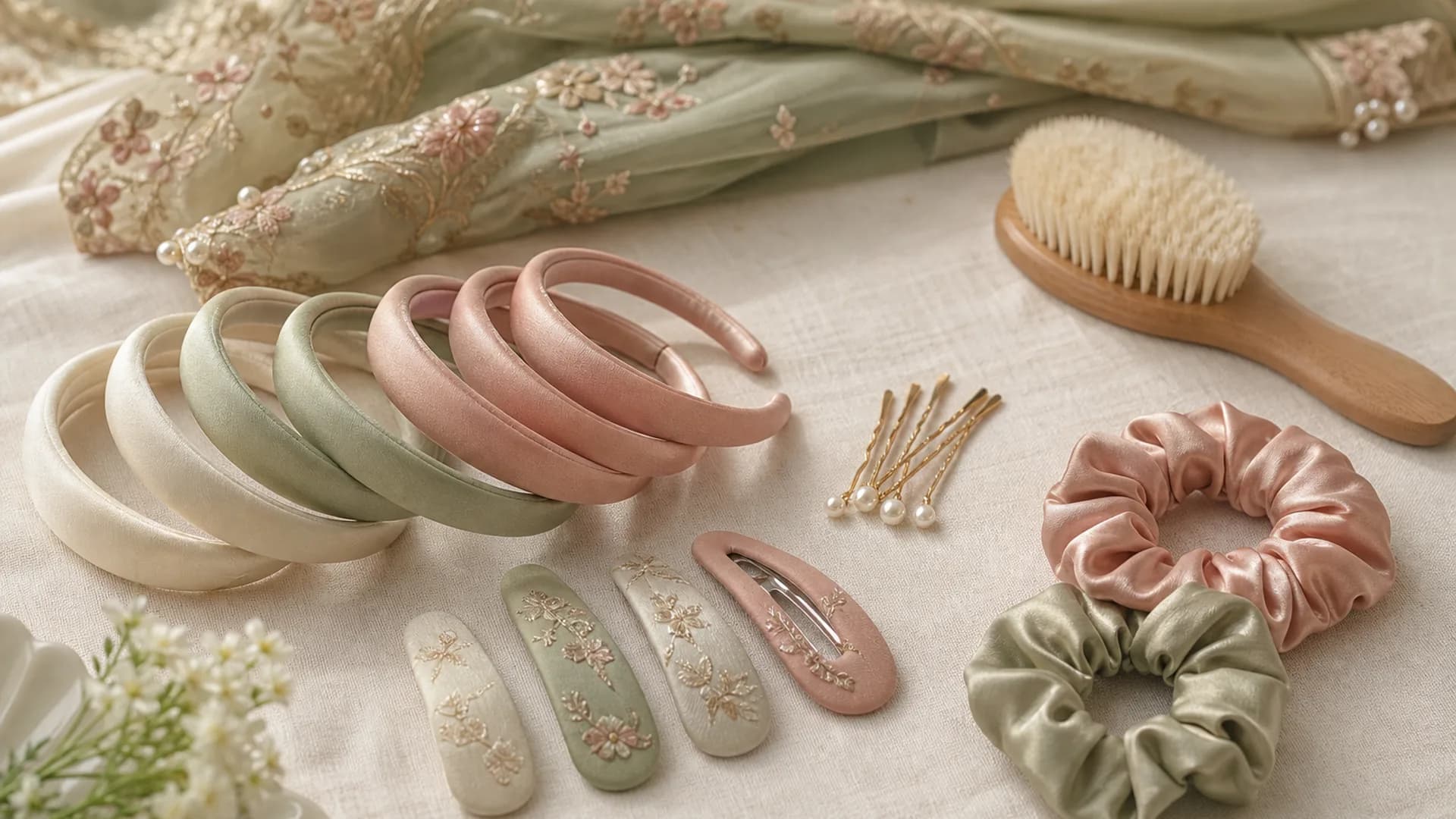
Girls' Hair for Functions: Styles That Survive
The hairstyle is done at six and gone by eight. Here is what actually survives a function, and which accessories stay in.
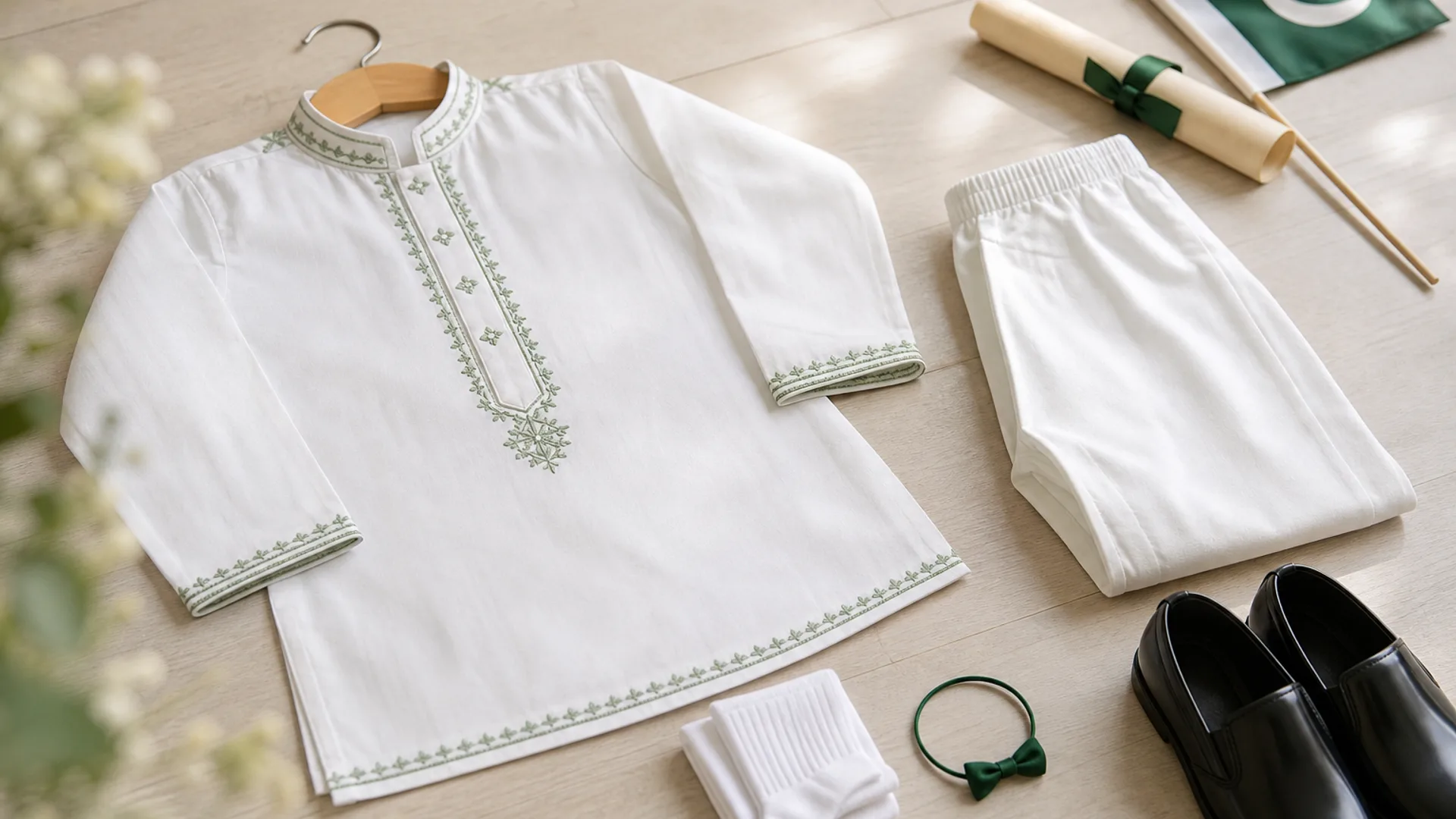
School Functions: What to Dress a Child In
School functions run long, involve a stage, and are rehearsed in the same clothes. Here is what works for each type, and what will be regretted by hour two.
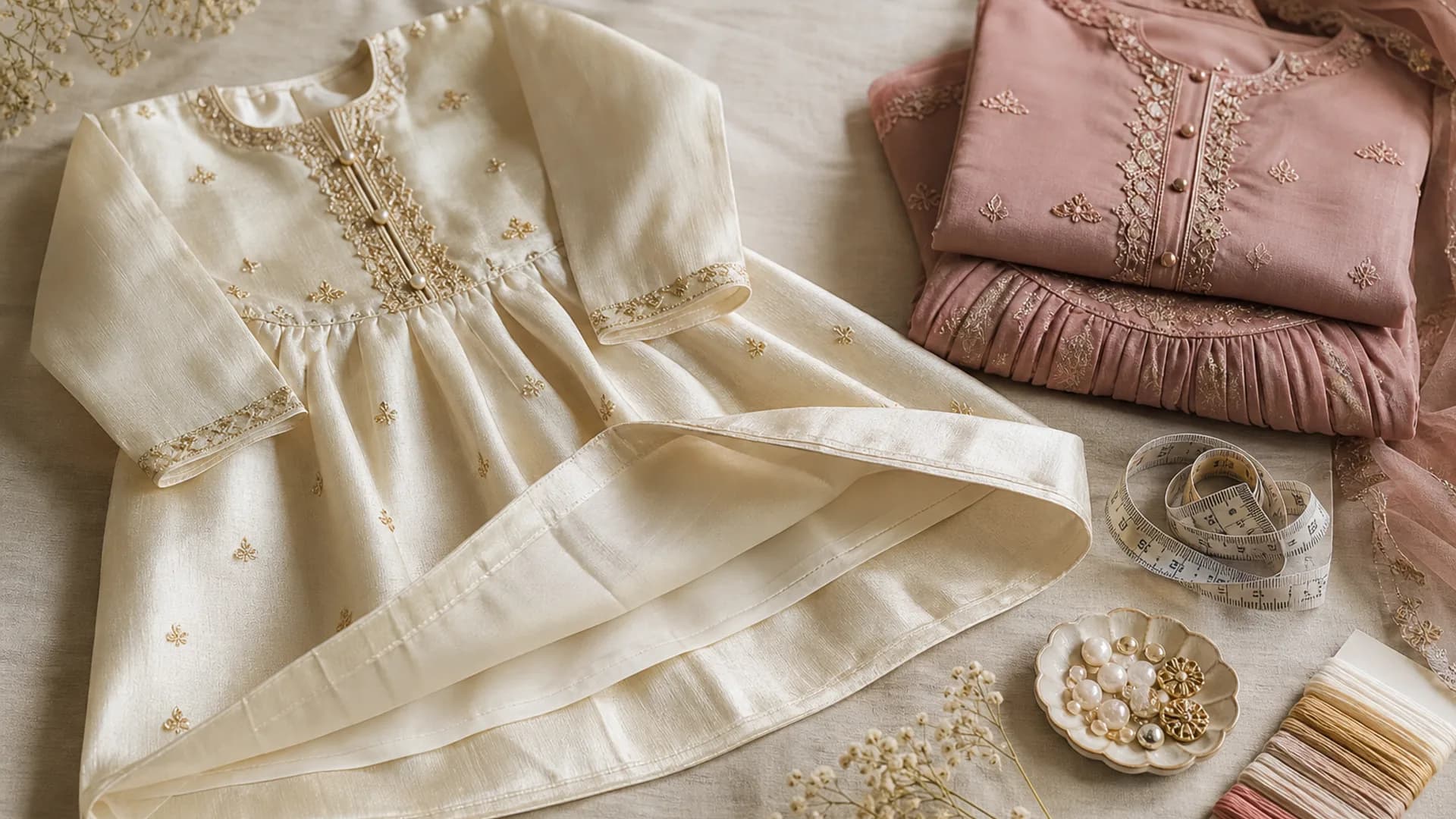
Kids' Formals That Last More Than One Season
A child's formal outfit is worn three or four times before it stops fitting. A few choices at the point of purchase double that, and none of them cost more.