

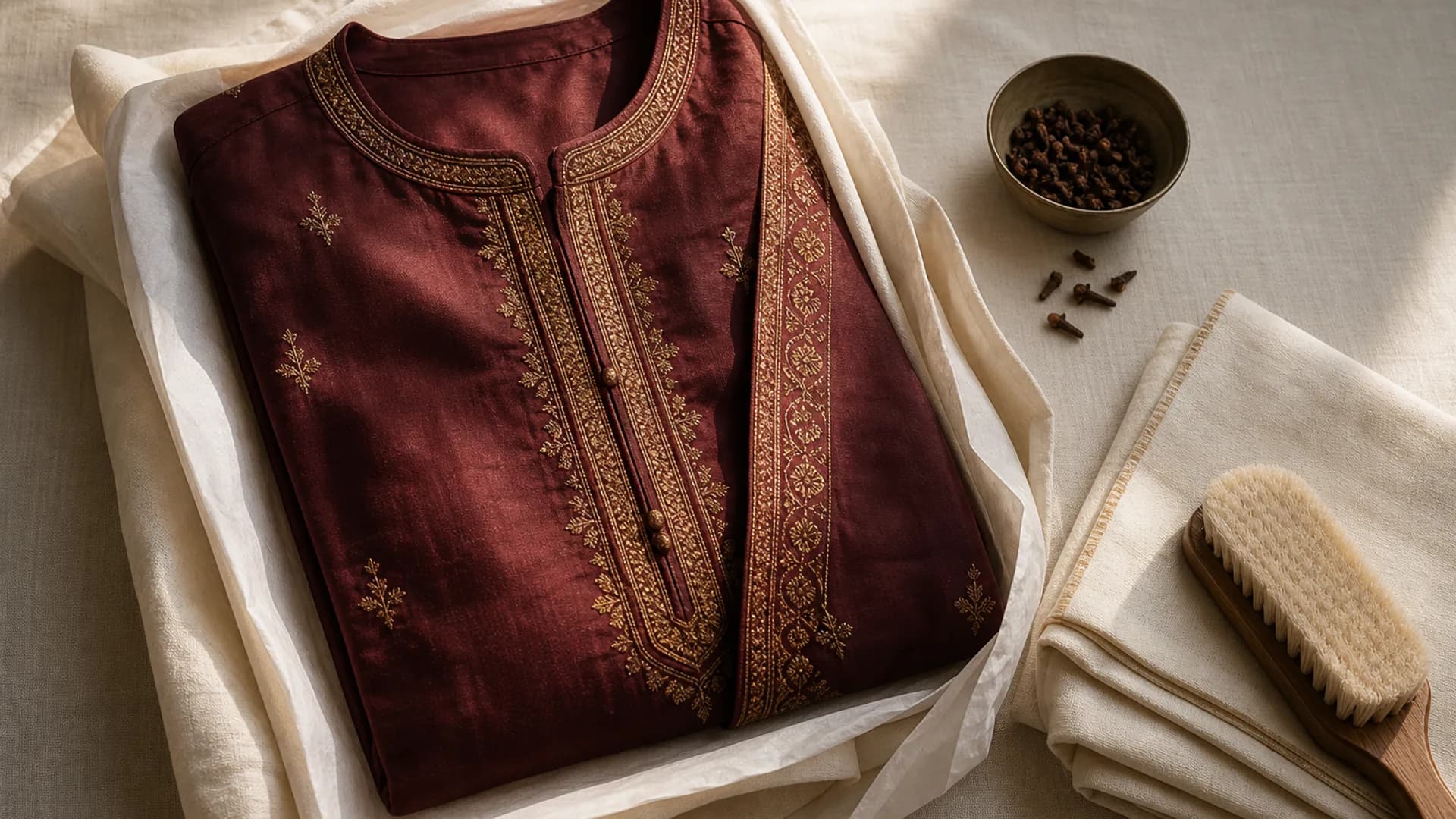
Caring for Kids' Embroidered Outfits: Wash & Store Right
An embroidered kids' outfit usually survives the party and dies in the wash or the cupboard. Here's the practical method — bleed testing, cold-water hand washing, ironing around zari, and storing festive wear through Karachi's humidity.
Most embroidered kids' outfits don't die at the party. They die three weeks later — in a bucket of warm water, under a hot iron, or inside a polythene bag at the back of a cupboard in Karachi in August. The frustrating part is that the outfit is usually fine. It's the handling that goes wrong. Below is the method we'd give a customer standing at the counter after Eid: what to test before you wash, how to wash, what to do about the inevitable chocolate handprint, and how to put the outfit away so it comes out next year looking like it did the first day.
Read the Embroidery, Not Just the Care Label
Before you decide anything, turn the outfit inside out under good light and work out what the surface work actually is. This one habit prevents most disasters. **Thread embroidery** — resham, thread-filled motifs, machine embroidery — is the most forgiving. It's stitched through the fabric and it isn't going anywhere. **Zari, tilla and dabka** are metallic. Today that usually means metallised polyester or a copper alloy wrapped around a core thread. It is stitched on, so it won't fall off, but it tarnishes and it crushes flat under a hot iron and never fully recovers. **Sequins (sitara) and beads** are stitched, but plastic sequins can soften at ironing temperatures and some cloud in dry-cleaning solvent. **Glue-set stones and kundan** are the fragile ones. They are held on with adhesive, and adhesive fails in hot water and in dry-clean solvent. A piece with a lot of stone work is honestly spot-clean-only, whatever the label says. Run your thumb gently under a motif. If it lifts as a flat disc with a hard edge and no visible stitching around it, it's glued. Treat the whole garment accordingly. Our [guide to handcrafted embroidered kids' suits](/journal/embroidered-kids-suits-handcrafted-eid-pakistan) goes into how the different techniques are built, which is useful context when you're deciding how rough you can be.
The Colour-Bleed Test You Should Never Skip
The single most common way an embroidered kids' outfit is ruined isn't dirt — it's dye migration. Deep maroon thread bleeding a pink halo into an ivory ground. Magenta piping running down a pale sleeve. Once it's happened, it's essentially permanent. The test takes thirty seconds. Dampen a white cotton cloth with cold water. Press it firmly onto an inside seam or the underside of a hem where the darkest thread sits. Hold for about thirty seconds, then look at the cloth. Any colour transfer at all means: do not immerse this garment. Spot-clean it, air it, and send it to a cleaner who knows what they're handling. No transfer means you can hand wash — but still don't soak. Soaking is what turns a slow bleed into a fast one. Five minutes in the water, maximum, from start to rinse. Set a timer if you're the sort of person who gets distracted by a phone call halfway through, which is all of us.
How to Hand Wash a Kids' Silk Suit at Home
Silk is a protein fibre — chemically closer to hair than to cotton. That tells you almost everything about how to treat it. **Cold water only.** Under 30°C. Hot water sets protein stains (milk, egg, blood — the standard kids' repertoire) and it accelerates dye bleeding. **Skip the bar soap and the regular detergent.** Both are alkaline, and alkali damages protein fibres. Use a pH-neutral or mild delicate wash, and use less than you think you need. Residue is harder to rinse out of embroidery than out of plain cloth. **Turn it inside out** and support the weight of the garment with both hands. Silk loses a meaningful share of its strength when wet — around a fifth — so it's at its most vulnerable in the bucket. **Press, don't rub.** Squeeze the water through the fabric. No twisting, no wringing, no scrubbing over embroidered panels. **Rinse twice in cold water,** then lift the whole garment out flat. **Roll it in a dry bath towel** and press to blot. Then dry it flat, indoors, in shade. Never hang a wet embroidered kurta — the weight of the work pulls the shoulders and neckline out of shape and they stay that way. And never sun-dry silk: UV yellows and embrittles it, and fades the dye at the same time. The same principles apply to adult pieces, which we've covered in more depth in [how to care for silk suits at home](/journal/how-to-care-for-silk-suits-at-home-pakistan).
Stains That Happen at Every Dawat
Children eat standing up. Plan for it. **Oil and gravy** — the biryani classic. Blot immediately with a dry tissue, pressing down rather than wiping. Wiping spreads it under the embroidery where you can't reach. At home, dust the mark with cornflour or talc, leave it an hour to absorb, and brush off with a soft brush before doing anything wet. **Chocolate and ice cream** — let it dry fully, then flake off the solid part. Cold water on the residue. Never warm water; the milk protein sets. **Juice and soft drinks** — cold water immediately, from the back of the fabric outward, pushing the stain out rather than deeper in. **Anything on or next to zari** — this is where people panic and make it worse. Don't rub metallic thread. Don't put water directly on it. Work the surrounding fabric with a barely damp cotton bud, keep the wet area as small as possible, and dry it quickly with a fan so no water ring forms. One more thing: between wears, air the outfit on a padded hanger for a few hours instead of washing it. Fewer washes is the whole secret to a festive outfit lasting through three children.
Ironing Around Zari, Sequins and Stones
More embroidery is destroyed by irons than by washing machines. Iron the garment inside out, on the lowest setting that does anything, with a plain cotton cloth between the iron and the fabric. Work the plain panels and leave the embroidered ones alone entirely — you almost never need to press a motif, because embroidery holds its shape better than the cloth around it. For zari, contact heat is the enemy. It crushes the metallic wrap flat and dulls it permanently. If a zari border genuinely needs relaxing, hold a steam iron a few inches away and let the steam do it, or hang the outfit in a steamy bathroom for twenty minutes. For sequins and glue-set stones, don't let the iron near them at any temperature. Plastic sequins soften and adhesive releases. If a stone does come loose, keep it — a good tailor can reset it far more neatly than fabric glue at home will. Heavy pieces with a lot of surface work, like a [3-piece stitched silk suit with a gold border](/product/kids-formal/kd-sku-mrn-kds-s-017), usually need nothing more than an inside-out press on the shalwar and a steam from a distance on the shirt.
When to Dry Clean — and What to Tell the Cleaner
"Dry cleaning is always safer" is one of the most expensive myths in Pakistani wardrobe care. It isn't always safer for our formals. Perchloroethylene, the standard dry-clean solvent, dissolves the adhesive under glue-set stones and can cloud or melt certain plastic sequins. And the pressing stage — heat plus pressure — is exactly what crushes zari. A garment can come back clean and flat and quietly worth less than it was. Dry clean when: the outfit has multiple fabric layers with different dyes, when the bleed test failed, when there's an oil stain across a large embroidered panel, or when there's structured lining and canvas interfacing that will never dry properly at home. Then actually talk to the cleaner. Point at the stone work. Say which motifs are metallic. Ask them to spot-clean rather than full-immerse if the soiling is localised, and to press lightly with a cloth or not at all. Any cleaner who handles bridals will understand immediately; if they look blank, take it somewhere else.
Storing Festive Kids Wear Through Karachi Humidity
In a coastal city, the enemy is not moths. It's damp, mildew and that musty smell that greets you when you open a suitcase in October. **Store it clean.** Invisible residue — sugar from a cold drink, sweat at the collar, a splash of oil — caramelises to brown over months and draws insects. An outfit worn once still needs airing and spot-checking before it goes away. **Wrap in unbleached muslin or malmal**, not polythene. Cotton lets the fabric breathe and buffers humidity. Old cotton dupattas and clean white bedsheets work perfectly well if you don't want to buy muslin. **Fold flat with tissue or white cloth along the fold lines**, and store heavy formals lying flat rather than hanging. Hanging a weighty embroidered shirt for a year distorts the shoulders. Refold along different lines every few months so the creases don't become permanent breaks in the thread. **Add silica gel sachets, dried cloves or neem leaves** — never in direct contact with metallic thread; tuck them into the box, not the folds. Check the box once during the monsoon. If anything smells musty, get it out into airy shade for a day, then rewrap in fresh dry cloth.
Mothballs and Plastic Bags: Two Habits Worth Breaking
Naphthalene mothballs are the default subcontinental advice and they cause real damage. The vapour and sulphur interaction dulls and blackens zari and tilla. They yellow pale fabrics over time. The smell embeds itself and takes weeks of airing to shift. And naphthalene is toxic — it has no business anywhere near children's or infants' clothing, which is reason enough on its own. Plastic is the second habit. The polythene cover from the dry cleaner is transport packaging, not storage. Leave it on and you seal humid Karachi air against silk for a year. Mildew spots, musty odour, sometimes off-gassing that tarnishes metallic thread. Strip it off the moment the outfit comes home. Vacuum bags are just as bad for heavy work — compressing embroidery flat for months crushes raised motifs and stresses the stitching along the fold lines. While we're clearing out folk wisdom: adding salt or vinegar to the wash does not fix dye on a finished garment. It's a myth. A splash of white vinegar in the final rinse helps clear soap residue from silk, and that's the extent of it.
Making an Outfit Last for the Next Child
Festive kids' wear gets worn two or three times, which is exactly why it's worth passing down — and why buying well matters more than buying often. A few things that help. Wash new outfits once before first wear where the fabric allows, especially for younger children and babies, to clear surface finishes and loose dye. Check the inside seams — if the embroidery backing feels scratchy at the neck or armhole, a soft cotton lining patch stitched in costs very little and stops the tugging and complaining halfway through the evening. Be realistic about sizing up. Parents often buy one size larger to get two seasons out of a piece, but altering an embroidered panel usually means cutting through the work, and that can't be undone. Our [festive sizing guide for children](/journal/how-to-pick-right-festive-outfit-size-child-pakistan) walks through the age-based and numeric chest systems if you're between sizes. When it's time for something new, browse the [kids formal wear collection](/kids) — pieces like the [Sunset Bloom girls festive co-ord set](/product/kids-formal/kd-sku-sbg-cs-fs25-047) are built to be worn, stored and worn again, and simple silhouettes with well-anchored stitched work always outlast heavy glue-set decoration.
Frequently Asked Questions
We'd advise against it, even in a mesh bag. The agitation abrades metallic thread and the spin cycle creases embroidery in ways a warm iron can't fix — and you can't iron the embroidery. Five minutes of careful hand washing in cold water is faster than repairing what the machine does.
Keep it away from sulphur and moisture. That means no naphthalene mothballs, no rubber bands around folded outfits, and no polythene storage in humid weather. Wrap in dry cotton muslin, add a silica sachet to the box, and air the outfit for a few hours after each wear.
Hang it in airy shade — never direct sun — for a full day, ideally with a fan moving air across it. If the smell lingers, place it loosely in a cotton bag with a few dried cloves or an open silica sachet for a week. Washing usually isn't necessary and often isn't safe.
For babies and children with sensitive skin, yes, where the fabric allows it — a short cold hand wash clears loose surface dye and finishing agents. For heavily embroidered formals with stone work, skip the wash and simply air the outfit for a day or two before the event. Check the bleed test first either way.
Usually, yes. Solvent dissolves the adhesive under glue-set decoration and can cloud plastic sequins, so tell the cleaner exactly what the work is and ask for spot-cleaning rather than full immersion. For pieces with a lot of glued stone work, spot-cleaning at home is genuinely the safer route.
Fold and store flat. Heavy embroidery pulls on the shoulders and neckline when hung for months, and the distortion doesn't come out. Fold with tissue or plain white cloth along the creases, and refold along different lines every few months so the fabric doesn't break at the folds.
About the Author
Habiba Minhas
Founder and creative director of Habiba Minhas, Pakistan's leading handcrafted fashion brand based in Karachi. With a passion for preserving traditional Pakistani craftsmanship while embracing modern design, she has built a brand serving over 5,000 customers nationwide.
Specializing in premium ladies suits, kids festive wear, and baby products, Habiba works directly with artisan embroiderers and skilled tailors to create pieces that honor Pakistani heritage.
Related Articles
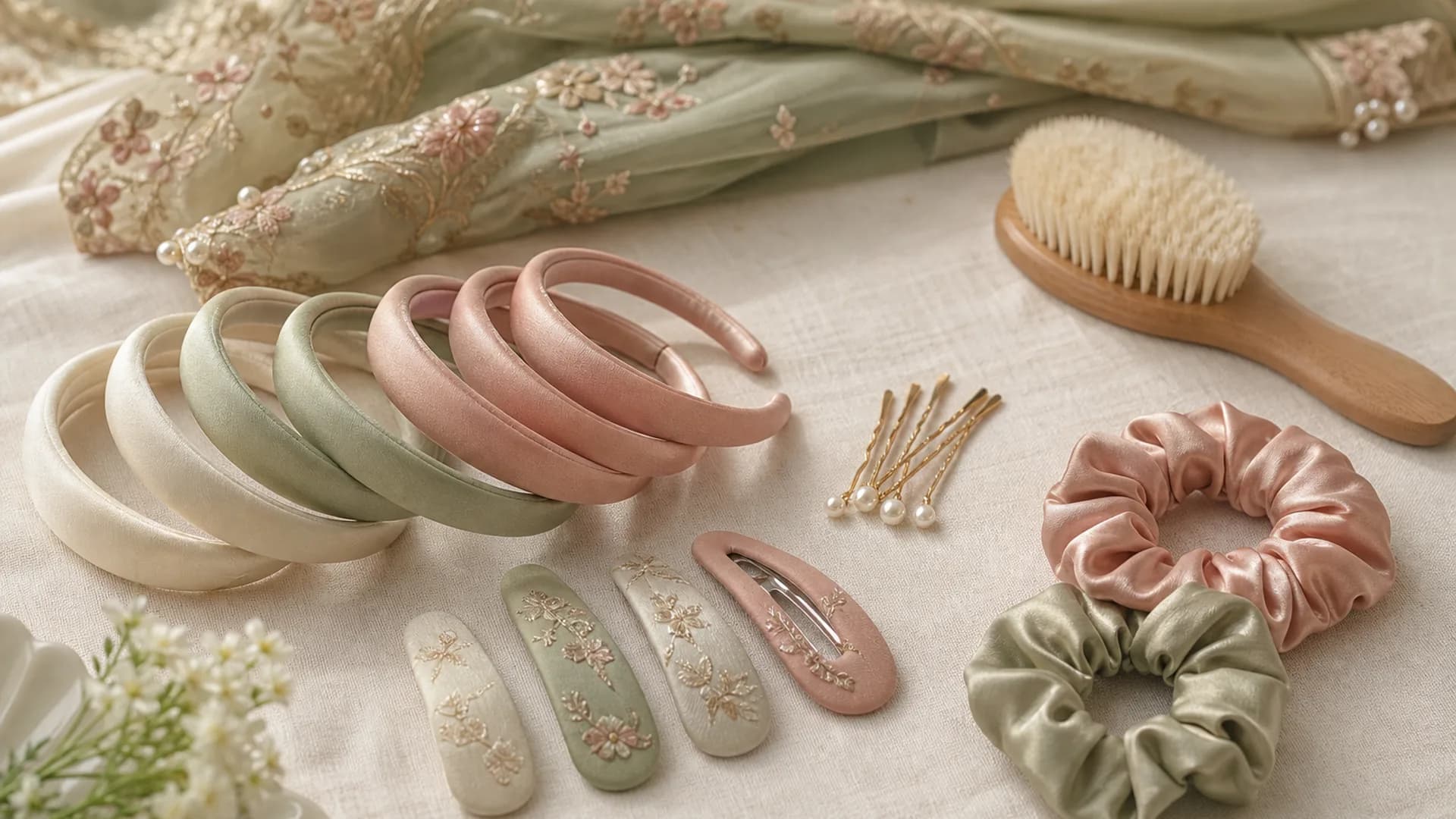
Girls' Hair for Functions: Styles That Survive
The hairstyle is done at six and gone by eight. Here is what actually survives a function, and which accessories stay in.
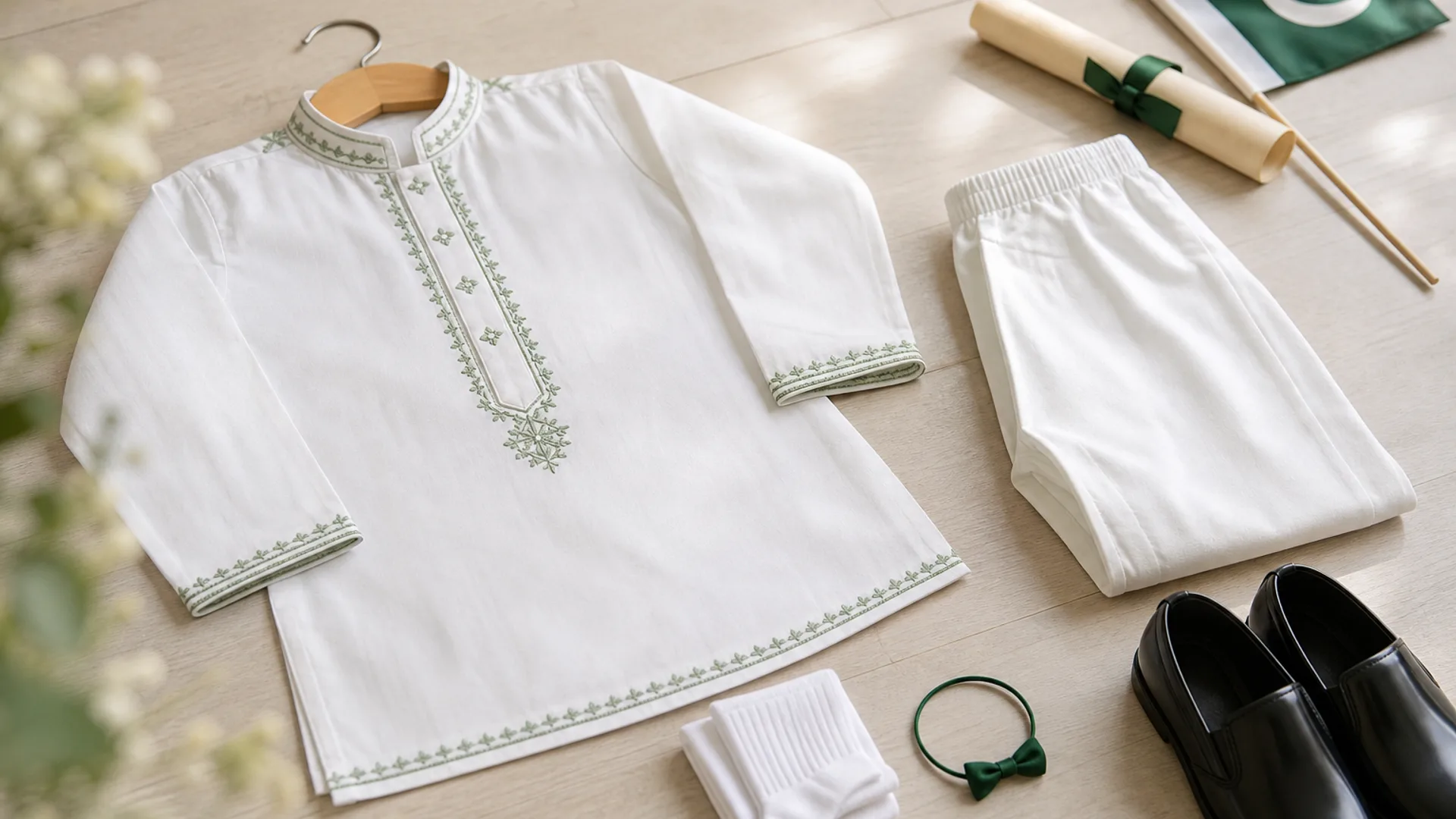
School Functions: What to Dress a Child In
School functions run long, involve a stage, and are rehearsed in the same clothes. Here is what works for each type, and what will be regretted by hour two.
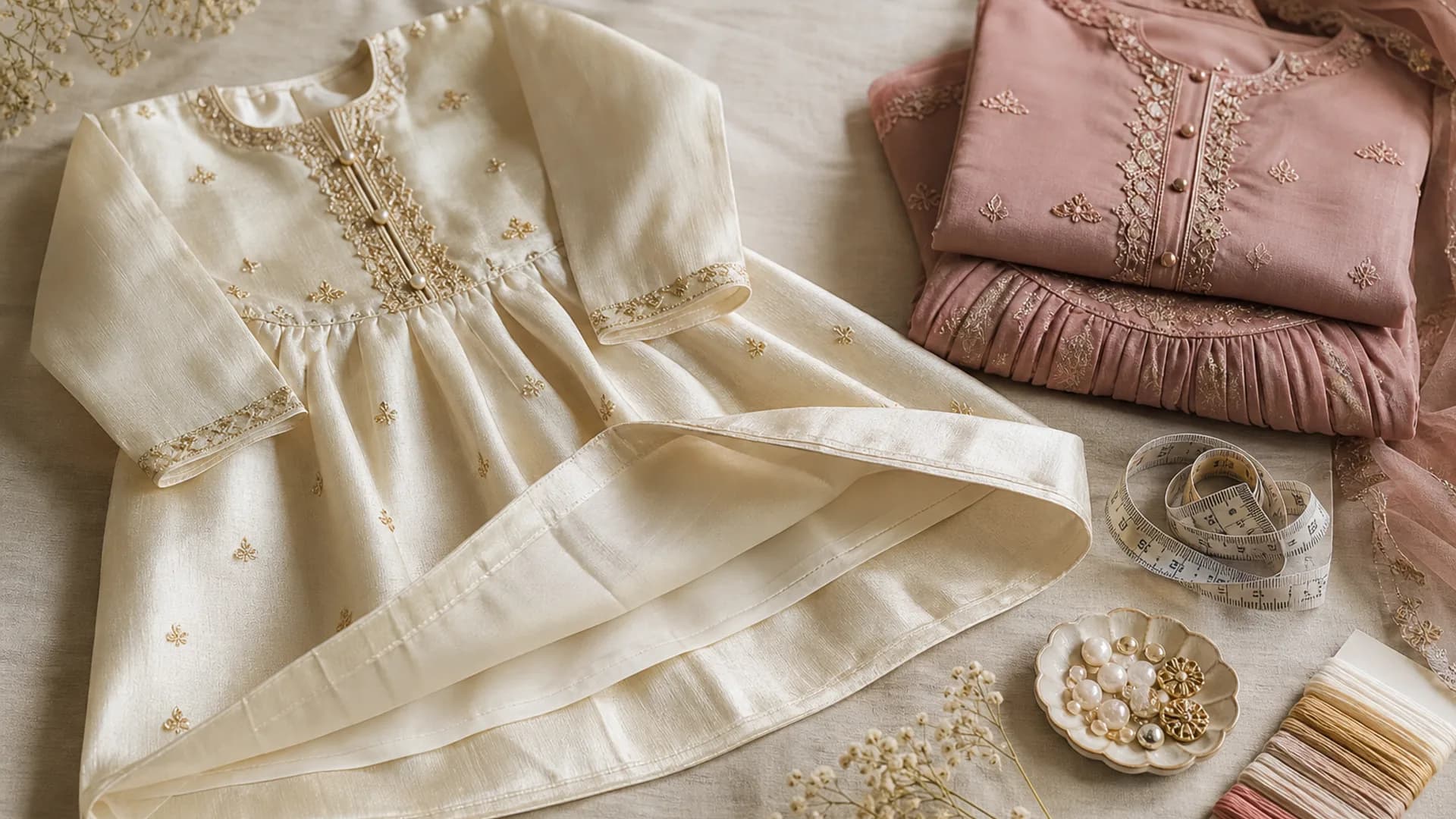
Kids' Formals That Last More Than One Season
A child's formal outfit is worn three or four times before it stops fitting. A few choices at the point of purchase double that, and none of them cost more.