

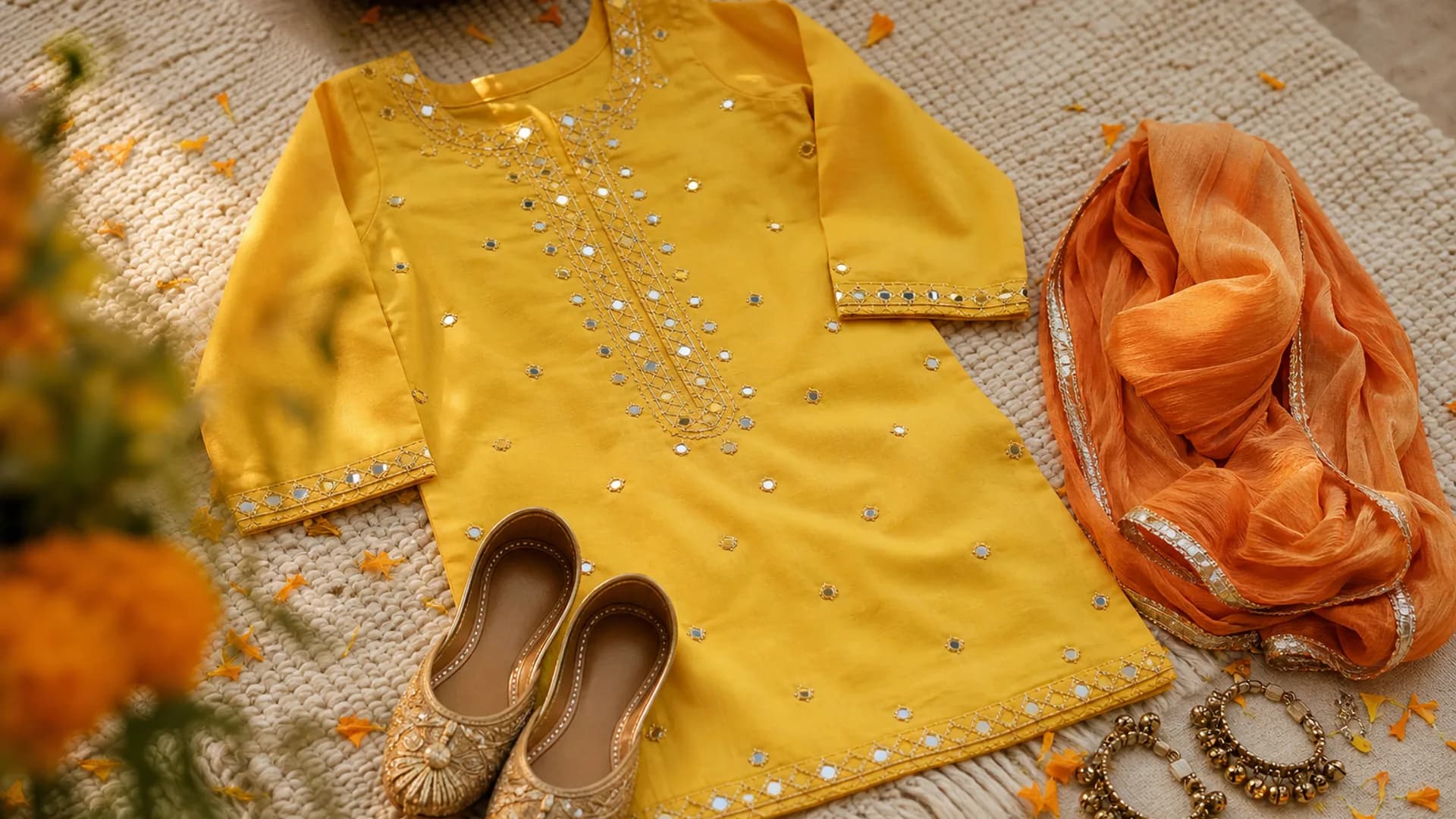
Dressing Children for a Dholki Night: What Works
A dholki is loud, late, and spent mostly on the floor. It is the one wedding function where comfort genuinely beats formality for children.
The dholki is the function everyone underdresses for and children still somehow end up overdressed. It happens at home or in a small hall. It runs late. It is loud, and it is spent almost entirely on the floor — sitting cross-legged around the dhol, standing up to dance, sitting down again. Nobody is posing. This is the one wedding function where comfort genuinely beats formality for a child, and the outfit that works here is almost the opposite of the one that works at a walima.
What Makes a Dholki Different
Three things, and each one changes what you should buy. **It is floor-based.** People sit on durries and cushions, not chairs. A stiff structured outfit is uncomfortable within ten minutes and a long hem is constantly underfoot. **It is physical.** There is clapping, dancing, and children running between rooms. Whatever she wears will move a great deal and probably get something spilled on it. **It is informal.** Heavy embroidery reads as trying too hard at a dholki in a way it never does at a barat. A simple bright piece looks more right than an expensive one. If you have been to a mehndi, the logic is similar but a dholki is a step further down in formality still. Our [mehndi night guide](/journal/what-to-wear-mehndi-night-pakistan) covers the adult side of the same distinction.
The Right Silhouette
Short and loose. That is genuinely the whole answer. A knee-length or mid-calf kurta with a shalwar or churidar is ideal — she can sit cross-legged, stand up without help, and dance without managing anything. A gathered frock at knee length works equally well and is easier for younger children. What to avoid: floor-length anything, fitted bodices, stiff net underskirts, and long trailing dupattas. All four fight a child who is trying to sit on the floor and get up repeatedly. If she wants a dupatta — and many girls do, because the older cousins have one — choose a short, light one and pin it at the shoulder. An unpinned dupatta at a dholki lasts about fifteen minutes before it is abandoned on a sofa and lost.
Fabric: Cotton, Lawn, or Light Silk
A dholki room gets warm quickly. There are more people than the space was designed for, the dhol raises the energy, and children are moving constantly. Cotton and lawn are the right answer for most dholkis, especially in summer. They breathe, they wash easily, and something will be spilled. Light raw silk works for winter dholkis and looks a little more finished without being formal. What to avoid: velvet, heavy jamawar, and anything fully lined in polyester. All three trap heat, and a hot child at a late function becomes an unhappy child quickly. Check the lining rather than the outer fabric — a cotton lining makes almost anything wearable. Our [summer and winter fabric guide](/journal/summer-vs-winter-fabric-guide-pakistani-women) explains why this matters more than the fabric name on the label.
Colour: Bright Is Correct Here
The dholki is the one function where strong colour is not just acceptable but expected. Yellow, orange, fuchsia, parrot green, and marigold tones all belong. This is the pre-wedding celebration, and the palette is deliberately louder than the main functions. Ivory and pastels, which work beautifully at a nikah, read as slightly flat at a dholki. Save them for the formal end of the week. Black is generally avoided at pre-wedding functions in most Pakistani families — worth checking with the hosts rather than assuming. If your daughter is in a family group being photographed, coordinate the tone rather than the exact shade. Our guide to [colours for Pakistani skin tones](/journal/best-colours-for-pakistani-skin-tones) helps pick which brights suit her rather than just which are traditional.
Footwear, Which Most People Forget
Shoes come off at a dholki. Almost always, and often at the door. That means two things. First, buy something she can remove and put back on herself — no buckles she cannot manage, no laces. Slip-on khussas or soft flat juttis are ideal. Second, check the socks or bare feet situation. She will spend most of the evening without shoes on a durrie or a cold marble floor. In winter, soft socks that match are worth packing. Avoid heels entirely at this age and at this function. There is genuinely nowhere to wear them at a dholki, and they come off within the first half hour anyway. Label the shoes if there are many children. Twenty pairs of small khussas by a door look remarkably similar at midnight.
Jewellery and Extras
Keep it minimal and keep it attached. Ghungroo anklets are the one accessory that genuinely belongs at a dholki — they suit the occasion, they make noise when she dances, and children love them. Small stud earrings are fine. Dangling earrings get caught and pulled. Bangles are traditional but choose plastic or light metal rather than glass. Glass bangles break, and broken glass on a floor where everyone is sitting is a real problem. Skip necklaces for younger children entirely. They twist, they catch, and they get lost. Our [hair accessories guide](/journal/hair-accessories-pakistani-women-styling-guide) has ideas that work for children too — a simple pinned flower or a small hair chain adds occasion without anything to lose.
The Practical Bag
A dholki runs late, and a prepared parent has a much easier night. Bring a change of clothes for anyone under about seven. Something will be spilled, and a second simple kurta turns a ruined evening into a five-minute interruption. Bring a light shawl. Rooms that are too warm at ten become cold at one in the morning, especially in winter. Bring a hair tie. Whatever was done to her hair will not survive the dancing, and being able to tie it back keeps her comfortable. And bring the shoes she arrived in, in a bag, if they are likely to disappear at the door. For the wider question of which function calls for what, our [kids festive wear guide](/journal/kids-festive-wear-guide-pakistani-weddings) maps the whole wedding week — and the [kids collection](/kids) has pieces at both the informal and formal ends.
Frequently Asked Questions
Often yes, if it is a bright kurta or frock at knee length. The mehndi is slightly more formal, so add a dupatta and better jewellery for that one. What does not transfer is a formal barat or walima outfit worn down to a dholki — it reads as overdressed and she cannot sit on the floor in it.
No. Heavy work is uncomfortable for sitting on the floor, too warm for a crowded room, and reads as overdressed at what is meant to be the most relaxed function of the week. Light mirror work or a simple printed cotton is more appropriate and far more comfortable.
Slip-on khussas or soft flat juttis they can take off and put on themselves — shoes come off at the door at most dholkis. Avoid buckles, laces and any kind of heel. In winter, pack matching socks, because she will spend the evening barefoot on a cold floor.
Better to avoid them. Glass bangles break easily during clapping and dancing, and broken glass on a floor where everyone is sitting cross-legged is a genuine hazard. Light metal or plastic bangles give the same look without the risk.
Bright ones — yellow, orange, fuchsia, parrot green and marigold all suit the occasion. Pastels and ivory read slightly flat at a dholki even though they work beautifully at a nikah. Check with the hosts about black, which many families avoid at pre-wedding functions.
About the Author
Habiba Minhas
Founder and creative director of Habiba Minhas, Pakistan's leading handcrafted fashion brand based in Karachi. With a passion for preserving traditional Pakistani craftsmanship while embracing modern design, she has built a brand serving over 5,000 customers nationwide.
Specializing in premium ladies suits, kids festive wear, and baby products, Habiba works directly with artisan embroiderers and skilled tailors to create pieces that honor Pakistani heritage.
Related Articles
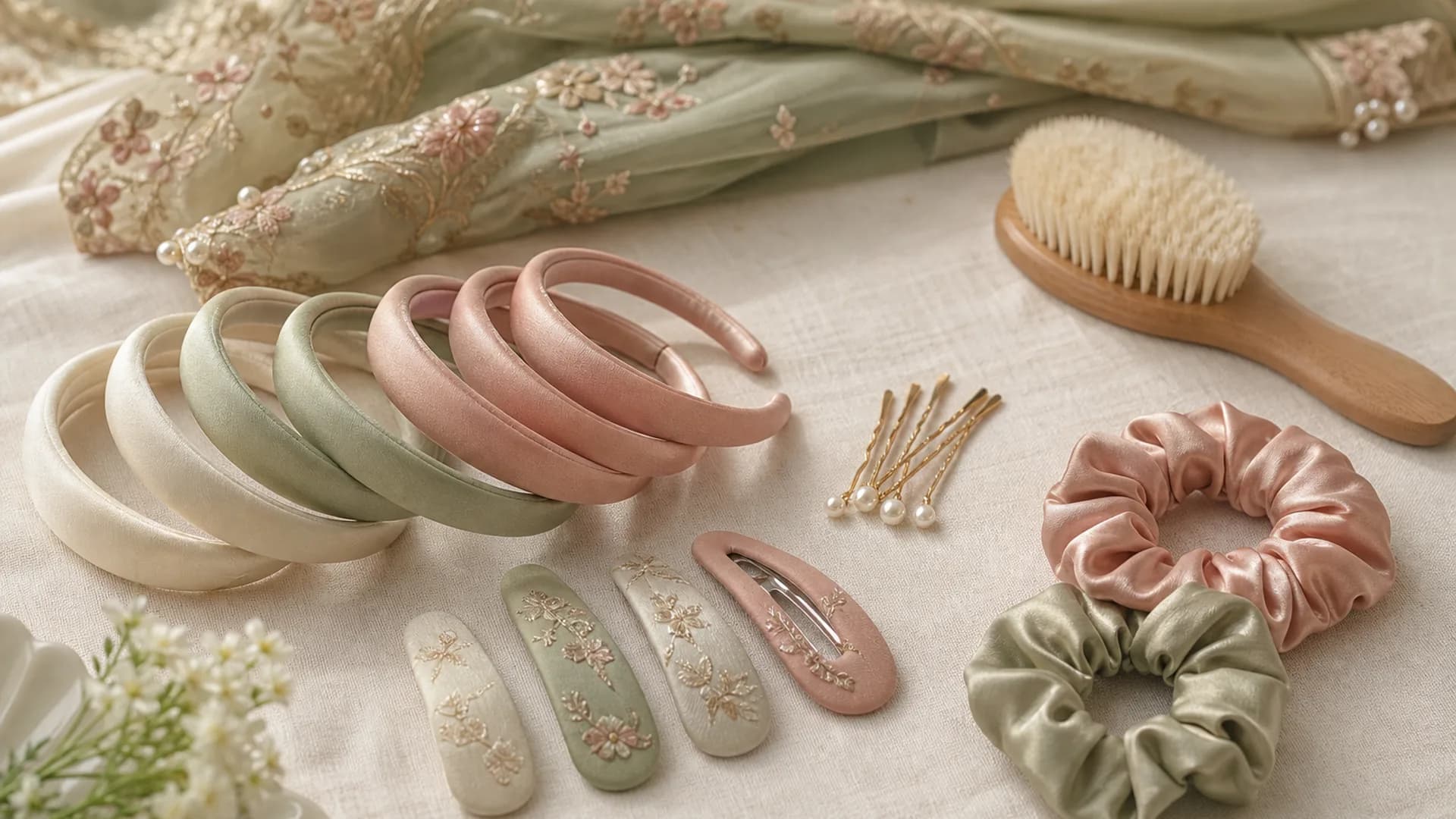
Girls' Hair for Functions: Styles That Survive
The hairstyle is done at six and gone by eight. Here is what actually survives a function, and which accessories stay in.
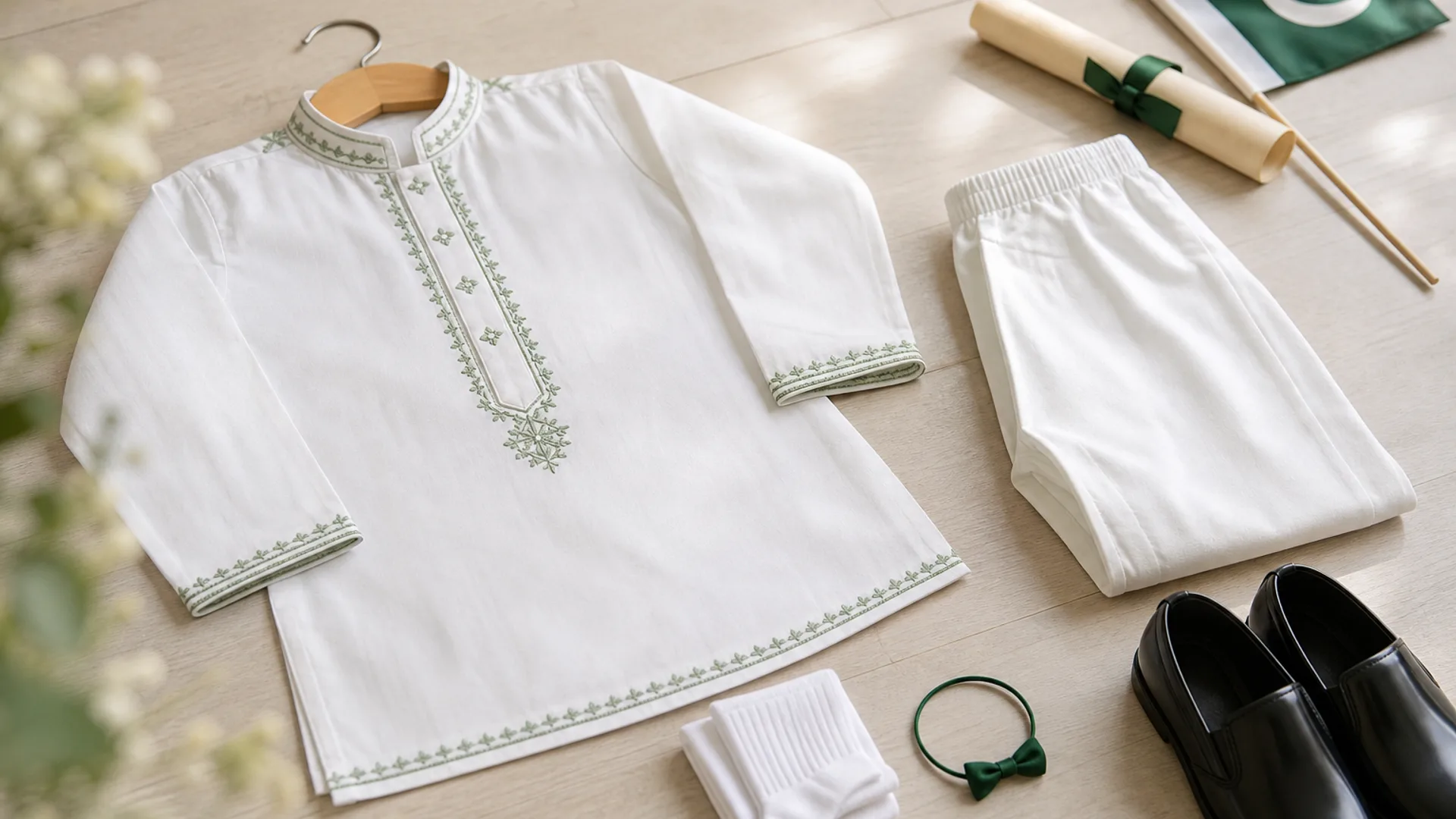
School Functions: What to Dress a Child In
School functions run long, involve a stage, and are rehearsed in the same clothes. Here is what works for each type, and what will be regretted by hour two.
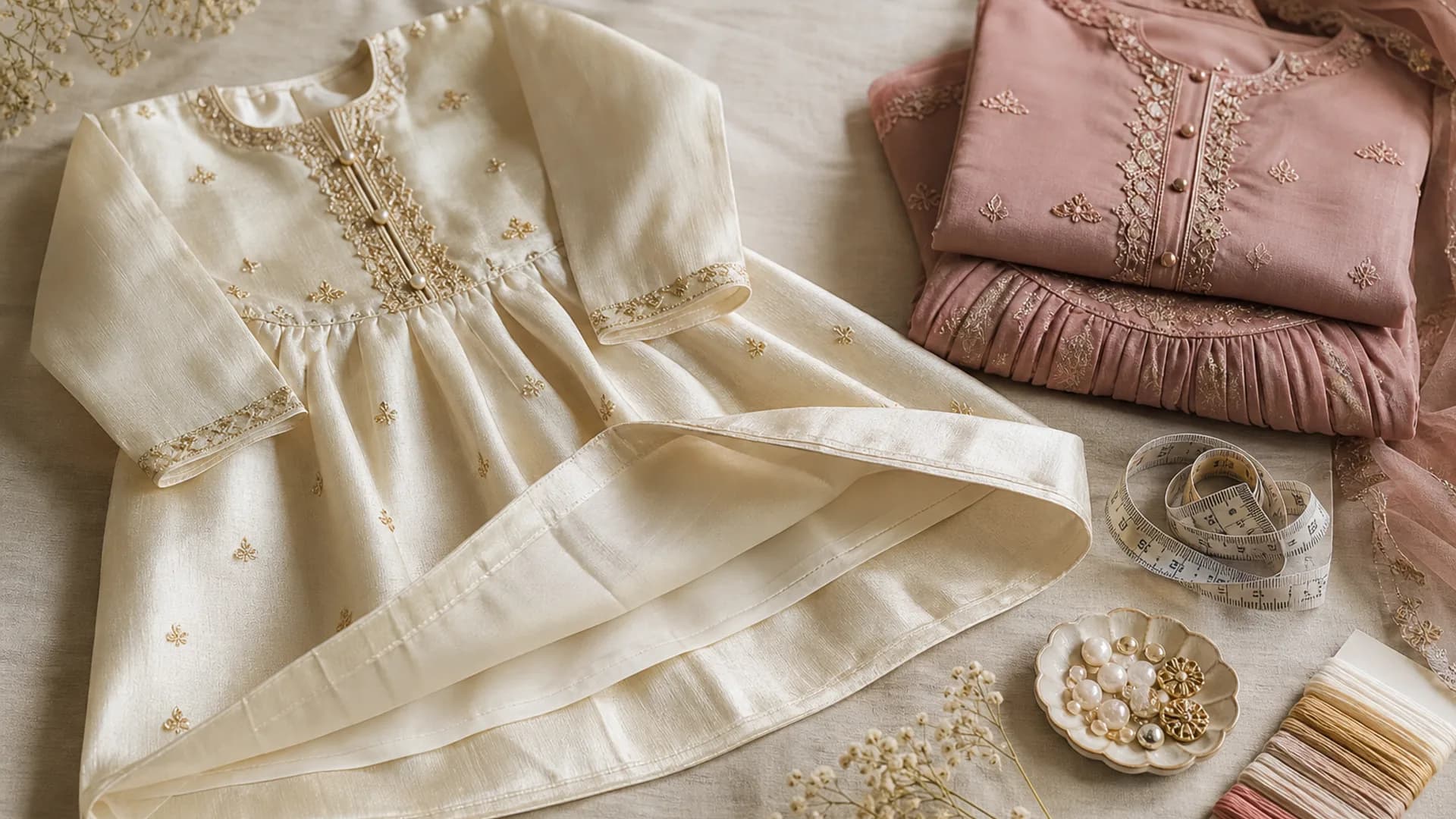
Kids' Formals That Last More Than One Season
A child's formal outfit is worn three or four times before it stops fitting. A few choices at the point of purchase double that, and none of them cost more.