

Keeping a Baby Warm Through a Pakistani Winter
Pakistani houses are built for heat, not cold, and a January night in Lahore inside is barely warmer than outside. Here is how to keep a baby warm safely.
Pakistani houses are built for heat. Thick walls, high ceilings, marble and tile floors, and almost no insulation or central heating — all of which is sensible for a summer that runs past forty degrees, and works badly for a January night in Lahore or Islamabad. The result is that a house in winter is often only a few degrees warmer than the air outside, and the coldest room is frequently the bedroom. For a baby that matters more than for an adult, because she cannot add a layer, move closer to a heater, or tell you she is cold. The instinct is to pile on blankets. That is the one thing not to do, and the alternative is straightforward once you know it — which is what most of this comes down to.
The Rule: Layers, Not Blankets
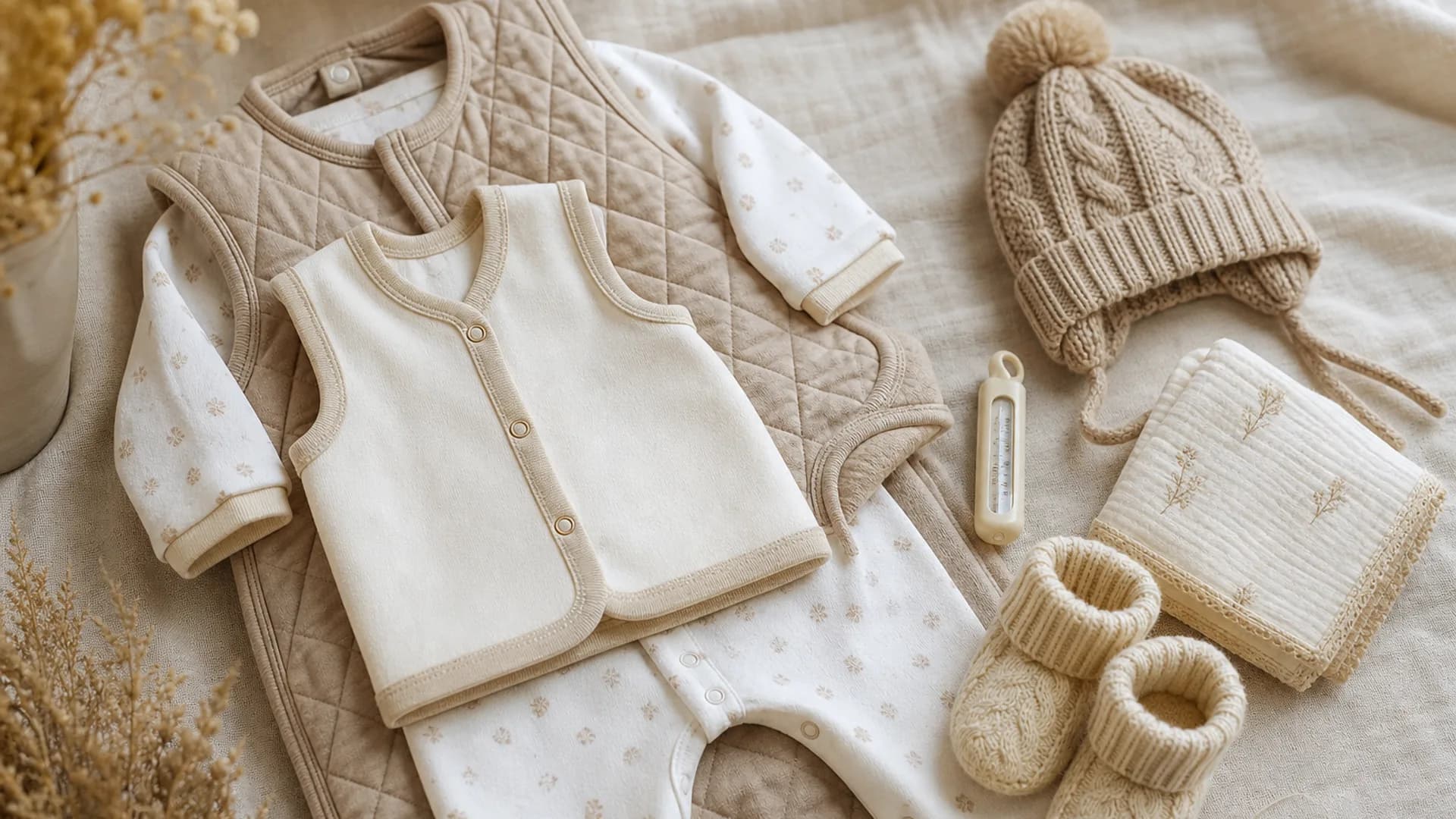
Loose bedding in a cot is a suffocation risk, and it remains a risk in winter — cold weather does not change safe-sleep guidance. A baby cannot push a blanket off her face. The alternative is to put the warmth *on* her rather than *over* her. **A sleep sack or wearable blanket** is the answer, and it is the single most useful thing to buy for a winter baby. She wears it, so nothing can ride up over her face, and she cannot kick it off and get cold at three in the morning. **Sleep sacks come in weights**, usually expressed as a tog rating. A warmer one for winter, a light one for summer. Two sacks cover a whole year. **Underneath it, layer clothing:** a thin cotton vest, then a long-sleeved sleepsuit, then the sack. Three light layers are warmer than one thick garment because of the air trapped between them, and each layer can be removed independently. Our [safe sleep guide](/journal/safe-sleep-baby-bedding-pakistan-guide) covers what belongs in the cot in full — and the answer stays the same in winter.
How Many Layers, Actually
The general rule: **one thin layer more than you are comfortable in.** In a cold Pakistani house that usually means: **Room at 16–20°C (a reasonably warm room):** cotton vest, long-sleeved sleepsuit, medium-weight sleep sack. **Room at 12–16°C (a typical unheated Lahore bedroom in January):** cotton vest, long-sleeved sleepsuit, a thin cardigan or a second layer, and a warmer sleep sack. **Below 12°C:** the same, plus warm the room if you possibly can. Adding endless layers has diminishing returns and starts to restrict her movement. **Daytime, being carried:** one layer fewer than for sleeping, because your body heat contributes. A baby in a carrier against you is considerably warmer than one lying in a cot. **Going outside:** one more layer than indoors, plus a hat, and remove the outer layer as soon as you come in or get into a warm car. Overheating happens fastest in transitions. **Hats indoors are not needed** once she is past the first days — a baby regulates temperature partly through her head.
Checking Whether She Is Warm Enough
The check nearly everyone uses is the wrong one. **Do not judge by her hands or feet.** Babies have cool hands and feet almost all the time, in every season, including when they are perfectly warm and including when they are too hot. Cold hands are not a reason to add a blanket. **Check the chest or the back of the neck.** Slide a hand inside her clothing. Warm and dry is correct. **Too cold:** a cool chest or back. Add a layer. **Too hot:** damp or sweaty neck and back, hair damp at the hairline, flushed cheeks. Remove a layer — this happens in winter more often than people expect, because parents over-layer against the cold. **Use a room thermometer** rather than judging by how the room feels to you. You are dressed, moving, and acclimatised; she is none of those things. 16–20°C is the target for sleep, and knowing the actual number changes what you put her in. Overheating carries real risks including a raised risk of sudden infant death, which is why the answer is never simply "more". Our post on [dressing a newborn in summer](/journal/dressing-newborn-pakistani-summer-heat) covers the other end of the same problem.
Fabrics for Winter
**Pure cotton against the skin, always.** Even in winter, and even under everything else. Synthetic fabric next to the skin traps moisture, and a baby who sweats under too many layers then gets cold as it evaporates. **Cotton fleece and cotton-rich knits** for the middle layers. Warm and breathable. **Wool for outer layers only**, and check she is not reactive to it — many babies are. A cotton layer underneath solves it. **Avoid polyester fleece against the skin.** It is warm and it does not breathe, which produces the damp-then-cold cycle. **Avoid anything bulky under a sleep sack.** A thick padded suit inside a sack restricts movement and is not warmer than two thin layers. **Check the sleep sack's own composition.** A cotton-lined sack is far more comfortable than a fully synthetic one. **Wash everything before first use** and wash new items separately the first time. The [swaddle](/baby/baby-swaddle) and [bedding](/baby/baby-bedding-set) sections have the cotton pieces, and our [nursery checklist](/journal/nursery-setup-checklist-pakistani-homes) covers quantities.
Heating, Load Shedding and Practical Realities
**Gas heaters need ventilation.** This is the most important safety point in a Pakistani winter. An unvented gas heater in a closed room produces carbon monoxide, and infants are more vulnerable to it than adults. Never run one in a closed bedroom overnight, and keep a window slightly open if one is running. **Never place a heater near the cot.** Radiant heat on one side and cold air on the other is uncomfortable, and it is a burn and fire risk. **Electric heaters and oil radiators are safer** than gas for a room where a baby sleeps, though load shedding limits how much you can rely on them. **Warm the room before bedtime, then turn the heater off.** A room that has been warmed holds heat for a while, and it removes the overnight risk. **Choose the warmest room in the house** for her, not the one with the nursery furniture. An interior room with fewer outside walls is considerably warmer. **Plan for load shedding.** A hot water bottle to warm the cot *before* she is put in it — removed before she goes down, never left in with her — works when the power does not. **Keep the cot away from windows and outside walls**, where cold air pools and condensation collects.
Going Out in Winter
**Car seats and thick coats do not mix.** A padded coat compresses under a harness, which leaves the straps loose in a crash. Strap her in wearing thin layers, then put a blanket or her coat over the top of the harness. **Remove the outer layer indoors and in a warm car.** Overheating in transitions is the most common winter mistake — a baby in full outdoor clothing in a heated car gets hot within minutes. **A hat matters outdoors.** She loses a meaningful amount of heat through her head, and it is the easiest layer to add and remove. **Cover the pram sensibly.** A proper pram cover or footmuff, not a blanket draped over the top — the same airflow problem applies in winter as in summer. **Watch for wind.** Wind chill affects a small baby more than an adult, and a pram at street level catches more of it than you do. **Fog is damp as well as cold.** Lahore and Islamabad fog gets into fabric, and damp clothing is far colder than dry. Bring a spare layer. Our [baby bag guide](/journal/baby-bag-essentials-what-to-pack) covers what to carry, and the [baby bags](/baby/baby-bags) section has the bags themselves.
What to Buy for a Winter Baby
**Two sleep sacks** in a winter weight, so one can be washed. The single most useful purchase. **Long-sleeved cotton sleepsuits — six to eight.** The main garment for the season. **Cotton vests — six to eight**, as the base layer under everything. **Two or three cotton-rich cardigans or jackets** for layering. **A warm hat and soft booties**, for outdoors. **A pram footmuff or proper cover**, rather than blankets. **A room thermometer.** Inexpensive, and it removes the guesswork entirely. **Muslins — eight.** Used constantly regardless of season. The [baby collection](/baby) has these alongside the bedding. **What not to buy:** thick padded snowsuits, which are unusable in a car seat and too warm indoors; heavy blankets, which do not belong in a cot; and hot water bottles intended to stay in the cot, which are unsafe. And if you are ordering ahead of a due date, allow extra time — deliveries slow through wedding season and around Eid. Our [shipping page](/help/shipping) has current timings.
Frequently Asked Questions
Not in the cot. Loose bedding remains a suffocation risk in cold weather, since a baby cannot push it off her face. Use a sleep sack or wearable blanket instead — she wears the warmth rather than lying under it — and layer thin clothing underneath.
Check her chest or the back of her neck, not her hands — babies have cool hands almost all the time in every season. Warm and dry is correct; a cool chest means add a layer, and a damp neck or back means remove one. Use a room thermometer rather than judging by feel.
Only with ventilation, and never in a closed room overnight — an unvented gas heater produces carbon monoxide, and infants are more vulnerable to it. Warm the room before bedtime and turn it off, keep any heater well away from the cot, and prefer electric where possible.
No. A padded coat compresses under the harness in a crash, leaving the straps effectively loose. Strap her in wearing thin layers and put the coat or a blanket over the top of the harness instead, and remove it once the car is warm.
One thin layer more than you are comfortable in. In a typical unheated room at 12–16°C that means a cotton vest, a long-sleeved sleepsuit, a thin cardigan and a warm sleep sack. Three light layers trap more air and are warmer than one thick garment.
About the Author
Habiba Minhas
Founder and creative director of Habiba Minhas, Pakistan's leading handcrafted fashion brand based in Karachi. With a passion for preserving traditional Pakistani craftsmanship while embracing modern design, she has built a brand serving over 5,000 customers nationwide.
Specializing in premium ladies suits, kids festive wear, and baby products, Habiba works directly with artisan embroiderers and skilled tailors to create pieces that honor Pakistani heritage.
Related Articles
Taking a Baby to a Wedding: A Survival Guide
A Pakistani wedding is loud, late, crowded and hot — four things a baby handles badly. All four are manageable with a plan made before you arrive.
The Baby Bag: What to Pack and What to Skip
Most baby bags are packed for every possible emergency and carried until your shoulder hurts. Here is the short list that covers almost everything.
Dressing a Newborn Through a Pakistani Summer
The instinct in most Pakistani households is to keep a newborn wrapped. In a Karachi June that instinct is the wrong one, and overheating is the bigger risk.