

Kids' Formals That Last More Than One Season
A child's formal outfit is worn three or four times before it stops fitting. A few choices at the point of purchase double that, and none of them cost more.
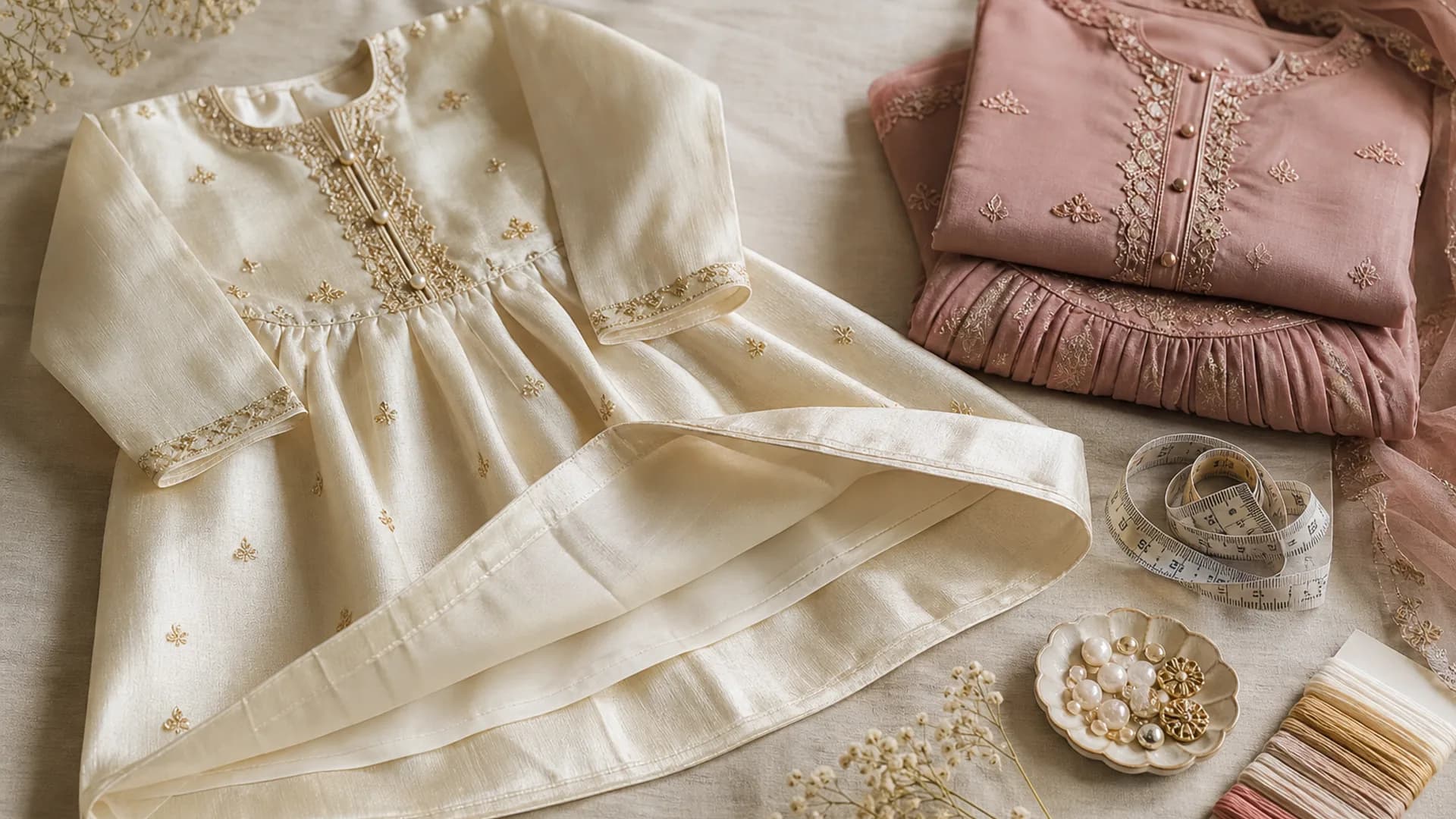
A child's formal outfit is typically worn three or four times. Eid, a wedding, a family dinner, perhaps a birthday. Then it stops fitting. That is the actual economics of children's festive wear, and it is worth being clear-eyed about: these garments are almost never worn out. They are outgrown, usually with plenty of wear left. Which changes what you should look for. Durability of fabric matters far less than it does in adult clothing. What matters is whether the garment can accommodate a growing child — and a small number of construction details decide that, none of which cost more to ask for. Get those right and one outfit covers two seasons instead of one. Across a childhood that is a substantial difference.
Where Children Actually Grow
Children do not grow uniformly, and knowing the pattern tells you which measurements to buy generously and which to buy correctly. **Length first, and fastest.** Height increases well ahead of width in most children between about three and ten. A frock that fitted at Eid is short by the winter, while the chest still fits fine. **Shoulders and chest, slowly.** These change gradually until closer to adolescence, which is why a shirt often still fits across the body long after it has become too short. **Arms, quickly.** Sleeve length is usually the second thing to fail after hem length. **Waist, unpredictably.** Some children thicken, some lengthen. This is the measurement to leave adjustable rather than guessed. The practical conclusion: **buy the shoulder and chest correctly, and find growing room in length.** A garment that is too wide looks wrong immediately; a garment with a deep hem turn-up looks perfectly normal and lasts twice as long. Our guide on [picking the right size for a child](/journal/how-to-pick-right-festive-outfit-size-child-pakistan) covers the measuring itself.
The Construction Details That Buy You a Year
These are what to look for or ask about, and they are the difference between one season and two. **A deep hem allowance.** Turn the garment inside out and look at the hem. Five to eight centimetres of folded fabric can be let down next year; a narrow overlocked hem cannot. This single detail is the most valuable thing on the list. **Sleeve hem allowance.** The same principle at the cuff. Often overlooked and equally useful. **Generous seam allowance at the sides.** Lets the garment be widened later if she thickens rather than just lengthens. **Adjustable waists.** Elastic with a button-hole tab inside the waistband, or a drawstring. Common in good children's trousers and shalwars and worth seeking out. **Ties and sashes rather than fixed waist seams.** A tie adjusts across two sizes; a stitched waistband does not. **Shoulder ties or adjustable straps** on a frock, which extend its life considerably. Most of these are visible in ninety seconds of inspection in a shop. Turn the garment inside out — it tells you more than the outside does.
Cuts That Grow With a Child
Some shapes tolerate growth and some do not, and it is fairly predictable. **A-line frocks and gathered frocks** are the most forgiving. They are loose through the body, so growth shows as a shorter hem rather than a tight fit — and the hem can be let down. **Empire-line frocks**, fitted just under the chest and loose below, work well because the fitted point moves less than a natural waist does. **Kurta and shalwar sets** are excellent value for exactly this reason: loose through the body, and the two pieces can be replaced separately when only one stops fitting. **Co-ord sets** work similarly. Our post on [co-ord sets for girls](/journal/co-ord-sets-girls-festive-events-pakistan) covers the range. **What does not grow:** anything with a fitted bodice and a defined waist seam, structured jackets, and fitted churidars. These fit precisely and then they do not. **The peshwas and long frock** sit in between — long enough that a few centimetres of growth is absorbed, but a fitted bodice limits how long that lasts.
How Much Growing Room Is Too Much
Buying a size up is the standard advice and it is right up to a point, past which it produces an outfit she looks lost in. **One size up is usually correct** for a formal piece bought at the start of a season. **Two sizes up is a mistake.** The shoulder seam falls off the shoulder, the armhole drops to mid-bicep, and the whole garment reads as borrowed. She will also be uncomfortable in it, and an uncomfortable child pulls at an outfit all evening. **The shoulder is the limit.** If the shoulder seam sits past the point of her shoulder, the size is too big regardless of what the label says. Every other measurement can be generous. **Sleeves and hems can be turned up now** and let down later, which is the correct way to buy growing room. A turned-up sleeve on a well-fitting shoulder looks deliberate; a dropped shoulder does not. **Have it taken up rather than leaving it long.** A dragging hem is a trip hazard at a function where she will be running, and it will be stepped on and torn.
Fabrics That Survive a Child
Since the garment is being outgrown rather than worn out, the fabric question is mostly about whether it survives washing and storage between the two seasons. **Cotton and lawn** wash repeatedly and hold up well. The right choice for anything semi-formal. **Raw silk** looks formal, holds a shape, and survives storage well provided it is stored properly. **Velvet** is excellent for winter and stores well, though it marks if crushed. **Avoid stiff net entirely** where you can. It is scratchy, children pull at it, it snags and tears, and it does not recover from being crushed in a cupboard. If a frock has a net underskirt, check there is a soft cotton lining between the net and her legs. **Check the lining, not the outer fabric.** A cotton-lined outfit in any fabric is comfortable; a polyester-lined one is hot and itchy, and that decides whether she keeps it on. Our [care guide for children's embroidered outfits](/journal/care-for-kids-embroidered-outfits-washing-storage) covers keeping it wearable between seasons, and the [fabric glossary](/content/fabric-glossary) explains the labels.
Colour and Style That Do Not Date
An outfit worn across two seasons is seen by the same people twice, and photographed both times, so this matters more than for a single-wear piece. **Choose a colour she suits rather than the season's shade.** A colour that flatters her will still flatter her next year; a trend colour will read as last year's. **Avoid loud novelty detail** — character motifs, slogans, anything tied to a specific moment. It dates fast and children become self-conscious about it faster than adults expect. **Classic silhouettes photograph better across time.** A simple A-line frock in a good fabric looks correct in any year. **Buy a plain outfit and change the accessories.** A different hair accessory, different bangles and a different dupatta genuinely make a repeat look different in photographs. The [hair bands](/accessories/hair-bands) and [hair clips](/accessories/hair-clips) sections are the cheapest way to do this. **Consider whether it passes down.** If there is a younger sister, a neutral colour and a forgiving cut will be worn twice as many times again. Our post on [matching sibling outfits](/journal/eid-twins-matching-siblings-outfits-pakistan) covers coordinating across ages.
Storing It So It Survives the Wait
A garment is put away in March and needed again in November. Most of the damage happens in between. **Wash or dry clean before storing**, not before wearing. Invisible food marks and body oils oxidise into permanent yellow-brown stains over months, and they attract insects. **Note the alterations needed while you remember.** "Let down the hem, let out the sleeves" on a slip of paper in the bag saves a fitting session next season. **Store in muslin or cotton, never plastic.** Plastic traps moisture, which tarnishes zari and can grow mildew in a humid summer. **Check it in September, not the week before Eid.** Enough time to alter it, replace a missing button or discover it no longer fits at all. **Keep spare buttons and the matching thread** with the garment. They are supplied for exactly this reason and they are always lost. Our [formal storage guide](/journal/how-to-store-formal-suits-pakistan) covers the method in full — it applies equally to children's pieces. The [girls formal](/kids/girls-formal) section and the [kids collection](/kids) are cut with growing room in mind.
Frequently Asked Questions
One size up is sensible for a piece bought at the start of a season. Two sizes up is a mistake — the shoulder seam falls off the shoulder and the armhole drops, so it reads as borrowed and she will be uncomfortable in it. The shoulder is the limit; everything else can be generous.
Turn it inside out. Look for a deep hem allowance of five to eight centimetres that can be let down next year, a sleeve hem allowance, generous side seams, and an adjustable waist. These details cost nothing extra and are the difference between one season and two.
A-line and gathered frocks, empire-line frocks fitted under the chest, and kurta-and-shalwar sets where each piece can be replaced separately. Avoid fitted bodices with a defined waist seam, structured jackets and fitted churidars — they fit precisely and then they do not.
Length first and fastest, then sleeves. Shoulders and chest change slowly until closer to adolescence, which is why a garment is usually too short long before it is too tight. Buy the shoulder and chest correctly and find your growing room in the hem.
Clean it first — invisible food marks and body oils turn into permanent stains over months and attract insects. Wrap it in muslin or cotton rather than plastic, keep the spare buttons with it, note the alterations it will need, and check it in September rather than the week before Eid.
About the Author
Habiba Minhas
Founder and creative director of Habiba Minhas, Pakistan's leading handcrafted fashion brand based in Karachi. With a passion for preserving traditional Pakistani craftsmanship while embracing modern design, she has built a brand serving over 5,000 customers nationwide.
Specializing in premium ladies suits, kids festive wear, and baby products, Habiba works directly with artisan embroiderers and skilled tailors to create pieces that honor Pakistani heritage.
Related Articles
Girls' Hair for Functions: Styles That Survive
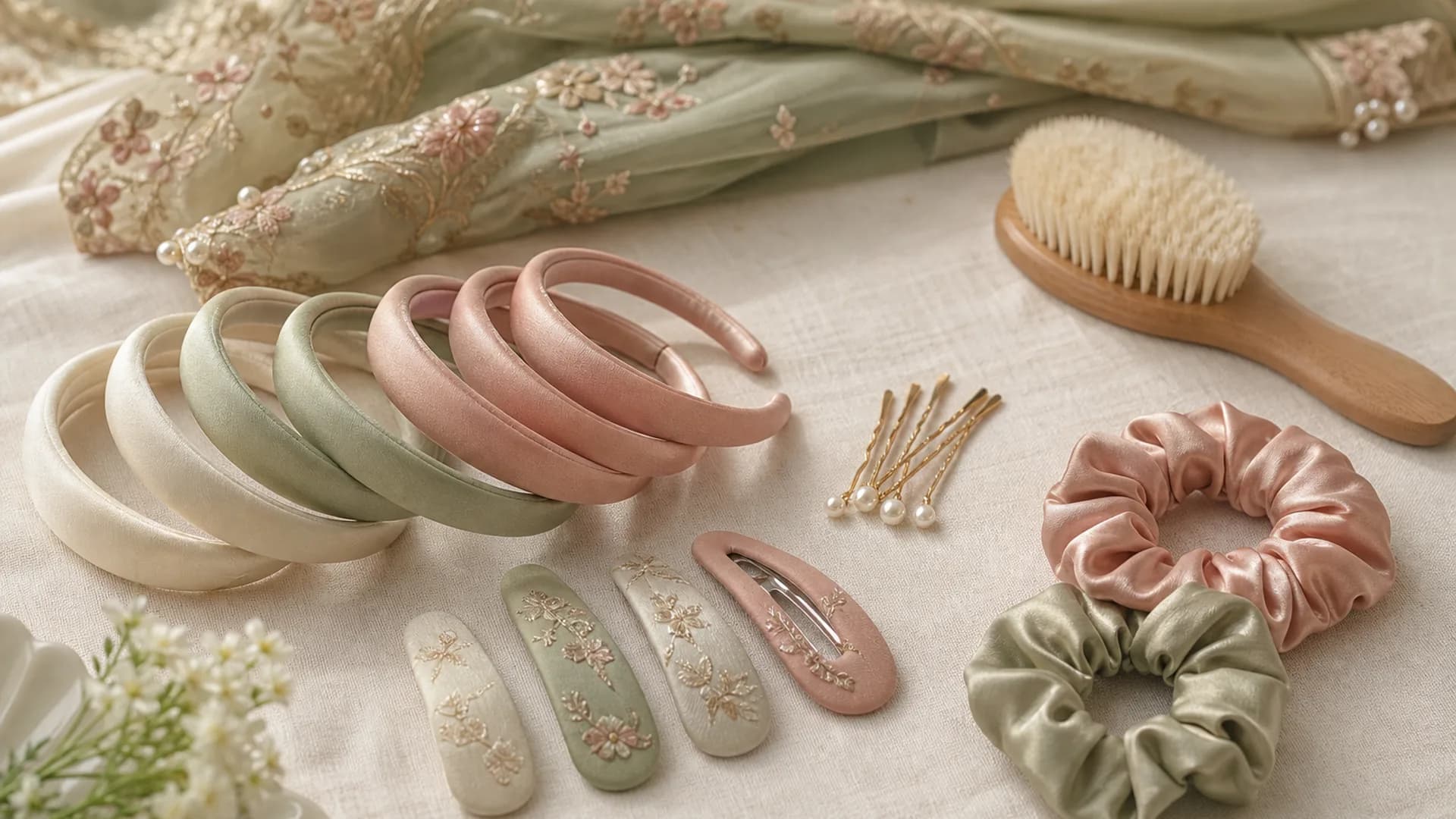
The hairstyle is done at six and gone by eight. Here is what actually survives a function, and which accessories stay in.
School Functions: What to Dress a Child In
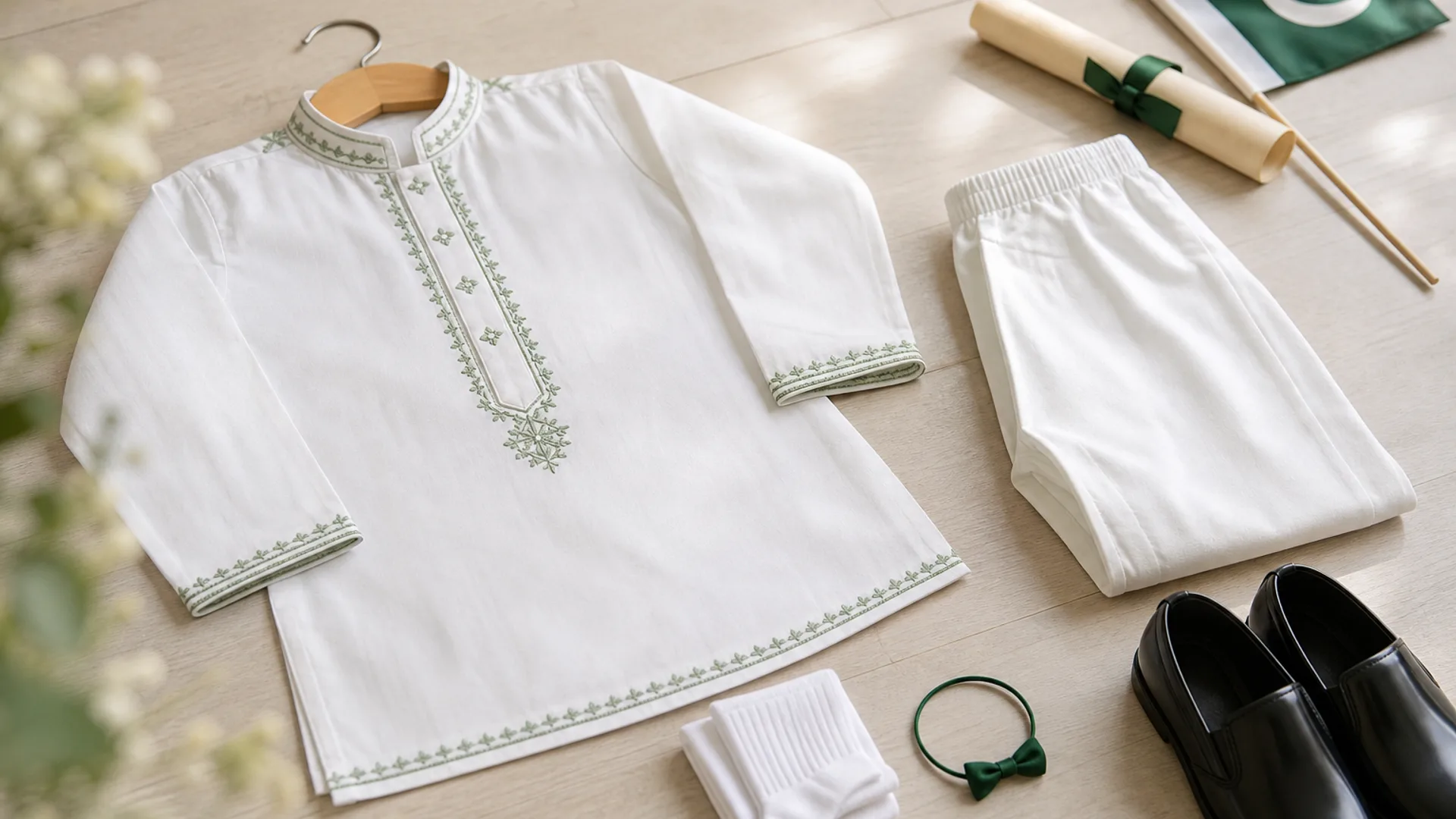
School functions run long, involve a stage, and are rehearsed in the same clothes. Here is what works for each type, and what will be regretted by hour two.
Dressing Children for a Winter Wedding
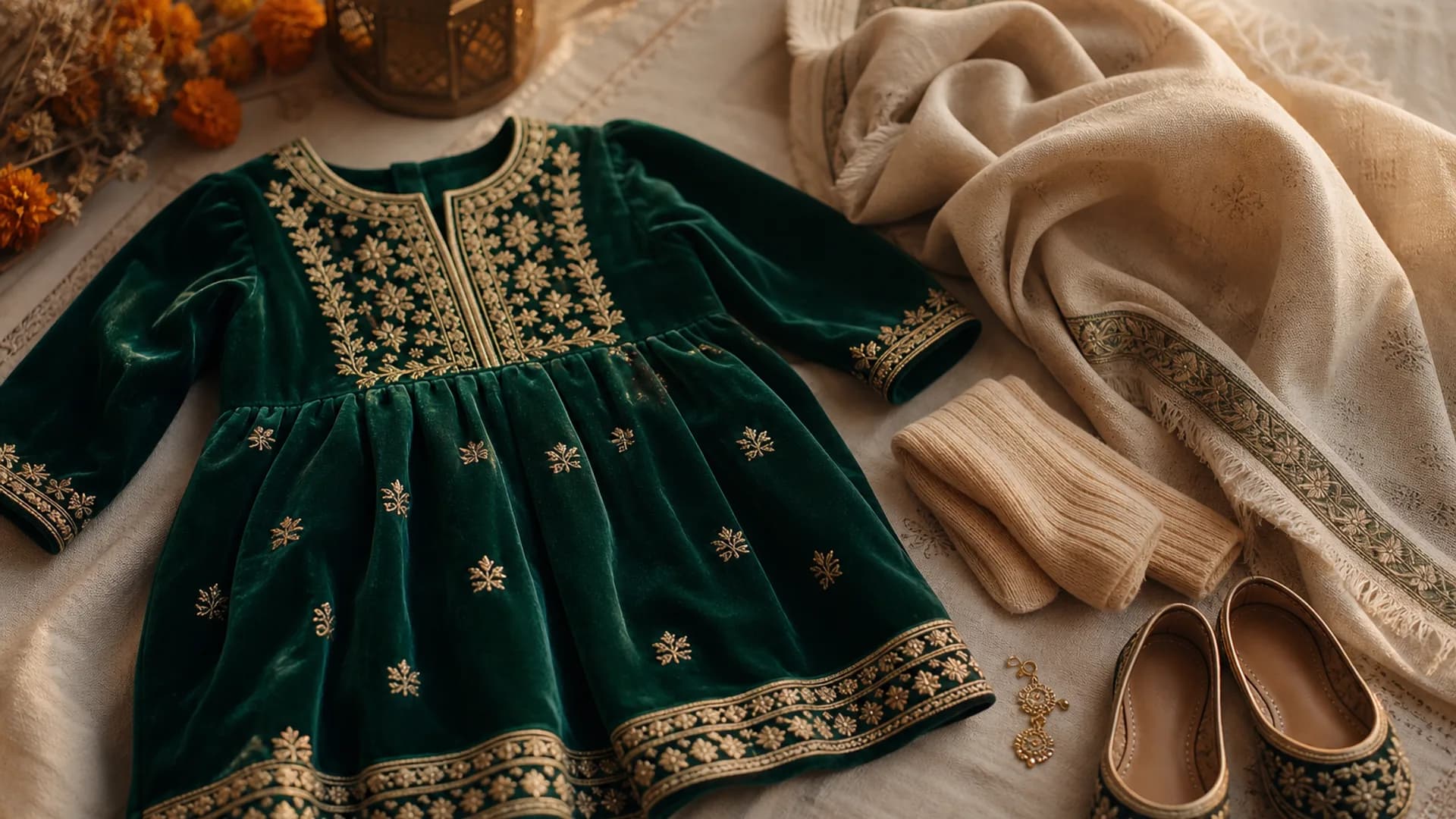
A child at an outdoor December wedding is colder than you are, complains sooner, and ends the evening in someone's shawl. This is how to avoid it.