

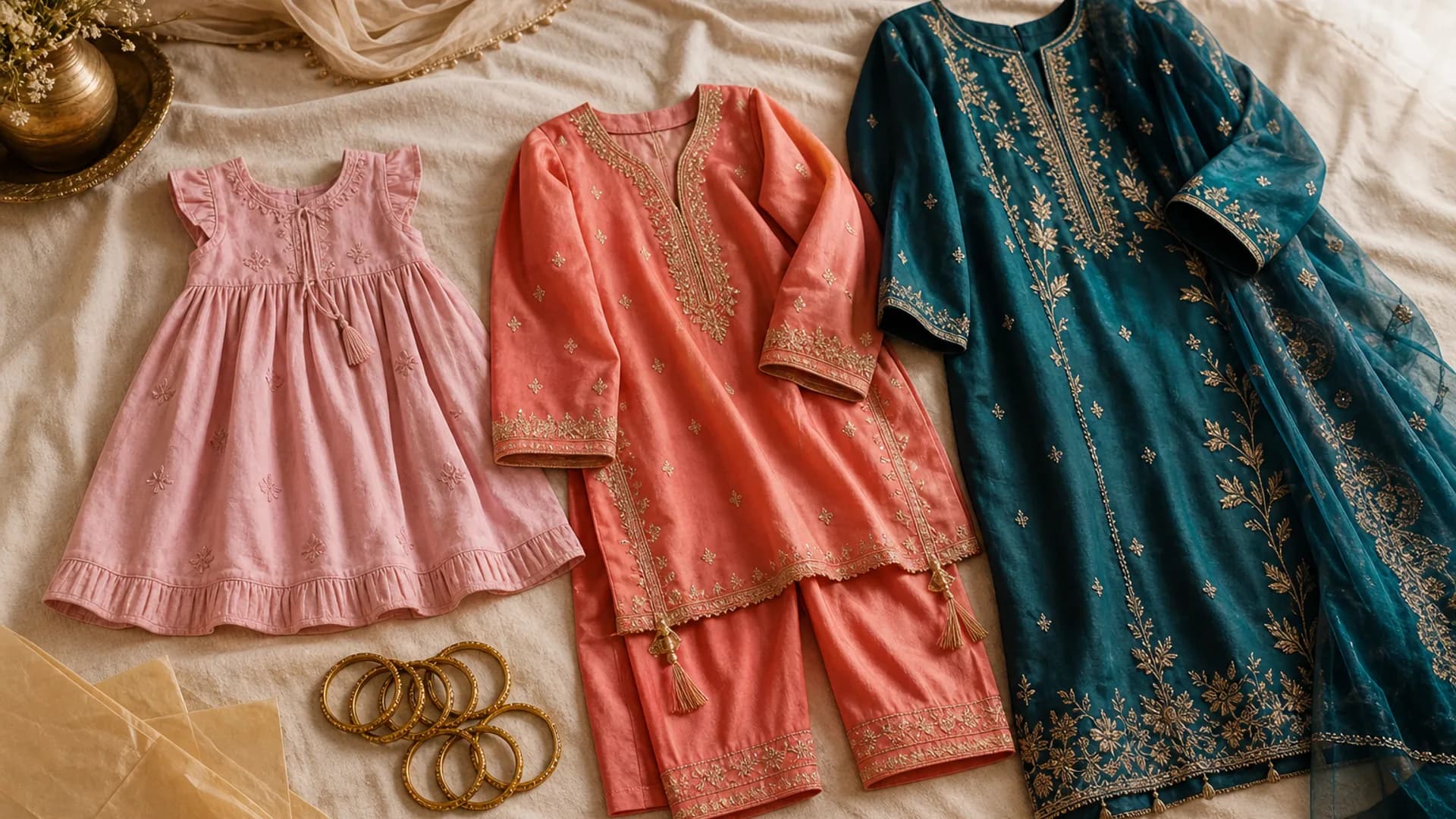
Girls' Festive Wear by Age: Toddler to Teen
A four-year-old and a fourteen-year-old need completely different things from a festive outfit. Here is what changes at each stage, and what to buy for it.
Buying festive clothes for a growing girl is not one problem repeated at bigger sizes. It is four different problems, and the thing that made an outfit perfect at four makes it wrong at fourteen. At two, the whole question is comfort and how quickly she can be changed. At seven, it is whether she can run in it. At eleven, it is whether she feels like herself. At fifteen, it is whether she looks like a version of an adult rather than an oversized child. This is what actually changes at each stage, and what to buy for it.
Two to Four: Comfort Is the Entire Brief
At this age the child has no opinion about how she looks and a very strong opinion about how she feels. Every decision follows from that. Choose soft cotton or lawn with a cotton lining. Skip anything with a stiff collar, a scratchy net underskirt, or embroidery on the inside of the sleeve. Keep the length at or above the knee. She is crawling, sitting on the floor, and being carried; a long hem gets stood on and pulls her over. Avoid back zips and small buttons. She will be changed at least twice during a long function, often in a hurry, often by someone who is not her mother. Elastic waists and shoulder poppers make everyone's day easier. One genuinely useful trick: buy two of the same simple outfit in different colours rather than one elaborate piece. Something will be spilled, and the second one saves the evening.
Five to Eight: The Running Years
She now has opinions, and she is fast. The outfit has to survive a dance floor, a staircase, and about four hours of being genuinely used. This is the sweet spot for the frock — knee to mid-calf, gathered or A-line, light enough to move in. Our [kids collection](/kids) is built around this range because it is where most festive buying happens. Weight matters more than parents expect. A heavily embroidered bodice sits on small shoulders for hours, and by the third hour she wants it off. Ask for work at the neckline and cuffs rather than across the whole chest. Colour becomes a negotiation around six. She will have a favourite and a firmly rejected one, and buying against that is money wasted. Let her choose within a shortlist you have already approved. Sizing tip for this range: buy generously on length, exactly on shoulder width. Girls grow taller far faster than they grow broader, so an extra inch at the hem buys a second season. Our guide on [picking the right festive outfit size for a child](/journal/how-to-pick-right-festive-outfit-size-child-pakistan) goes into this properly.
Nine to Twelve: The Awkward, Important Middle
This is the stage most parents find hardest, and it is a real shift rather than a phase to wait out. She no longer wants to be dressed like her younger sister. She is not yet comfortable in adult silhouettes. Anything that reads as "little girl" is rejected; anything that reads as grown-up is uncomfortable. What works: proper suits in child proportions. A kurta with a churidar or straight trouser, a real dupatta, and embroidery that is elegant rather than sweet. Longer lines, quieter colours, less frill. What to drop: puffed sleeves, large bows, character motifs, and heavy gathering at the waist. All of these read younger than she wants to look. Give her the decision at this age. Choose three options you are happy with and let her pick. The outfit she chose gets worn willingly; the outfit chosen for her gets negotiated over on the morning of the event. This is also when a well-fitted piece starts to matter more than a forgiving one. She notices fit now, and so does she in photographs afterwards.
Thirteen and Up: Dressing a Young Adult
By now the rules are essentially the adult rules, applied with a lighter hand. Full-length works. Fitted works. Heavier embroidery works, because she can carry the weight and wants the occasion feeling. What still differs from adult dressing: keep the styling less severe. Softer colours, less structured tailoring, and jewellery that is delicate rather than statement. The aim is a young woman, not a miniature of her mother. She should be choosing at this point, with you setting the budget and the formality level rather than the piece. That transition matters — the alternative is an outfit worn resentfully. Most of our [ladies collection](/ladies) works from around fifteen depending on build, and the styling guidance in [how to match accessories with a formal suit](/journal/how-to-match-accessories-formal-pakistani-suit) applies directly.
Fabric, Across Every Age
Some rules do not change with age. Check the lining, not the outer fabric. A cotton lining makes almost any outer fabric wearable; a polyester lining makes even light chiffon uncomfortable within an hour. This is the single most useful thing to check and almost nobody does it. Match the fabric to the season, not the photograph. Velvet and heavy jamawar are winter fabrics. In a warm hall in May they are genuinely unpleasant at any age. Our [summer and winter fabric guide](/journal/summer-vs-winter-fabric-guide-pakistani-women) covers the reasoning. Run your hand along the inside seams before buying. If the reverse of the embroidery catches on your palm, it will catch on her skin. A tailor can add a soft facing at the neck and armholes cheaply, but it is easier to buy a piece that does not need it. And for anything worn more than once, choose fabrics that survive washing. Our guide to [caring for silk suits at home](/journal/how-to-care-for-silk-suits-at-home-pakistan) applies to children's pieces too.
Buying Across Several Ages at Once
If you are dressing more than one daughter, the temptation is to buy the same thing in different sizes. It works up to about eight and stops working sharply after that. Better: pick one colour family and give each girl a different depth of it, with a cut that suits her age. The youngest in a light frock, the middle in a coral kurta set, the eldest in a deeper suit. They read as a family in photographs without the eldest feeling like a scaled-up toddler. Buy at the same time if you want the tones to sit together — dye lots vary between batches, and two pieces in the same nominal shade bought months apart can look mismatched under a camera flash. And give the youngest the lightest weight regardless of what the others are wearing. Coordinating the colour does not mean coordinating the embroidery.
The Short Version
**Two to four:** cotton, knee-length, elastic waist, nothing scratchy. Buy two. **Five to eight:** frocks, light embroidery at neckline and cuffs, generous length, let her pick the colour. **Nine to twelve:** proper suits in child proportions, quieter colours, real dupatta, let her pick the outfit from a shortlist. **Thirteen up:** adult rules, lighter styling, she chooses. Across all of them: check the lining, match the fabric to the season, and buy long rather than wide. You can see the current range in the [kids collection](/kids), and the [festive wear guide for Pakistani weddings](/journal/kids-festive-wear-guide-pakistani-weddings) covers which functions call for what.
Frequently Asked Questions
Usually around ten, though it depends on height and confidence more than age. Before that a floor-length hem gets stood on, especially on stairs and dance floors. If you want length earlier, choose an ankle-length A-line rather than a true floor-length cut.
A proper kurta with a straight trouser or churidar and a real dupatta, in a quieter colour than you would have chosen at six. Drop puffed sleeves, bows and heavy waist gathering — those are the details that read young. Give her three approved options and let her choose.
If you can feel the weight when you lift the garment with one hand, it is too much for a child under about seven. Work at the neckline and cuffs gives the occasion feeling without the load. Full-bodice and heavy-hem embroidery is what makes children ask to change halfway through an event.
Buy long, not wide. Extra length at the hem genuinely buys you a second season because girls grow taller much faster than they grow broader. An outfit that is too wide across the shoulders never hangs correctly and cannot be fixed with a belt or dupatta.
Not checking the lining. Parents examine the outer fabric and the embroidery carefully and never look at what sits against the skin. A cotton lining makes almost any outer fabric comfortable; a synthetic one makes even a light chiffon itchy within an hour, and the outfit gets refused the next time.
About the Author
Habiba Minhas
Founder and creative director of Habiba Minhas, Pakistan's leading handcrafted fashion brand based in Karachi. With a passion for preserving traditional Pakistani craftsmanship while embracing modern design, she has built a brand serving over 5,000 customers nationwide.
Specializing in premium ladies suits, kids festive wear, and baby products, Habiba works directly with artisan embroiderers and skilled tailors to create pieces that honor Pakistani heritage.
Related Articles
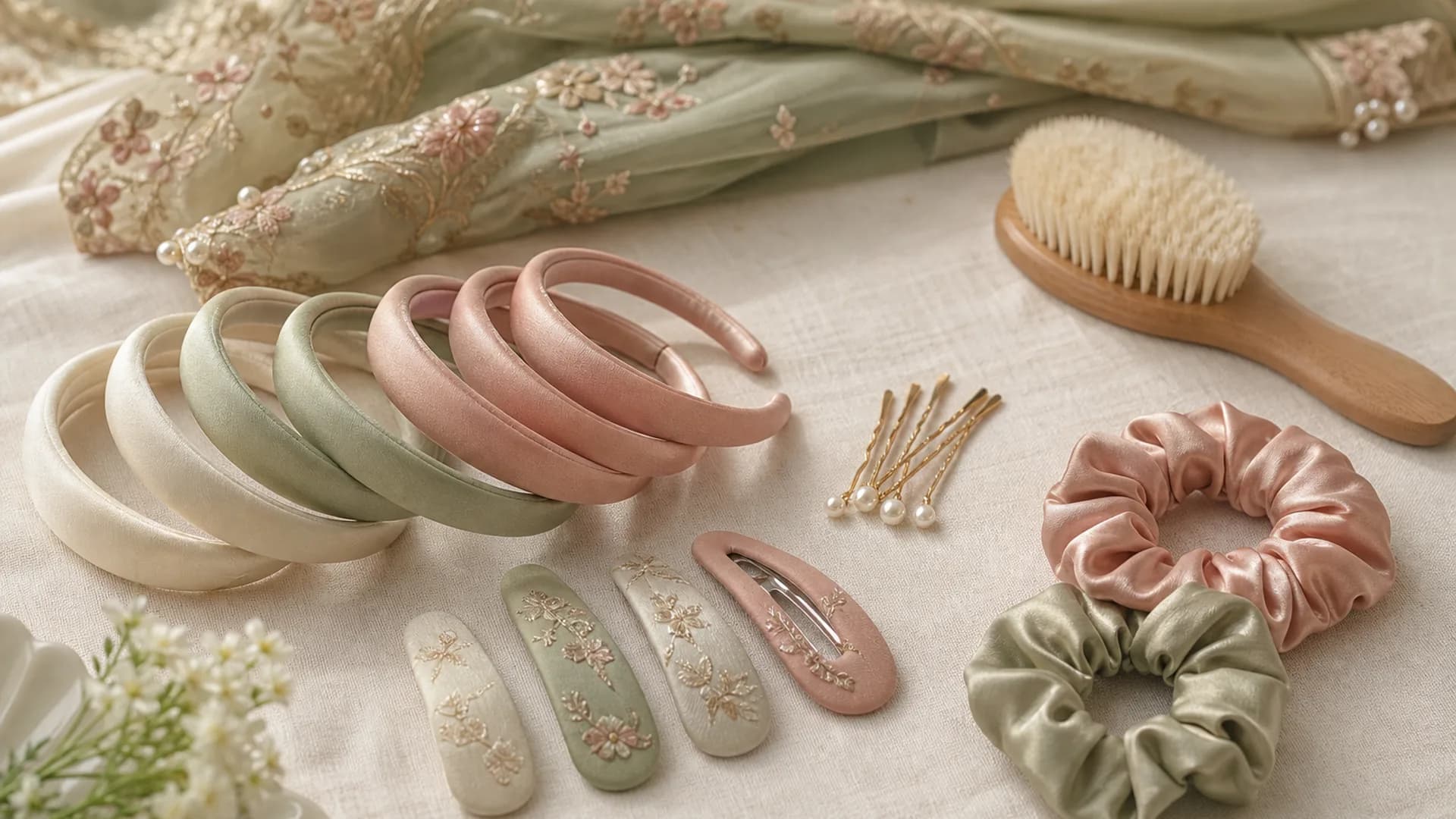
Girls' Hair for Functions: Styles That Survive
The hairstyle is done at six and gone by eight. Here is what actually survives a function, and which accessories stay in.
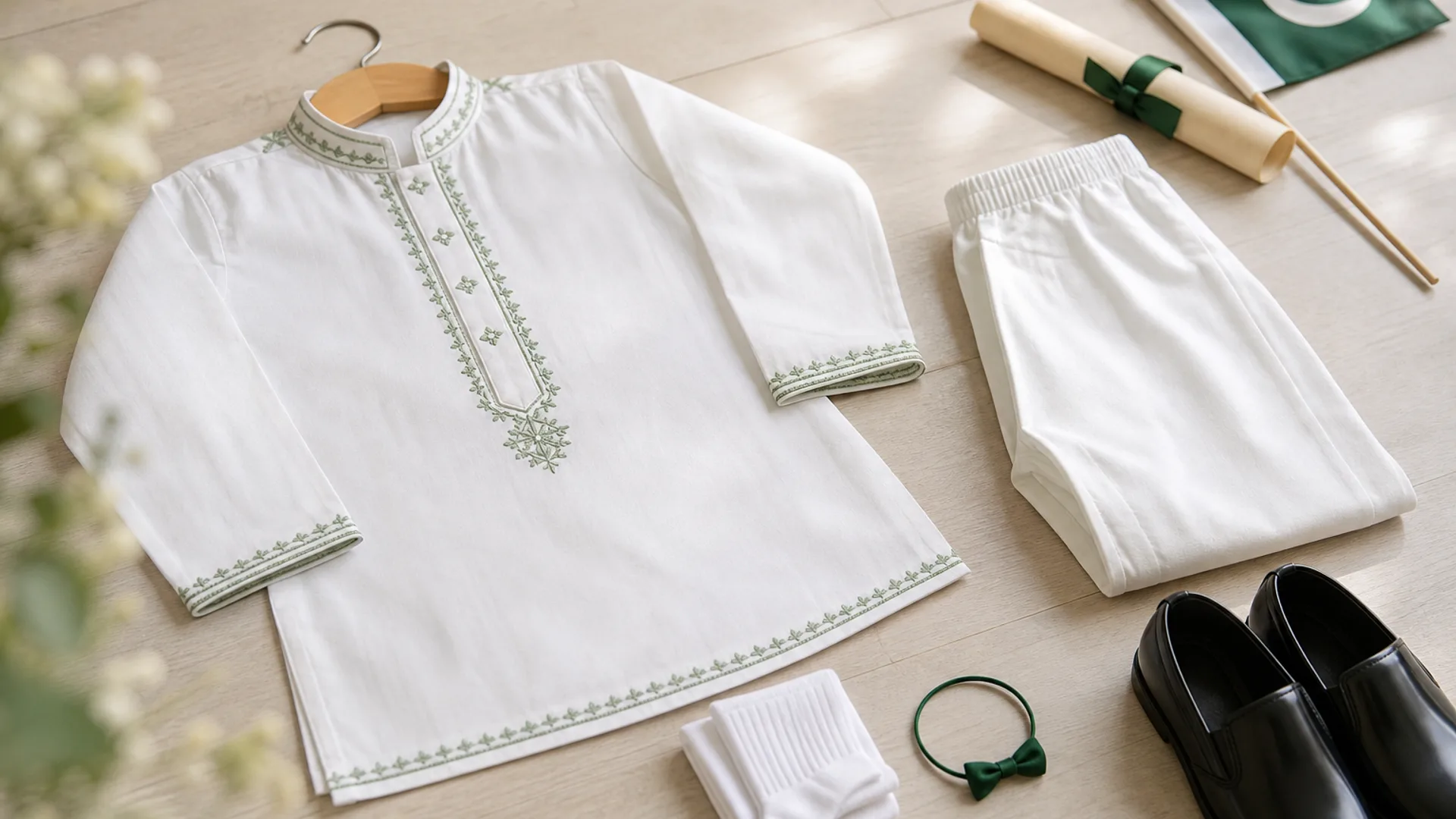
School Functions: What to Dress a Child In
School functions run long, involve a stage, and are rehearsed in the same clothes. Here is what works for each type, and what will be regretted by hour two.
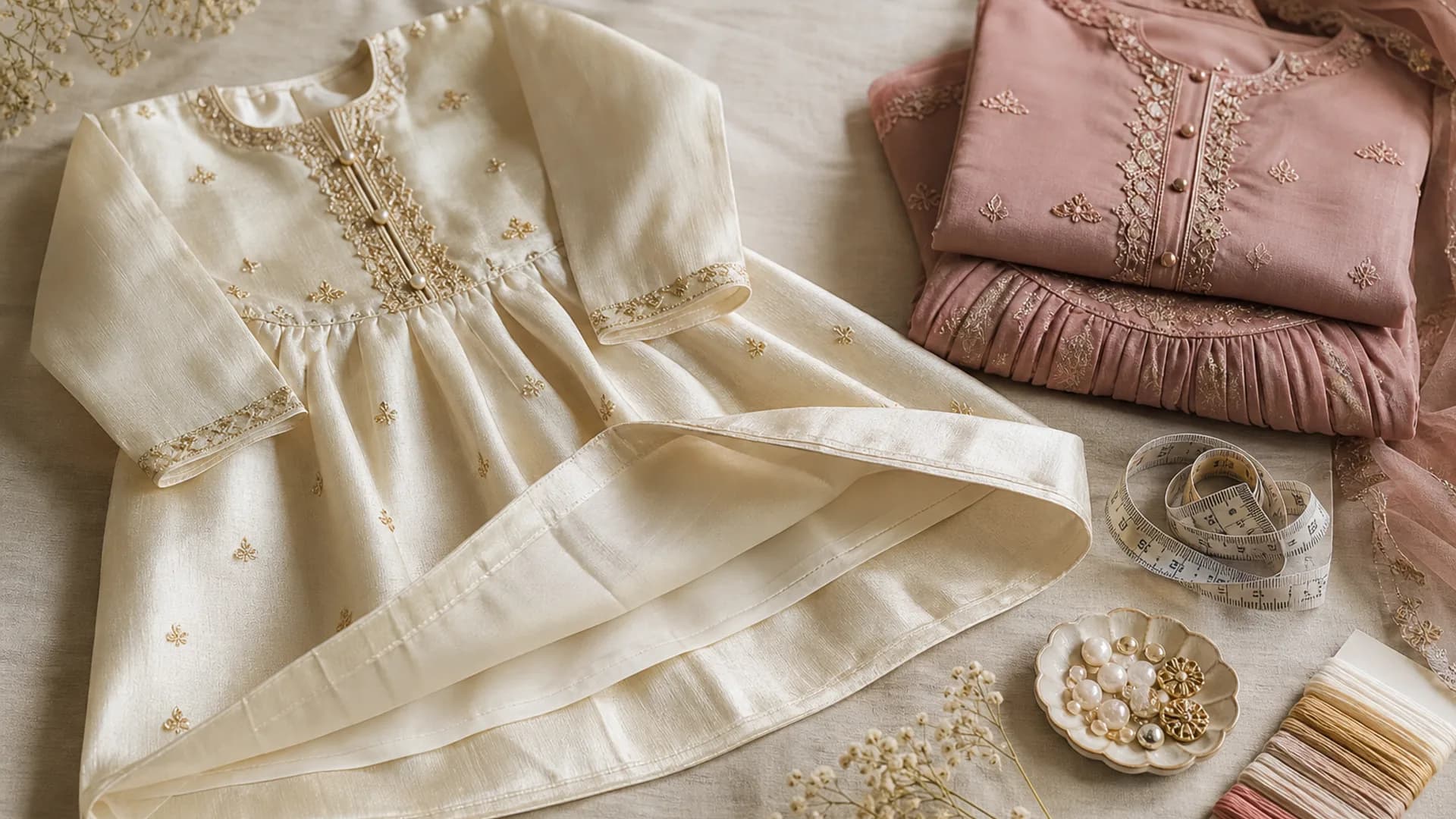
Kids' Formals That Last More Than One Season
A child's formal outfit is worn three or four times before it stops fitting. A few choices at the point of purchase double that, and none of them cost more.