

How to Judge a Kids' Festive Outfit: A Buying Checklist
Two outfits at the same price can be wildly different in quality, and the difference is visible in about ninety seconds if you know where to look.
Two children's outfits can carry the same price tag and be entirely different garments. One survives three Eids and gets handed down. The other loses a sequin trail in the first wash and never fits properly to begin with. The difference is not luck, and it is not brand. It is visible in about ninety seconds if you know which nine things to look at. This is the checklist we would use ourselves, in the order that catches problems fastest.
1. Turn It Inside Out First
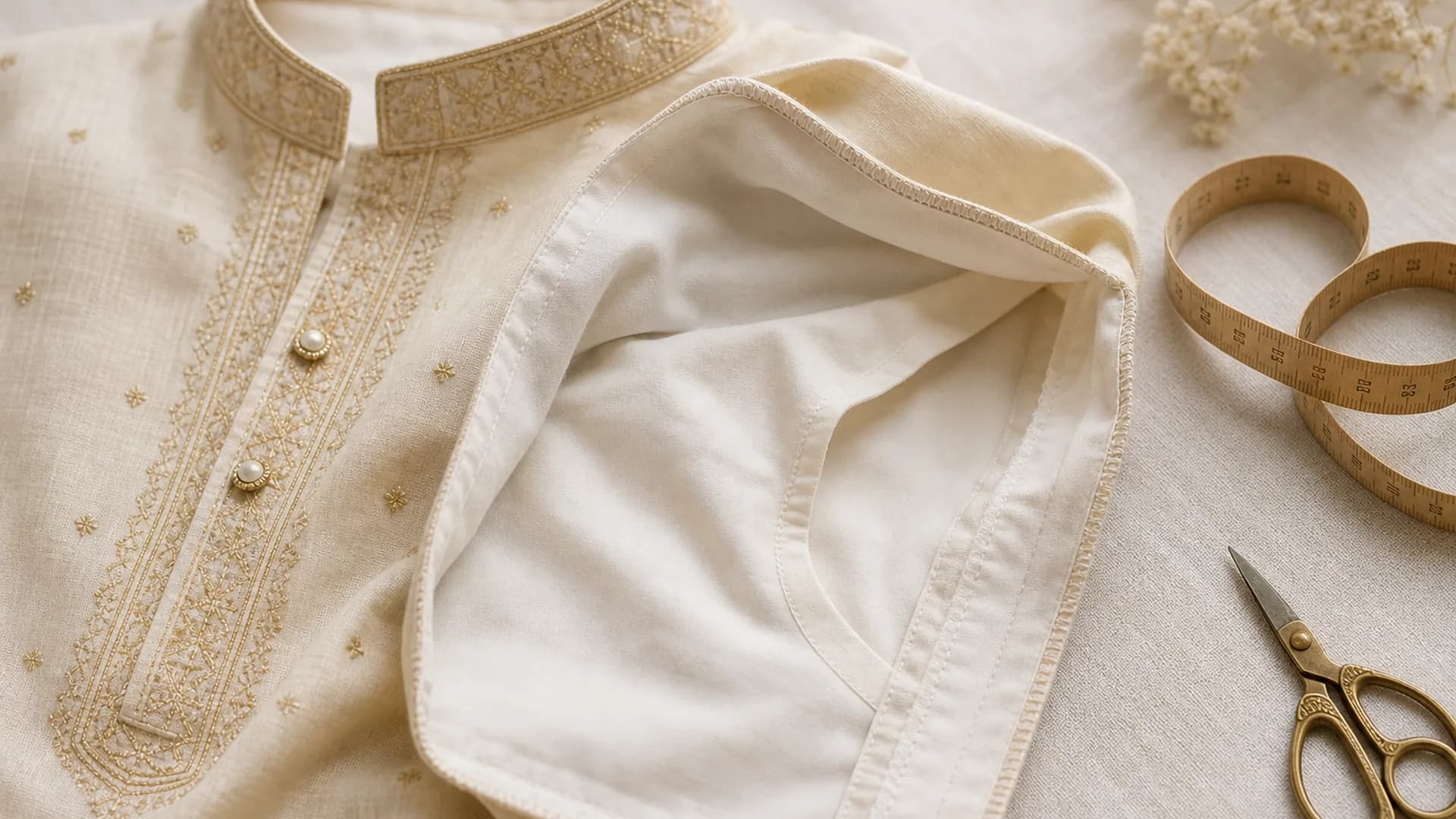
Before you look at the front, look at the back of the work. This one check tells you more than anything else. On a well-made piece, the reverse of the embroidery is covered — either by a lining or by a neat facing at the neck and armholes. On a poorly made one, the loose thread ends and the rough back of the zari sit directly against the child's skin. Run your palm along the inside of the neckline and the underarm seam. If it catches, she will feel it within twenty minutes and will not want to wear the piece again. This is fixable — a tailor can add a soft cotton facing for very little — but it tells you what corners the maker was willing to cut, and it is rarely the only one.
2. Check the Lining, Not the Outer Fabric
Almost everyone examines the outer fabric carefully and never touches the lining. The lining decides comfort. Cotton lining: breathable, soft, comfortable for hours, worth paying for. Polyester lining: cheap, non-breathable, and the reason a child in a beautiful chiffon frock is miserable by the time food is served. In a warm hall it traps heat against the skin. Unlined chiffon or net: itchy directly against skin, and see-through in photographs with flash. If the label does not say, feel it. Cotton is soft and slightly matte; polyester is slick and cool to the touch and does not crease. This single check separates outfits that get worn repeatedly from outfits that get worn once.
3. Pull the Seams Gently
Hold a side seam between both hands and pull outward, lightly. You are not trying to break it — you are looking at what happens to the stitching. A good seam holds with no visible gaps and springs back. A weak one shows daylight between the stitches, which means it will split under a child who is genuinely moving. Check the armhole seam specifically. It takes the most stress on a child's garment and it is the first place cheap construction fails. Look at the finish too. Overlocked or bound edges last; raw edges that are simply cut will fray after two washes, and the garment loses shape from the inside out.
4. Test the Embroidery's Attachment
Pick one sequin or stone near the hem — somewhere that will not show — and tug it very gently with a fingernail. If it moves easily, the whole piece will shed. Sequins attached with adhesive rather than stitched will come away in the wash and, more annoyingly, one at a time throughout the evening. Stitched work stays. Glued work does not. On heavily embellished pieces, glue is the most common shortcut and the most visible failure. Also look at whether the embroidery sits flat. Puckered fabric around the work means it was stitched under tension, and it will pucker worse after washing. Our guide to [caring for embroidered pieces](/journal/how-to-care-for-silk-suits-at-home-pakistan) helps once you own it, but it cannot fix construction.
5. Do the Colour-Bleed Test
Deep colours on a light ground are where the most expensive disappointments happen — maroon thread bleeding into ivory, magenta piping running down a pale sleeve. Dampen a white tissue and press it firmly against the darkest thread on an inside seam for about twenty seconds. Any colour transfer at all means the piece will bleed the first time it meets water. That does not necessarily mean do not buy — it means never immerse it. Spot-clean only, and send it to a cleaner who understands what they are handling. What it does mean is that you should know before you buy rather than after the first wash, when it is permanent.
6. Measure the Shoulder, Not the Age
Age labels are close to meaningless — two eight-year-olds can be two sizes apart. Shoulder width is the measurement that cannot be adjusted. If the shoulder seam sits down the arm, the whole garment hangs wrong regardless of how well everything else fits. Measure across her back from the point of one shoulder to the other and match that to the size chart. Everything else has some tolerance. Length can be generous. Waists can be taken in. Sleeves can be shortened. Shoulders cannot be meaningfully fixed. Buy long and correct across the shoulders, and you get two seasons out of the piece. Our guide on [picking the right size for a child](/journal/how-to-pick-right-festive-outfit-size-child-pakistan) has the full method.
7. Lift It and Feel the Weight
Hold the garment up by the shoulders with one hand. That is roughly what the child's shoulders will carry for the next four hours. If it feels heavy to you, it is heavy for her. This is the most consistently underestimated factor in children's formalwear, and it is the reason outfits get abandoned halfway through an event. Pay particular attention to where the weight sits. Work concentrated at the hem makes walking hard. Work across the bodice tires the shoulders. Work at the neckline and cuffs gives the same occasion feeling with a fraction of the load. For a child under seven, lighter is almost always the better purchase — see our [embroidered kids suits guide](/journal/embroidered-kids-suits-handcrafted-eid-pakistan) for what that looks like in practice.
8. Check the Closures
A child will be changed at least once during a long function, often in a hurry. Back zips that run the full length are difficult for the child and awkward for whoever is helping. Side zips and shoulder poppers are far more practical. Small covered buttons look beautiful and come off. Check that they are stitched through rather than tacked, and ask whether spares are included. Drawstrings should have both ends secured so they cannot be pulled through and lost. Elastic waists should be inside a proper casing, not stitched directly to the fabric, or they cut in. None of these are dramatic failures. They are the things that make a garment mildly annoying every single time it is worn.
9. Ask About Returns Before You Pay
Especially when buying online, and especially for a gift. Children's sizing is genuinely hard to predict, and a shop that will not exchange is asking you to carry all of that risk. Check the window, whether the piece must be unworn with tags, and who pays return postage. For gifts, ask for the exchange note to be included in the bag. Every parent has quietly swapped a gifted outfit for the right size, and making that easy is a kindness rather than an insult. Our own returns terms are on the [help pages](/help/returns), and the same principle applies to buying [unstitched fabric online](/journal/5-things-check-buying-unstitched-suit-online-pakistan) — know the terms before the money moves. You can browse the current range in the [kids collection](/kids) with all nine of these in mind.
Frequently Asked Questions
The lining. Turn the garment inside out and feel what sits against the skin. A cotton lining makes almost any outer fabric comfortable for a full evening; a synthetic one makes even light chiffon unbearable within an hour, and that is what determines whether the outfit gets worn a second time.
Tug one gently with a fingernail, somewhere near the hem where it will not show. Stitched work holds firm; glued work moves and will shed — first in the wash, then one piece at a time throughout the evening. Glue is the most common shortcut on heavily embellished children's pieces.
Yes, provided you check the returns policy before paying and buy on shoulder measurement rather than age. Ask for the actual garment measurements rather than relying on a size label, and confirm the exchange window in case the fit is wrong.
It was stitched under tension, and it will get worse after washing rather than better. Check for this before buying by laying the piece flat — well-made embroidery sits smooth against the fabric. Puckering is a construction fault and cannot be pressed out permanently.
Press a damp white tissue firmly against the darkest thread on an inside seam for about twenty seconds. Any colour on the tissue means the piece will bleed in water. You can still buy it, but treat it as spot-clean only and never soak it.
About the Author
Habiba Minhas
Founder and creative director of Habiba Minhas, Pakistan's leading handcrafted fashion brand based in Karachi. With a passion for preserving traditional Pakistani craftsmanship while embracing modern design, she has built a brand serving over 5,000 customers nationwide.
Specializing in premium ladies suits, kids festive wear, and baby products, Habiba works directly with artisan embroiderers and skilled tailors to create pieces that honor Pakistani heritage.
Related Articles
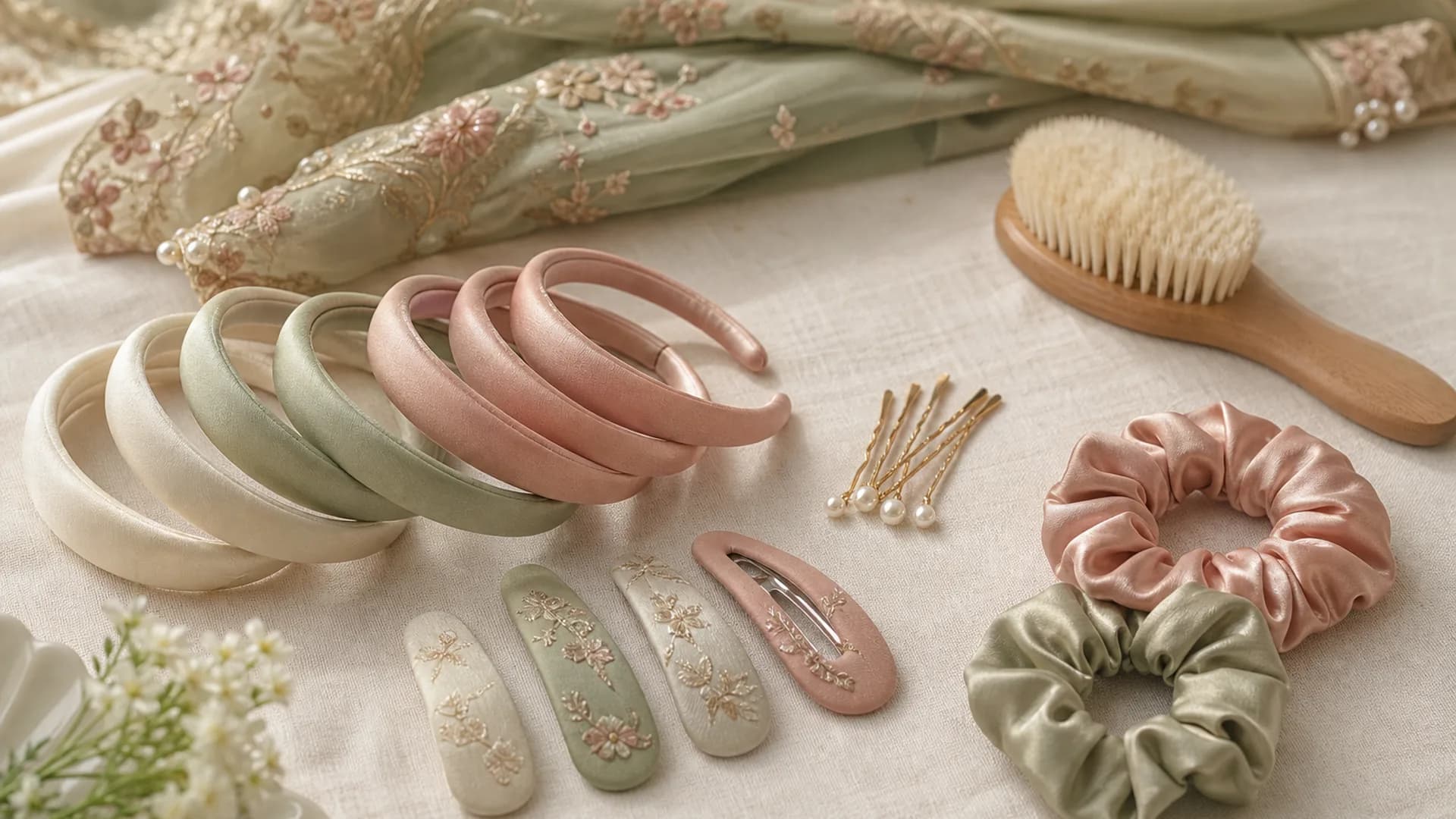
Girls' Hair for Functions: Styles That Survive
The hairstyle is done at six and gone by eight. Here is what actually survives a function, and which accessories stay in.
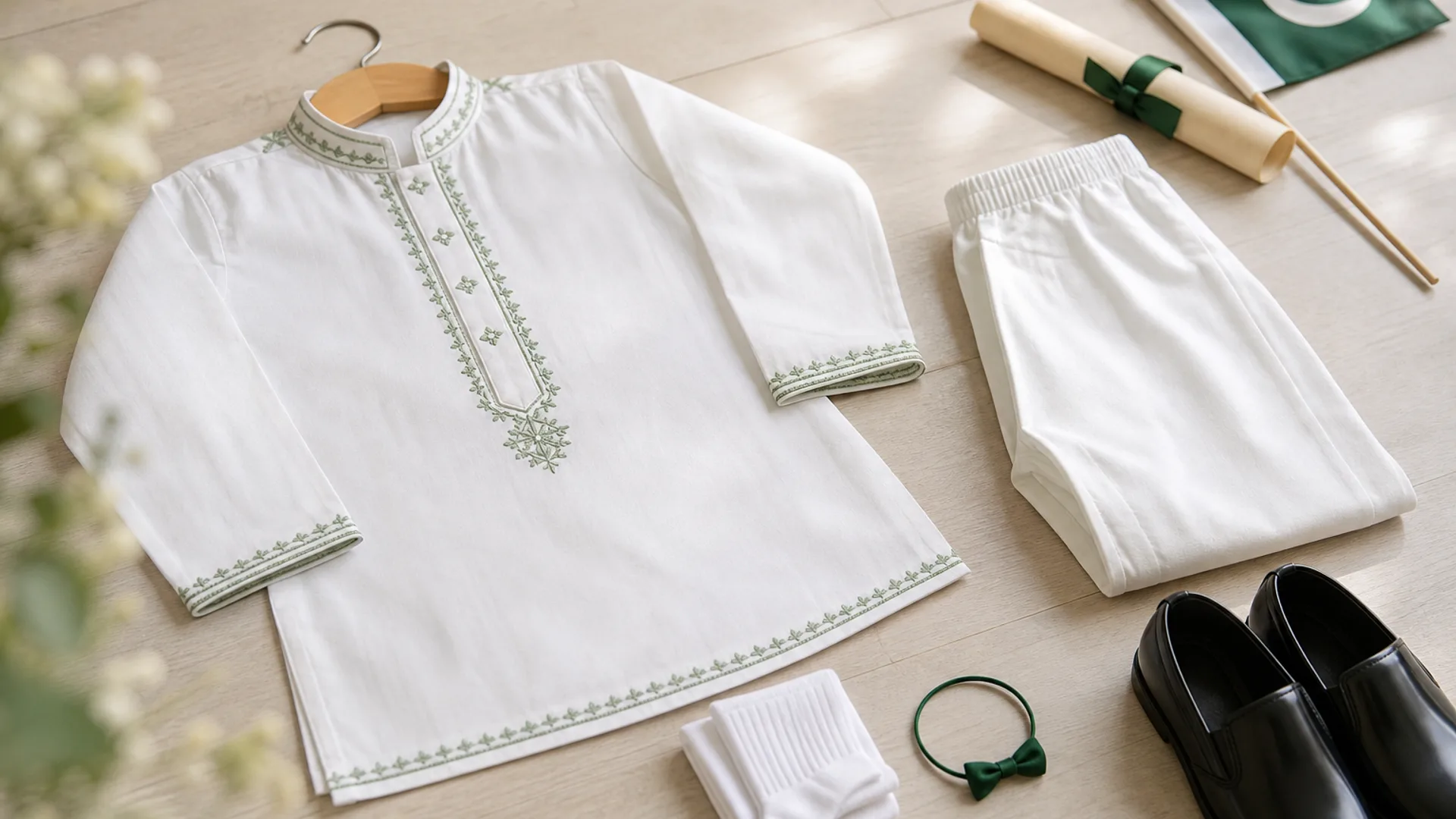
School Functions: What to Dress a Child In
School functions run long, involve a stage, and are rehearsed in the same clothes. Here is what works for each type, and what will be regretted by hour two.
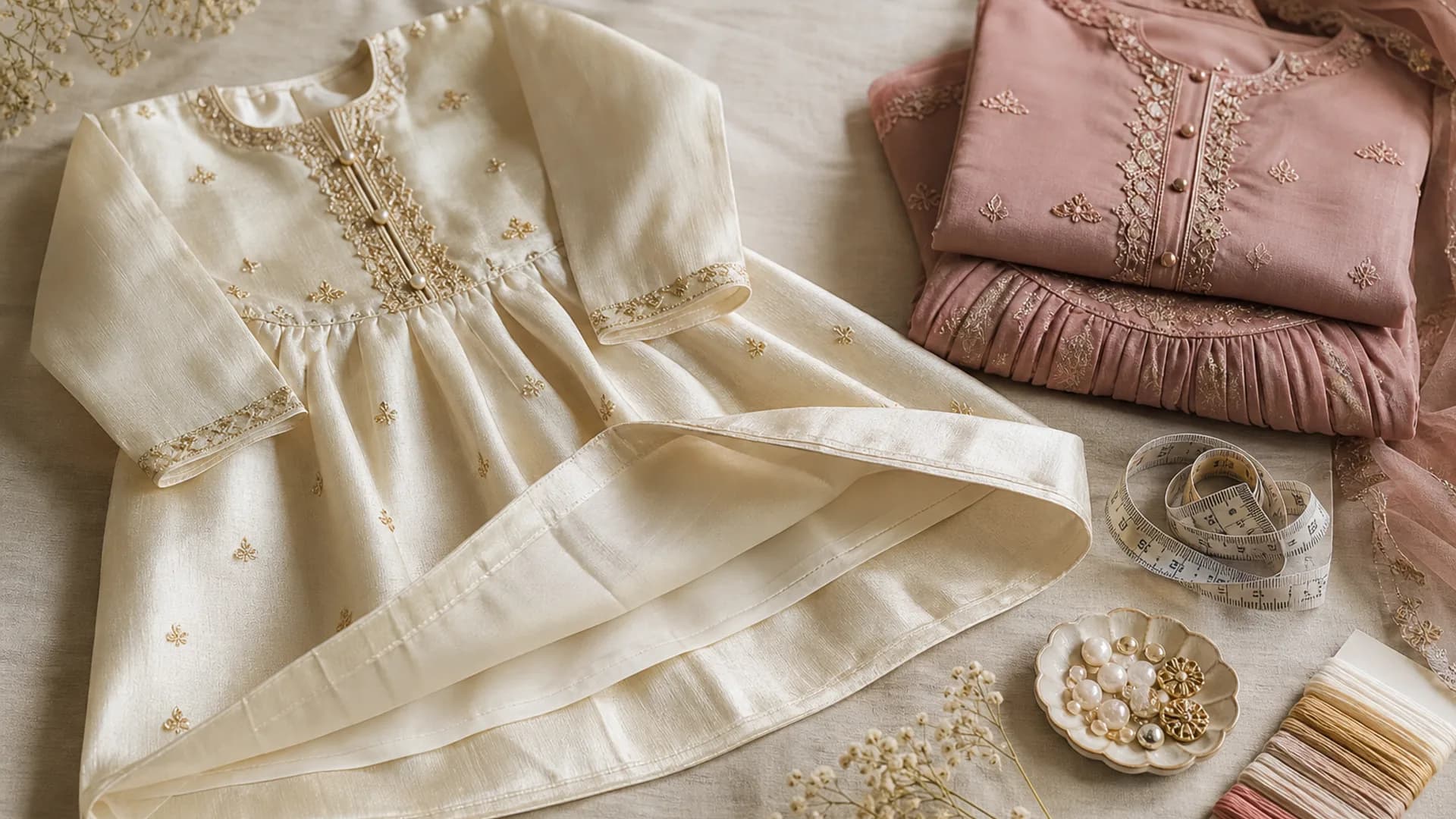
Kids' Formals That Last More Than One Season
A child's formal outfit is worn three or four times before it stops fitting. A few choices at the point of purchase double that, and none of them cost more.