

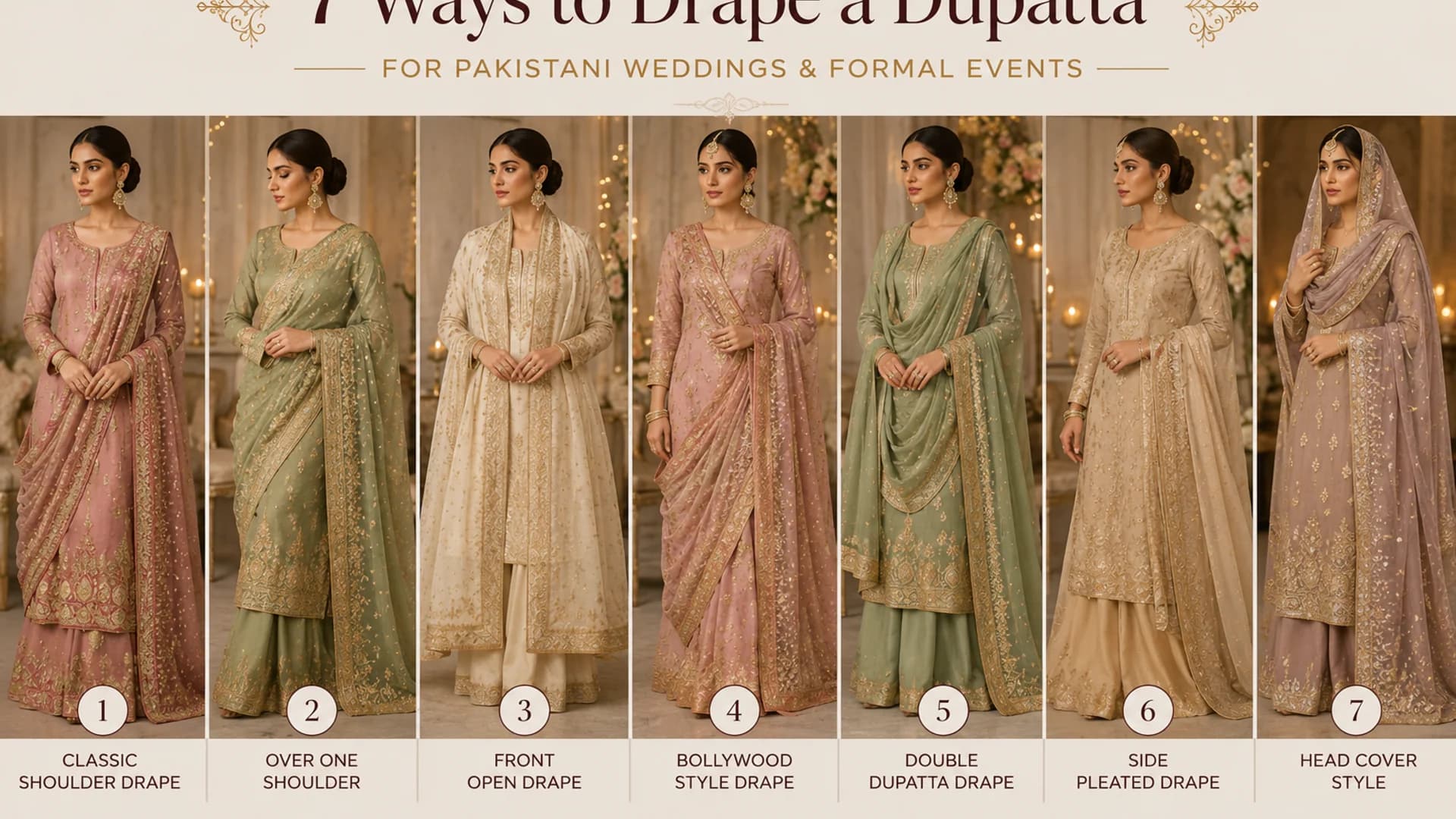
7 Ways to Drape a Dupatta for Pakistani Weddings and Formal Events
The dupatta is the finishing touch that transforms a good outfit into a great one. From classic shoulder drapes to modern cape styles, here are seven ways to wear your dupatta for Pakistani weddings and formal occasions — each with styling tips and fabric recommendations.
A beautifully draped dupatta can elevate a simple suit into something memorable. It frames your face, adds movement to your silhouette, and provides that final layer of elegance Pakistani formal wear is known for. But dupatta styling isn't one-size-fits-all — the draping technique you choose depends on the occasion, your outfit, the fabric of your dupatta, and how much movement you'll be doing (standing in a receiving line versus dancing at a mehndi require very different approaches). This guide covers seven essential dupatta draping styles, from timeless classics to contemporary variations. Whether you're attending a barat, getting ready for Eid prayers, or styling yourself for a formal dinner, you'll find the perfect drape here.
Style 1: The Classic Single-Shoulder Drape
This is the most common and versatile dupatta style — simple, elegant, and works for almost any occasion. Drape the dupatta over one shoulder, letting one end fall in front and the other cascade down your back. The front end should reach about hip level, while the back can extend to knee length or longer depending on the dupatta's length.
Best For
Everyday formal wear, Eid gatherings, semi-formal events, and any occasion where you want understated elegance without fuss.
Fabric Recommendation
Works with all fabrics, but particularly beautiful with chiffon, georgette, and silk. Heavier fabrics like jamawar stay in place naturally; lighter fabrics may need a small pin at the shoulder.
Styling Tip
For a polished look, pleat the dupatta at the shoulder before draping. This creates neat, defined folds rather than a bunched appearance.
Style 2: The Double-Sided Front Drape
Bring the dupatta around your neck so both ends hang in front, framing your face and neckline. This style draws attention to embroidered or embellished dupattas since the work is visible from the front. Adjust the lengths so they're either even or intentionally asymmetrical for a modern look.
Best For
Weddings, formal dinners, and events where you'll be photographed a lot. It's particularly flattering for petite women as it creates vertical lines that elongate the silhouette.
Fabric Recommendation
Lightweight fabrics like chiffon or organza work best — heavy dupattas create too much bulk in front. Choose dupattas with border work or embroidery so the design is showcased.
Styling Tip
Keep your neckline simple — this drape adds visual interest, so a heavily embroidered neckline plus a double-front dupatta can look cluttered.
Style 3: The One-Side Tuck (Wedding Guest Classic)
This is the go-to style for wedding guests who will be standing, greeting, or sitting for extended periods. Take one end of the dupatta and tuck it into your waistband or trouser at the hip. Bring the rest across your front, over the opposite shoulder, and let it fall down your back. The tucked side stays secure while the draped side adds elegance.
Best For
Weddings (especially barat and walima where you're in a formal setting for hours), receptions, and any event where you need your dupatta to stay in place without constant adjustment.
Fabric Recommendation
Medium-weight fabrics like silk or cotton silk — they tuck securely and drape beautifully. Avoid very light chiffon, which slips out of the tuck easily.
Styling Tip
Pin the shoulder point discreetly to keep the dupatta from sliding. This style works especially well with three-piece suits where the kameez has side slits.
Style 4: The Head Covering Drape (Modest Formal)
Drape the dupatta over your head, bringing one end across your chest and over the opposite shoulder, then let both ends hang in front or tuck one end at the waist. This style is appropriate for religious ceremonies, modest events, and occasions where head covering is expected or preferred.
Best For
Nikah ceremonies, religious gatherings, mosque visits, and any formal event where modest dressing is appropriate. Also popular for meeting elders or attending traditional family functions.
Fabric Recommendation
Opaque fabrics like lawn, cotton, or silk that provide actual coverage rather than sheer layering. The dupatta should be long enough to cover your head and still reach your waist in front.
Styling Tip
Use a small clip or pin at the crown of your head to keep the dupatta from slipping back. Choose a dupatta with border work so the edge frames your face beautifully.
Style 5: The Cape Style (Modern Formal)
Pin both ends of the dupatta to your shoulders, letting it hang across your back like a cape. This contemporary style works beautifully with modern silhouettes like straight kurtas, palazzo sets, or cigarette-pant suits. The dupatta becomes a structured layer rather than a flowing accessory.
Best For
Modern formal events, corporate functions, contemporary wedding receptions, and occasions where you want a fashion-forward look that's still traditionally rooted.
Fabric Recommendation
Lightweight, flowing fabrics like chiffon, georgette, or organza that create movement when you walk. Heavy fabrics look stiff and boxy in this style.
Styling Tip
This style works best with simple, unembellished dupattas or those with scattered sequins rather than heavy borders. The focus should be on the drape and flow, not embroidery.
Style 6: The Belted Waist Wrap
Wrap the dupatta around your waist like a belt, either over your kameez or at the natural waistline, and tie or pin it at the side. Let the ends fall asymmetrically — one to the side, one down the front. This unconventional style transforms the dupatta into a waist-defining accessory.
Best For
Fashion-forward events, creative gatherings, and modern mehndi or dholki nights where experimentation is welcome. Not suitable for very formal or traditional settings.
Fabric Recommendation
Soft, drapey fabrics like silk or modal that wrap smoothly without bulk. Avoid stiff or heavily embroidered dupattas — they don't wrap cleanly at the waist.
Styling Tip
This style works best with long, straight kameez or kurtas — it creates a defined waist and adds visual interest to simple silhouettes. Pair with minimal jewelry to keep the focus on the draping.
Style 7: The Layered Stole Style
Drape the dupatta evenly over both shoulders like a stole, letting both ends hang in front at equal lengths. This creates a layered, shawl-like effect that's both elegant and practical. It's the simplest style — no pinning or tucking required — and it keeps you warm in air-conditioned venues or winter events.
Best For
Winter weddings, air-conditioned venues, formal dinners, and events where you want coverage without the commitment of a full head drape. Also excellent for travel — it doubles as a wrap on flights or in cars.
Fabric Recommendation
Medium to heavy fabrics like pashmina, wool blends, or thick silk that provide warmth and structure. This style looks less elegant with very light, floaty fabrics.
Styling Tip
Leave the dupatta loose and relaxed for a modern look, or pin it discreetly at the shoulders for a more structured appearance. This style pairs beautifully with long kurtas and straight trousers.
Fabric & Draping: What Works Best
The fabric of your dupatta significantly affects which draping styles work best. Here's a quick reference.
- Chiffon & Georgette: Best for cape style, double-front drape, and single-shoulder styles. Too light for belted waist wraps.
- Silk: Versatile — works for almost all styles. Particularly good for one-side tuck and head covering drapes.
- Cotton & Lawn: Perfect for head covering and everyday single-shoulder drapes. Too casual for evening formal events.
- Organza: Ideal for cape style and double-front drapes where you want volume and movement without weight.
- Jamawar & Brocade: Heavy fabrics work best in single-shoulder or stole styles. Too stiff for cape or belted styles.
- Net & Tulle: Best for layered stole or double-front drapes. Avoid for styles requiring structure or hold.
Quick Styling Tips for Every Dupatta Drape
Regardless of which style you choose, these universal tips ensure your dupatta looks polished.
✅ Do:
- Iron or steam your dupatta before draping — wrinkles ruin even the most elegant drape
- Use small, discreet pins that match your outfit color — visible safety pins look unfinished
- Consider your activity level — dancing at mehndi requires a more secure drape than sitting at a formal dinner
- Match your draping style to your outfit silhouette — flowy kurtas pair well with cape styles; fitted suits look better with shoulder drapes
- Practice your drape before the event — you don't want to be figuring out pins in a rush
❌ Don't:
- Don't over-pin your dupatta — too many pins create a stiff, unnatural look
- Avoid mismatched draping and formality — a belted waist wrap at a nikah ceremony is too casual
- Don't let your dupatta drag on the floor — it's impractical and looks unkempt
- Never drape a dupatta that clashes with your outfit color — it should complement, not compete
Frequently Asked Questions
Use a small pin at the shoulder to secure the dupatta to your kameez. For extra security, some women attach a small loop of thread inside the shoulder seam of their kameez and slip the dupatta through it. Heavier fabrics like silk and jamawar slip less than light chiffon.
The one-side tuck is your best bet — it stays in place even with movement. Alternatively, skip the dupatta entirely during dancing and add it back afterward. Light, flowy dupattas get in the way while dancing; if you must wear one, choose the cape style and pin it securely.
You can, but varying your drape adds visual interest across events. Try a single-shoulder drape for mehndi, one-side tuck for barat, and head covering or double-front for nikah. It also gives your outfit a fresh look even if you repeat pieces.
Standard dupattas are 2.25 to 2.5 meters long and work for most styles. For head covering drapes, you need at least 2.5 meters. Cape style and belted wraps can work with shorter dupattas (2 to 2.25 meters). Extra-long dupattas (3 meters+) are beautiful for dramatic single-shoulder drapes.
Both work! Matching dupatta and kameez is classic and safe. Contrasting dupattas (like a gold dupatta with a navy suit) add visual interest and are very on-trend. Just ensure the colors complement each other. Check our dupatta styling guide for more color pairing ideas.
The head covering drape (Style 4) is most appropriate for nikah ceremonies. Drape the dupatta over your head, bring one end across your chest and over the opposite shoulder, and let both ends hang in front or tuck one at the waist. Choose an opaque fabric that provides actual coverage.
Look for brands that offer dupattas in various fabrics and styles to match different occasions. At Habiba Minhas, our ladies collection includes coordinated three-piece suits with perfectly matched dupattas, plus standalone dupatta options. Shop our accessories section for more.
Final Thoughts: The Dupatta as Art
The dupatta is more than a piece of fabric — it's the element that ties your entire outfit together. Mastering different draping styles gives you versatility in your wardrobe. The same three-piece suit can look completely different depending on how you drape your dupatta, which means you can get more mileage out of each outfit by varying your styling approach. Experiment with these seven styles, pay attention to fabric and occasion pairing, and find what works for your personal style and comfort. For more styling guidance, explore our guide on styling silk suits for Pakistani weddings and browse our collection of handcrafted ladies formal wear designed for every celebration in your calendar.
About the Author
Habiba Minhas
Founder and creative director of Habiba Minhas, Pakistan's leading handcrafted fashion brand based in Karachi. With a passion for preserving traditional Pakistani craftsmanship while embracing modern design, she has built a brand serving over 5,000 customers nationwide.
Specializing in premium ladies suits, kids festive wear, and baby products, Habiba works directly with artisan embroiderers and skilled tailors to create pieces that honor Pakistani heritage.
Related Articles
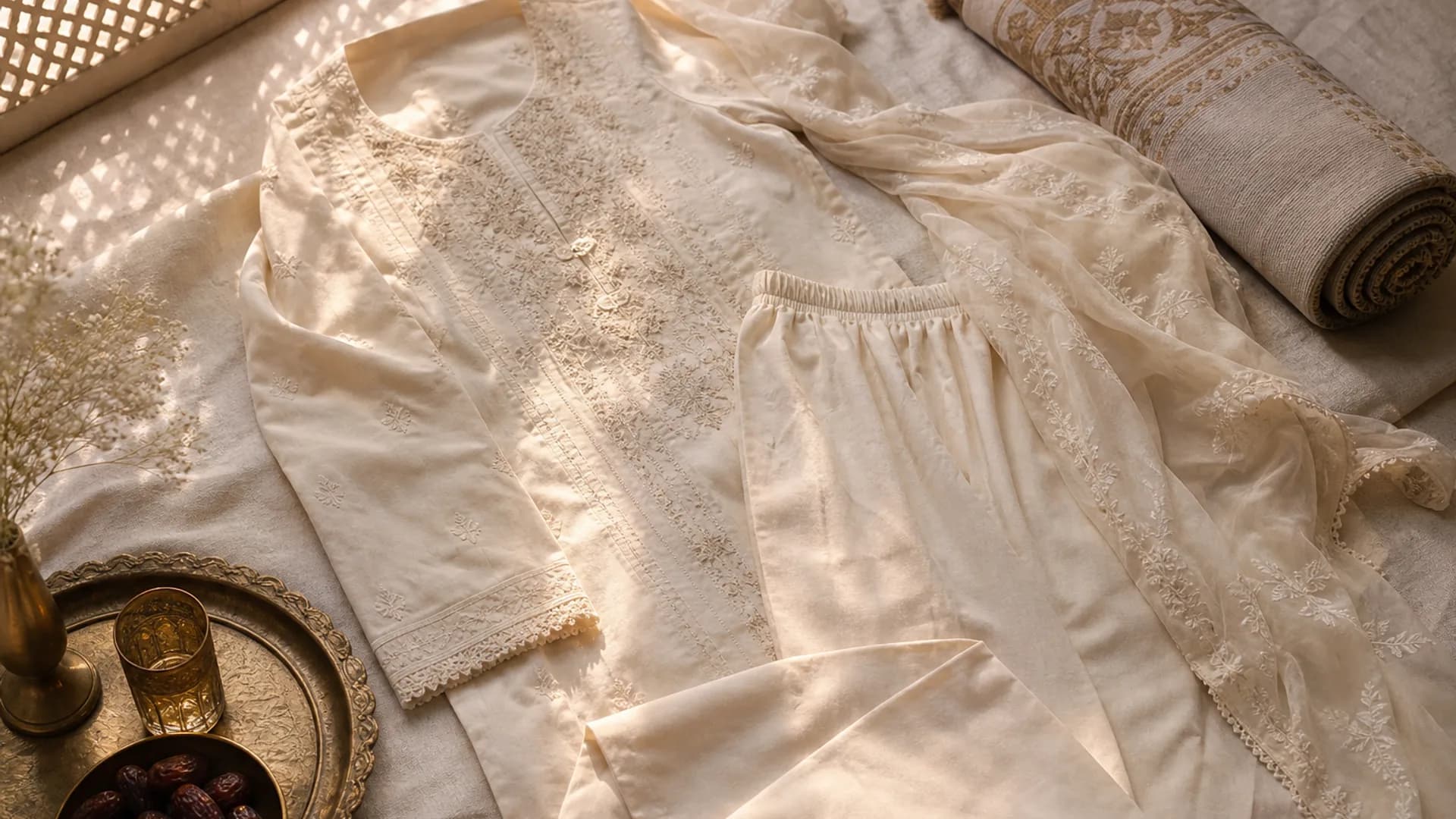
Dressing for Ramadan and Iftar Gatherings
Ramadan runs a month, and the clothing has to work for fasting through the afternoon and hosting in the evening. The two are different problems.
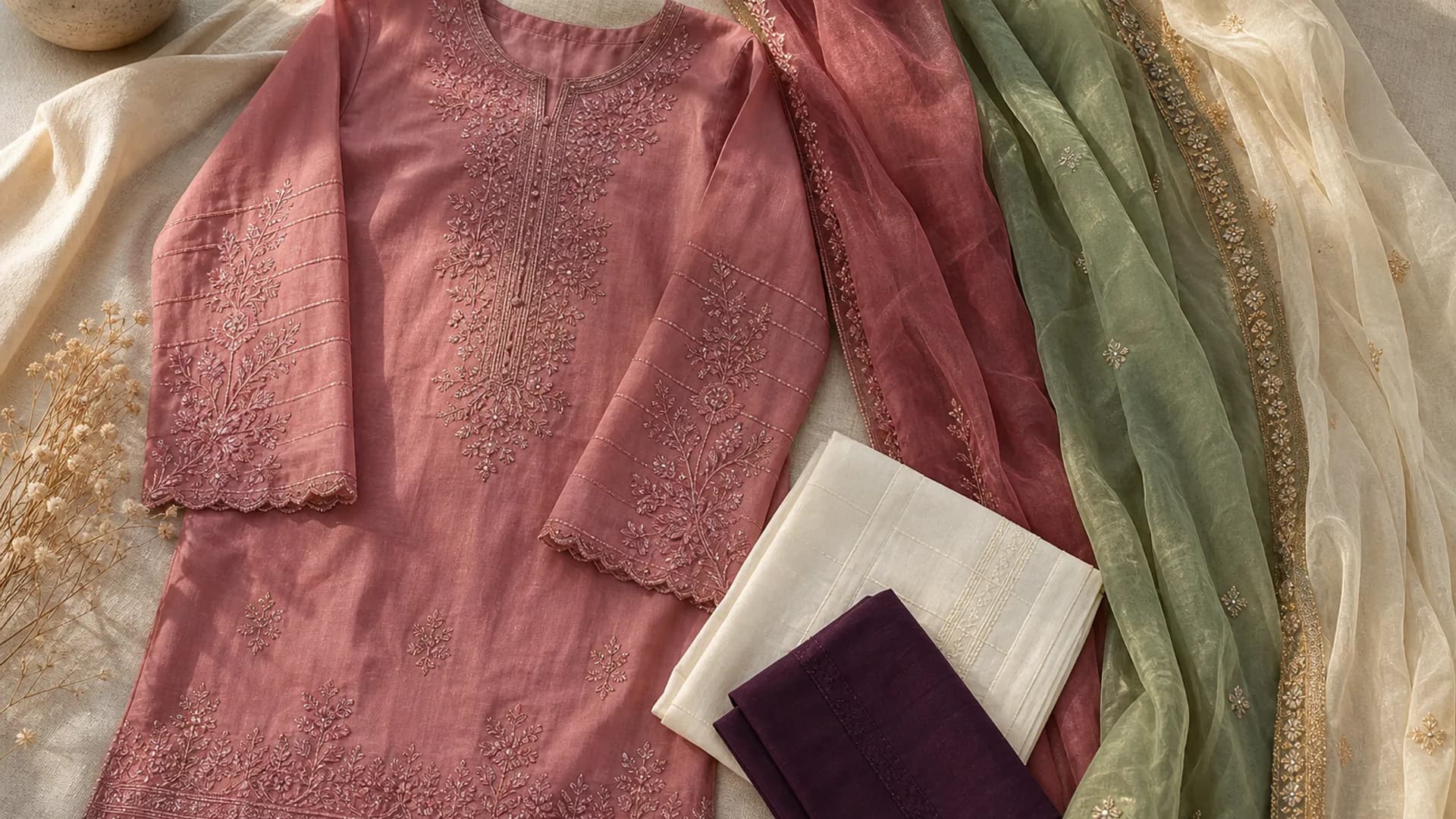
Matching a Dupatta or Trouser to a Shirt
Almost matching looks worse than clearly not matching. Here is how to pair pieces bought separately so the outfit reads as deliberate.
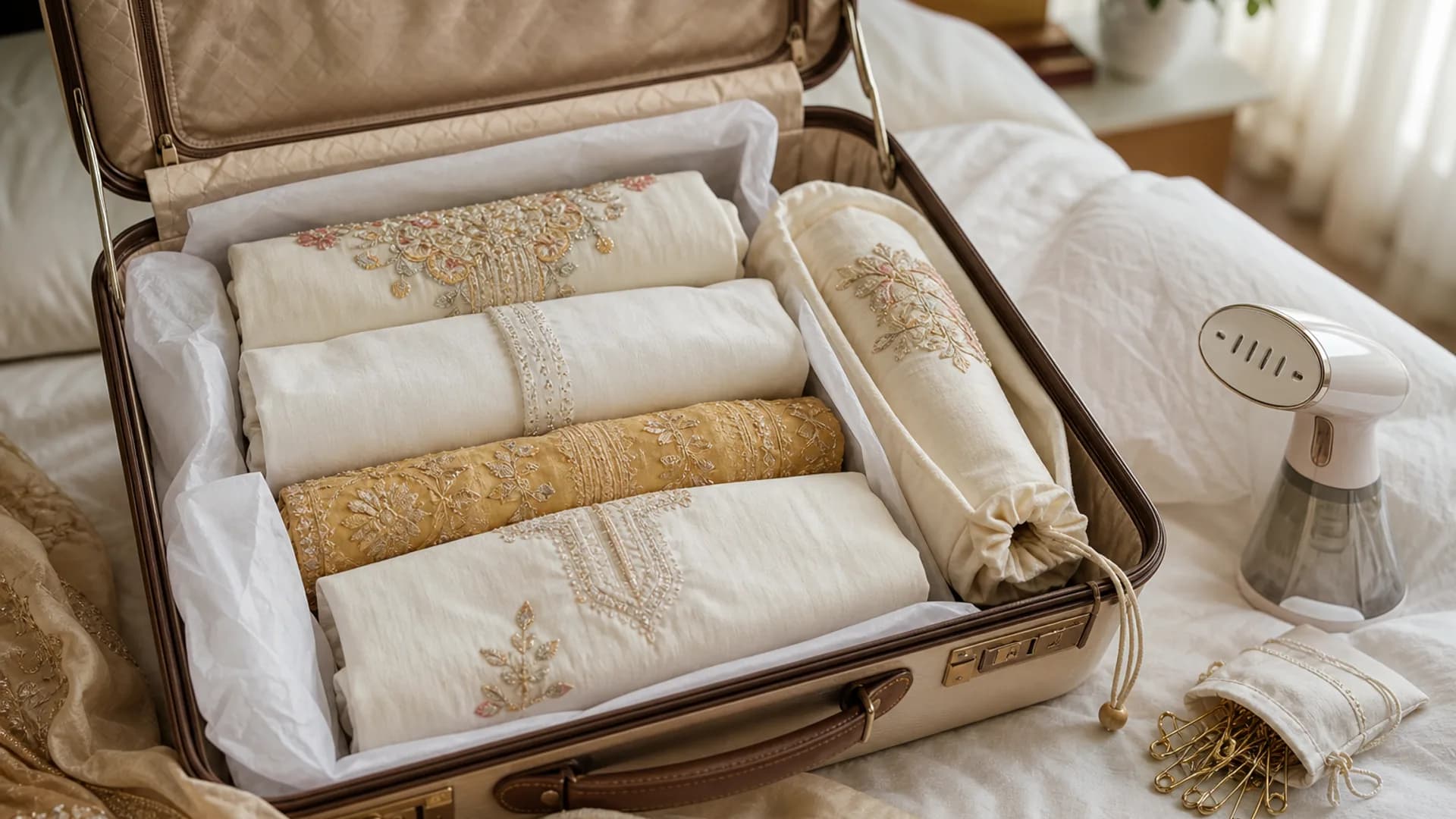
Packing Formal Wear Without Ruining It
A heavily worked outfit and a suitcase are natural enemies. A specific folding method and twenty minutes on arrival is the difference between wearable and not.