

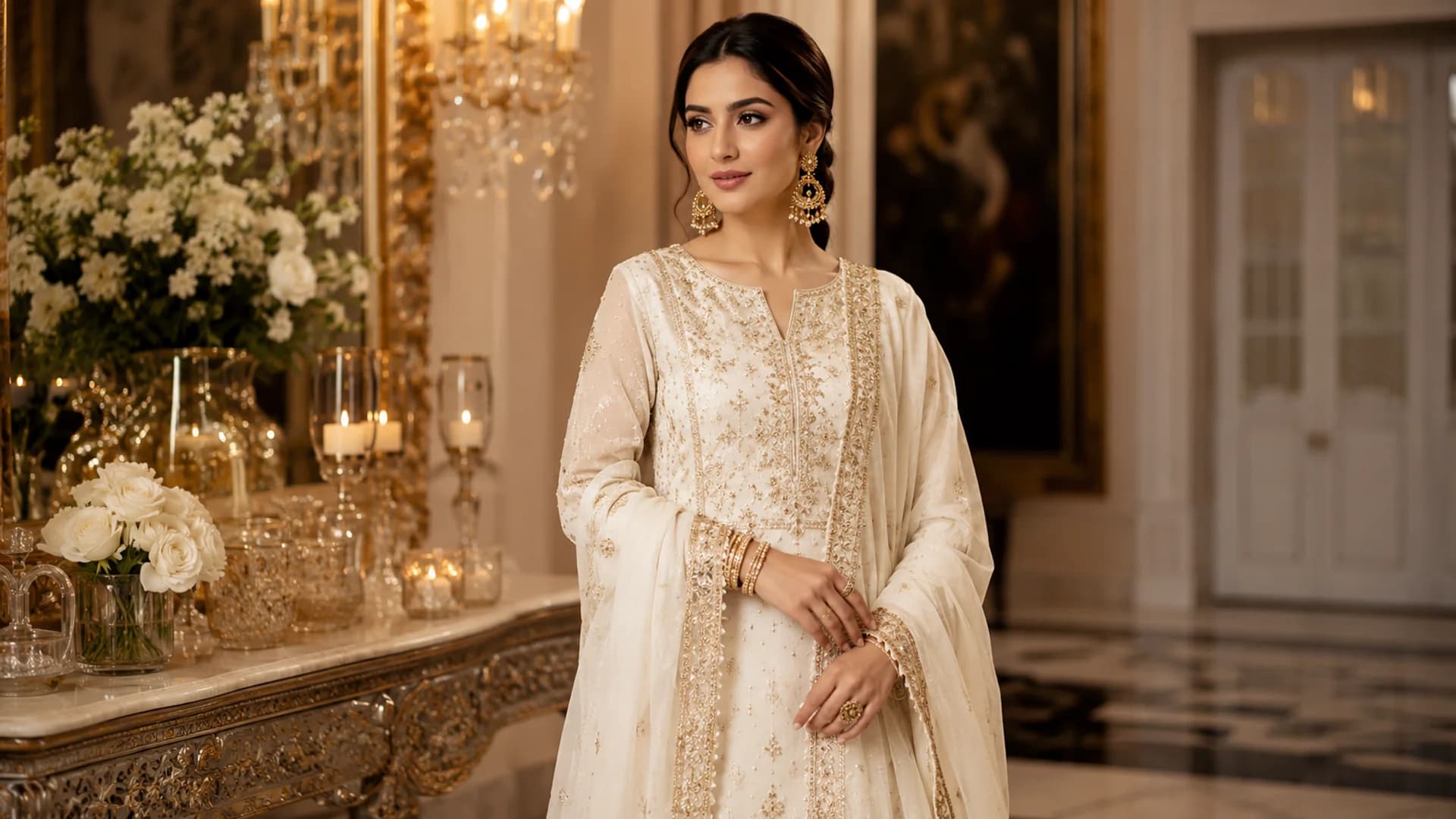
How to Style White Suits for Pakistani Occasions
White and ivory suits are having a major moment in Pakistani fashion. Once considered too plain or too risky, they're now the choice for minimalist elegance. Here's how to style them beautifully for any occasion.
White has always been a tricky color in Pakistani fashion. Too plain? Too bridal? Too hard to keep clean? For years, white and ivory suits were relegated to casual daywear or avoided entirely. But that's changing. In 2026, white and off-white tones are the new neutral — sophisticated, versatile, and quietly luxurious. The key is knowing how to style them. A white suit styled poorly looks unfinished; styled well, it becomes the most elegant thing in the room. This guide walks you through everything: when to wear white vs ivory, how to accessorize, which fabrics work best, and how to make white feel intentional rather than accidental.
White vs Ivory: Which Should You Choose?
White and ivory are not interchangeable. Pure white is bright, crisp, and high-contrast — it works beautifully on deeper skin tones but can wash out fair complexions. Ivory (also called off-white, cream, or ecru) is softer, warmer, and more forgiving across all skin tones. Ivory is also more practical — small stains are less visible, and it photographs beautifully in both natural and artificial light.
When to choose pure white
Daytime outdoor weddings, summer Eid celebrations, minimalist formal events, or when you want maximum contrast with bold accessories or embroidery.
When to choose ivory
Indoor weddings, evening events, mehndis, formal dinners, or if you have fair to medium skin and want something softer than pure white.
Best Fabrics for White Suits
The fabric you choose makes or breaks a white outfit. Some fabrics elevate white to luxury; others make it look flat or cheap.
- Silk: The gold standard for white formal wear. Silk has natural lustre that prevents white from looking flat. Perfect for weddings and formal events.
- Chiffon: Lightweight and elegant, chiffon in ivory works beautifully for semi-formal occasions. Layer it or keep it simple.
- Linen: The best choice for summer. Linen in off-white or ivory feels relaxed, breathable, and effortlessly chic.
- Lawn: For everyday wear, white or ivory lawn is practical and comfortable. Keep embellishments minimal.
- Avoid: Cheap synthetics that look grey under certain lights, or overly stiff fabrics that don't drape well.
How to Style White Suits for Weddings
White is no longer reserved for the bride. Guests can wear ivory or off-white suits — just avoid pure white at the actual wedding ceremony unless the bride has given explicit permission. Here's how to style it:
Mehndi or Dholki
Choose ivory lawn or chiffon with colorful embroidery (green, gold, pink). Pair with a contrasting bright dupatta (mustard, coral, or mint green). Add jhumkas and colorful bangles. The white base makes the bright accents pop.
Barat or Walima (as a guest)
Opt for ivory or cream silk with heavy gold embroidery (zardozi, dabka, or gota work). Keep the dupatta tone-on-tone or add a blush or champagne-colored dupatta. Gold jewelry, nude heels, and a structured clutch complete the look.
Styling White Suits for Eid
White is a classic Eid choice — fresh, clean, and celebratory. For Eid ul Fitr, choose ivory or white lawn with delicate embroidery (chikankari, resham, or lace details). For Eid ul Adha, go with a slightly richer fabric like silk or organza. Pair with gold or pearl jewelry, keep the dupatta light, and add a pop of color with your footwear or clutch (mint green, blush, or gold work beautifully).
Accessorizing White & Ivory Suits
The secret to making white look intentional is in the accessories. A plain white suit with no styling looks unfinished; add the right pieces, and it becomes editorial.
Jewelry
Gold is the classic choice — it warms up white and adds richness. Pearls are timeless and elegant. Silver works if you're going for a cool, modern vibe. Statement earrings (jhumkas, chandbalis) are your best friend.
Dupattas
Swap your white dupatta for a contrasting one in gold, blush, mint, or coral. Or keep it tonal (ivory on ivory) with heavy embroidery for a monochromatic luxury look.
Footwear
Gold or nude khussas are the safest bet. For a modern twist, try metallics (rose gold, champagne) or a soft pastel heel.
Hair accessories
A delicate gold hair clip, floral pins, or a simple tikka can elevate a white outfit from simple to stunning.
Embroidery on White: What Works Best
Embroidery is what takes a white suit from plain to powerful. The right embroidery adds texture, richness, and visual interest without overwhelming the base.
- Gold work (zardozi, gota, dabka): Classic, formal, and incredibly elegant on ivory or white.
- White-on-white embroidery: Subtle and sophisticated — perfect for minimalist formal wear.
- Pastel embroidery (blush, mint, lavender): Fresh and modern, ideal for daytime events.
- Colorful embroidery (emerald, ruby, sapphire thread work): Bold and statement-making for mehndis or festive occasions.
When NOT to Wear White
There are a few occasions where white isn't the best choice. Avoid pure white at the bride's actual wedding ceremony (unless explicitly invited to do so by the bride). Skip white for very casual settings where it might look too formal or impractical. And if you're attending an outdoor event with lots of food, dust, or kids running around, ivory is safer than pure white.
Caring for White Suits
White requires more care than colored fabric, but it's not as high-maintenance as you think. Treat stains immediately with cold water. Hand wash or dry clean — never machine wash white silk or embroidered pieces. Store white suits in breathable muslin bags away from direct sunlight to prevent yellowing. And if a stain won't come out, embrace it — a well-worn white linen kurta has character.
Frequently Asked Questions
Yes, but choose ivory or off-white instead of pure white, and avoid wearing it to the actual nikah or barat ceremony where the bride is present. Ivory with gold embroidery is perfectly appropriate for mehndi, dholki, or walima events.
Absolutely. White and ivory are classic Eid colors symbolizing purity and celebration. Choose a fabric appropriate for the weather — lawn for summer, silk or organza for cooler months.
Add texture through embroidery (gold, white-on-white, or pastel threadwork), swap in a contrasting or embellished dupatta, and accessorize with statement jewelry. Fabric choice also matters — silk and chiffon have natural lustre that keeps white from looking flat.
Gold is the classic choice and works beautifully with ivory and white. Pearls are timeless and elegant. Silver works for a modern, cool-toned look. Statement earrings (jhumkas, chandbalis) are essential.
About the Author
Habiba Minhas
Founder and creative director of Habiba Minhas, Pakistan's leading handcrafted fashion brand based in Karachi. With a passion for preserving traditional Pakistani craftsmanship while embracing modern design, she has built a brand serving over 5,000 customers nationwide.
Specializing in premium ladies suits, kids festive wear, and baby products, Habiba works directly with artisan embroiderers and skilled tailors to create pieces that honor Pakistani heritage.
Related Articles
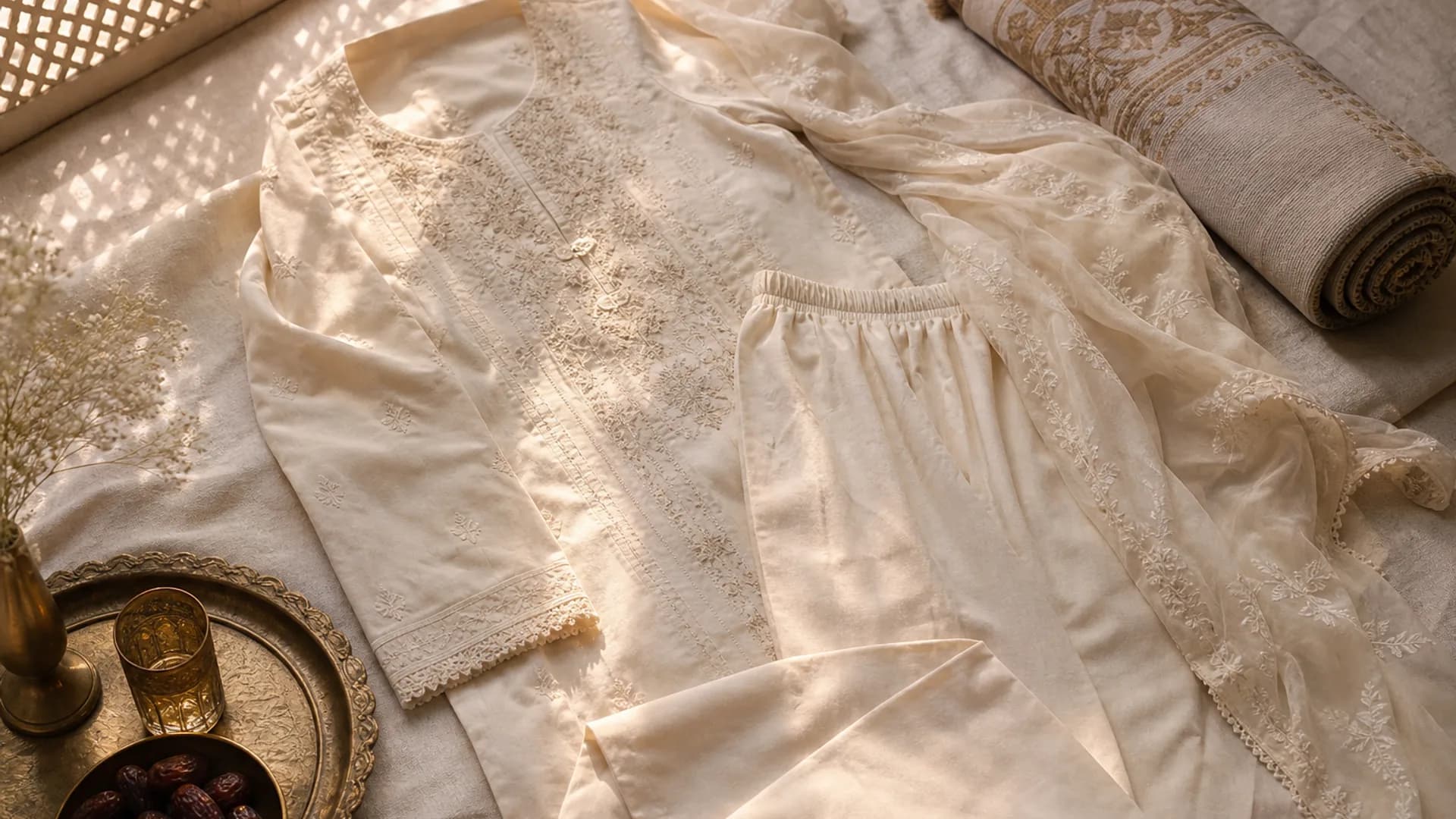
Dressing for Ramadan and Iftar Gatherings
Ramadan runs a month, and the clothing has to work for fasting through the afternoon and hosting in the evening. The two are different problems.
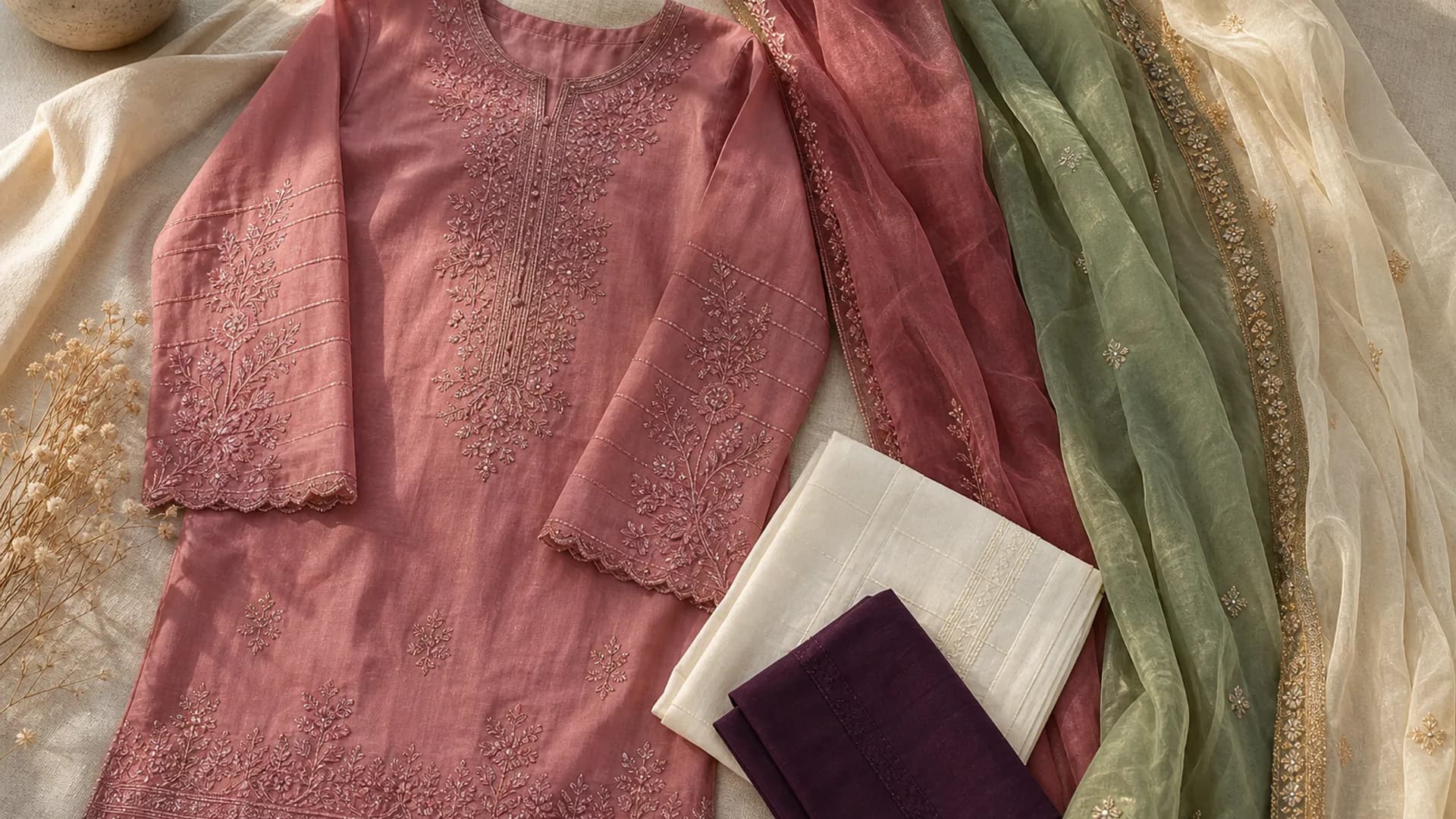
Matching a Dupatta or Trouser to a Shirt
Almost matching looks worse than clearly not matching. Here is how to pair pieces bought separately so the outfit reads as deliberate.
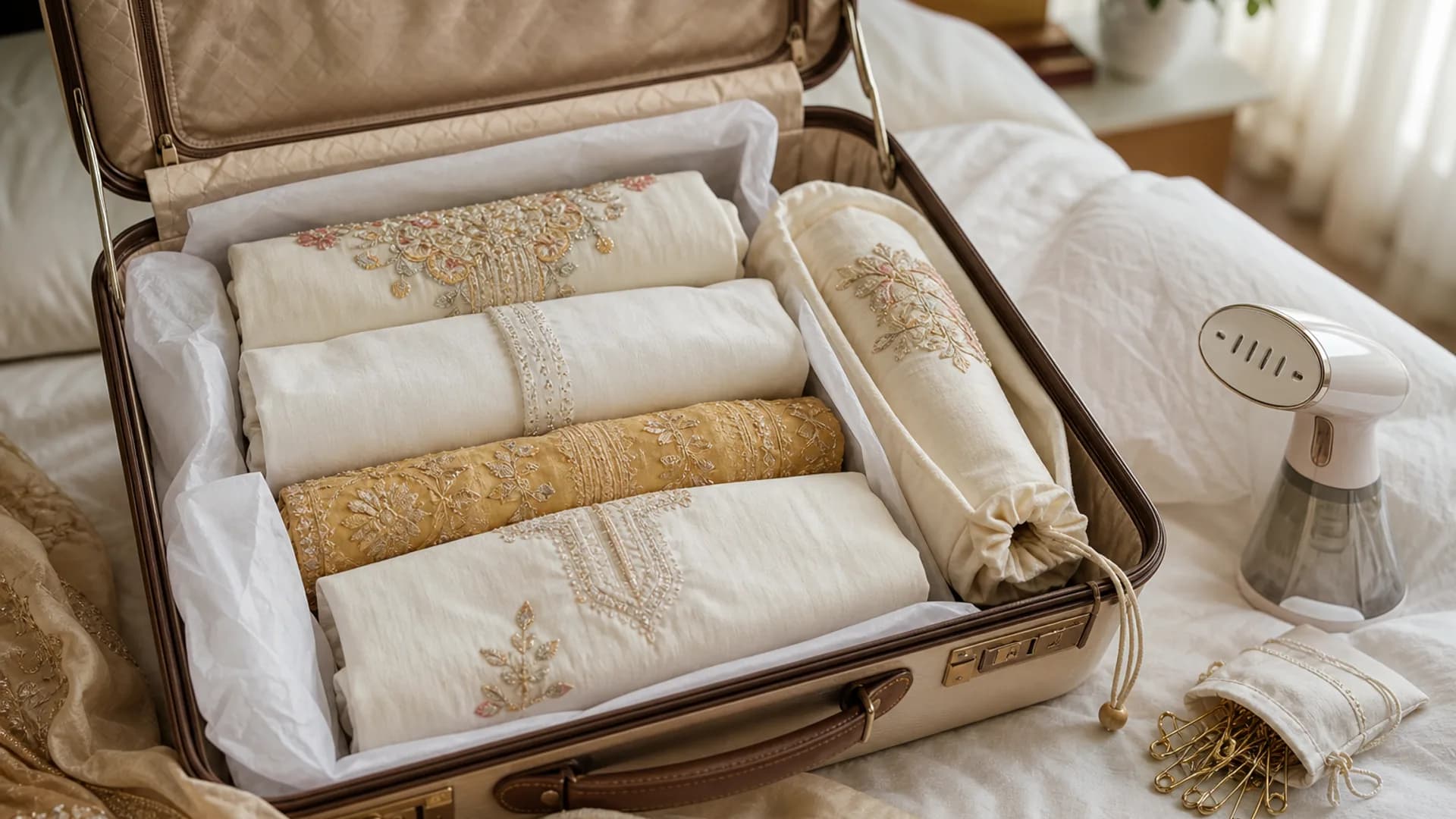
Packing Formal Wear Without Ruining It
A heavily worked outfit and a suitcase are natural enemies. A specific folding method and twenty minutes on arrival is the difference between wearable and not.