

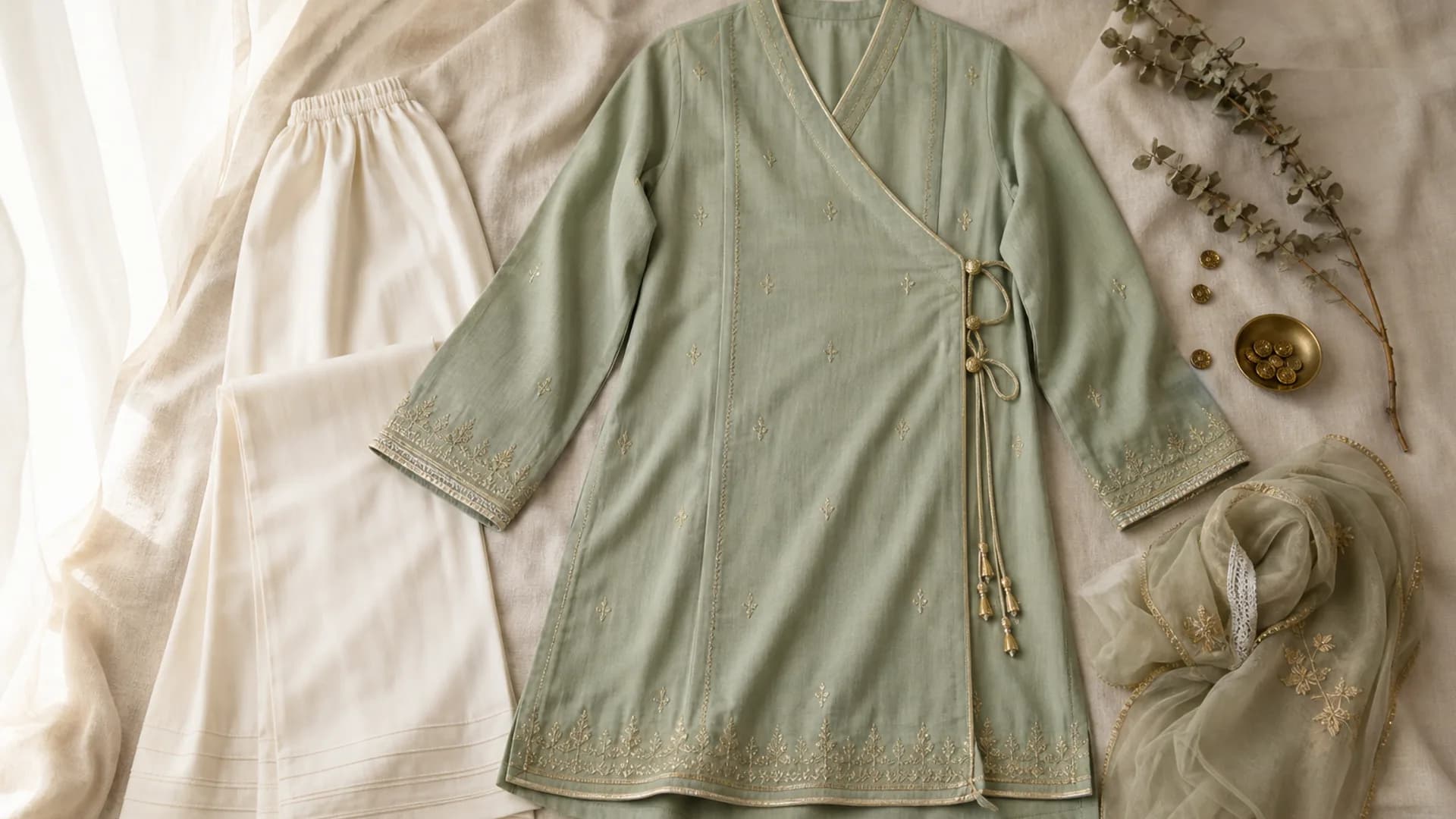
The Angrakha Kameez: How to Wear 2026's Key Shape
The wrap-front angrakha has moved from occasional revival to the defining cut of the year. Here is why it flatters almost everyone, and how to wear it.
Every few years one silhouette moves from occasional revival to the shape everything else is measured against. In 2026 that shape is the angrakha. The wrap-front kameez — crossed over the chest and tied at the side rather than fastened down the centre — has become the most significant cut in Pakistani womenswear this year. It appears across almost every major collection, and unlike most trend silhouettes it genuinely suits a wide range of bodies rather than one. This is what it is, why it works, and how to wear it without it looking like a costume.
What an Angrakha Actually Is
The angrakha is a wrap-front garment. Instead of opening down the middle and buttoning shut, one panel crosses over the other and ties at the side seam, usually with fabric cords or small covered buttons. The cut is centuries old — it descends from Mughal court dress and survived in regional wear long after it faded from the mainstream. What has changed in 2026 is the proportion. Contemporary versions are cut cleaner and shorter than the historical ones, sit closer to the body through the shoulder, and are paired with modern bottoms rather than heavy ghararas. The defining feature to look for: the diagonal line across the chest. That angle is what does the visual work, and it is why the shape reads as distinctly Pakistani rather than as a generic wrap dress.
Why It Suits Almost Everyone
Most trend silhouettes flatter one body type and fight the rest. The angrakha is unusual in that the geometry works broadly. The diagonal wrap creates a long unbroken line across the torso, which is more forgiving than a horizontal waist seam. It draws the eye across and down rather than cutting the body in half. The side tie is adjustable. Unlike a fitted bodice with a fixed measurement, the wrap accommodates a range and can be pulled tighter or looser depending on the day. The crossed neckline is naturally modest without being high — it covers the chest while creating a V that lengthens the neck. For anyone who has struggled to find a formal shape that is neither tent-like nor tight, this is worth trying on before anything else this season.
Pairing It: Three Combinations That Work
**Angrakha with wide-leg trousers.** The current default, and the most wearable. The volume at the hem balances the wrap at the top, and the whole outfit reads as relaxed and modern. Wide-leg trousers have quietly replaced the shalwar as the standard bottom for many women in 2026, so this combination will not look dated in a year. **Angrakha with a sharara.** The formal version. The flare from the waist gives the diagonal line something dramatic to sit above, and this is the combination that photographs best at weddings. **Angrakha with a churidar.** The most traditional and the most flattering on shorter frames. The narrow leg makes the wrap the entire focus and keeps the proportions long. What to avoid: pairing it with a straight, narrow trouser in the same weight as the kameez. Without contrast the wrap loses its shape and the outfit reads flat. You can see how these proportions work across our [ladies collection](/ladies).
Fabric Makes or Breaks It
The angrakha depends entirely on drape. It is the one silhouette where fabric choice is not a matter of preference. **Chiffon and georgette** — the wrap falls softly and the diagonal stays fluid. Best for formal and evening. **Raw silk** — holds a crisper line and gives the wrap structure. Photographs beautifully and suits winter functions. **Lawn and cotton** — the everyday version. Works well for daywear angrakhas, though the wrap will be softer and less defined. **Avoid stiff, heavily starched fabric.** An angrakha in a fabric that will not drape stands away from the body and the crossed line disappears entirely. If you hold the fabric up and it does not fall, the cut will not work. Our [summer and winter fabric guide](/journal/summer-vs-winter-fabric-guide-pakistani-women) covers how these behave across Pakistani seasons.
Colours That Suit the Shape
The angrakha carries detail well but does not need much of it. Because the cut itself is the feature, heavy embroidery competes rather than adds. This fits neatly with where colour is going in 2026. Sage and mint green have become the most searched shades in Pakistani fashion this year, and both suit the angrakha's clean lines particularly well. Dusty rose, powder blue, lavender and stone beige work equally. For evening, deep emerald, burgundy and plum give the shape weight without needing embroidery to do it. The styling rule: let the wrap be the detail. Work at the neckline edge and the tie, and leave the body of the garment quiet. A heavily embroidered angrakha loses the diagonal line under the pattern, which defeats the point of choosing it. Our guide to [colours for Pakistani skin tones](/journal/best-colours-for-pakistani-skin-tones) helps narrow which of these suits you.
Dupatta and Accessories
The angrakha creates a strong diagonal, and everything else should work with it rather than across it. Drape the dupatta on one shoulder and let it fall, rather than across both shoulders. A dupatta pulled straight across the chest cancels the wrap line entirely — the single most common styling mistake with this cut. Keep necklaces short or skip them. The crossed neckline already creates a focal point; a long pendant sitting in the middle of it looks cluttered. Earrings are where to spend. With a quiet neckline and a clean body, statement earrings have room to work. Our [dupatta draping guide](/journal/7-ways-drape-dupatta-weddings-formal-events) has several styles that suit a one-shoulder fall, and the [accessories guide](/journal/how-to-match-accessories-formal-pakistani-suit) covers the balance in more detail.
Where the Angrakha Belongs
The genuine advantage of this cut is range. Very few Pakistani silhouettes work from a morning at home to an evening function, and this one does. **Everyday:** cotton or lawn angrakha with wide-leg trousers. Comfortable, distinctive, and requires no styling effort. **Eid morning:** chiffon angrakha in a pastel with a sharara. This is one of the most photographed looks of the year for good reason. **Semi-formal dinners:** raw silk angrakha with a churidar and good earrings. **Weddings:** a worked angrakha over a sharara, in a jewel tone for evening functions. That versatility is also why it answers the question more Pakistani women are asking before buying — will I wear this again? A single well-cut angrakha earns its place in a wardrobe in a way a heavily embroidered one-occasion piece does not. Our [capsule wardrobe guide](/journal/capsule-wardrobe-pakistani-women-10-pieces) makes the same argument across ten pieces.
Buying One: What to Check
**Where the tie sits.** It should fall at your natural waist or just above. A tie sitting on the hip drags the whole line down. **How far the panel crosses.** Too little overlap and it gapes when you move; too much and the diagonal becomes a straight edge. Sit down and raise your arms in the fitting room. **The inner fastening.** A well-made angrakha has an inner tie or hook holding the under-panel in place. Without it the wrap shifts all day. **Shoulder fit.** As with any kameez, the shoulder seam is the measurement that cannot be altered. Everything else has tolerance. Our guide on [picking your size in ready-to-wear](/journal/how-to-pick-size-pakistani-ready-to-wear) covers how to judge this properly, and the [size guide](/content/size-guide) has our measurements.
Frequently Asked Questions
A kurta opens down the centre and fastens with buttons; an angrakha wraps one panel over the other and ties at the side, creating a diagonal line across the chest. That diagonal is the defining feature and the reason the shape flatters more body types than a straight centre opening.
Yes, arguably better than most cuts. The diagonal wrap creates an unbroken line across the torso rather than a horizontal waist seam, and the side tie is adjustable rather than fixed. Choose a fabric with good drape — chiffon or soft raw silk — and avoid anything stiff, which stands away from the body.
Wide-leg trousers for everyday, a sharara for formal occasions, or a churidar for the most traditional look. Avoid pairing it with a narrow straight trouser in the same weight as the kameez — without contrast in volume the wrap loses definition and the outfit reads flat.
Over one shoulder, falling loose. Pulling a dupatta straight across the chest hides the diagonal wrap line, which is the whole point of the silhouette. A one-shoulder drape keeps the angle visible and lets the shape do its work.
Generally no. The cut is the feature, and dense embroidery across the body obscures the diagonal line. Keep the work at the neckline edge and the tie, and let the wrap be the detail. This also suits the wider 2026 move toward cleaner tailoring and lighter embellishment.
About the Author
Habiba Minhas
Founder and creative director of Habiba Minhas, Pakistan's leading handcrafted fashion brand based in Karachi. With a passion for preserving traditional Pakistani craftsmanship while embracing modern design, she has built a brand serving over 5,000 customers nationwide.
Specializing in premium ladies suits, kids festive wear, and baby products, Habiba works directly with artisan embroiderers and skilled tailors to create pieces that honor Pakistani heritage.
Related Articles
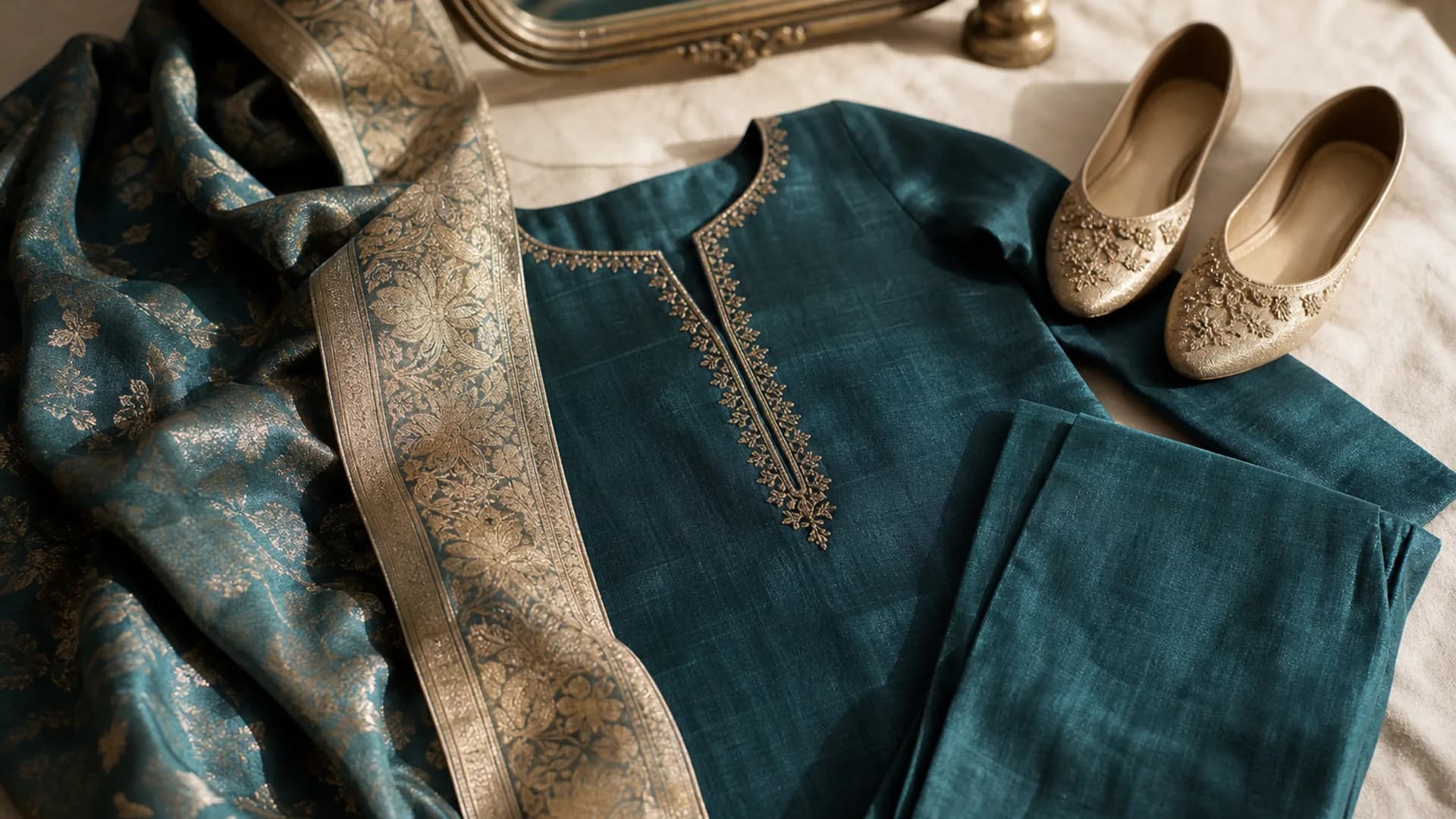
Formal Dressing in Your Forties and Fifties
There is a great deal of advice about what women over forty should stop wearing. Most of it is wrong. What actually changes is fit, fabric and comfort.
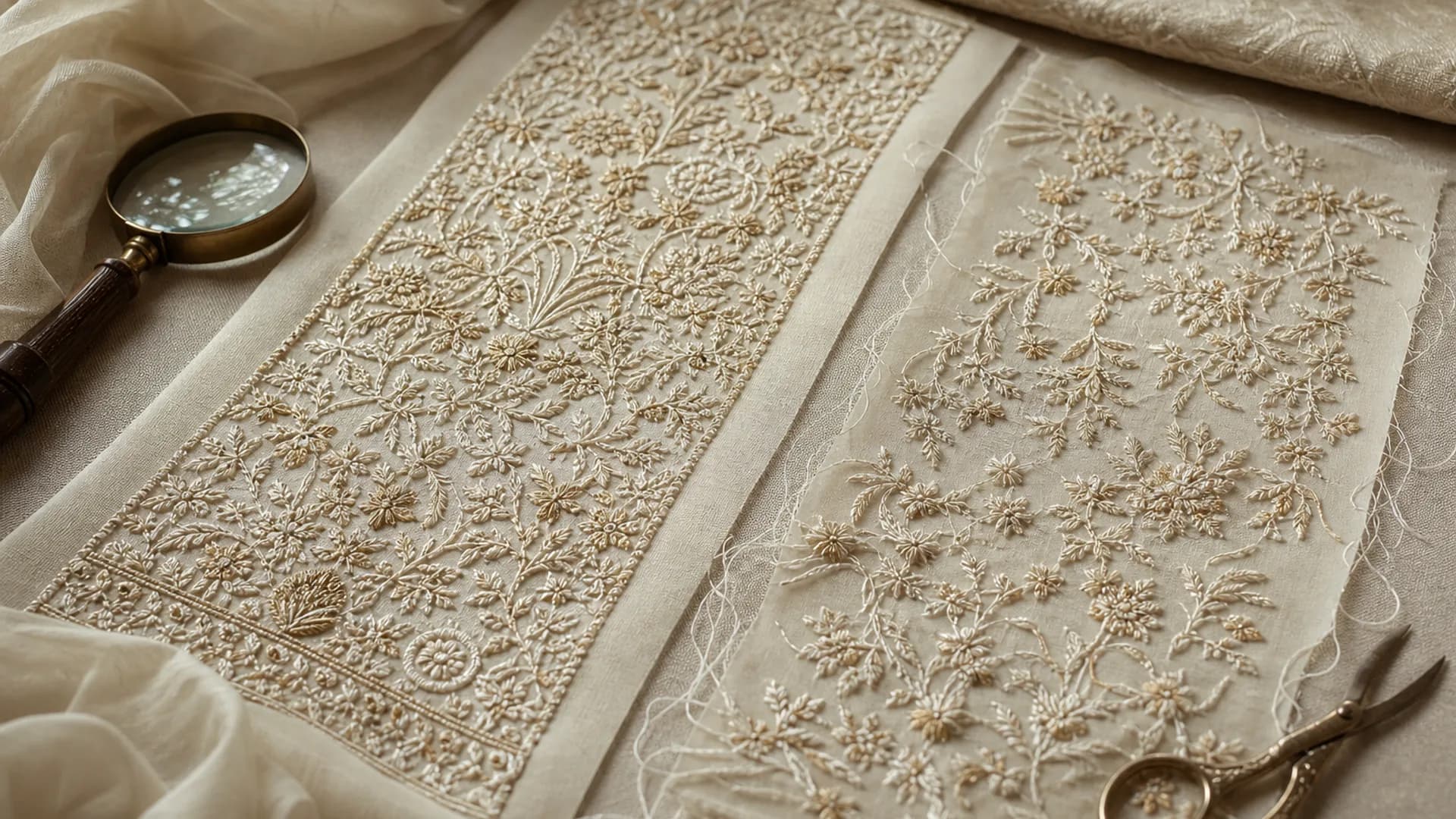
Original or Copy: How to Tell a Replica Suit
Master copies are sold openly and often honestly. The problem is when a copy is sold as an original at an original's price — here is how to tell.
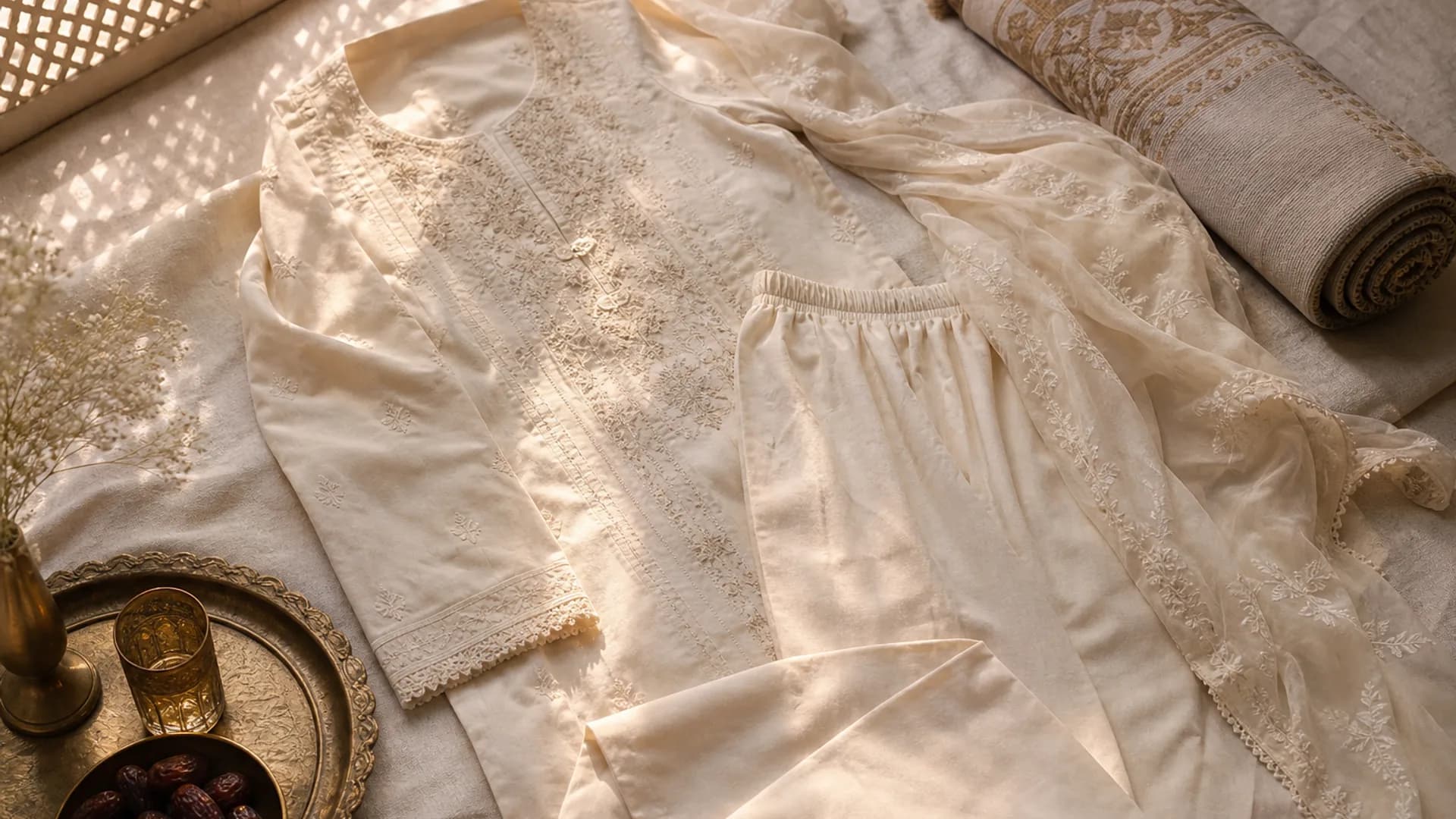
Dressing for Ramadan and Iftar Gatherings
Ramadan runs a month, and the clothing has to work for fasting through the afternoon and hosting in the evening. The two are different problems.