

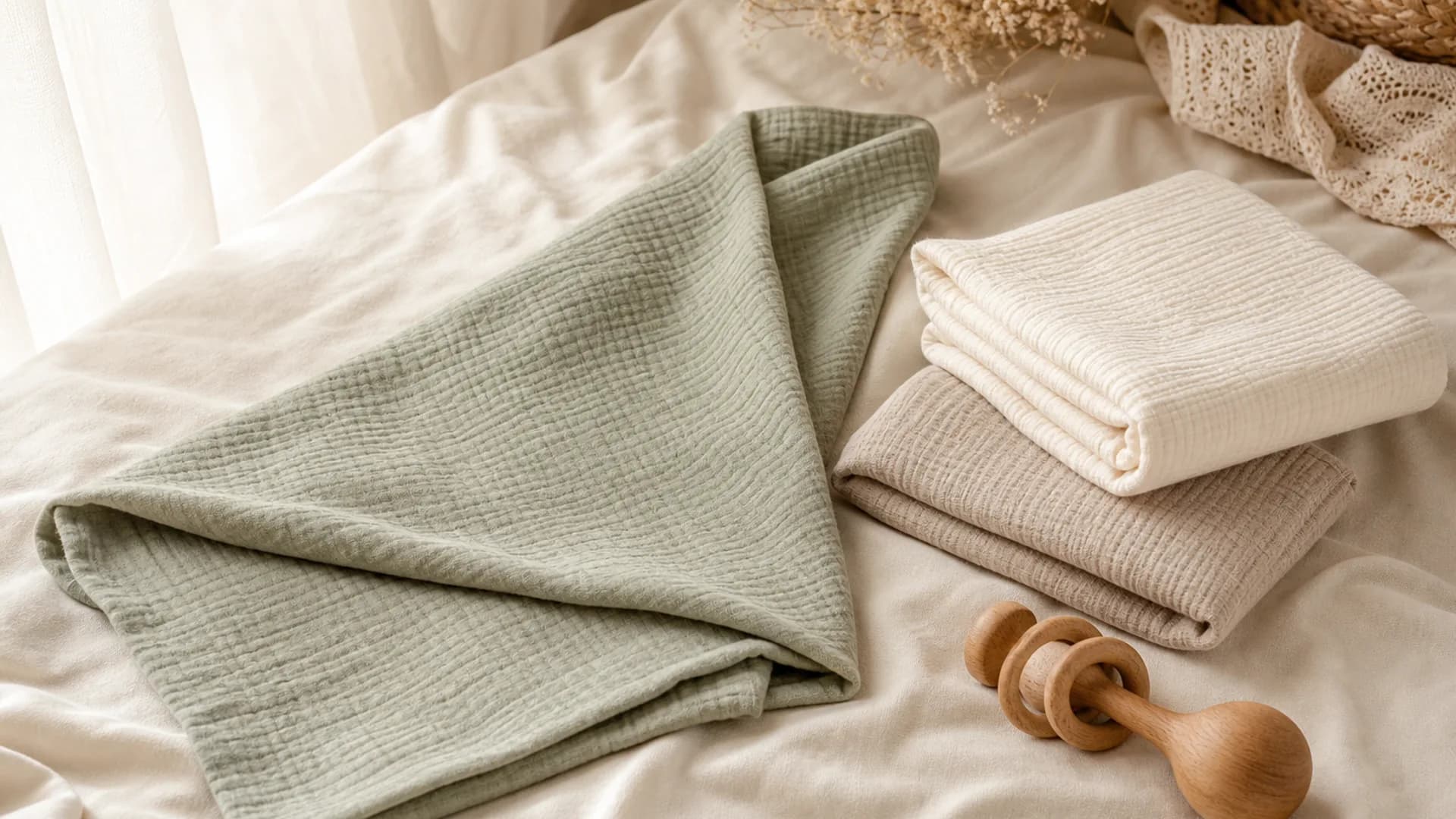
Swaddling a Baby: How to Do It Safely
Swaddling calms most newborns and is done wrong in two specific ways. Both are avoidable, and one of them matters a great deal.
Swaddling is one of the oldest pieces of baby care there is, and in Pakistani homes it is usually taught rather than read about — a grandmother or an aunt shows you how, and that is that. Mostly that works. Swaddling genuinely calms a newborn, because the firm wrap mimics the containment of the womb and suppresses the startle reflex that keeps waking her. But two things about it have changed with what we now know, and both matter. One is how the legs are wrapped, which affects hip development. The other is when to stop, which affects safety directly and is the more urgent of the two. The rest of the traditional method is sound. This is the whole picture, including the parts that are specific to a hot climate.
Why Swaddling Works
A newborn has a startle reflex — the Moro reflex — which makes her fling her arms out at any sudden noise or change in position. She then wakes herself up, repeatedly. A firm wrap keeps the arms contained, which stops the reflex waking her. This is why a swaddled newborn frequently sleeps longer and settles faster. It also provides a consistent sensation of containment, which is closer to the womb than an open cot is, and that is calming for a baby in her first weeks. What swaddling is not: a treatment for colic, a way to make a baby sleep through the night, or something every baby likes. A meaningful minority of babies dislike being swaddled and settle better with their arms free. If yours fights it consistently, she is telling you something and it is worth listening. And it is a temporary tool. It is useful for the first two to four months and then it stops being appropriate — which is the part covered further down.
How to Swaddle: The Method
Use a large thin square, roughly one metre by one metre. Muslin is ideal. **One.** Lay the cloth flat as a diamond and fold the top corner down about fifteen centimetres, making a straight edge. **Two.** Lay the baby on her back with her shoulders just above the folded edge, so the fabric does not come near her face. **Three.** Hold one arm gently down by her side. Bring the cloth on that side across her body and tuck it firmly under her opposite side. **Four.** Bring the bottom corner up and lay it loosely across her legs — not tightly, and not pulling the legs straight. **Five.** Hold the second arm down, bring the remaining side across and tuck it under her. The finished wrap should be firm across the chest and arms, and loose from the hips down. **Test it:** you should be able to slide a flat hand between the cloth and her chest. If you cannot, it is too tight. She should be able to kick her legs freely inside the lower part of the wrap.
The Hips: The Part Most Often Done Wrong
This is the single most important correction to the traditional method, and it is not obvious. A newborn's hip joints are not fully formed. The ball sits in a shallow socket that deepens over the first months, and it deepens correctly when the legs are able to move — bent up and out, in the natural frog position. Wrapping the legs straight and tight holds the joint in a position that prevents that development. Done consistently over weeks it is associated with hip dysplasia, which can require bracing or surgery to correct. The traditional tight wrap from shoulder to ankle — still common, and still taught in many families — is exactly the wrap to avoid. **What to do instead:** wrap firmly across the arms and chest, and leave the bottom of the swaddle loose and roomy. She should be able to bend her knees and bring them up. A bag-shaped lower section, or simply a looser fold, achieves this. This single change costs nothing and removes the risk entirely. It is worth explaining kindly to whoever else is swaddling her in the house, because it is a genuine difference from how it was done a generation ago.
When to Stop — This One Is Urgent
Stop swaddling the moment she shows any sign of rolling over. Not when she rolls reliably — at the first sign. The reason is direct: a swaddled baby who rolls onto her front cannot use her arms to lift her head or push herself back. That is a suffocation risk and it is the most serious hazard associated with swaddling. For most babies this is somewhere between eight and sixteen weeks, but it varies considerably and some are much earlier. Watch for rolling to the side, pushing up on the shoulders during tummy time, or arching and twisting in the cot. **The transition:** move to a sleep sack or wearable blanket, which gives the same warmth and containment with arms free. Many parents go through a stage of swaddling with one arm out for a few nights, which makes the change easier. **Expect a few disturbed nights.** The startle reflex is still present for a while after swaddling has to stop, and sleep usually gets worse before it settles. It is worth it, and it does settle. Our [safe sleep guide](/journal/safe-sleep-baby-bedding-pakistan-guide) covers what belongs in the cot at each stage.
Fabric and Pakistani Heat
Overheating is a real risk with swaddling, and it is a larger risk here than in the climates most swaddling advice is written for. **Muslin is the right fabric.** Thin, breathable, and it becomes softer with every wash. A double-layer muslin is warm enough for most Pakistani winters when paired with appropriate clothing underneath. **Cotton jersey** stretches, which makes a neat wrap easier but also makes over-tightening easier. Fine for winter. **Avoid fleece, polyester and anything padded.** These trap heat, and a swaddled baby cannot kick off a layer the way an unswaddled one can. **Count the swaddle as a layer.** In a Karachi or Multan summer, that usually means a nappy and a thin cotton bodysuit underneath and nothing more. In winter, a vest and a sleepsuit under a muslin. **Check her temperature at the chest or the back of the neck**, not the hands — babies have cool hands even when they are perfectly warm. Warm and dry is right; sweaty, flushed or damp hair means too hot, and overheating is a more common problem than being too cold. The [swaddle](/baby/baby-swaddle) and [bedding](/baby/baby-bedding-set) sections have the cotton pieces, and our [nursery checklist](/journal/nursery-setup-checklist-pakistani-homes) covers how many of each to buy.
Other Safety Points
**Always on the back.** A swaddled baby must be placed on her back to sleep, every time, without exception. This is the most established safe-sleep guidance there is. **Nothing loose in the cot.** The swaddle should be secure. A loose end that works free during the night is exactly the loose bedding that safe-sleep guidance warns about. Check the tuck before you put her down. **Not on a sofa or an adult bed for sleep.** A swaddled baby cannot readjust herself at all, which makes soft surfaces more dangerous rather than less. **Not during feeding, and not while she is skin-to-skin.** **Watch for signs it is too tight:** difficulty breathing, a red mark where the fabric sat, or her being unable to move her legs at all. **One adult, one method.** If several people in the house swaddle her, it is worth agreeing the method so she is not tightly leg-wrapped by one person and correctly wrapped by another.
Beyond Swaddling: What Muslins Are Really For
Buy more muslins than the swaddling itself needs, because they turn out to be the most used item in the whole nursery. **Burp cloth over the shoulder.** The most frequent use by a distance. **Sun shade over a pram**, though never draped fully over in heat — it traps air and raises the temperature underneath sharply, which is a genuine risk in a Pakistani summer. Clip it to one side. **Feeding cover**, light enough to be comfortable for both of you. **A clean surface** to lay her on anywhere — a relative's sofa, a changing table, the floor at a family function. **Floor blanket** once she is doing tummy time. **Changing mat liner** when travelling. Six is a reasonable starting number and eight is better. They wash constantly, they wear out, and the good ones soften rather than thinning. You can see the range in the [baby collection](/baby), and the [baby bags](/baby/baby-bags) section covers carrying them around.
Frequently Asked Questions
Firm across the chest and arms, loose from the hips down. You should be able to slide a flat hand between the cloth and her chest, and she should be able to bend her knees and bring them up inside the wrap. If you cannot fit a hand in, it is too tight.
No. A newborn's hip socket deepens correctly only when the legs can move into the natural bent, frog-like position. Wrapping the legs straight and tight is associated with hip dysplasia. Wrap the arms and chest firmly and leave the lower part of the swaddle loose and roomy.
At the first sign of rolling, not when she rolls reliably — usually somewhere between eight and sixteen weeks. A swaddled baby who rolls onto her front cannot push herself back, which is a suffocation risk. Move to a sleep sack, which gives the same containment with arms free.
Thin cotton muslin. It breathes, it softens with washing, and a double layer is warm enough for most Pakistani winters. Avoid fleece, polyester and anything padded — a swaddled baby cannot kick off a layer, so overheating is a real risk in summer.
No. A swaddled baby must always be placed on her back, every time. She cannot readjust her position at all, which makes any other position and any soft surface — a sofa, an adult bed — considerably more dangerous than it would otherwise be.
About the Author
Habiba Minhas
Founder and creative director of Habiba Minhas, Pakistan's leading handcrafted fashion brand based in Karachi. With a passion for preserving traditional Pakistani craftsmanship while embracing modern design, she has built a brand serving over 5,000 customers nationwide.
Specializing in premium ladies suits, kids festive wear, and baby products, Habiba works directly with artisan embroiderers and skilled tailors to create pieces that honor Pakistani heritage.
Related Articles
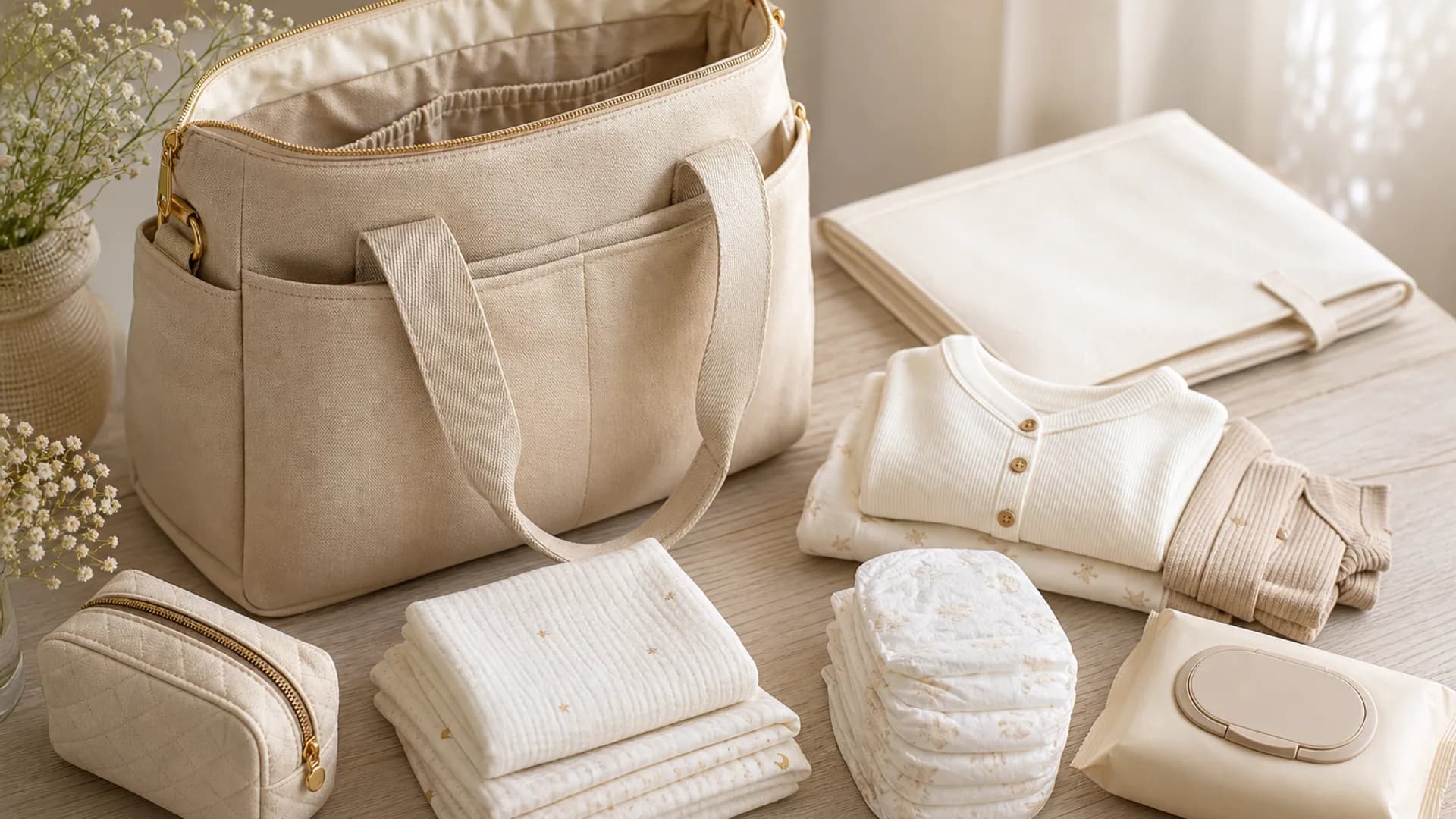
The Baby Bag: What to Pack and What to Skip
Most baby bags are packed for every possible emergency and carried until your shoulder hurts. Here is the short list that covers almost everything.
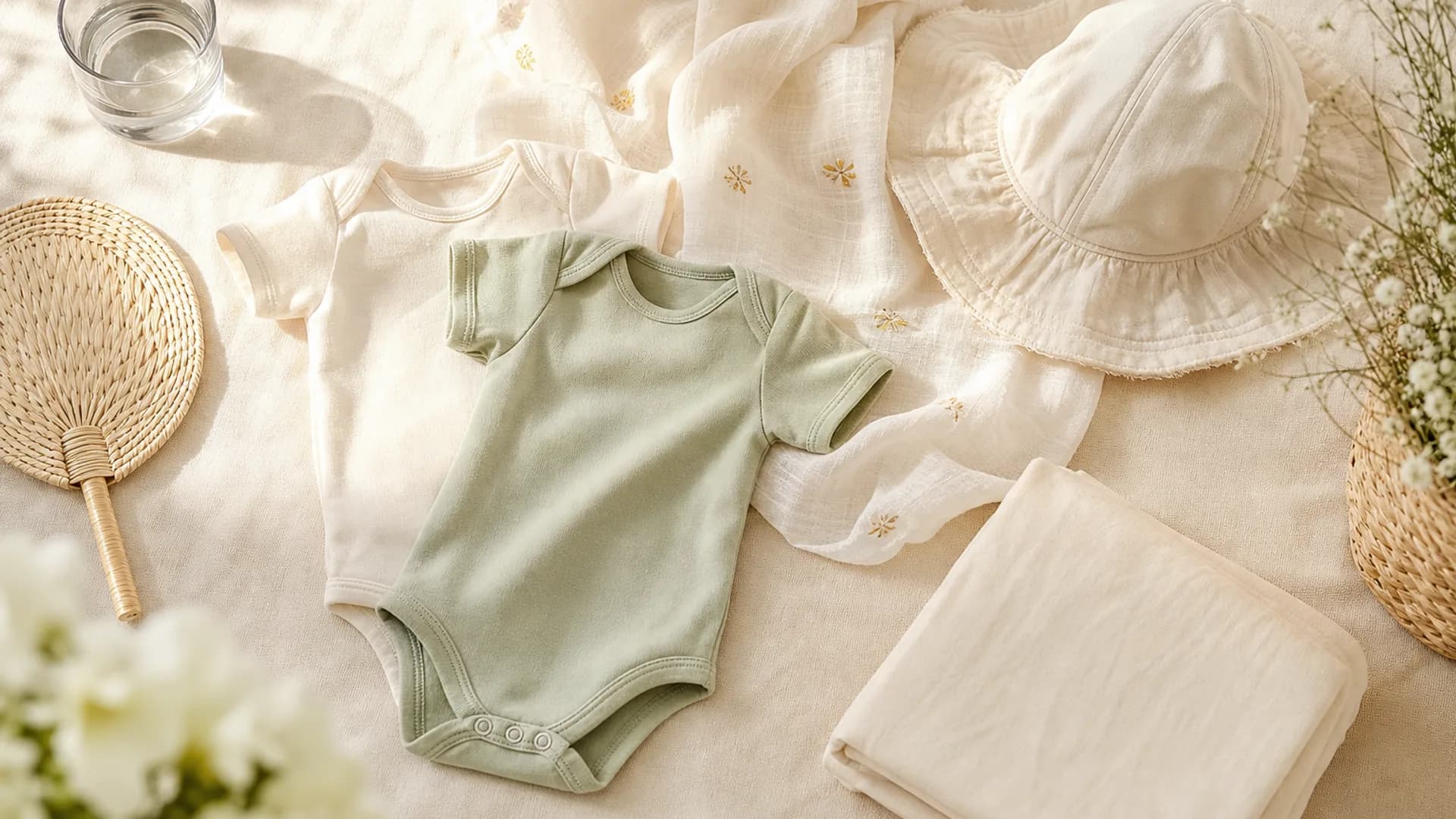
Dressing a Newborn Through a Pakistani Summer
The instinct in most Pakistani households is to keep a newborn wrapped. In a Karachi June that instinct is the wrong one, and overheating is the bigger risk.
Setting Up a Nursery: What You Actually Need
Most nursery checklists are written by people selling nurseries. This one is written around a Pakistani home, where the baby usually sleeps in your room first.