

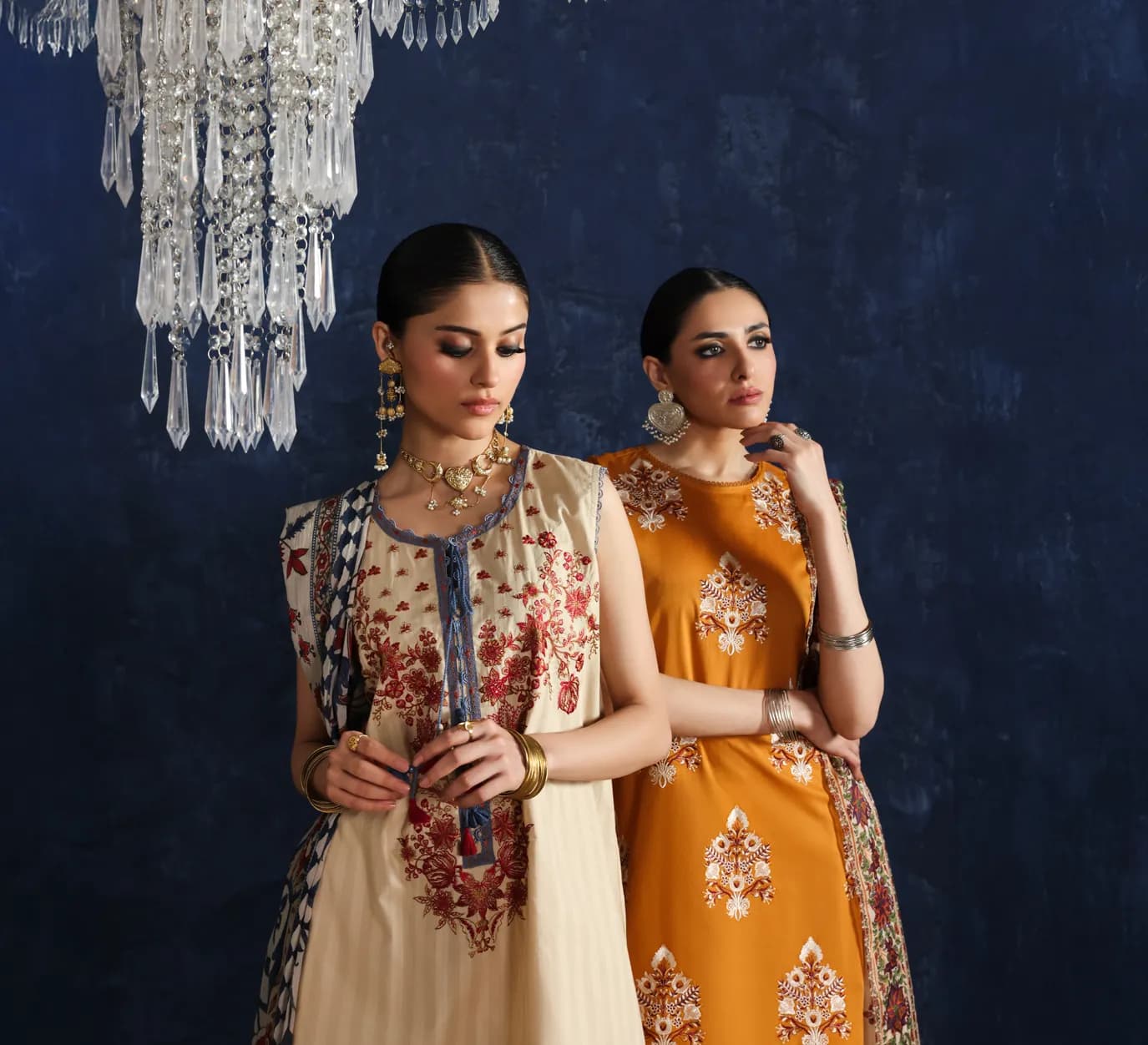
How to style a dupatta in five ways
From loose-draped to tuck-and-pin — an illustrated guide from the studio.
The dupatta is perhaps the most underestimated piece in South Asian dressing. It can transform a simple two-piece into a formal statement, add dimension to a plain kurta, or simply finish a look with the lightness only a fine fabric can bring.
1. The classic drape
Throw it over one shoulder and let it fall naturally. This works best with a heavier fabric — a silk or jacquard dupatta stays put with minimal adjustment. For lightweight lawn, a single pin at the shoulder keeps it from sliding.
2. The double drape
Loop it around your neck so both ends hang in front. A favourite for formal events — it frames the neckline and adds vertical length. Best with embroidered dupattas where you want the work visible from the front.
"The dupatta is the punctuation mark of the outfit — it tells you whether the sentence ends with a period or an exclamation."
3. The one-side tuck
Tuck one end into the waistband at the hip, let the rest fall across the front and drape over the opposite shoulder. Works beautifully for weddings — it keeps the dupatta in place during hours of standing and greeting.
4. The cape style
Pin both ends to the shoulders and let the dupatta hang across the back like a cape. A modern take that works with contemporary silhouettes and palazzo trousers. Best in lightweight chiffon or georgette.
5. The wrapped waist
Wrap it around your waist twice and let the ends fall to one side. Unusual, but striking — particularly with a long shirt. The dupatta becomes a belt and a statement piece at once.
A note on fabric
Heavier fabrics like silk and jacquard hold their shape in classic drapes. Lighter fabrics like chiffon and organza work best when pinned or tucked. Lawn is the most versatile — it does everything, just keep a few discreet pins on hand.