

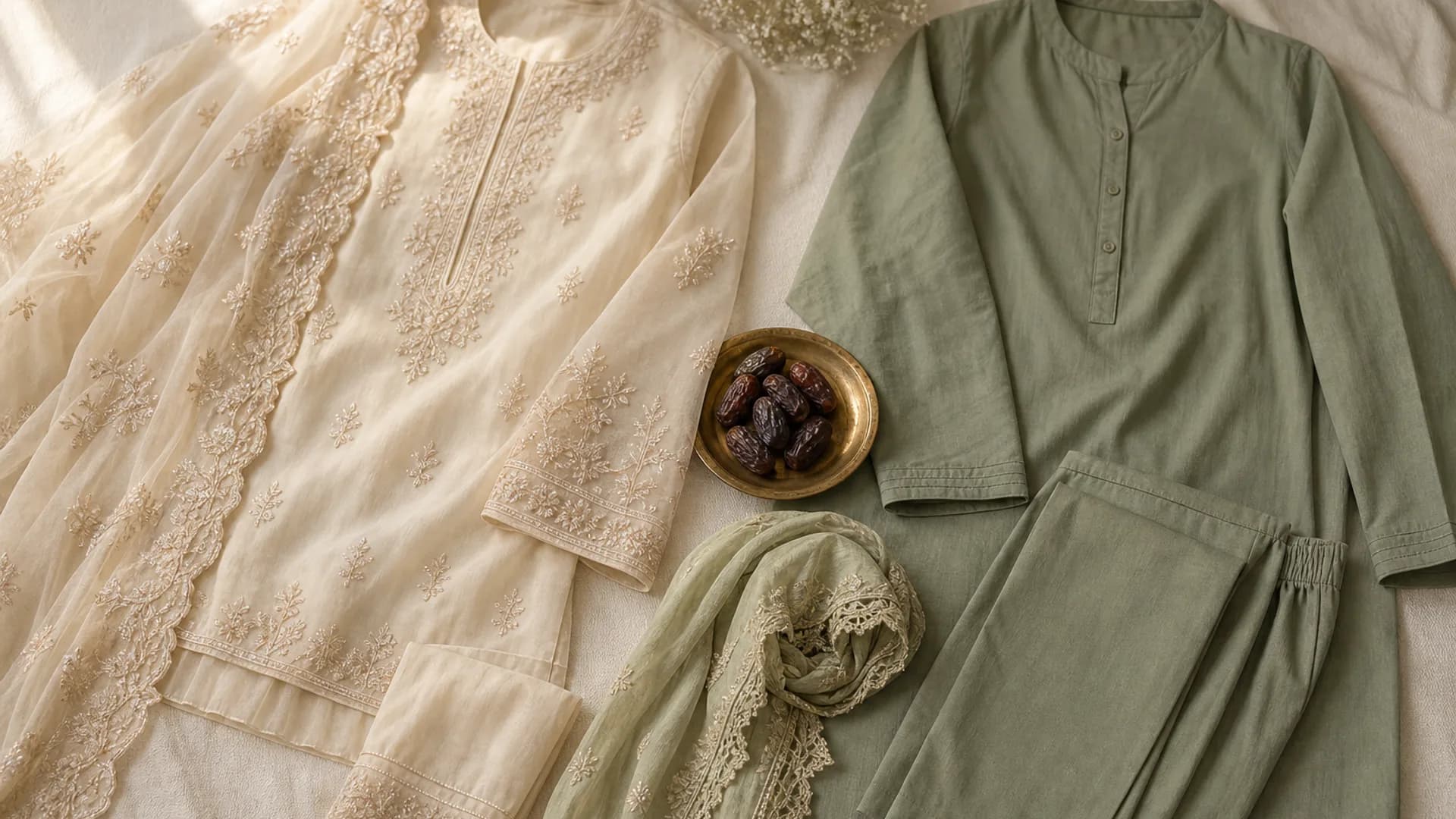
Eid ul Fitr vs Eid ul Adha: Dressing Differently
Most Eid dressing advice is written for Eid ul Fitr. Eid ul Adha runs to three days, involves a great deal more standing around, and needs a different wardrobe.
Almost all Eid dressing advice is written for Eid ul Fitr, and then quietly reused for Eid ul Adha as though the two occasions were the same. They are not. Eid ul Fitr is one dressed-up morning followed by visits. Eid ul Adha is three days, involves qurbani, a great deal of standing in a courtyard, distribution of meat to several households, and considerably more physical activity than anyone dresses for. The result is predictable: a beautiful chiffon outfit bought for Eid ul Adha and worn for two hours before being changed out of, and a second day spent in whatever was clean. Dressing well for the second Eid means planning for three days rather than one, and accepting that day one is not the day for the best outfit.
Eid ul Fitr: One Big Morning
The structure is straightforward and it is what most people already dress for correctly. Morning prayers, then the best outfit of the season, then visiting — either receiving guests at home or going house to house through the day. Eid ul Fitr falls at the end of Ramadan, so the whole occasion carries a sense of celebration and newness that shows in the clothing. **What works:** the most formal daytime outfit you own. Chiffon, light silk, organza. Pastels and fresh colours — this is the occasion for pale and pretty rather than deep and rich. **Full jewellery**, because the day is largely spent sitting and visiting rather than working. **Comfortable shoes**, because you will be removing them at every house you visit. **A second, simpler outfit for the evening** if there is a dinner or a family gathering later. Our [Eid outfit guide](/journal/best-eid-outfits-women-pakistan-2026) covers this in detail, and the [Eid dawat guide](/journal/how-to-dress-eid-dawat-pakistan) covers the evening side of it.
Eid ul Adha: Three Days, Three Different Days
The second Eid has a completely different shape, and the mistake is treating day one as the dressed-up day. **Day one** is the qurbani. There is standing outdoors, there is meat being handled, there is a courtyard or a street involved, and there is a great deal of coming and going. Whatever you wear will be worn hard. **Day two** is when the meat is distributed and the cooking happens. Kitchens, deliveries to relatives and neighbours, and often long stretches on your feet. **Day three** is the social day. This is when the visiting happens properly, when people come to the house, and when the good outfit belongs. So the sequence should run the other way from what most people plan: **practical on day one, comfortable on day two, formal on day three.** Buying one beautiful outfit and wearing it on day one gets it ruined and leaves nothing for the day it was actually needed.
What to Wear on Qurbani Day
Day one calls for genuinely practical clothing, and there is no shame in it — everyone who has done it once dresses this way the second time. **Cotton or lawn.** Washable, breathable, and it survives a hot morning outdoors. Eid ul Adha falls in the hot months in Pakistan for the next several years, and this matters. **A mid-tone or darker colour.** Not pale, for obvious reasons. Not black either, which shows dust and is hot in the sun. Mid greens, blues, rust and mid-browns are the practical range. **A print rather than a plain.** A pattern hides a great deal. **Short or three-quarter sleeves**, or sleeves you can push up. **No dupatta trailing**, or a short one pinned. A long dupatta in a courtyard on qurbani day is a genuine nuisance. **Closed, washable shoes.** Not new, not fabric, not your good khussas. **Hair tied back.** This is not the outfit anyone photographs. That is the point — it frees up the good one for when it will be seen.
Day Three: The Outfit That Matters
This is where the Eid ul Adha budget should go, and where the formality sits. By the third day the work is done, the house is in order and people are visiting properly. This is the equivalent of the Eid ul Fitr morning, and it takes the same kind of outfit. **A worked three-piece in raw silk or good chiffon.** Formal enough for guests, comfortable enough for a long day of sitting. **Deeper and richer colours** than Eid ul Fitr, which is partly seasonal and partly convention — the second Eid tends toward jewel tones and warm neutrals rather than the pastels of the first. **Full jewellery**, since the day is spent hosting rather than working. **Something you can sit in for hours.** Guests arrive and stay. A heavily structured outfit is uncomfortable by the third hour. The useful realisation: **this outfit does not need to be new every year**, because it is seen by a different set of visitors from those at the wedding or the last Eid. Our post on [planning a wardrobe across a season](/journal/how-many-outfits-pakistani-wedding-week-budget) makes the same case.
Heat, Which Is the Bigger Problem
Eid ul Adha falls in the hot months and the difference from Eid ul Fitr is substantial. Both Eids shift earlier by about eleven days a year, but Adha is currently in the worst of the Pakistani summer. **Pure cotton and lawn, not synthetic.** A polyester chiffon in June is genuinely unpleasant, and it is what a great deal of inexpensive festive wear is made from. Our guide on [telling real silk from fake](/journal/how-to-tell-real-silk-from-fake-pakistan) covers checking, and the [fabric glossary](/content/fabric-glossary) explains the labels. **Light colours reflect heat**, which argues against dark on the days you are outdoors — except day one, where practicality wins. **Loose beats fitted.** Air moving between fabric and skin is what keeps you cool. **Avoid full lining** on a summer Eid outfit. A lined chiffon is twice as hot as an unlined one, and this is the detail that decides whether an outfit is bearable. **Heavy embroidery traps heat** and sits against the skin. Keep the work at the neckline and hem rather than across the body. Our [seasonal fabric guide](/journal/summer-vs-winter-fabric-guide-pakistani-women) covers what behaves well in Pakistani heat.
Dressing Children for Each Eid
The same logic applies and matters more, because children get less say in what they are put in. **Eid ul Fitr:** the good outfit in the morning, and a spare for the afternoon. Children spill things, and an Eid morning outfit ruined at eleven o'clock is a long day. **Eid ul Adha day one:** practical clothing only. Children are fascinated by qurbani and will be underfoot in exactly the wrong place. Washable cotton, closed shoes, nothing precious. **Eid ul Adha day three:** the good outfit, when visitors come. **In both cases, check the lining.** A polyester-lined festive outfit in a Pakistani summer is why a child pulls at her clothes all day. **Buy one size up rather than exactly.** Our post on [kids' formals that last more than one season](/journal/kids-formal-wear-that-lasts-more-than-one-season) covers getting two Eids out of one purchase, and the [kids collection](/kids) is cut with that in mind.
Buying for Both Eids Together
The two Eids are roughly two months apart, and planning them together is considerably more efficient than treating each as a separate event. **Buy the formal piece once.** A good three-piece in a colour that suits you works for the Eid ul Fitr morning and again on the third day of Eid ul Adha, seen by largely the same people but two months apart, which nobody minds at all. **Change the dupatta between them.** A different dupatta and different jewellery is enough. Our [dupatta fabric guide](/journal/dupatta-fabric-guide-chiffon-organza-net-silk) covers which fabrics change a look most. **Buy the practical day-one clothing separately and cheaply.** Cotton or lawn, not festive. **Order early.** Delivery slows considerably in the weeks before both Eids, and alterations take time. Our [shipping page](/help/shipping) has current timings. **Do not leave it to Chand Raat.** The night before Eid is the worst possible time to buy anything — the choice is picked over, alterations are impossible, and prices are at their highest. You can see the formal range across the [ladies collection](/ladies) and the [3-piece suits](/ladies/3-piece-suits), and the [Virtual Try Room](/virtual-try-room) will show you how a colour sits before you order.
Frequently Asked Questions
Eid ul Fitr is one dressed-up morning followed by visiting, so the best outfit goes on day one. Eid ul Adha runs three days with qurbani and meat distribution first, so day one needs practical washable clothing and the formal outfit belongs on day three, when visitors come.
Cotton or lawn in a mid-tone or darker colour, ideally a print, with short or push-up sleeves, no trailing dupatta, and closed washable shoes that are not new. You will be outdoors, on your feet and handling things — this is not the day for the outfit you want photographed.
Not necessarily. The two Eids are about two months apart, and a good formal three-piece works for the Eid ul Fitr morning and again on the third day of Eid ul Adha. Change the dupatta and the jewellery and it reads differently. Buy the practical day-one clothing separately and cheaply.
Pure cotton, lawn or genuine chiffon — not polyester, which is what a great deal of inexpensive festive wear is made from and is unpleasant in June heat. Avoid full lining, keep the cut loose, and keep heavy embroidery at the neckline and hem rather than across the body.
The choice is picked over, alterations are impossible at that point, prices are at their highest, and delivery cannot help you. Ready-to-wear almost always needs a small amount of tailoring to look right, and Chand Raat leaves no time for it.
About the Author
Habiba Minhas
Founder and creative director of Habiba Minhas, Pakistan's leading handcrafted fashion brand based in Karachi. With a passion for preserving traditional Pakistani craftsmanship while embracing modern design, she has built a brand serving over 5,000 customers nationwide.
Specializing in premium ladies suits, kids festive wear, and baby products, Habiba works directly with artisan embroiderers and skilled tailors to create pieces that honor Pakistani heritage.
Related Articles
Dressing for Ramadan and Iftar Gatherings
Ramadan runs a month, and the clothing has to work for fasting through the afternoon and hosting in the evening. The two are different problems.
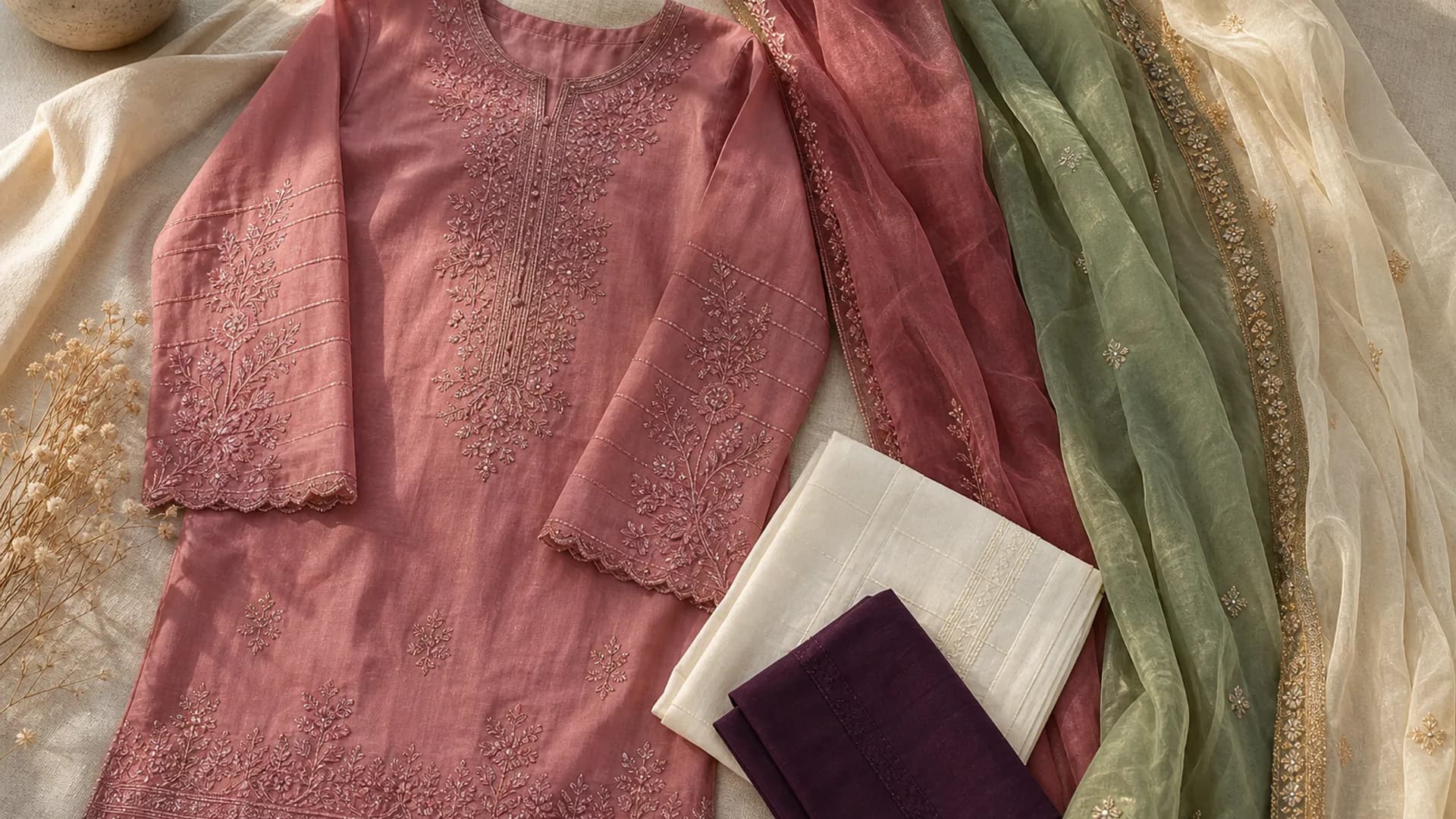
Matching a Dupatta or Trouser to a Shirt
Almost matching looks worse than clearly not matching. Here is how to pair pieces bought separately so the outfit reads as deliberate.
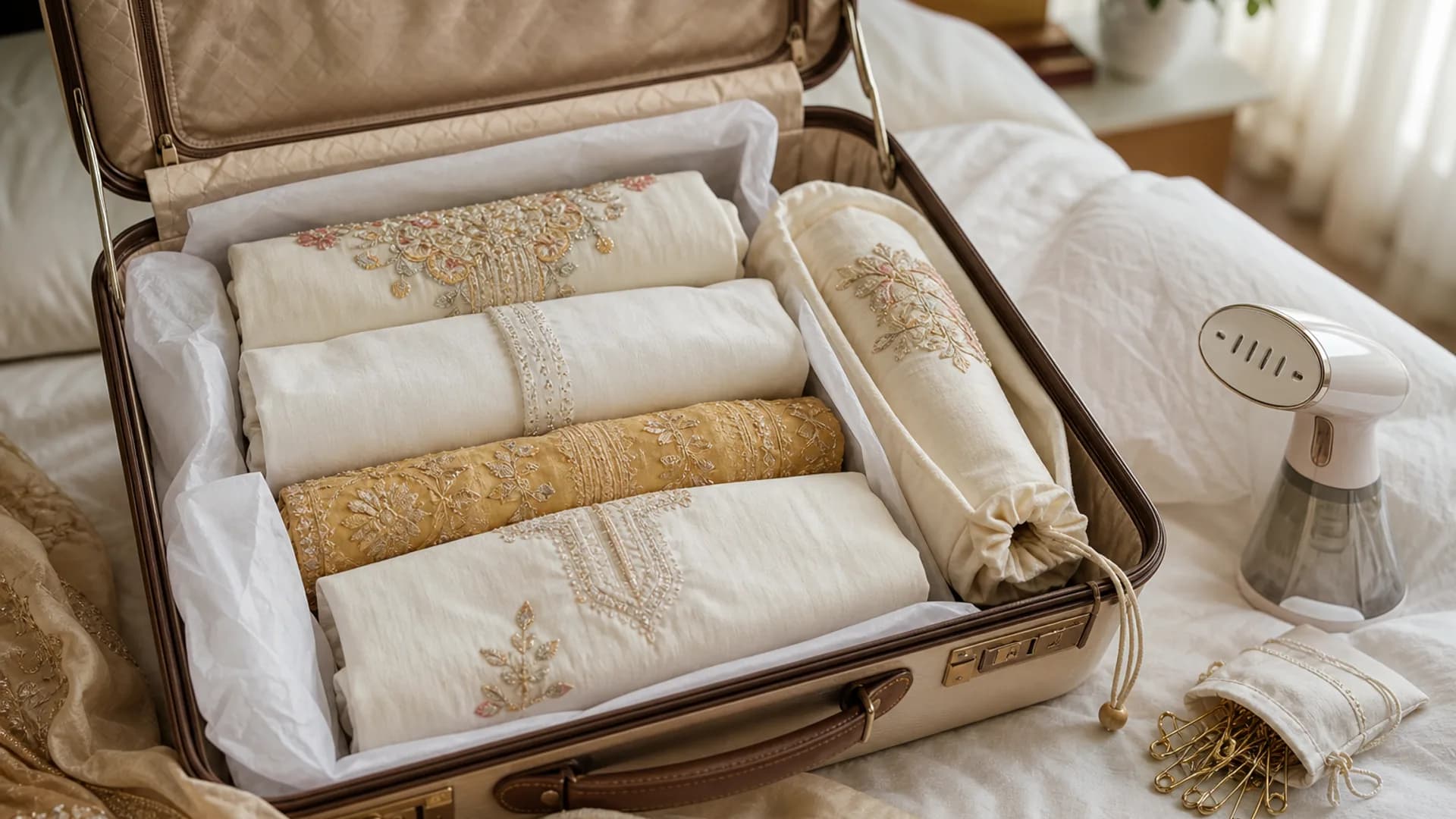
Packing Formal Wear Without Ruining It
A heavily worked outfit and a suitcase are natural enemies. A specific folding method and twenty minutes on arrival is the difference between wearable and not.