

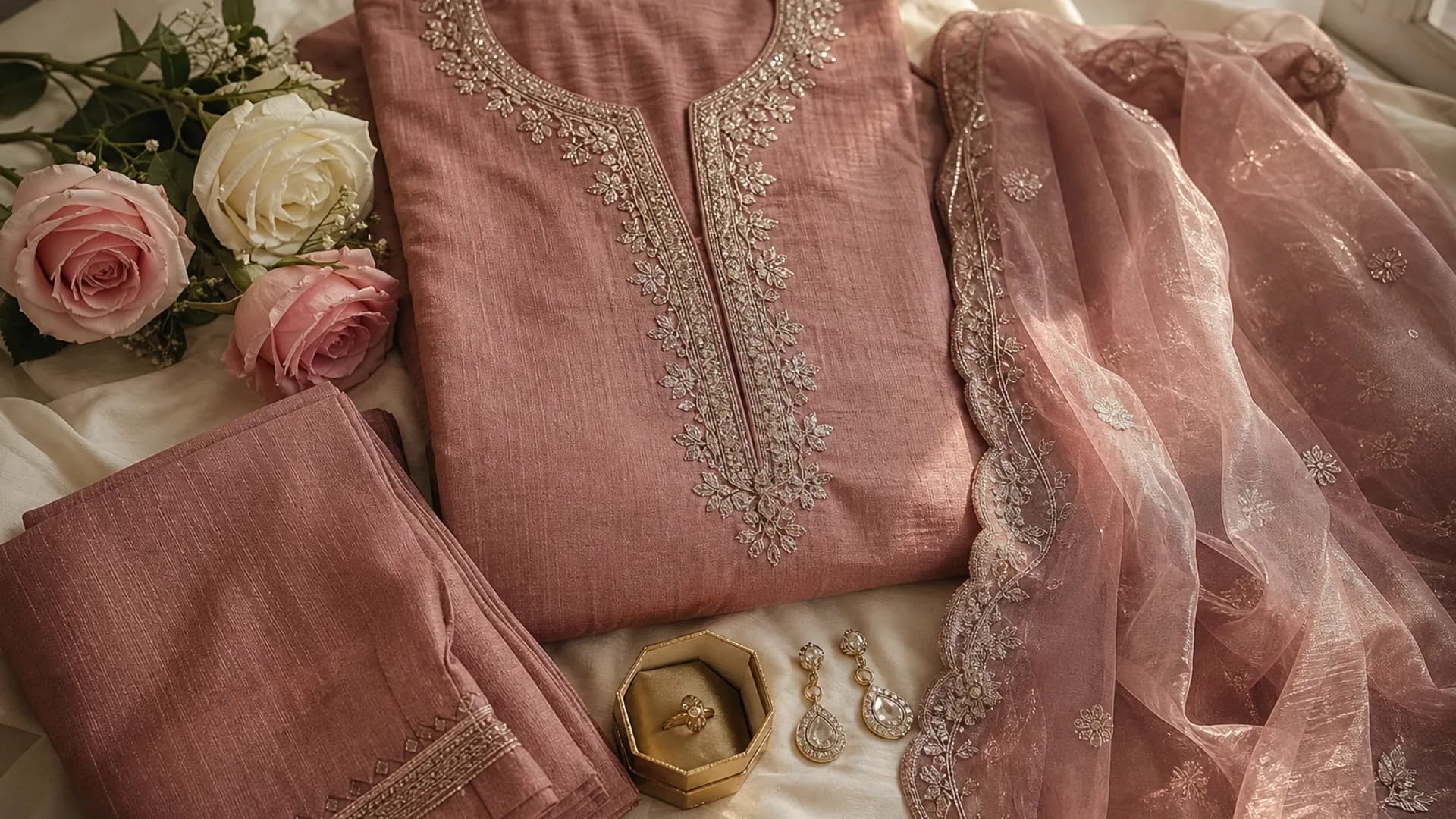
What to Wear to an Engagement or Mangni
The engagement is the hardest function to pitch — too formal and you look like you have come to the wrong event, too casual and you have underdressed the family.
The engagement is the function guests find hardest to pitch, and the reason is structural: it is not one kind of event. In some families a mangni is thirty relatives in a drawing room, tea, and a ring exchanged in twenty minutes. In others it is three hundred people in a marquee with a stage, a photographer and a full dinner — indistinguishable from a wedding function except that nobody is married at the end of it. Dressing for the first as though it were the second is the most common mistake, and it is an uncomfortable one. Dressing for the second as though it were the first is worse. So the first thing to work out is which engagement you are attending, and there is a reliable way to find out.
Work Out Which Kind It Is First
Three questions settle it, and none of them require asking anyone what to wear. **Where is it?** A home address means the smaller version. A marquee, hall or hotel means the larger one. **What time does it start?** An afternoon or early evening start — four or five o'clock — usually means tea and a ceremony. A nine o'clock start means dinner and a full evening event. **Is there a separate dinner mentioned?** If the invitation mentions dinner or a reception, dress for a wedding function. If you cannot tell, ask a cousin rather than the hosts. Failing that, aim slightly above a smart dinner and take a good dupatta you can add. It is far easier to lift a restrained outfit with jewellery and a worked dupatta than to tone down a lehenga. Our [formal wear guide](/journal/pakistani-formal-wear-guide-party-semi-formal-festive) sets out the whole ladder from semi-formal to bridal, which is useful for placing an ambiguous invitation.
The Home Mangni: Semi-Formal, Good Fabric
For the smaller version, the target is a very good everyday outfit rather than a formal one. A three-piece in raw silk, jacquard or a good jacquard-weight lawn. Light embroidery at the neckline and sleeve, nothing across the body. A dupatta that matches rather than contrasts. The reasoning is practical as well as social. You will be sitting on sofas or on the floor, in a room with more people than chairs, probably serving or helping with tea at some point. A heavily worked outfit is uncomfortable and slightly absurd in that setting. What lifts it without overdoing it: good jewellery, proper shoes, and a dupatta with a worked border. Those three carry a plain suit a long way. What reads as too much: a lehenga, a floor-length gown, heavy sequin work, and a maang tikka. Save all four. Our [angrakha guide](/journal/angrakha-kameez-how-to-style-pakistan-2026) covers a cut that manages this balance particularly well — it looks considered without needing embellishment.
The Marquee Engagement: Dress as for a Walima
For the large version, treat it as a wedding reception and dress accordingly. Full formal: worked three-piece, sharara or gharara set, or a long formal shirt with a churidar. Silk, velvet in winter, or chiffon with good embroidery for a summer evening. The distinction from a barat or walima is one of degree rather than kind. An engagement is a shade less formal than the wedding itself, so the very heaviest outfit in your wardrobe is still slightly too much — but not by much. Embellishment is expected here, and a plain outfit will read as underdressed however good the fabric is. This is the function where a worked dupatta and a properly embroidered neckline earn their place. Our [walima guest guide](/journal/walima-guest-outfit-guide-pakistan) applies almost directly, and the [party wear](/ladies/party-wear) and [formal wear](/ladies/formal-wear) sections cover the range.
Colours: Where the Engagement Differs
The engagement palette is softer and more romantic than the wedding one, and there is more freedom than at any other function of the sequence. **Pastels and soft tones lead** — dusty rose, powder blue, lilac, champagne, sage, peach. These are the engagement colours and they suit the mood of the occasion. **Metallics work particularly well.** Champagne, rose gold and old gold read as celebratory without being bridal. **Jewel tones for a winter evening event** — plum, emerald, teal, sapphire. **Red is far less restricted than at a wedding**, because the bride-to-be is usually not in red at her mangni. Check if you are close family; as a general guest it is normally fine. The one to think about: **whatever the bride-to-be is wearing.** She is often in a specific shade the family has chosen, and turning up in the same colour is the awkward outcome. A quick message to someone in the know solves it. Our guide to [colours for Pakistani skin tones](/journal/best-colours-for-pakistani-skin-tones) helps narrow which of the pastels suit you.
If You Are Close Family
Sisters, cousins and sisters-in-law sit differently at an engagement than general guests, and the calculation shifts. You will be in the photographs, repeatedly, and frequently beside the couple on a stage. That justifies a more formal outfit than the setting alone would suggest, even at a home mangni. Coordinate rather than match. A shared palette across the sisters photographs far better than identical outfits, and it lets each person pick a shade that suits her. Ask what the bride-to-be is wearing before you buy, not after. This is the single most useful question and the one most often skipped. And think about the sequence. If there is a dholki, a mehndi and a wedding still to come, plan the outfits together — the engagement is the wrong function to spend the largest part of the budget on. Our [capsule wardrobe guide](/journal/capsule-wardrobe-pakistani-women-10-pieces) makes the case for pieces that recombine across a season of functions.
Jewellery and Finishing
The engagement is a ring ceremony, so hands are photographed more than at any other function. **Look at your hands.** Nails, a manicure, and one good ring on the other hand. This is the one occasion where hands are genuinely in frame. **Earrings over necklaces** at a home mangni — a heavy necklace in a drawing room is too much. At a marquee event, either works. **Skip the maang tikka and jhoomar** unless you are immediate family at a large event. They read as bridal-adjacent at an engagement. **Bangles are worth wearing** here. They photograph well, they suit the occasion, and they are the accessory that reads as festive without reading as formal. Our [accessories guide](/journal/how-to-match-accessories-formal-pakistani-suit) covers balancing these against a worked outfit, and the [hair accessories guide](/journal/hair-accessories-pakistani-women-styling-guide) has styles for both settings. The [accessories collection](/accessories) has hand-crafted pieces if you want something less common than the usual sets.
The Reusability Question
The engagement outfit is the one most likely to be worn again, which makes it the smartest place in the wedding sequence to spend well. A barat or walima outfit is heavy, memorable and photographed exhaustively — it is difficult to repeat within the same circle. An engagement outfit sits at a level that works for Eid, a dinner, another family's function and a semi-formal event, so a good one earns back its cost several times. That argues for buying the best fabric you can at a moderate level of embellishment, rather than the heaviest embellishment at whatever fabric the budget allows. Heavy work dates quickly and is instantly recognisable; a good silk in a well-chosen colour is not. It also argues for a shape you already know suits you. An engagement is a poor place to experiment with a silhouette you have never worn. You can see the range across our [ladies collection](/ladies), and the [stitched suits](/ladies/stitched-suits) are cut at roughly this level of formality. If you want to check a colour on yourself before committing, the [Virtual Try Room](/virtual-try-room) will show you.
Frequently Asked Questions
It depends entirely on the venue. A home mangni is semi-formal — a good three-piece in raw silk with light embroidery. A marquee or hotel engagement is a full wedding function and should be dressed for like a walima. Check the venue and start time before choosing.
Usually yes, unlike at a wedding. The bride-to-be is generally not in red at her mangni, so red is far less restricted. If you are close family, ask what she is wearing first — the awkward outcome is matching her shade, not the colour itself.
Soft romantic tones lead — dusty rose, powder blue, lilac, champagne, peach and sage — along with metallics like rose gold and old gold. Jewel tones work for a winter evening event. Avoid whatever the bride-to-be is wearing.
Only to a large marquee or hotel engagement, and even then a worked three-piece or sharara set is usually the better pitch. At a home mangni a lehenga is clearly too much — you will be sitting on sofas in a crowded room, and it reads as having misjudged the occasion.
It is the best-value outfit in the whole wedding sequence, because it sits at a level you can repeat at Eid, at dinners and at other families' functions. Spend on fabric rather than embellishment — heavy work is recognisable and hard to wear twice, good silk is not.
About the Author
Habiba Minhas
Founder and creative director of Habiba Minhas, Pakistan's leading handcrafted fashion brand based in Karachi. With a passion for preserving traditional Pakistani craftsmanship while embracing modern design, she has built a brand serving over 5,000 customers nationwide.
Specializing in premium ladies suits, kids festive wear, and baby products, Habiba works directly with artisan embroiderers and skilled tailors to create pieces that honor Pakistani heritage.
Related Articles
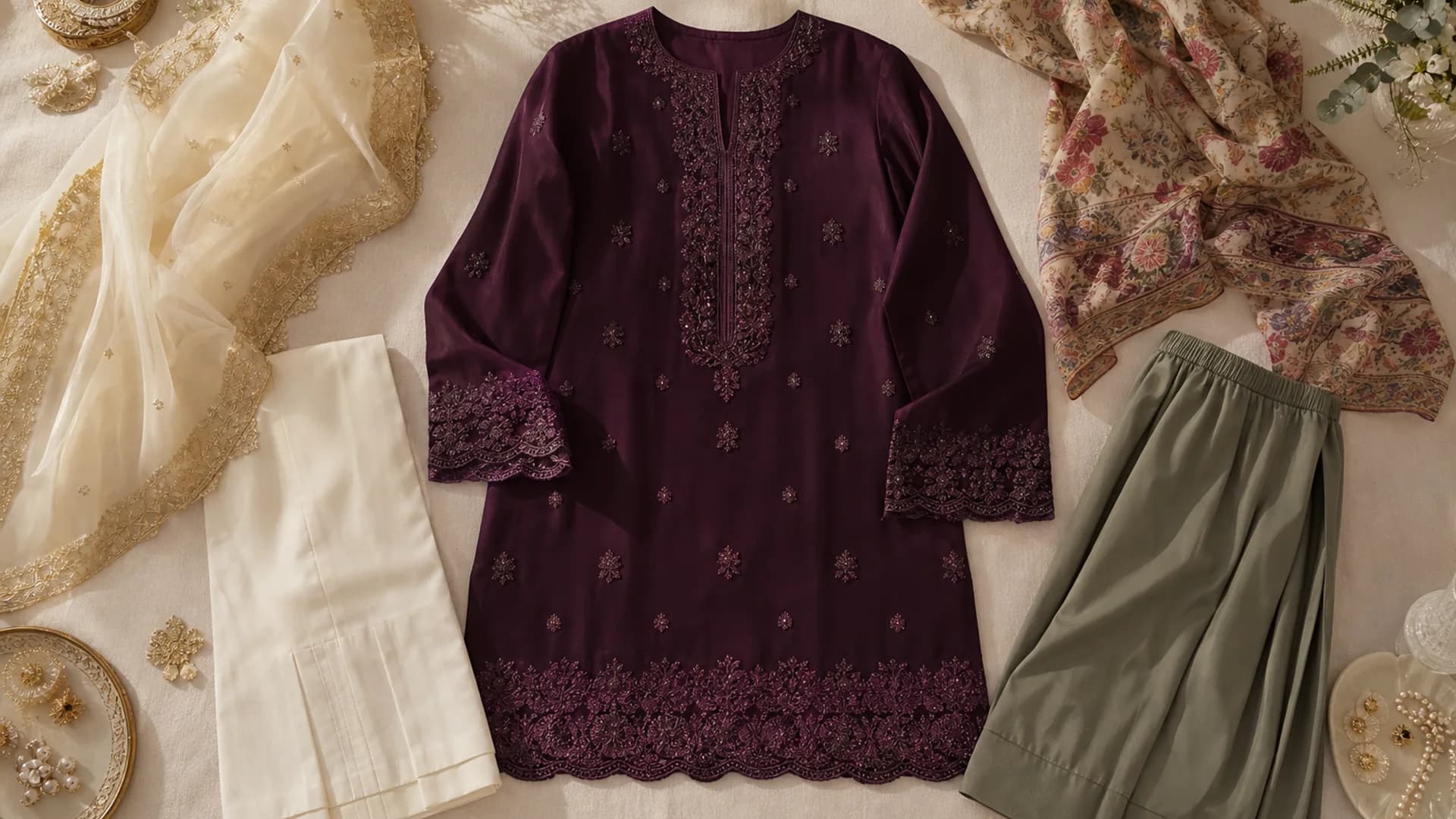
Eight Ways to Restyle a Formal Suit You Own
Most wardrobes hold three or four formal outfits that have been worn once and feel finished. Very little needs to change to make them wearable again.
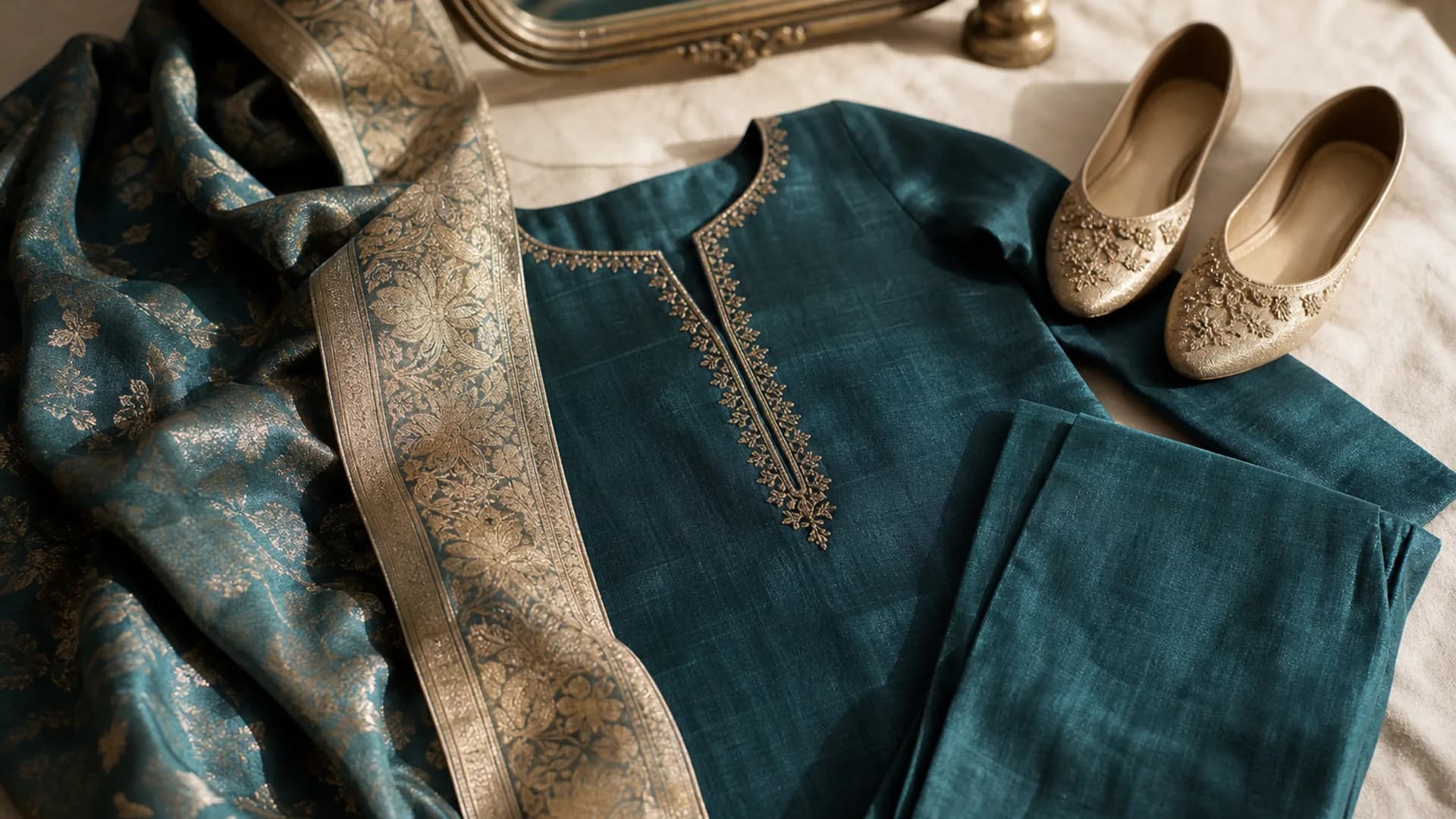
Formal Dressing in Your Forties and Fifties
There is a great deal of advice about what women over forty should stop wearing. Most of it is wrong. What actually changes is fit, fabric and comfort.
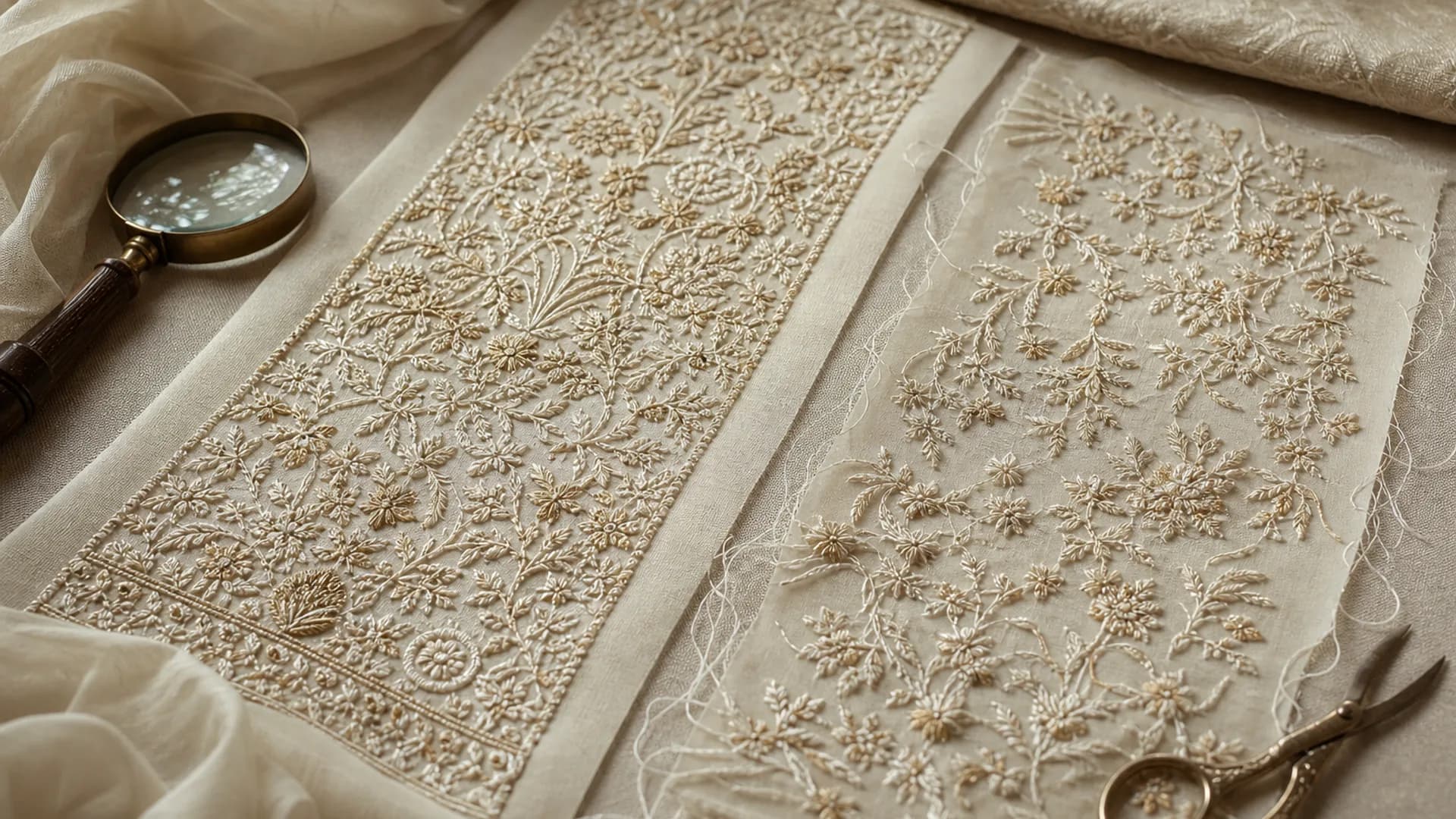
Original or Copy: How to Tell a Replica Suit
Master copies are sold openly and often honestly. The problem is when a copy is sold as an original at an original's price — here is how to tell.