

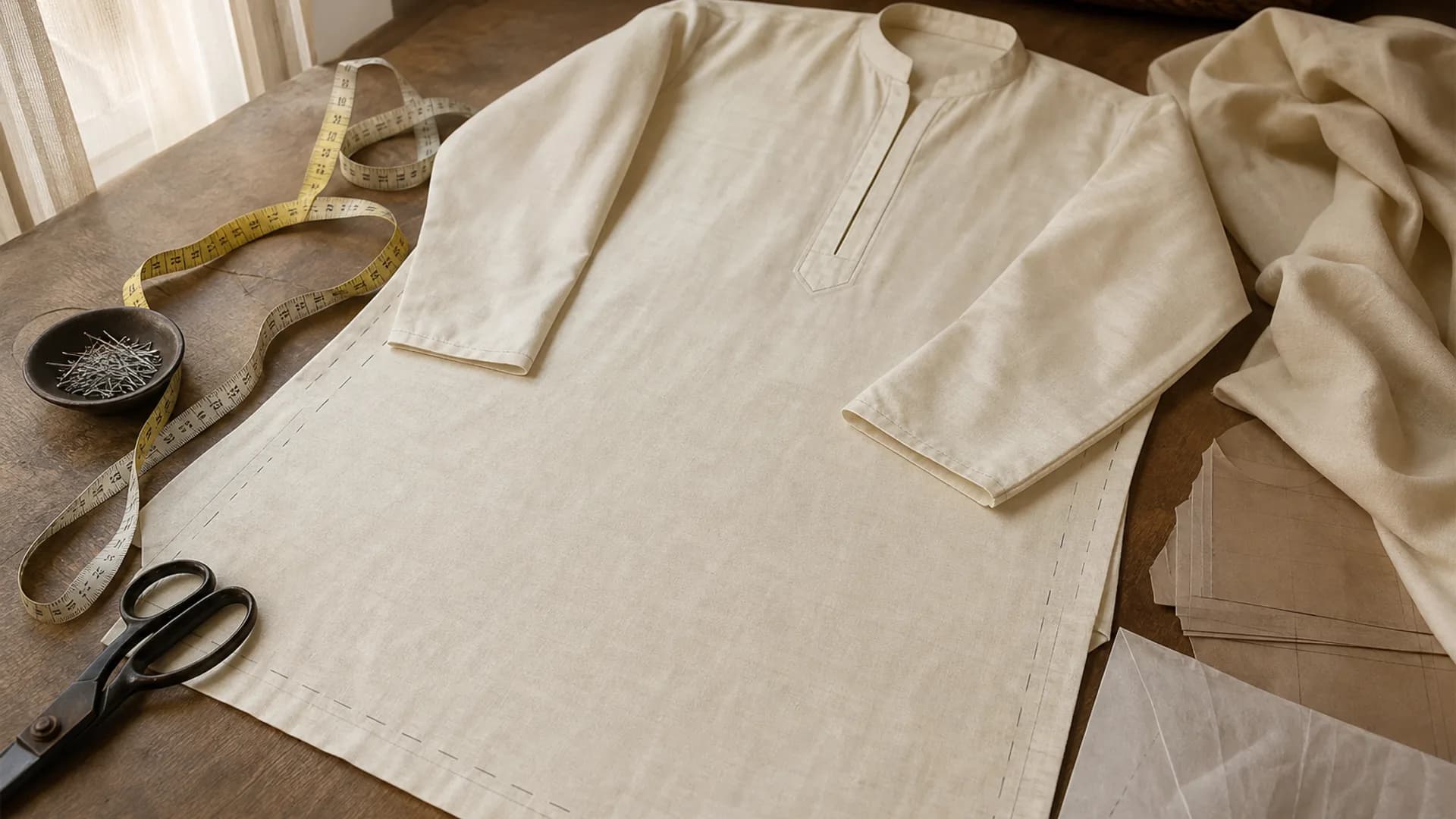
Five Alterations That Make Any Suit Fit
Ready-to-wear is cut for a body nobody has. Five small alterations, none expensive, are the difference between a suit that fits and one that just about does.
Ready-to-wear is cut to an average, and the average is a statistical body rather than a real one. Almost nobody matches it in more than three or four measurements at once. Which is why a suit that is the right size can still look wrong — the shoulder hangs, the sleeve swallows the wrist, the hem drags, and the whole thing reads as approximately correct rather than as fitting you. The fix is not to buy differently. It is to accept that ready-to-wear is a starting point and budget a small amount on top for a tailor. Five alterations cover almost every fit problem in Pakistani womenswear, none of them is expensive, and together they turn an off-the-rail suit into something that looks made. This is what to ask for and what to expect to pay attention to.
1. The Shoulder Seam
This is the most important alteration and also the most expensive, which is why it is worth avoiding the need for it at the point of purchase. **The problem:** the shoulder seam sits beyond the bony point of your shoulder. The armhole drops with it, the sleeve hangs long, and the entire garment reads as too big even though the body fits. **Why it happens:** ready-to-wear scales the shoulder up with the bust, so anyone who buys up to fit the chest inherits a shoulder they did not need. **The fix:** narrowing the shoulder means detaching the sleeve, taking in the shoulder seam and re-setting it. It is real work, and on a worked or embroidered shoulder it may not be possible at all without disturbing the embroidery. **The rule that follows:** buy for the shoulder, alter the body. A side seam is a ten-minute job; a shoulder is not. When you are checking a suit before buying, put your finger on the point of your shoulder and see where the seam falls. Our guide on [picking a size in ready-to-wear](/journal/how-to-pick-size-pakistani-ready-to-wear) covers judging this in a fitting room.
2. The Side Seams
The cheapest, quickest and most transformative alteration available. **The problem:** the shirt is straight where you are not. It fits at the bust and hangs loose at the waist, or fits at the waist and pulls at the hip. **The fix:** taking in or letting out the side seams, usually with a gentle shaping through the waist. Ten minutes on a machine. **How much shaping:** less than you think. A kameez is not meant to be fitted like a dress — a suggestion of a waist reads as tailored, a strongly nipped one reads as a different garment and is uncomfortable to sit in. **The limit:** letting out is restricted by the seam allowance, which on inexpensive ready-to-wear is often barely a centimetre. Taking in has no limit. So when in doubt between two sizes, the larger one is the more alterable purchase. **Check the side seam before buying.** Turn the garment inside out and look at how much fabric is inside the seam. It tells you how much room you have.
3. Shirt Length
The alteration that changes the proportion of the whole outfit, and the one most people never think to ask for. **The problem:** the shirt was cut for a different height, so it divides your body at the wrong point. On a shorter frame it lands mid-calf and leaves a stub of trouser below; on a taller frame it rides up and looks like it shrank. **The fix:** shortening is straightforward unless there is a worked border at the hem, in which case the border must be removed and re-applied — more work, but usually possible. Lengthening is not possible without adding a panel, which shows. **Where it should sit:** above the widest part of the thigh, or below the knee. Not in between. For most people the fingertip line is a good starting point. **Say a number, not a description.** Measure a shirt you already own and like from the shoulder to the hem, and give the tailor that number in inches. "A bit shorter" is how alterations go wrong. Our [petite styling guide](/journal/how-to-look-taller-pakistani-suits-petite) covers why this one measurement does more for proportion than anything else.
4. Sleeve Length and Width
Two separate problems that both read as the same thing: a sleeve that looks borrowed. **Length.** A sleeve should end at the wrist bone or just above. Past the wrist and it covers the hand, shortens the arm and gets in the way of eating. This is a five-minute alteration on a plain sleeve, more involved on a worked cuff. **Width.** A sleeve that grips the upper arm shows a visible line through the fabric and is the most common fit complaint in ready-to-wear. Letting out the underarm seam is easy where there is allowance; where there is not, a tailor can insert a small gusset, though it will show on a plain fabric. **The three-quarter option.** If a sleeve is too tight at the wrist and too long, shortening it to three-quarter length solves both at once and is the most flattering length on most arms. **Armhole depth** is the third variable and the one that decides comfort. A deep loose armhole feels roomy and looks bulky; one cut close to the underarm is what makes a garment look tailored. Raising an armhole is real work — check it before buying rather than planning to fix it.
5. Trouser Length and Waist
The alteration people leave until it is too late, and the one that undoes all the others when it is wrong. **Length.** Hem in the shoes you will actually wear. A trouser hemmed flat and worn with a three-inch heel sits several inches short; one hemmed for heels drags in flats and picks up dirt. This matters most for palazzos, shararas and ghararas, which should just clear the floor. Our [shoes guide](/journal/shoes-with-pakistani-formal-wear-guide) covers choosing the shoe first. **Waist.** Ready-to-wear trousers are usually elasticated, which is comfortable and forgiving but bulky under a fitted shirt. A tailor can replace elastic with a flat front and a side zip, or simply shorten the elastic, which takes minutes. **Rise.** The distance from crotch to waistband is rarely right and is rarely adjusted. A low rise under a short kurti is the most common problem — it drags the whole line down. Raising the rise means re-cutting the waistband and is worth it on a piece you will wear often. **Do the trousers last.** Hem after the shirt length is settled, because the two decisions interact.
Working With a Tailor
A few habits that produce better results than describing what you want. **Bring a garment that fits.** The single most useful thing you can do. A tailor can copy measurements off a shirt you already love in two minutes, and it removes all ambiguity. **Wear the right underclothes and shoes to the fitting.** Both change the fit measurably. **Ask for one change at a time on a piece you care about.** Alterations interact — taking in the side seam changes where the sleeve sits — and it is easier to correct one thing than to unpick three. **Ask what cannot be undone.** Cutting is permanent. A good tailor will tell you when an alteration is one-way, and that is the moment to be certain. **Keep your measurements written down.** Chest, waist, hip, shoulder seam to seam, sleeve length, shirt length, trouser length and rise. Eight numbers in your phone makes every future purchase easier, online or in person. Our [size guide](/content/size-guide) shows how ours are measured so you can compare.
What Not to Alter
Some things cost more to fix than the garment is worth, and knowing them changes what you buy. **A worked shoulder or a worked armhole.** Detaching a sleeve through embroidery usually damages it. If the shoulder is wrong on a heavily worked piece, it will stay wrong. **All-over embroidered side seams.** Taking in through dense work means cutting through the embroidery, and it will show. **Anything more than two sizes out.** Beyond that the proportions are wrong everywhere at once — the dart placement, the armhole, the neckline width — and the result is a garment that fits without looking right. **A neckline that is too small.** Deepening is easy; raising or narrowing means adding fabric, and the join shows. Our [neckline guide](/journal/kameez-neckline-guide-which-suits-you) covers ordering conservative and deepening later. **Pleated or gathered ghararas below the knee joint.** The construction cannot be shortened without rebuilding it. The pattern in all of these: buy for the parts that cannot be altered — shoulder, armhole, worked areas — and let the tailor handle the rest. If you want to check how a cut sits before ordering, the [Virtual Try Room](/virtual-try-room) will show you, and the [stitched suits](/ladies/stitched-suits) are where to start.
Frequently Asked Questions
The shoulder seam sitting on the point of your shoulder rather than beyond it. When it hangs off, the armhole drops, the sleeve lengthens and the whole garment reads as too big. It is also the most expensive to fix, so buy for the shoulder and alter the body instead.
Bigger — but only if the shoulder still fits. Taking in a side seam has no limit; letting one out is restricted by the seam allowance, which on inexpensive ready-to-wear is often barely a centimetre. Turn the garment inside out and look at the seam before deciding.
Usually yes, but it means removing the border and re-applying it higher, which is more work than a plain hem. Lengthening is a different matter — it requires adding a panel and the join always shows, so buy long and shorten rather than the reverse.
Last, and in the shoes you will actually wear. Heel height changes where the hem falls by several inches, and the shirt length should be settled first because the two decisions interact. Palazzos, shararas and ghararas should just clear the floor.
A worked shoulder or armhole, since detaching a sleeve through embroidery damages it; side seams through dense all-over work; and anything more than two sizes out, where the dart placement and armhole are wrong everywhere at once. Buy for what cannot be altered.
About the Author
Habiba Minhas
Founder and creative director of Habiba Minhas, Pakistan's leading handcrafted fashion brand based in Karachi. With a passion for preserving traditional Pakistani craftsmanship while embracing modern design, she has built a brand serving over 5,000 customers nationwide.
Specializing in premium ladies suits, kids festive wear, and baby products, Habiba works directly with artisan embroiderers and skilled tailors to create pieces that honor Pakistani heritage.
Related Articles
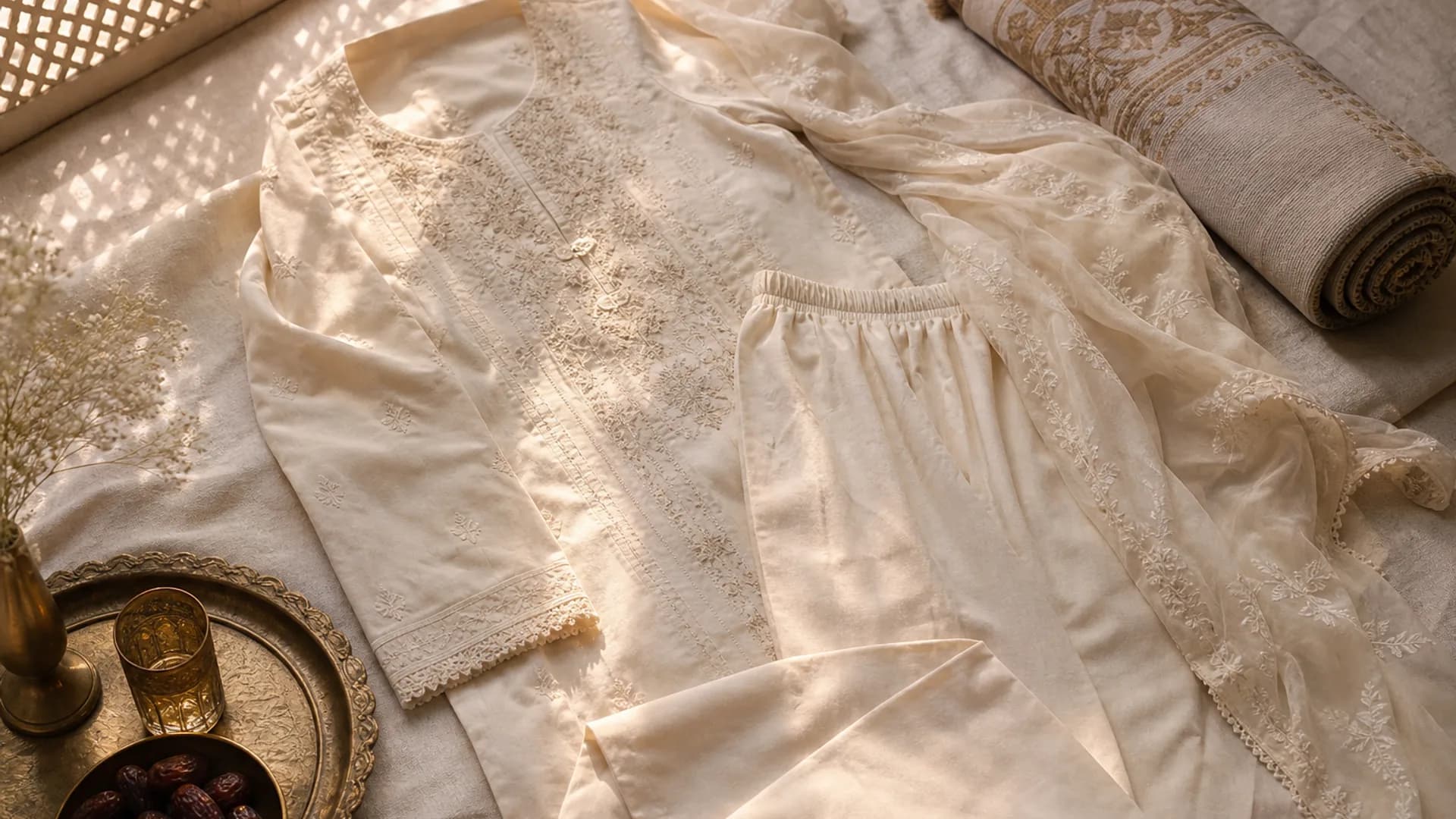
Dressing for Ramadan and Iftar Gatherings
Ramadan runs a month, and the clothing has to work for fasting through the afternoon and hosting in the evening. The two are different problems.
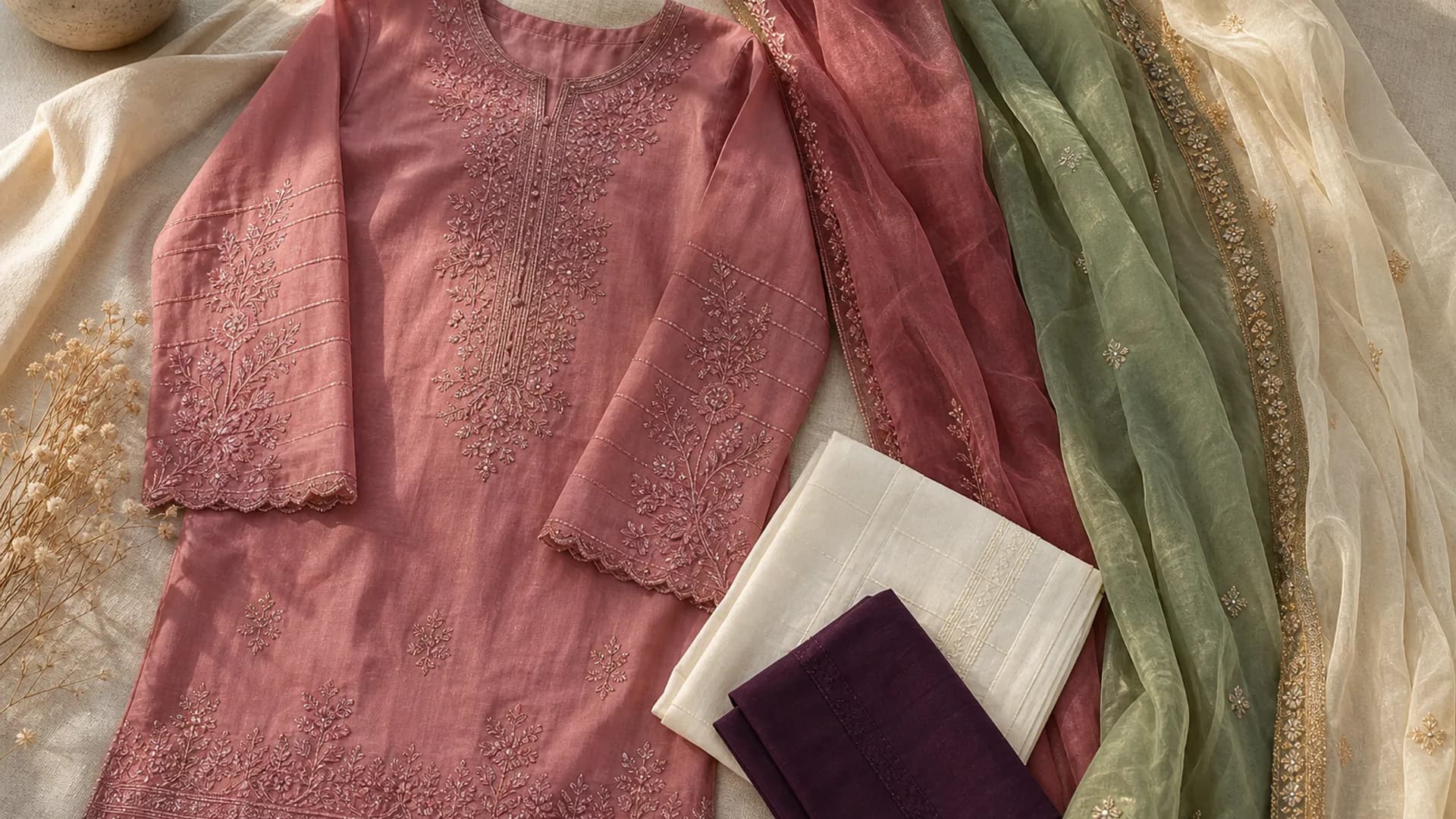
Matching a Dupatta or Trouser to a Shirt
Almost matching looks worse than clearly not matching. Here is how to pair pieces bought separately so the outfit reads as deliberate.
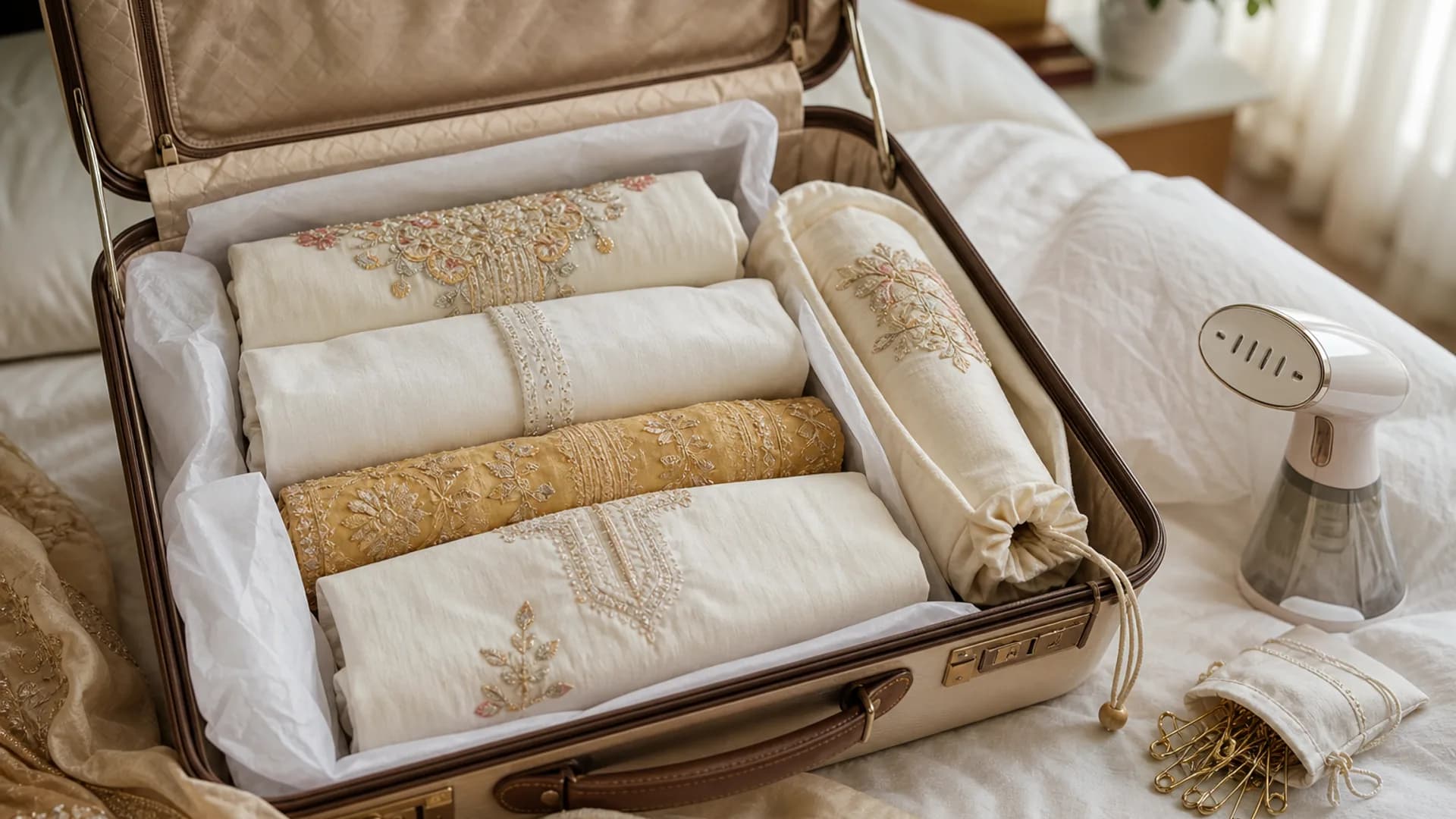
Packing Formal Wear Without Ruining It
A heavily worked outfit and a suitcase are natural enemies. A specific folding method and twenty minutes on arrival is the difference between wearable and not.