

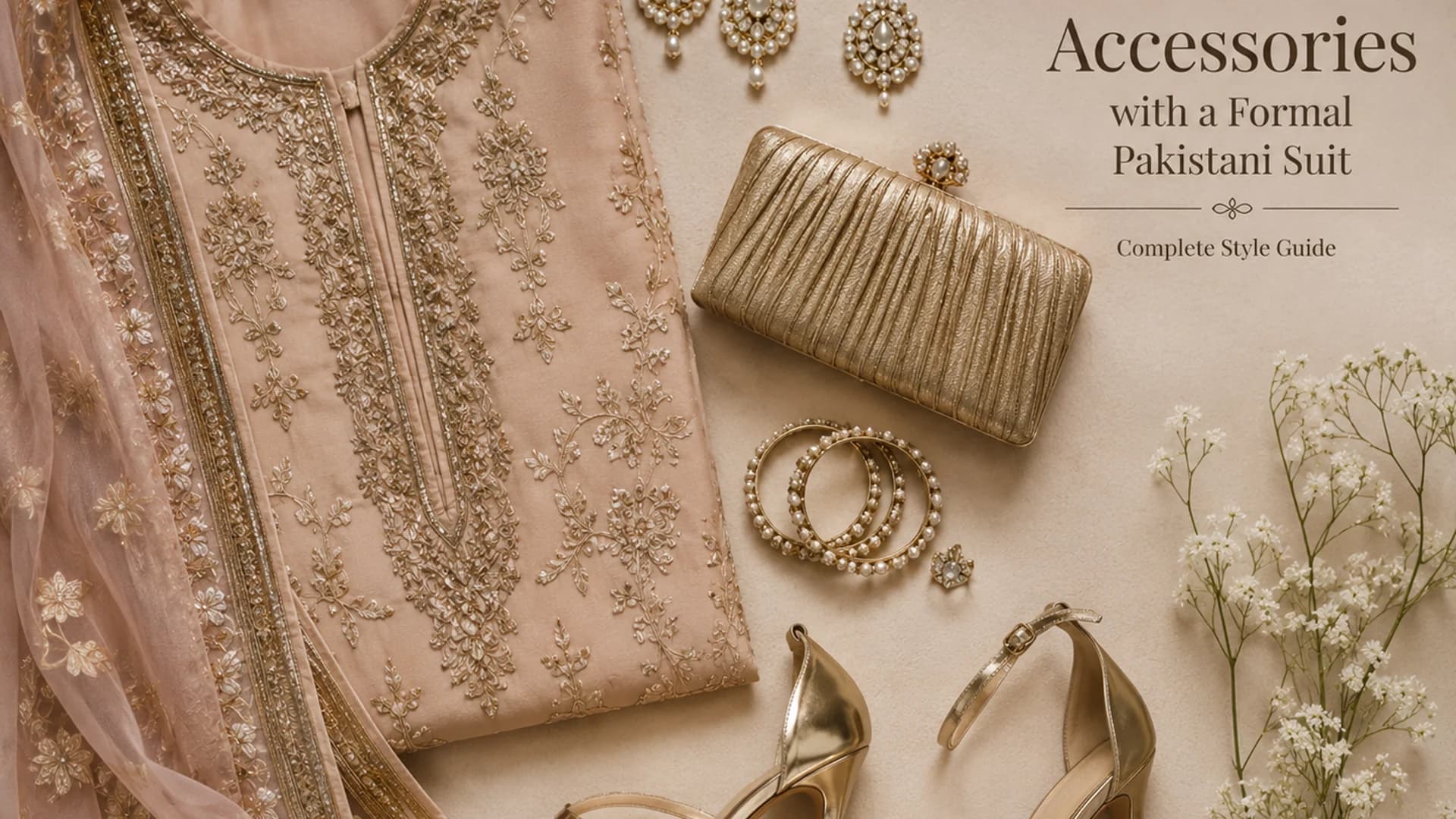
How to Match Accessories with a Formal Pakistani Suit
Accessories can make or break a formal Pakistani outfit. The right jewelry, footwear, and bag elevate your suit from nice to unforgettable — but the wrong choices create visual clutter. Here's how to match accessories to your formal suit with confidence.
You've found the perfect formal suit for an upcoming wedding — the fabric is luxurious, the embroidery is exquisite, and the fit is flawless. Now comes the final challenge: accessorizing. Pakistani formal wear walks a fine line between elegance and excess. Too few accessories and your outfit looks incomplete; too many and you veer into overwhelming territory. The key is understanding how to match accessories to your suit's neckline, color, embellishment level, and the occasion itself. This guide covers jewelry selection (earrings, necklaces, bangles), footwear pairing, bag choices, and color coordination principles. Whether you're dressing for a barat, Eid gathering, or formal dinner, you'll learn how to create a cohesive, polished look that lets both your suit and accessories shine.
Matching Jewelry to Neckline: The Foundation of Good Accessorizing
Your kameez neckline dictates which jewelry will work best. The wrong necklace-neckline pairing creates awkward visual competition; the right pairing enhances both elements.
V-Neck and Deep Necklines
V-necks create a vertical line that elongates the neck and draws the eye down. Pair with delicate pendant necklaces that follow the V-shape, or skip the necklace entirely and let statement earrings do the work. Chokers clash with V-necks — they cut the line and look cramped.
Round and Scoop Necklines
Round necklines have gentle curves that work beautifully with short necklaces, chokers, or princess-length pieces that sit just above the collarbone. These necklines can handle more ornate jewelry without looking cluttered. Avoid very long necklaces that hang past the neckline's curve — they disrupt the silhouette.
Boat Necks and Wide Necklines
Boat necks expose your shoulders and collarbones, making them perfect for showcasing statement necklaces. Go bold — chunky pieces, layered necklaces, or ornate collar-style jewelry all work. Since the neckline is wide, you have room to experiment without overwhelming your look.
High Necks and Mandarin Collars
High necklines are already a statement, so skip the necklace entirely. Let your earrings be the star. Long, dramatic earrings like jhumkas or chandelier styles work especially well with high necks since there's no necklace competing for attention.
Asymmetrical and One-Shoulder Necklines
Asymmetry requires careful balance. Choose one side for jewelry — if the neckline is bare on one shoulder, wear a statement earring on that side and keep the covered side minimal. Alternatively, skip necklaces and opt for bold cuff bracelets or bangles.
Earrings Guide: Jhumkas, Chaand Bali, Studs & More
Earrings are non-negotiable for Pakistani formal wear — they frame your face and complete your look. Here's how to choose the right style.
- Jhumkas (bell-shaped earrings): The quintessential Pakistani choice for weddings and formal events. Work with almost all necklines and suit styles. Choose smaller jhumkas for daytime events, larger for evening functions.
- Chaand Bali (crescent moon earrings): Elegant and timeless, perfect for formal dinners and semi-formal occasions. Pair with simple necklaces or no necklace at all.
- Long Chandelier Earrings: Best for high necklines or when you're skipping a necklace. They create dramatic vertical lines that elongate your silhouette. Avoid with heavy necklaces — too much visual weight.
- Studs and Small Hoops: Great for minimalist styling or when your suit has heavy neckline embroidery. Also ideal for daytime formal events like Eid prayers or morning receptions.
- Dangling Chain Earrings: Modern and fashion-forward. Work well with contemporary silhouettes like straight kurtas and palazzo pants. Less appropriate for traditional bridal-style suits.
Bangles and Bracelets: Wrist Coordination
Pakistani formal wear traditionally includes bangles or bracelets — bare wrists look unfinished. The key is coordinating them with your outfit without overdoing it.
Metal Bangles (Kara Style)
Thin metal bangles, worn in sets of 6-12, are classic and versatile. Gold bangles work with warm-toned suits (reds, maroons, oranges); silver with cool tones (blues, greens, purples). Mix metals carefully — gold and rose gold can work together; gold and silver typically clash.
Embellished Bangles
Bangles with stones, kundan work, or enamel add color and sparkle. Match the embellishment color to your suit or dupatta. Limit to 4-6 bangles per wrist — more looks heavy. Pair with simple earrings if your bangles are heavily embellished.
Cuff Bracelets
Modern and statement-making. One wide cuff on each wrist is enough. Works beautifully with contemporary suits, straight kurtas, and minimalist styling. Less traditional, so skip for very formal or conventional events.
Matching Your Necklace
If you're wearing a matching jewelry set, keep bangles in the same metal and style as your necklace and earrings. Sets create cohesion; mixing styles can look disjointed unless done intentionally with a stylist's eye.
Footwear Matching: Khussas, Heels & Sandals
Your footwear should complement your suit in both style and formality level. Here's how to choose.
Khussas (Traditional Embroidered Flats)
Khussas are perfect for weddings, Eid, and traditional formal events. Match the embroidery color to your suit or dupatta. Heavily embroidered khussas work with heavily embroidered suits; simple khussas with minimalist outfits. They're comfortable for long events but less formal than heels.
Block Heels and Kitten Heels
The formal, comfortable middle ground. Block heels provide height and elegance while being stable enough for standing and walking. Choose neutral colors (nude, gold, silver) that work across multiple outfits, or match your heel color to your suit for a monochromatic look.
Strappy Heels and Stilettos
The most formal footwear option. Best for evening events, receptions, and occasions where you'll mostly be seated. Metallic heels (gold, silver, rose gold) are versatile and work with most suit colors. Avoid very high stilettos if you'll be walking on grass or uneven surfaces.
Embellished Sandals
Open-toe sandals with embellishments bridge traditional and modern. Work well for semi-formal events like mehndi or dholki. Match embellishment colors to your outfit. Keep jewelry minimal if your sandals are heavily decorated.
Bags and Clutches: The Final Touch
A formal Pakistani outfit needs a bag, but it should enhance rather than distract. Here's how to choose.
- Metallic Clutches: Gold, silver, and rose gold clutches are wardrobe staples — they work with almost any suit color and formality level.
- Embellished Potlis: Traditional drawstring bags in embroidered or beaded designs. Perfect for weddings and very formal events. Match the embellishment style to your suit.
- Envelope Clutches: Sleek and modern. Work well with contemporary silhouettes and minimalist styling. Choose solid colors that complement your suit.
- Box Clutches: Structured and formal. Best for evening events and receptions. Can be plain or embellished depending on your suit style.
- Size Matters: Your clutch should be proportional to your silhouette. Petite women look overwhelmed by oversized bags; tall women can carry larger clutches elegantly.
Color Coordination: Rules and Guidelines
Matching accessory colors to your suit can make or break your look. Follow these principles for cohesive styling.
✅ Do:
- Match one accessory element to your suit color — if your suit is emerald, choose emerald earrings OR an emerald clutch, not both
- Use metallic accessories (gold, silver, rose gold) as neutrals that work across colors
- Pull accent colors from your dupatta or embroidery for accessories — if your navy suit has gold embroidery, gold accessories are a natural choice
- Consider the formality of your color choices — pastels and soft tones suit daytime; jewel tones and metallics suit evening events
- Match your jewelry metal to your skin undertone — gold complements warm undertones, silver suits cool undertones
❌ Don't:
- Don't match every single accessory to your suit color — it looks costumey rather than styled
- Avoid mixing too many colors — stick to your suit color plus one or two accent colors from your embroidery or dupatta
- Don't wear all-gold jewelry with a gold brocade suit — the monotone shimmer is overwhelming
- Never wear black accessories with pastel or light-colored suits — the contrast is too stark and formal
Occasion-Based Accessory Levels
Different occasions call for different accessory volumes. Here's your guide.
Weddings (Barat, Walima): Go Bold
This is the time for statement jewelry, embellished heels, and ornate clutches. Layer bangles, wear dramatic earrings, add a necklace if your neckline allows. Weddings are celebratory — your accessories should reflect that.
Eid Gatherings: Balanced Elegance
Choose 2-3 accessory types maximum. Earrings, bangles, and simple footwear are enough. Skip heavy necklaces unless your suit is very simple. The focus is on the festive spirit, not showcasing jewelry.
Formal Dinners and Corporate Events: Minimal Sophistication
Less is more. Simple earrings, a delicate necklace or bracelet, neutral heels, and a sleek clutch. The goal is polish, not opulence.
Mehndi and Dholki: Playful and Comfortable
Skip heavy jewelry that will get in the way while dancing. Choose lightweight earrings, skip necklaces, wear comfortable footwear (khussas or block heels), and bring a small potli. Function over formality.
Frequently Asked Questions
Not necessarily. Matching one element (like earrings) to your suit creates cohesion, but matching everything can look overdone. Metallic accessories (gold, silver) work as neutrals with most colors. Pull accent colors from your embroidery or dupatta for a coordinated look without perfect matching.
It's possible but tricky. Mixing metals works best when done intentionally — for example, a two-tone watch or jewelry that combines both metals. Random mixing (gold bangles + silver earrings) typically looks uncoordinated. When in doubt, stick to one metal family.
When your neckline is heavily embroidered, skip the necklace entirely and let your suit be the statement. Focus on earrings and bangles instead. A necklace competes with neckline embroidery and creates visual clutter.
For thin metal bangles, 6-12 per wrist is standard. For embellished or wider bangles, 4-6 per wrist is enough. If you're wearing a statement cuff bracelet, one per wrist is sufficient. The heavier your other jewelry, the fewer bangles you should wear.
Metallic heels or sandals in gold, silver, or rose gold are the most versatile — they work with almost any suit color and formality level. Nude block heels are also excellent wardrobe staples for formal Pakistani wear.
Black clutches work best with darker suit colors like navy, maroon, or emerald. With light or pastel suits, black creates too much contrast. Choose metallic or neutral clutches for lighter outfits.
Look for brands that offer coordinated accessories designed to complement Pakistani formal wear. At Habiba Minhas, our accessories collection includes jewelry, footwear, and bags curated to match our ladies suits. Shop accessories that complete your look.
Final Thoughts: Accessorizing as an Art Form
Matching accessories to a formal Pakistani suit is as much about restraint as it is about selection. The goal isn't to wear all your beautiful jewelry at once — it's to choose pieces that enhance your outfit without overwhelming it. Start with your suit's neckline and embellishment level as your guide, then build your accessories around those elements. Consider the occasion, the time of day, and your personal comfort. A well-accessorized outfit looks effortless, even though it's the result of thoughtful choices. For more styling guidance, explore our dupatta draping guide and hair accessories styling tips. And browse our ladies collection and accessories for coordinated pieces designed to work together beautifully.
About the Author
Habiba Minhas
Founder and creative director of Habiba Minhas, Pakistan's leading handcrafted fashion brand based in Karachi. With a passion for preserving traditional Pakistani craftsmanship while embracing modern design, she has built a brand serving over 5,000 customers nationwide.
Specializing in premium ladies suits, kids festive wear, and baby products, Habiba works directly with artisan embroiderers and skilled tailors to create pieces that honor Pakistani heritage.
Related Articles
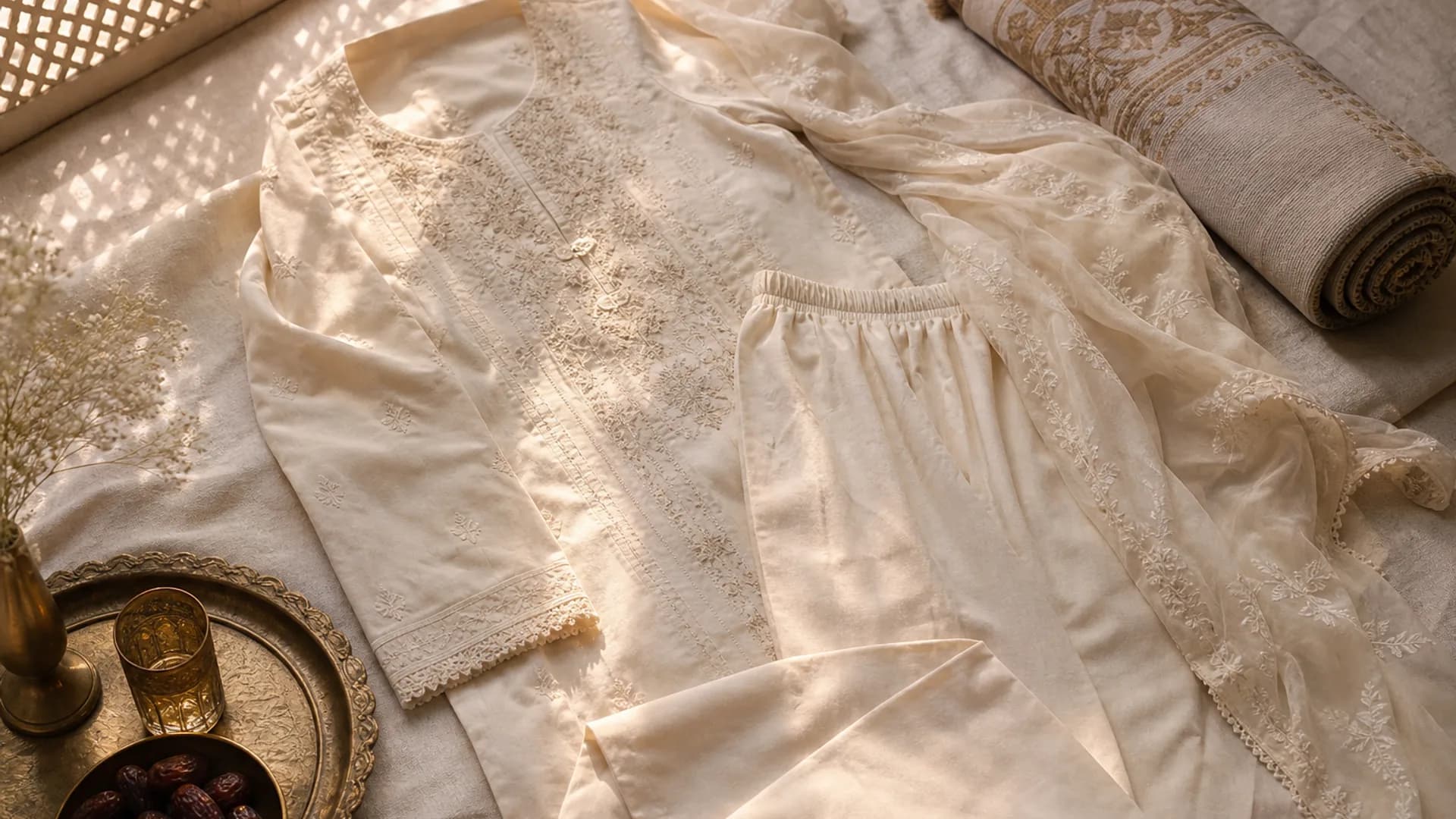
Dressing for Ramadan and Iftar Gatherings
Ramadan runs a month, and the clothing has to work for fasting through the afternoon and hosting in the evening. The two are different problems.
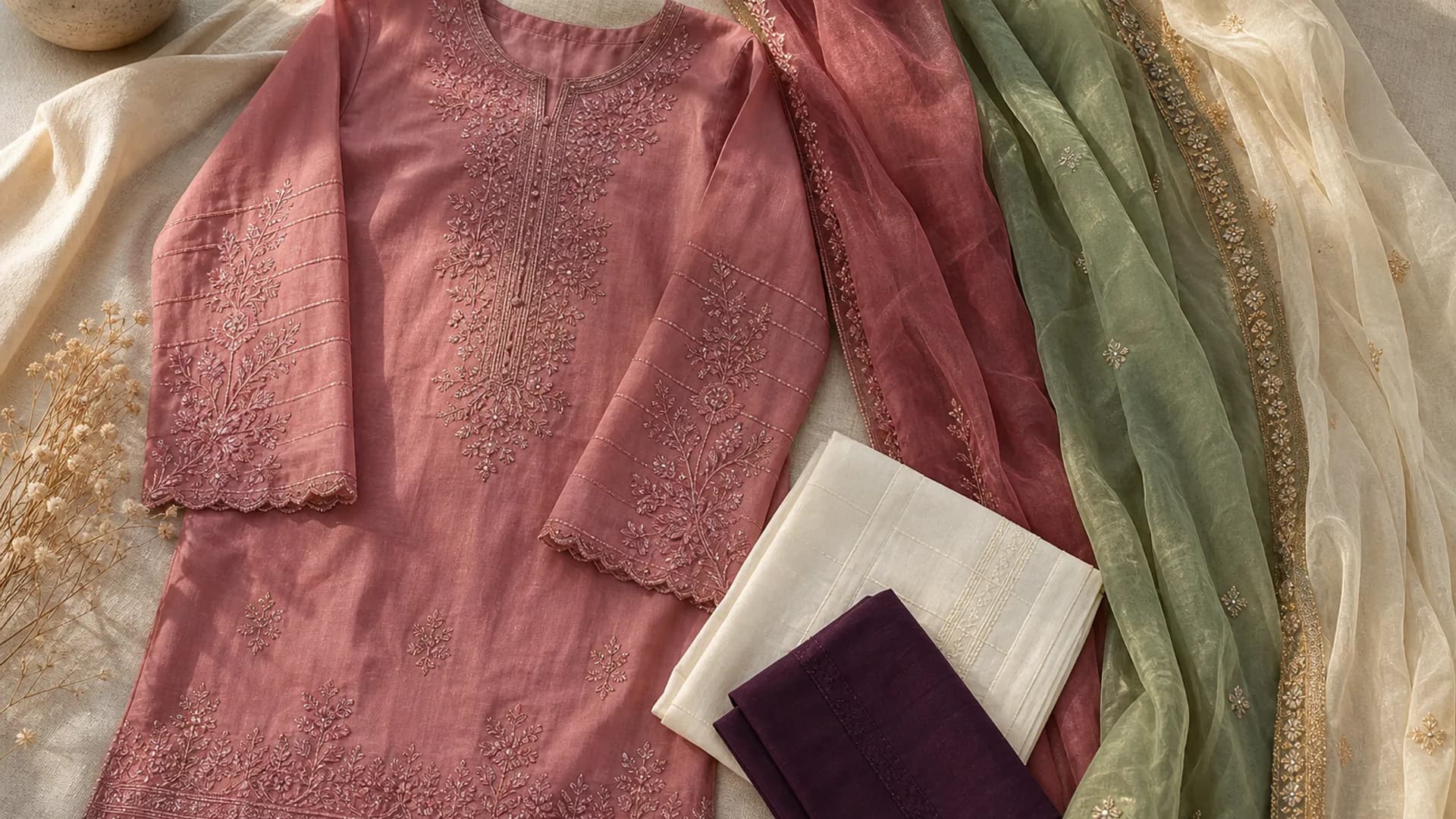
Matching a Dupatta or Trouser to a Shirt
Almost matching looks worse than clearly not matching. Here is how to pair pieces bought separately so the outfit reads as deliberate.
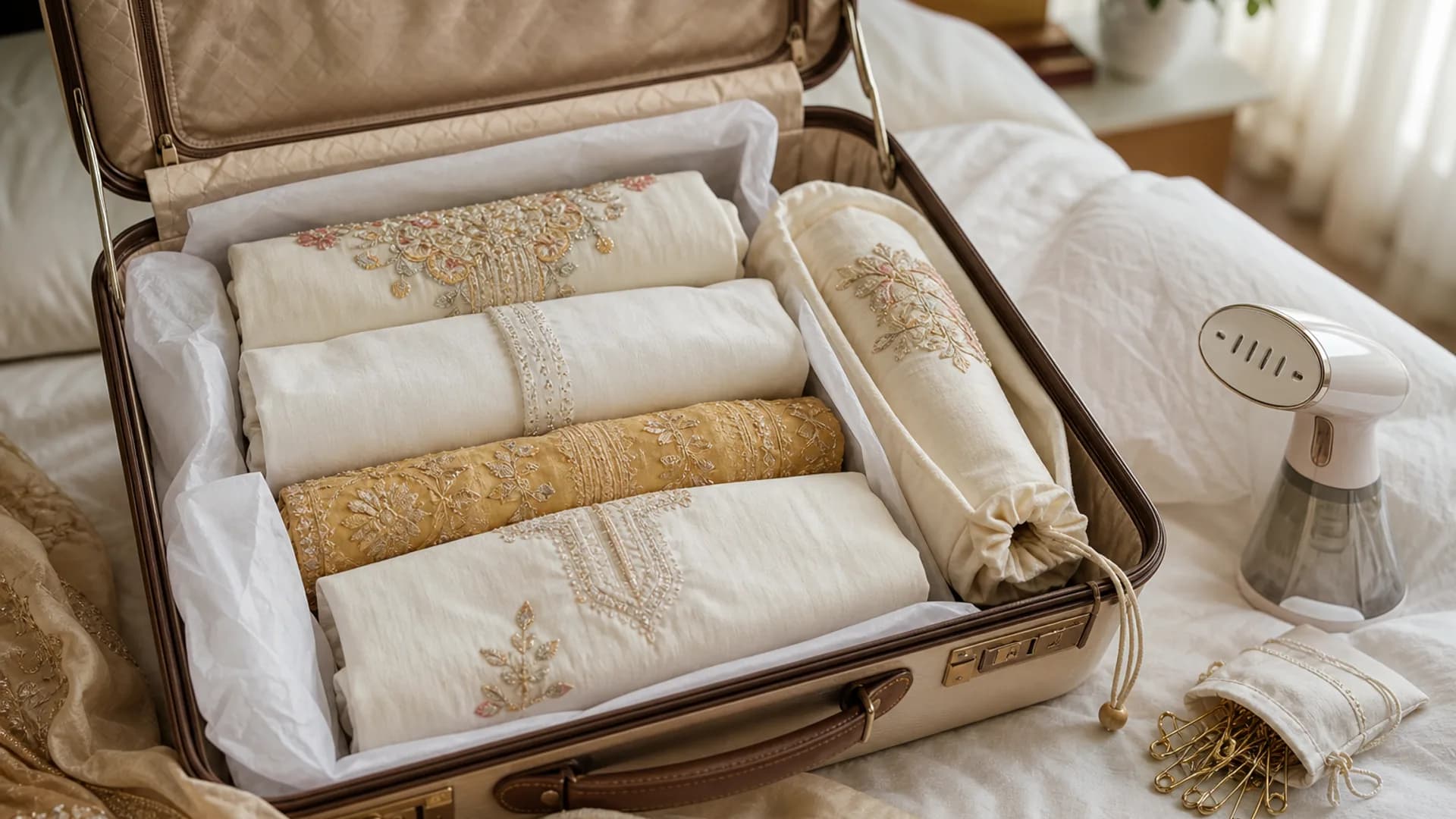
Packing Formal Wear Without Ruining It
A heavily worked outfit and a suitcase are natural enemies. A specific folding method and twenty minutes on arrival is the difference between wearable and not.