

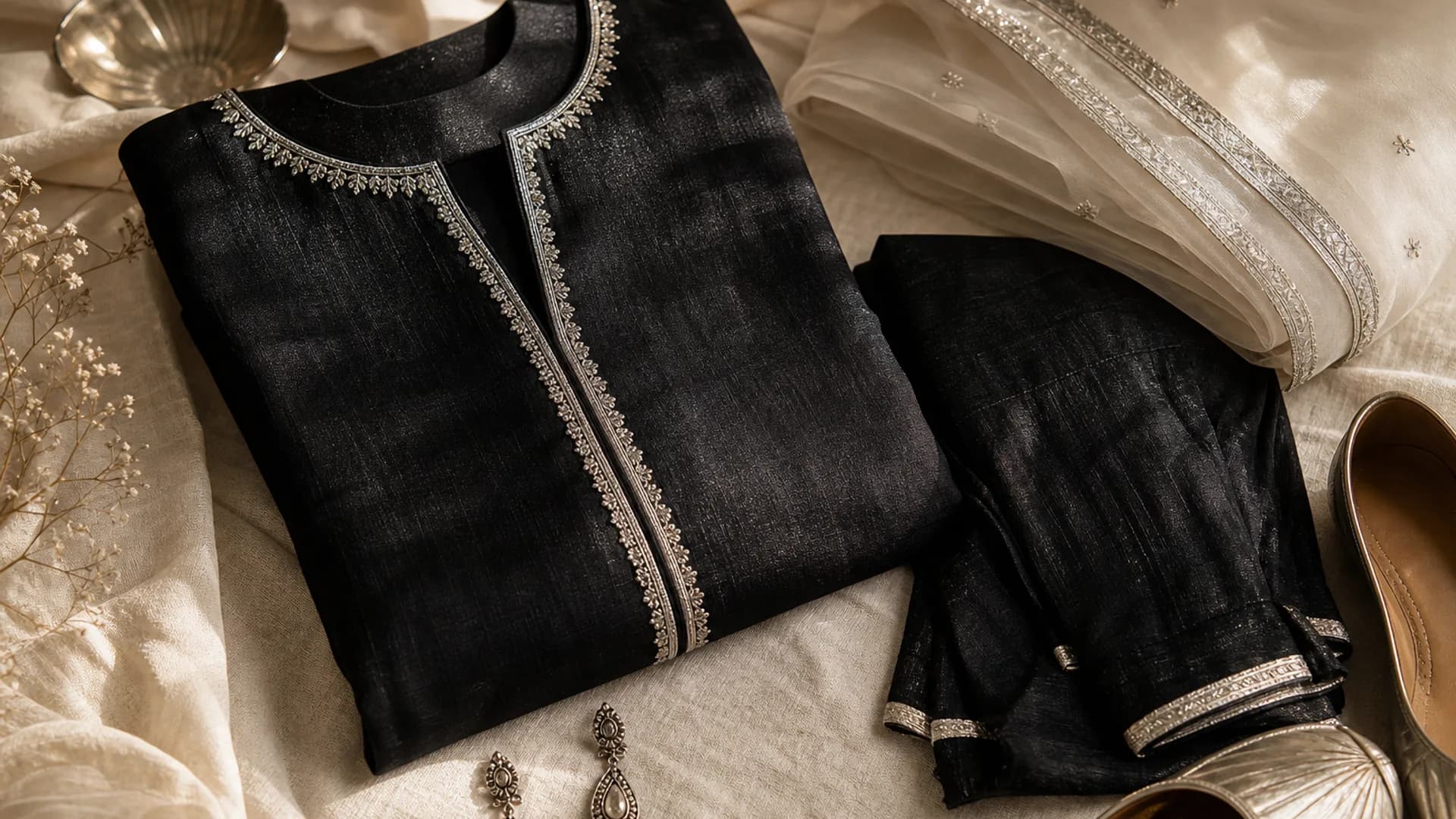
Black Formal Wear: How to Wear It Properly
Black is the safest purchase and the least forgiving colour to actually wear. Here is how to make it look expensive rather than plain, and when to leave it in the cupboard.
Black is the most bought and least thought-about colour in a formal wardrobe. It is the fallback when nothing else suits, the safe choice online, and the outfit people reach for when they do not want to think. It is also the hardest colour in Pakistani formal wear to actually wear well, for two reasons that pull against each other. First, black hides detail. Embroidery, texture and cut all disappear into it under low light, which is exactly the light most Pakistani functions happen in. A beautifully worked black outfit can photograph as a black shape. Second, black is not neutral socially here in the way it is in a Western wardrobe. There are functions where it is unremarkable and functions where it will be noticed. Both are manageable, and black done well is genuinely striking. It just needs more decisions than a colour does.
Where Black Is Welcome, and Where It Is Not
This varies by family and region more than any other colour question, so the honest answer is to ask. But the general pattern is consistent. **Generally fine:** walima, reception, dinners, dawats, corporate and semi-formal events, Eid evening gatherings, engagement parties in a hall. **Usually avoided:** mehndi and dholki, where black sits oddly against a deliberately bright palette, and where many families treat it as inauspicious for pre-wedding celebration. **Ask first:** barat and nikah. Some families have no view at all; others consider black inappropriate at a wedding ceremony. It costs one message to find out. **Widely avoided:** Eid morning in many households, where the convention is new clothes in bright or fresh colours. The underlying association is that black is linked to mourning in parts of Pakistani culture and to Muharram observance in others. That reading has softened considerably in cities and among younger families, but it has not vanished, and a guest in full black at a barat in a more traditional family will be noticed. Our [barat guest guide](/journal/barat-outfit-ideas-guests-pakistan) covers the wider etiquette.
Fabric Is Doing All the Work
This is the single most important thing to understand about black: with no colour to look at, the eye reads texture and sheen instead. So the fabric is not a supporting choice, it is the entire outfit. **Raw silk** is the best black in Pakistani formal wear. The slubbed texture catches light unevenly, which gives a black outfit depth and stops it reading flat. **Velvet** is exceptional in black and the reason black velvet is a winter staple. It absorbs light in the pile and reflects along the nap, so it has visible dimension even in a dark room. **Organza and net** work as the dupatta, where sheerness prevents the outfit becoming a solid block. **Chiffon** is good, particularly with a sheen, and it moves — movement is what saves black from looking static. **What to avoid: flat matte polyester.** A black synthetic has no texture, no sheen shift and no depth, and it reads as cheap in a way that the same fabric in a colour does not. Black is the least forgiving colour for a poor fabric. Our guide on [telling real silk from fake](/journal/how-to-tell-real-silk-from-fake-pakistan) covers checking, and the [fabric glossary](/content/fabric-glossary) explains the labels.
Choosing the Metal
Black needs a contrast, and the metal you pair it with sets the whole register of the outfit. **Silver** reads modern, cool and slightly formal-Western. It is crisp against black and photographs cleanly. Best for evening events, receptions and dinners. **Antique gold** reads traditional and warm. It softens black considerably and is the more Pakistani of the two choices. Best for weddings and family functions. **Bright yellow gold** is the strongest contrast and the most festive. It can tip into heavy quickly, so it suits placed work at the neckline rather than all-over. **Rose gold and bronze** sit between the two and are the most flattering against warm skin tones. **Pearl and ivory** against black is the most understated option and looks considerably more expensive than it costs. Pick one metal and stay with it across the embroidery, jewellery and shoes. Mixed metals on black are more visible than on any other colour, because there is nothing else for the eye to look at. Our [accessories guide](/journal/how-to-match-accessories-formal-pakistani-suit) covers this in more detail.
Black Near Your Face
The practical problem nobody mentions: black next to the face is unflattering on a large number of people, and it is the one place it cannot be avoided in a kameez. Black casts a shadow upward. On warm and golden skin tones it can drain colour and emphasise under-eye shadows. On deeper skin tones it usually works beautifully. On very fair skin it can look severe. The fixes are simple and all of them work: **Put something between the black and your face.** A contrast neckline in gold, silver, ivory or a colour. This is why worked necklines on black outfits are so common — it is not only decoration. **Use the dupatta.** An ivory, gold or coloured dupatta draped near the face changes the whole effect while the outfit stays black. **Earrings that reflect light.** Gold, pearl or crystal at the jawline lifts the face. **Wear a stronger lip.** Black takes a stronger makeup than a pastel does, and a pale face against black reads washed out. Our guide to [colours for Pakistani skin tones](/journal/best-colours-for-pakistani-skin-tones) covers judging this on yourself, and the [Virtual Try Room](/virtual-try-room) is genuinely useful for the black question specifically.
Pairing Black With Colour
Black as a full head-to-toe outfit is one option. Breaking it up is usually the better one. **Black with ivory or cream.** The most elegant combination available and consistently underused. A black shirt with ivory trousers and an ivory dupatta is quietly expensive-looking. **Black with deep red or maroon.** Traditional, strong and formal. Works particularly well in winter. **Black with emerald or bottle green.** Rich and less common than the red pairing, and it has become a favourite as green has risen through 2026. Our post on [sage and mint green](/journal/sage-mint-green-pakistani-fashion-2026) covers where the paler greens belong instead — they are too soft against black. **Black with fuchsia or magenta.** The most festive combination, and the one that works at a mehndi where plain black would not. **Black with dusty rose or blush.** Softer and more modern, good for daytime and semi-formal. What does not work: black with navy, which reads as a mistake rather than a choice, and black with a muddy mid-brown.
Cut Matters More in Black
Because embroidery disappears into black, the shape of the garment becomes the visible feature — which makes black the best colour for a strong cut and the worst for a weak one. **A well-cut black outfit looks remarkable.** An angrakha, a sharp A-line, a defined shoulder, a clean straight column. The silhouette is legible even in a dark room. Our [angrakha guide](/journal/angrakha-kameez-how-to-style-pakistan-2026) covers a cut that suits black particularly well. **A badly cut black outfit looks like nothing at all.** A boxy shirt with a dropped shoulder in black has no shape to read and no colour to distract, and it reads as shapeless. So black is the colour to spend tailoring attention on. Check the shoulder seam, the armhole and the length carefully — more carefully than you would in a print, where a pattern hides a multitude of fit problems. This is also why black suits structural fabrics. A black raw silk holds a line; a black soft georgette does not, and the shape you paid for disappears. Our guide on [picking a size in ready-to-wear](/journal/how-to-pick-size-pakistani-ready-to-wear) covers what to check.
Practical Notes
**Black shows dust, lint and hair immediately.** A lint roller in the car is not an over-precaution at a wedding. Pale hair, dust from a marquee floor and a car seat all show. **Blacks do not match each other.** A black shirt and a black trouser from different lots are frequently different blacks — one warmer, one cooler — and it is very visible in daylight. Buy the pieces together, and check them side by side outdoors before committing. **Black fades.** Sun and repeated washing turn black grey-brown along the shoulders and folds. Store it in the dark, wash inside out and cold, and dry in shade. Our [storage guide](/journal/how-to-store-formal-suits-pakistan) covers keeping it black. **Black photographs as a silhouette under strong flash.** If a function has a photographer with direct flash, a black outfit loses all detail. Texture and a metallic dupatta are what save it. **It is the most repeatable outfit you own**, precisely because it is not memorable. A good black formal can be worn several times in one season, changed by the dupatta and jewellery, and nobody notices. Our post on [planning a wedding wardrobe](/journal/how-many-outfits-pakistani-wedding-week-budget) makes that case, and you can see the darker end of the range across the [ladies collection](/ladies) and [formal wear](/ladies/formal-wear).
Frequently Asked Questions
At a walima or reception, generally yes. At a mehndi or dholki it sits oddly against a deliberately bright palette and many families avoid it. For a barat or nikah, ask — some families have no view, others consider black inappropriate at a wedding ceremony.
Almost always the fabric. Black has no colour for the eye to read, so it reads texture and sheen instead — a flat matte polyester has neither and looks flat. Raw silk, velvet and chiffon with a sheen all have depth. Black is the least forgiving colour for a poor fabric.
Pick one metal and keep it consistent. Silver reads modern and formal, antique gold reads traditional and warm, bright gold is the most festive. Pearl against black is understated and looks expensive. Mixed metals show more against black than against any other colour.
Not next to the face. Black casts a shadow upward and can drain warm or fair skin tones. It usually works beautifully on deeper skin. The fix is to put something between the black and your face — a worked neckline in gold or ivory, a contrast dupatta, or reflective earrings.
Because blacks from different dye lots are genuinely different — one warmer, one cooler — and the difference is very visible in daylight even when it is invisible under shop lighting. Buy the pieces together and check them side by side outdoors before committing.
About the Author
Habiba Minhas
Founder and creative director of Habiba Minhas, Pakistan's leading handcrafted fashion brand based in Karachi. With a passion for preserving traditional Pakistani craftsmanship while embracing modern design, she has built a brand serving over 5,000 customers nationwide.
Specializing in premium ladies suits, kids festive wear, and baby products, Habiba works directly with artisan embroiderers and skilled tailors to create pieces that honor Pakistani heritage.
Related Articles
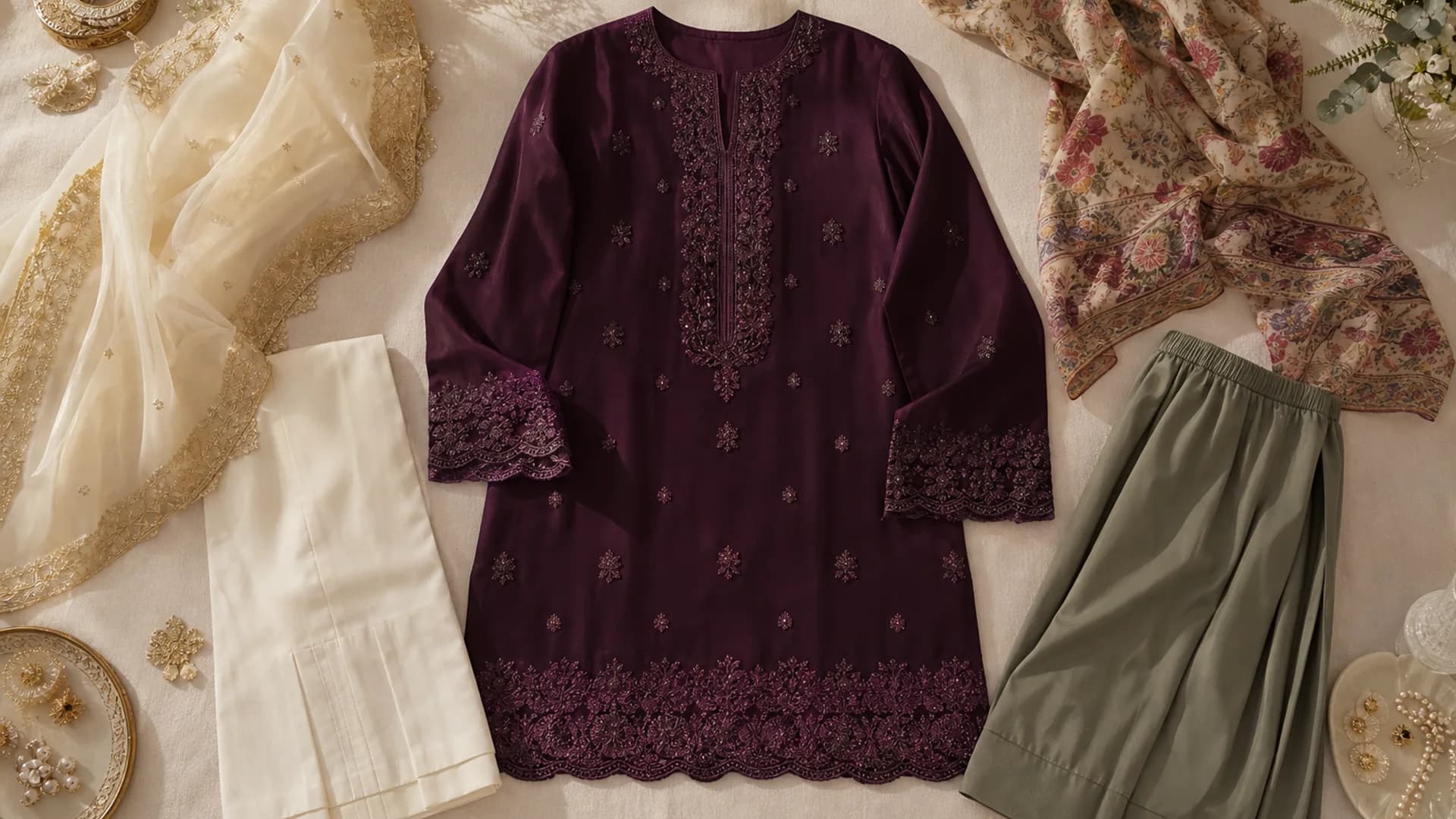
Eight Ways to Restyle a Formal Suit You Own
Most wardrobes hold three or four formal outfits that have been worn once and feel finished. Very little needs to change to make them wearable again.
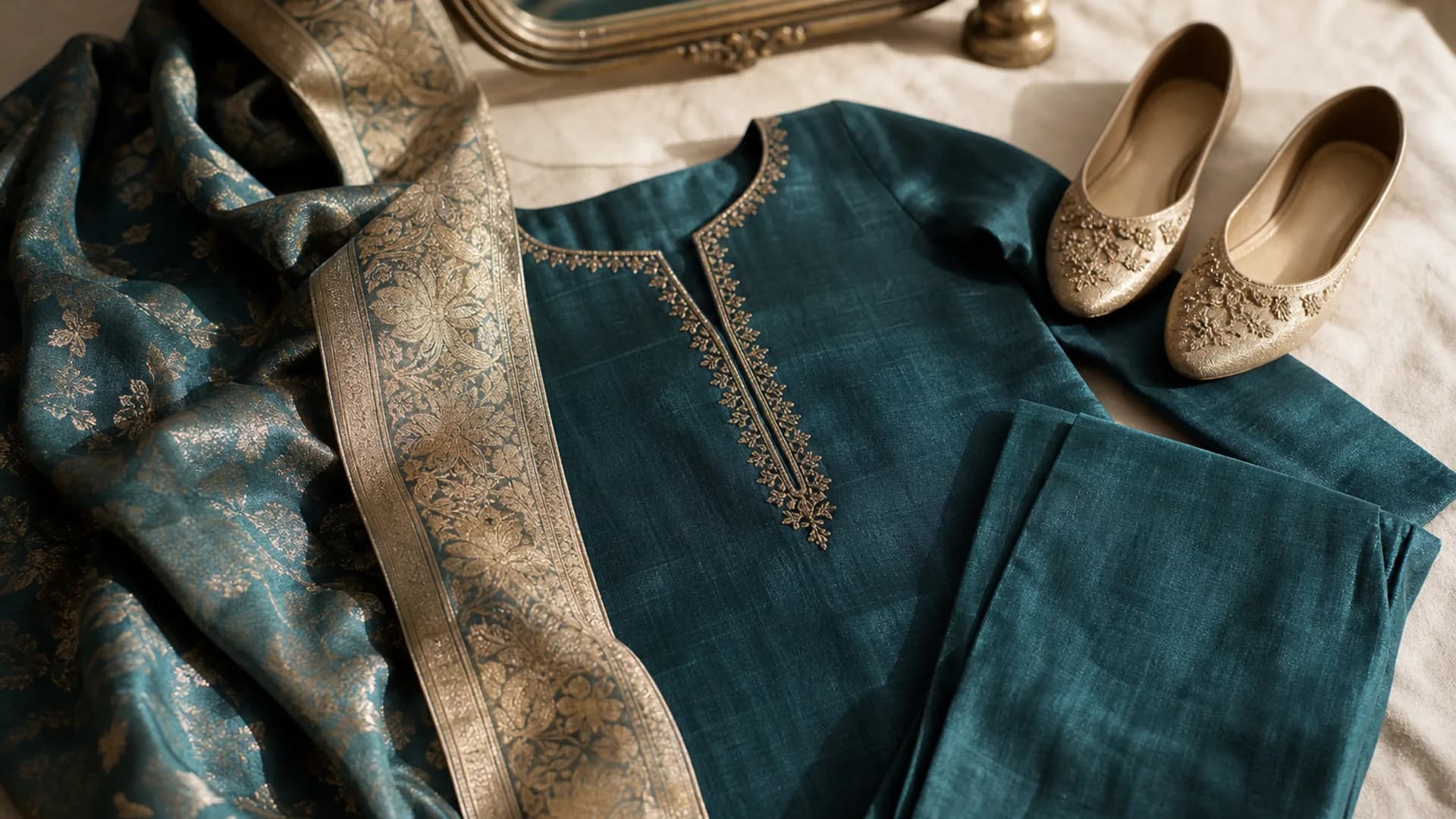
Formal Dressing in Your Forties and Fifties
There is a great deal of advice about what women over forty should stop wearing. Most of it is wrong. What actually changes is fit, fabric and comfort.
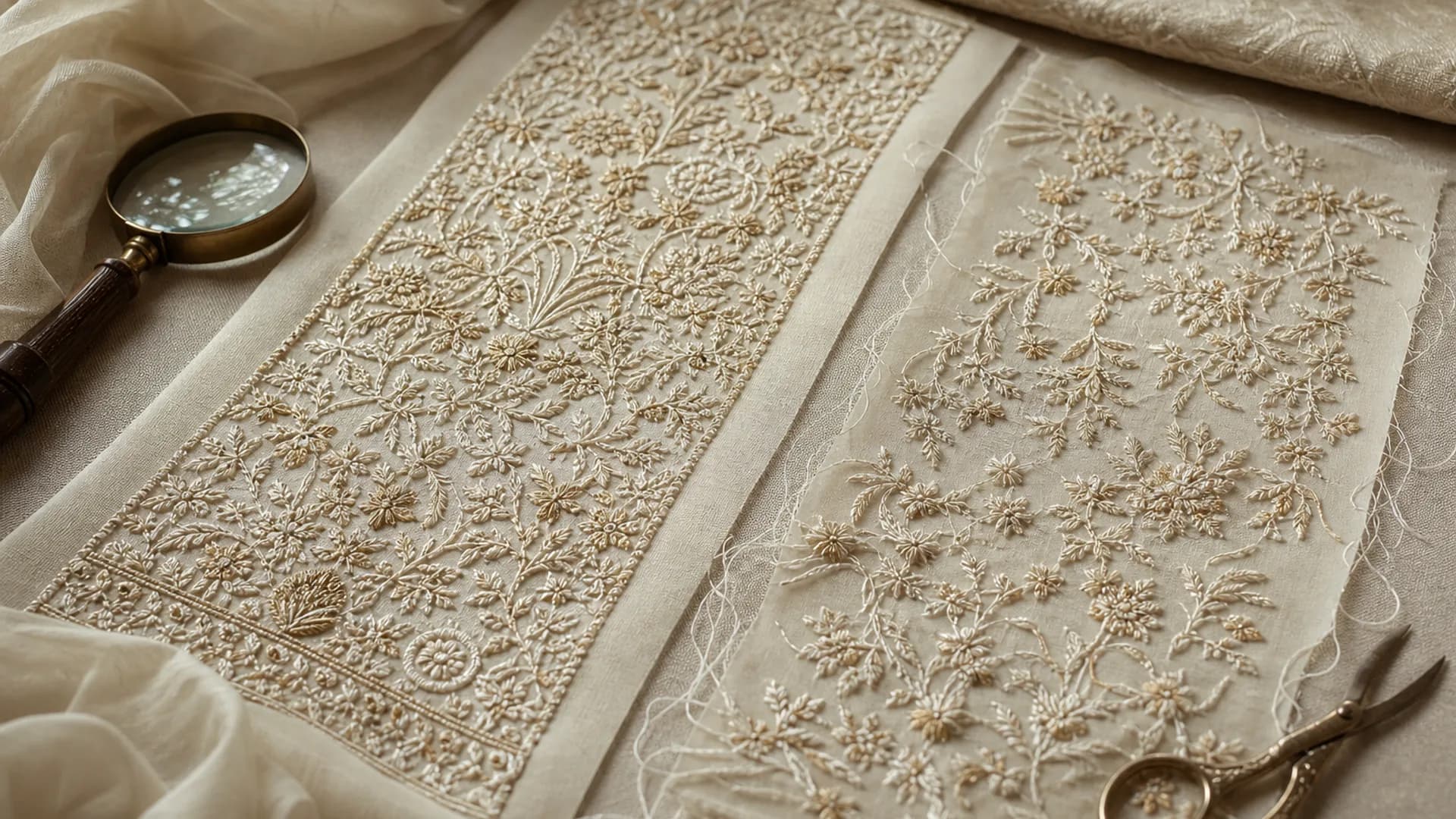
Original or Copy: How to Tell a Replica Suit
Master copies are sold openly and often honestly. The problem is when a copy is sold as an original at an original's price — here is how to tell.