

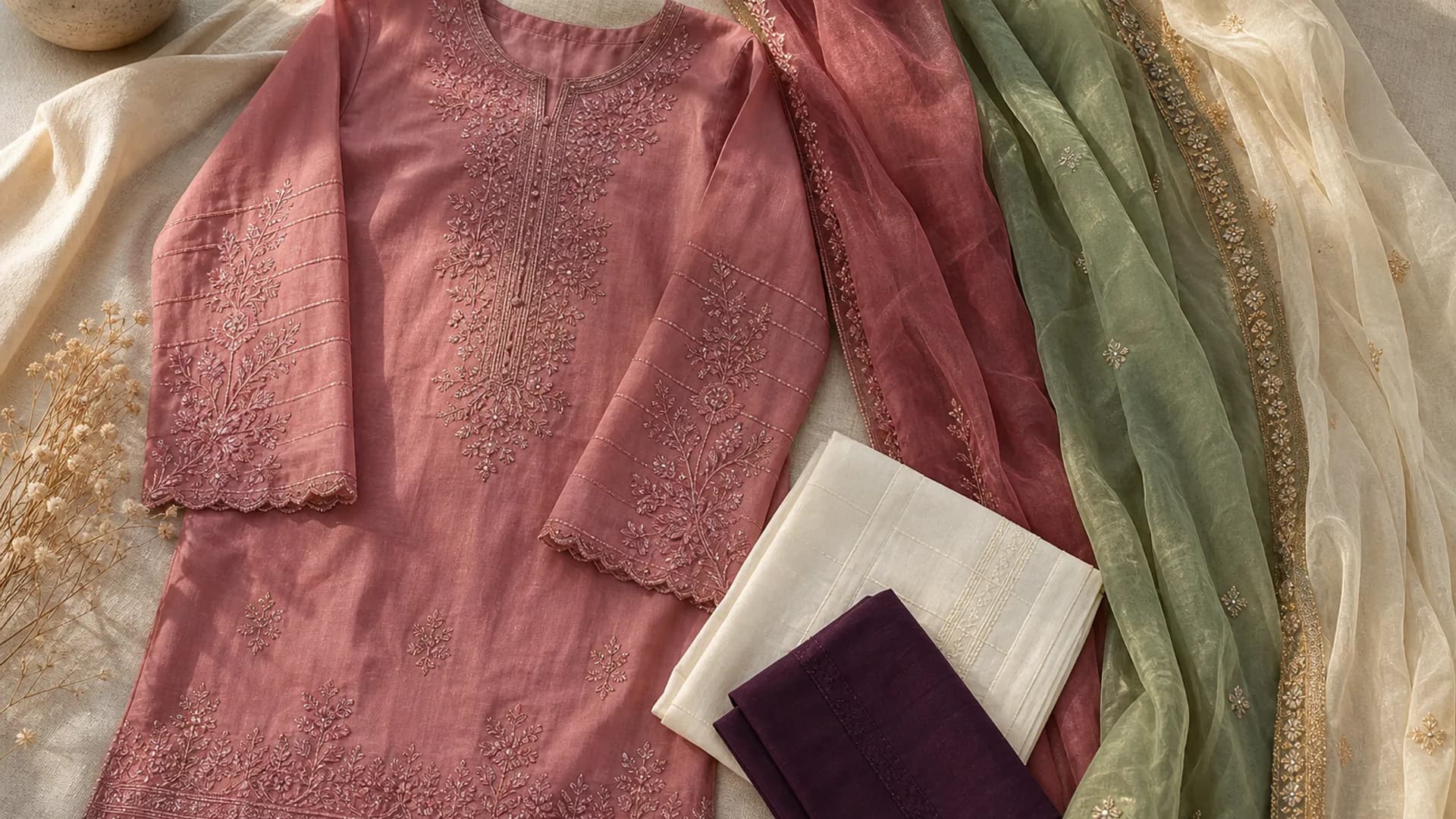
Matching a Dupatta or Trouser to a Shirt
Almost matching looks worse than clearly not matching. Here is how to pair pieces bought separately so the outfit reads as deliberate.
The most common outfit mistake in Pakistani wardrobes is not a clash. It is a near-match. A dupatta that is almost the same pink as the shirt, but slightly warmer. A trouser that is nearly the same ivory, but a shade cooler. In shop lighting both looked identical. In daylight they read as a mistake — and specifically as an attempt at matching that failed, which is a worse impression than a deliberate contrast. This matters because so much of a Pakistani wardrobe is assembled rather than bought complete: a dupatta from one place, a trouser length from another, a shirt from an old suit that still fits. The rule that solves nearly all of it is simple. Match exactly, or contrast clearly. Never sit in between.
Why Near-Matches Fail
Two colours that are close but not identical draw attention to the difference, because the eye is very good at judging small differences and very bad at judging large ones. Put a pink dupatta against a slightly different pink shirt and the eye immediately reads "these were meant to match and do not". Put a sage dupatta against the same pink shirt and it reads as a choice. The practical effect: **a contrast is more forgiving than a near-match**, which is the opposite of how most people shop. The usual failure mode is buying a dupatta to match a shirt, in a shop, under artificial light, without the shirt present. Every part of that is a mistake, and the fix for all of it is the same — carry the piece with you. When you genuinely want a tonal outfit, the safest route is to buy the pieces together from the same dye lot. Otherwise deliberately go a full shade or two away, so the difference reads as intentional.
Undertone: The Thing to Actually Check
Colours have undertones — a warm or cool bias underneath the main colour — and two pieces clash when the undertones disagree even if the colour name is the same. **Ivory versus white.** Ivory is warm, white is cool. An ivory trouser with a white shirt looks like the trouser is dirty, and it is the single most common near-match failure. **Warm pink versus cool pink.** A coral-leaning pink and a blue-leaning pink are different colours despite both being pink. **Warm grey versus cool grey.** Same problem. **Blacks vary too.** Some blacks are warm and brownish, some are cool and blue-black. Two blacks from different lots frequently do not match, which is why our post on [wearing black](/journal/how-to-wear-black-pakistani-formal-wear) recommends buying the pieces together. **How to check:** put the two pieces side by side, touching, in daylight. If one looks slightly dirty or slightly grey next to the other, the undertones disagree. Separate them by a few centimetres and the effect disappears — which is why holding two pieces apart in a shop tells you nothing.
Four Pairings That Always Work
**Tonal.** All three pieces in the same colour family, at different depths — a mid-sage shirt, a pale sage trouser, a deep sage dupatta. Elegant, lengthening, and the safest formal choice. It also avoids the near-match problem entirely, because the differences are deliberate and large. **Neutral base, coloured dupatta.** Ivory or stone shirt and trouser, with the colour in the dupatta. The most flexible option — one neutral base works with every dupatta you own. **Coloured base, neutral dupatta.** The reverse. A strong-coloured shirt with an ivory or gold dupatta. Formal and quiet. **Two colours plus a bridging dupatta.** A shirt in one colour, a trouser in another, and a dupatta containing both — usually a print or a shaded piece. This is what makes a genuinely mismatched pair read as intentional, and it is the trick that rescues odd combinations. What to avoid: three strong colours with nothing connecting them, and any two pieces that are nearly the same. Our guide to [colours for Pakistani skin tones](/journal/best-colours-for-pakistani-skin-tones) covers which base colours suit you.
Choosing the Trouser Colour
The trouser is the piece people default on, and the default is usually not the best choice. **Matching the shirt exactly** gives a column and is lengthening. Best when bought together, risky when bought separately. **Ivory or cream** works with almost everything and is the most useful trouser to own. Two ivory trousers in slightly different fabrics will cover most of a wardrobe. **A deeper shade of the shirt colour** is elegant and reliable — a plum trouser with a dusty rose shirt. **A colour picked from the embroidery** is the most considered-looking option. If the shirt has gold and green work, a deep green trouser looks deliberate. **Contrast** works but shortens the leg line, so it is worth avoiding if you are petite. Our [petite guide](/journal/how-to-look-taller-pakistani-suits-petite) covers why the tonal column does so much for apparent height. **Black trousers** are the least useful default in Pakistani wear — they cut the leg line and work with fewer things than ivory does.
Choosing the Dupatta
The dupatta has the most freedom of the three pieces, because it sits over rather than beside. **Match the shirt** for a tonal, quiet look. **Contrast strongly** to make the dupatta the feature — and this is the cheapest way to make a plain suit look new. **Pick up a colour from the embroidery**, which always looks deliberate. **Use a print containing both** the shirt and trouser colours to tie an odd pair together. **Go neutral** — ivory, gold or silver — when everything else is busy. The other half of the decision is fabric, and it matters as much as colour: a stiff organza dupatta over a stiff brocade shirt produces an outfit with no movement anywhere, while a soft chiffon over a structured raw silk has contrast in behaviour as well as colour. Our [dupatta fabric guide](/journal/dupatta-fabric-guide-chiffon-organza-net-silk) covers which does what. And the drape changes the effect entirely. A contrast dupatta across both shoulders is a wide band of colour; the same dupatta over one shoulder is a vertical line. Our [draping guide](/journal/7-ways-drape-dupatta-weddings-formal-events) has the options.
Buying Separately, Practically
**Carry the piece with you.** A physical sample beats a photograph on a phone every time, because a phone screen shifts colour and cannot be trusted for a close match. **If you cannot carry it, carry a scrap.** Ask your tailor for the leftover fabric from the original stitching and keep a small piece in your bag. This is what makes matching possible months later. **Check in daylight.** Shop lighting is chosen to flatter, and it is warm, which pushes cool colours toward neutral and makes everything look like it goes together. **Hold the two pieces touching.** Separated by even a few centimetres, two mismatched colours look fine. **Ask about the dye lot** if you are buying more of something you already own. Even the same product from the same brand differs between production runs. **Buy the trouser fabric with the shirt** where possible. It is the pairing most likely to go wrong and the least visible when it does — until you are standing in daylight.
Getting More From What You Own
The reason this is worth learning: a small number of well-chosen pieces recombines into a large number of outfits. **Two ivory trousers and five shirts** is ten combinations. Add three dupattas and it is thirty. **A neutral base multiplies everything.** Ivory, stone and black shirts and trousers work with every dupatta; a strongly printed one works with almost nothing else. **Buy dupattas as the variable.** They are the cheapest of the three pieces and they change a look most. A worked dupatta over a plain suit is a different outfit. **Keep an inventory.** Photographing what you own sounds excessive and is genuinely useful — it stops duplicate buying and makes planning a wedding week much faster. Our post on [planning a wedding wardrobe](/journal/how-many-outfits-pakistani-wedding-week-budget) covers the same idea across a season, and the [capsule wardrobe guide](/journal/capsule-wardrobe-pakistani-women-10-pieces) sets out a ten-piece version. If you would rather not assemble anything, complete [3-piece suits](/ladies/3-piece-suits) come matched from the same dye lot, which removes the problem entirely.
Frequently Asked Questions
Because it is close but not identical, which reads worse than a clear contrast. The eye judges small differences very accurately and large ones poorly, so a near-match draws attention to itself. Match exactly from the same dye lot, or go a full shade or two away deliberately.
Ivory or cream. It works with almost any shirt and dupatta, and two ivory trousers in different fabrics cover most of a wardrobe. Black is the least useful default in Pakistani wear — it cuts the leg line and works with fewer things than ivory.
Hold them touching, in daylight. Separated by even a few centimetres, two mismatched colours look fine — which is why holding pieces apart in a shop tells you nothing. If one looks slightly dirty or grey against the other, the undertones disagree.
It is more forgiving, which is the opposite of how most people shop. A clear contrast reads as a choice; a near-match reads as a failed attempt. A contrast dupatta is also the cheapest way to make a plain suit look like a different outfit.
Ask your tailor for the leftover fabric when the suit is stitched and keep a small scrap in your bag. A physical sample beats a phone photograph, because screens shift colour and cannot be trusted for a close match.
About the Author
Habiba Minhas
Founder and creative director of Habiba Minhas, Pakistan's leading handcrafted fashion brand based in Karachi. With a passion for preserving traditional Pakistani craftsmanship while embracing modern design, she has built a brand serving over 5,000 customers nationwide.
Specializing in premium ladies suits, kids festive wear, and baby products, Habiba works directly with artisan embroiderers and skilled tailors to create pieces that honor Pakistani heritage.
Related Articles
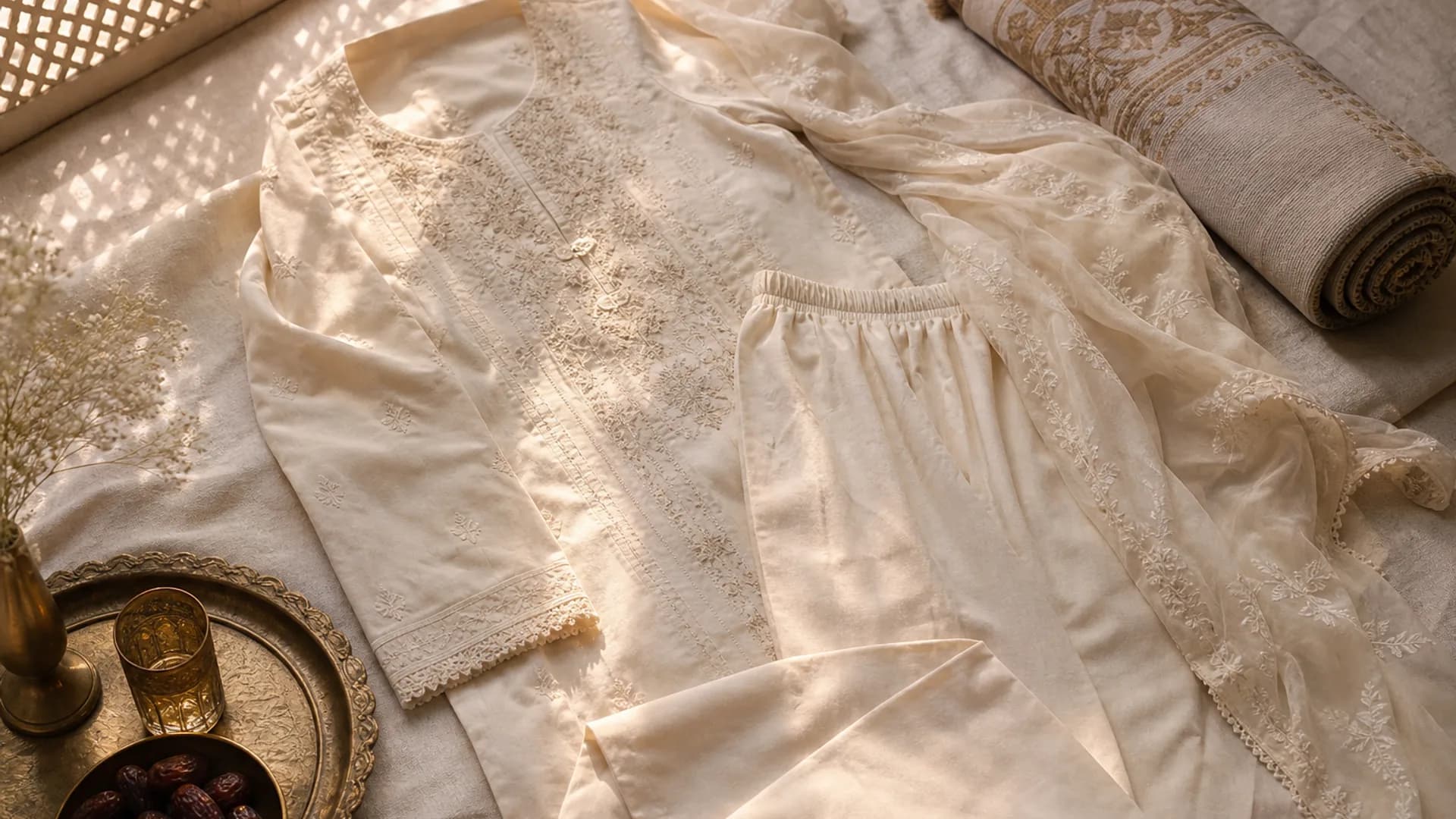
Dressing for Ramadan and Iftar Gatherings
Ramadan runs a month, and the clothing has to work for fasting through the afternoon and hosting in the evening. The two are different problems.
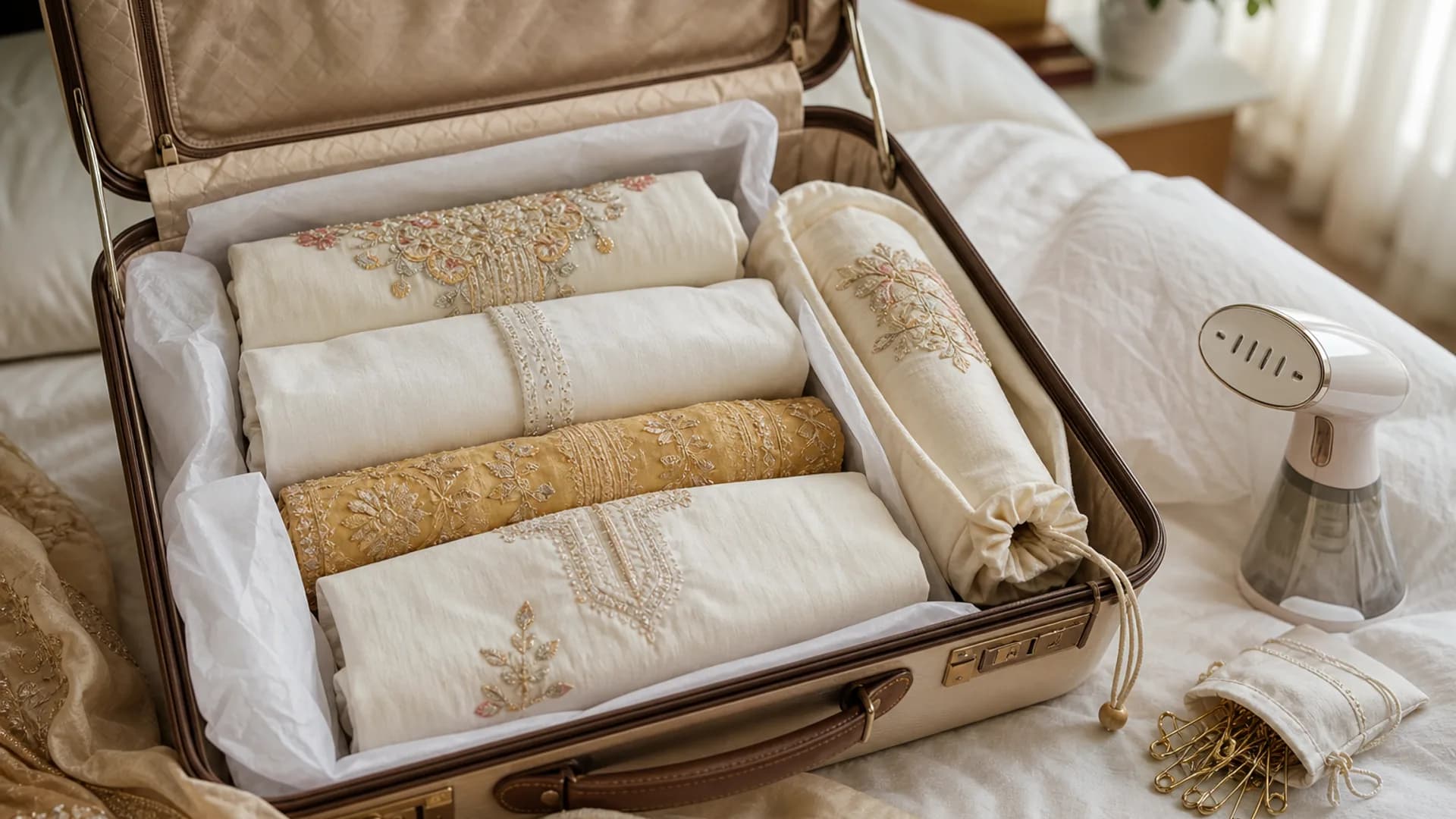
Packing Formal Wear Without Ruining It
A heavily worked outfit and a suitcase are natural enemies. A specific folding method and twenty minutes on arrival is the difference between wearable and not.
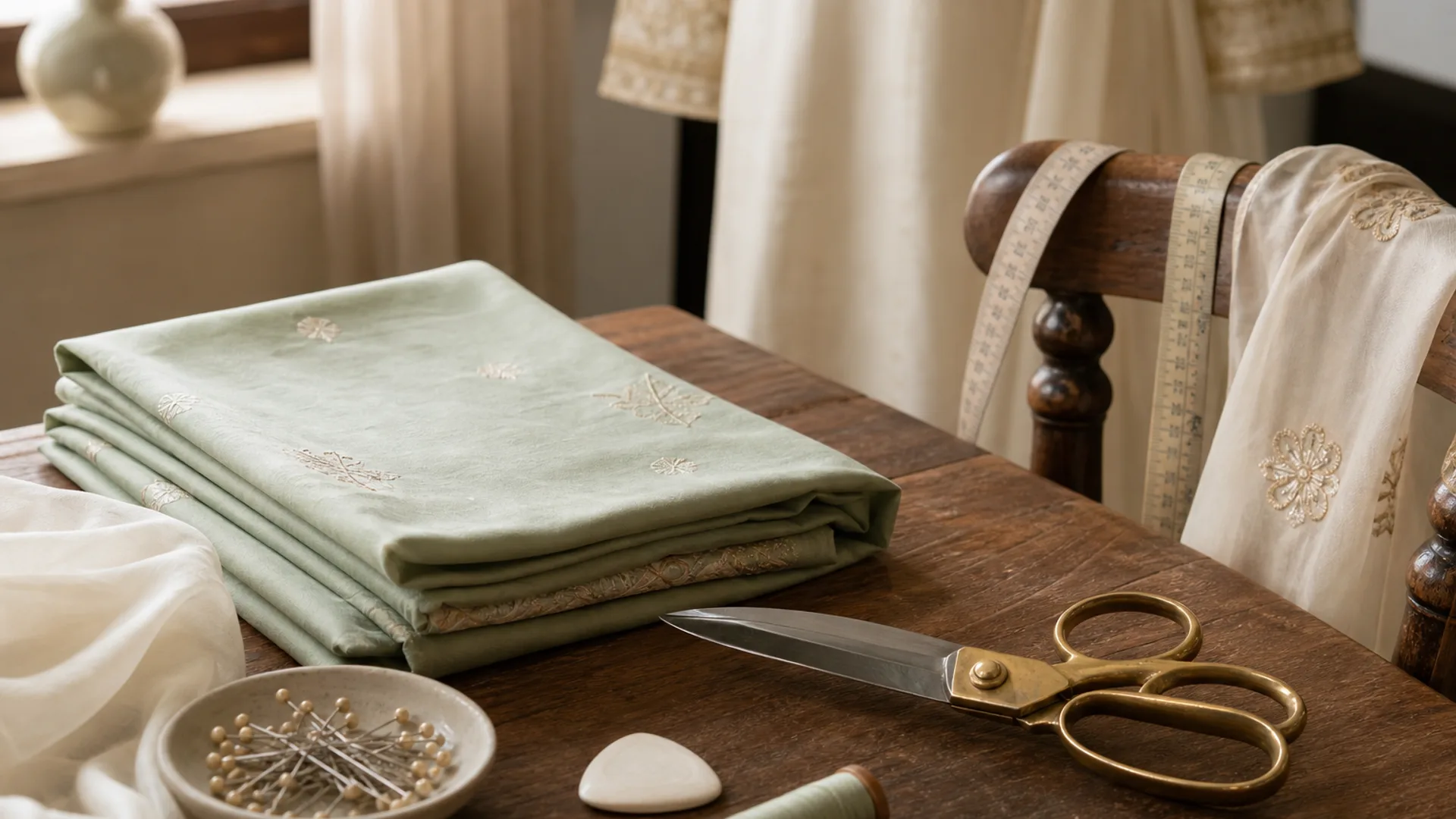
Working With a Tailor: What to Actually Say
Most tailoring disappointments are communication failures, not skill failures. Here is how to brief a darzi so what comes back matches what you pictured.