

Dressing Through Pregnancy in Pakistani Clothes
You do not need a separate maternity wardrobe in Pakistani clothing. Most of what you own already adapts, and a few alterations extend it a long way.
One genuine advantage of Pakistani clothing that rarely gets stated: it adapts to pregnancy far better than most Western wardrobes do. A fitted dress has a fixed waist and there is nothing to be done about it. An A-line kameez does not — it flows from the shoulder or the bust, which means it accommodates a changing shape for months without alteration. Elasticated and drawstring trousers do the same at the other end. Which means the answer to "what maternity clothes do I need" is often "considerably fewer than you think". Most of what is already in the cupboard works into the second trimester and a good deal of it into the third, with a small number of adjustments. This is what adapts, what does not, and what to do about the occasions where you need to look formal at seven months.
What You Already Own That Works
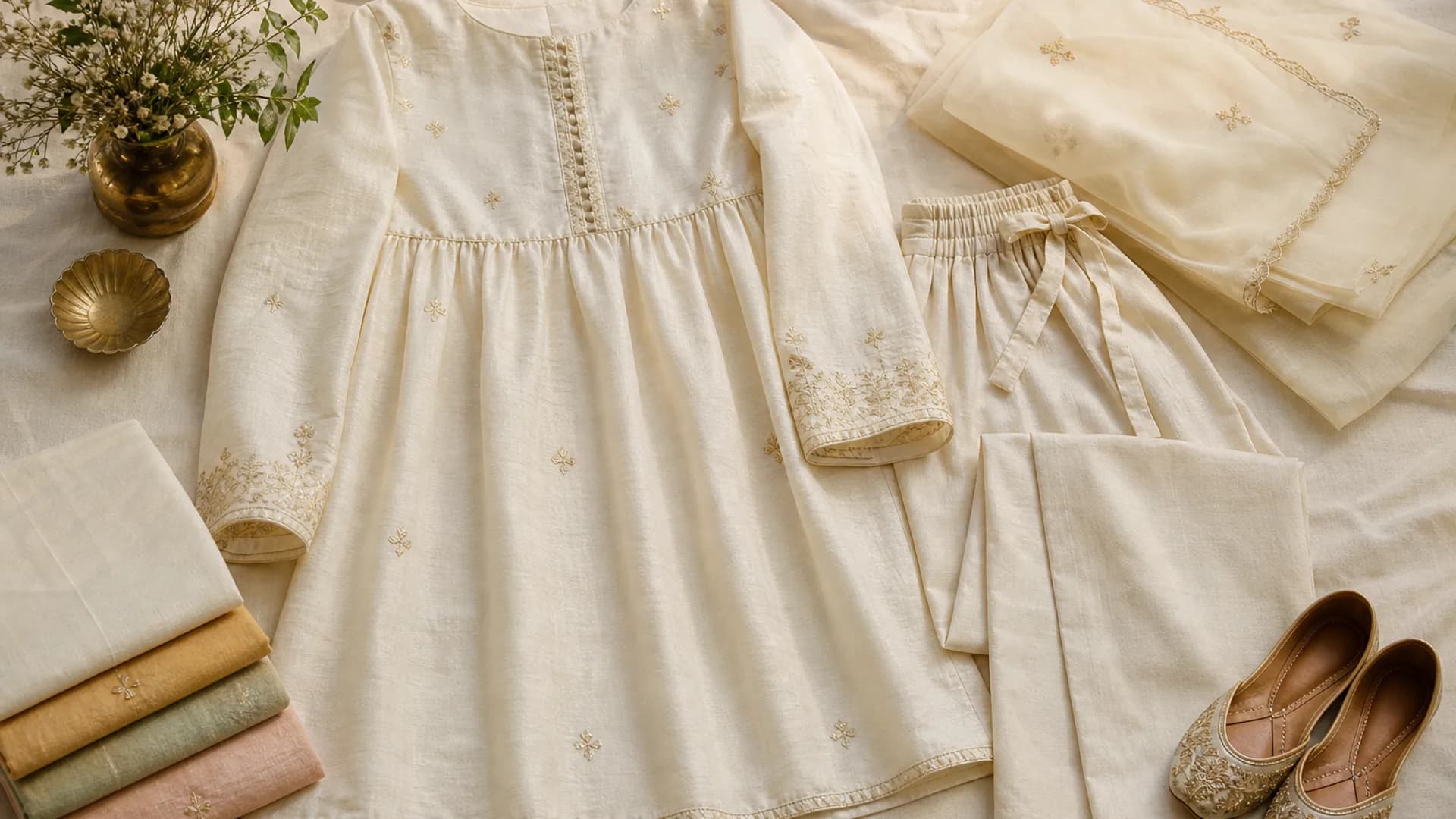
Go through the cupboard before buying anything. Several categories are already maternity wear. **A-line and flared kameez.** Fitted at the shoulder, loose from below the bust. These work almost the whole way through, and they are the backbone of a pregnancy wardrobe. **Anarkalis and long frocks.** Fitted just under the bust and full below — the empire line is the single most accommodating cut there is, and it stays comfortable well into the third trimester. **Straight kurtas one size up**, if you already own any. **Elasticated shalwars, palazzos and trousers with a drawstring.** These adjust naturally, and a drawstring can simply be tied lower as the months go on. **Every dupatta you own.** Unaffected by any of this, and useful for changing the look of a shrinking set of outfits. **What stops working early:** anything with a fixed waistband, fitted churidars, straight-cut trousers with a zip, structured jackets, and fitted bodices. These go first, usually somewhere in the second trimester.
Alterations That Extend a Wardrobe
A tailor can convert several existing pieces for very little, and it is much cheaper than buying maternity versions. **Replace a fixed waistband with elastic.** Ten minutes, and it makes a straight trouser wearable for months more. The most useful single alteration. **Add a drawstring** in place of, or alongside, elastic. It adjusts as you change rather than being one fixed size. **Let out side seams.** Limited by the seam allowance, but on a well-made piece this can buy a size. **Convert a fitted kameez to an A-line** by letting out the side seams from below the bust and adding a small side panel. More work, worth it on a piece you love. **Lengthen a kameez at the front.** As the bump grows, a kameez rides up at the front and drops at the back, which is why hemlines look uneven in the third trimester. A tailor can add length at the front only, and it fixes the whole look. Almost nobody knows to ask for this. Our post on [the five alterations that matter](/journal/five-alterations-make-any-suit-fit) covers the general principles, and what can and cannot be undone.
What to Buy, If You Buy Anything
A short list, chosen so that everything is still wearable afterwards. **Two or three A-line kurtas one to two sizes up**, in good cotton or crepe. These work through pregnancy, through the postpartum months, and afterwards as loose everyday wear. **Two pairs of wide-leg trousers or palazzos with a soft elasticated waist.** Wearable throughout and afterwards. **One formal outfit** if there is a wedding or Eid falling in the later months. Buy this at the point you need it rather than in advance — your shape at eight months is not predictable at four. **Nothing tight, nothing fitted, nothing with a structured waist.** The principle worth applying: **buy things that do not announce themselves as maternity wear.** A loose A-line kurta in a good fabric is simply a kurta, and it stays in the wardrobe afterwards. A garment cut with a stretch panel does not. This is where Pakistani clothing has a real advantage — the shapes that work through pregnancy are ordinary shapes, not special ones. Our [capsule wardrobe guide](/journal/capsule-wardrobe-pakistani-women-10-pieces) covers building around pieces that recombine.
Fabric and Comfort
Comfort matters more here than at any other time, and two things change: you feel heat considerably more, and skin becomes more sensitive. **Pure cotton, lawn and crepe.** Breathable, soft, and forgiving. Crepe in particular holds a shape without clinging, which is exactly what is wanted. **Avoid synthetics.** Pregnancy raises body temperature and a polyester kameez in a Pakistani summer is genuinely unpleasant. This is not a small point — it is the most common comfort complaint. **Avoid anything scratchy at the waist or under the bust.** Elastic that was fine before can dig, and the skin over a bump is more reactive. **Check the lining.** An unlined cotton is cooler than a lined one, and lining is where synthetic fabric hides. **Loose, not tight, in heat.** Air moving between fabric and skin is what keeps you cool, and this matters more when you are carrying extra weight in forty-degree heat. Our [seasonal fabric guide](/journal/summer-vs-winter-fabric-guide-pakistani-women) covers what behaves well in Pakistani conditions, and the [fabric glossary](/content/fabric-glossary) explains the labels.
A Wedding at Seven Months
The situation that generates the most anxiety, and it is more manageable than it feels. **Choose an empire line.** Fitted just under the bust and flowing below. It is formal, it is flattering, it accommodates any size of bump, and it is a completely standard Pakistani silhouette rather than a compromise. **An anarkali or long frock** is the most reliable formal choice. **An A-line kameez with wide-leg trousers** works for a less formal function. **Buy or have it made late.** Four weeks before is soon enough. Buying at five months for a function at eight is guesswork. **Prioritise the shoulder fit.** It is the one measurement that does not change, and it is what makes a loose garment look deliberate rather than oversized. **Flat or low block-heeled shoes.** Balance changes in pregnancy, feet swell, and a Pakistani wedding is hours of standing on uneven ground. Our [shoes guide](/journal/shoes-with-pakistani-formal-wear-guide) covers the venue question. **Take the dupatta seriously.** Draped over one shoulder and falling long, it creates a vertical line and is genuinely flattering. Our [draping guide](/journal/7-ways-drape-dupatta-weddings-formal-events) has the styles.
What Actually Flatters
Most advice here is about concealment, which is the wrong frame. The shapes that work are the ones that are comfortable and clearly deliberate. **Define under the bust, not at the waist.** An empire line sits above the bump and creates a clear line. A dropped or natural waist fights it. **Vertical detail helps.** A worked centre panel, vertical embroidery or a long dupatta down one side keeps the eye moving up and down. **Keep the shoulder line clean.** A well-fitting shoulder is what stops loose clothing looking like a tent, and it is the measurement to insist on. **Tonal outfits work beautifully.** One colour family from shoulder to floor reads as a single elegant column. **Avoid a tight fit anywhere.** Clothing pulled across a bump reads as too small even when it is comfortable, whereas skimming reads as intentional. **Avoid horizontal bands** — a contrast waist panel, a wide belt, a heavy hem border high on the shirt. Our [fuller figure guide](/journal/fuller-figure-pakistani-formal-wear-guide) covers many of the same principles, which apply directly here.
Afterwards
The months after the birth are the part nobody buys for, and they last longer than pregnancy does. **Your pregnancy clothes are your postpartum clothes.** Nothing fits immediately afterwards and nothing should be expected to. The A-line kurtas and elasticated trousers carry straight through. **Front openings if you are feeding.** A kurta with a button placket, a wrap front or a side-tie angrakha is considerably more practical than a closed neckline. Our [angrakha guide](/journal/angrakha-kameez-how-to-style-pakistan-2026) covers a cut that happens to be ideal for this. **Dark and patterned fabric is practical** for the same reason it always is. **Do not buy formal wear in the first months.** Your shape is still changing. If there is an occasion, borrow, alter something you own, or buy one loose piece. **Keep the dupattas.** They are the fastest way to make three outfits look like six during a period when getting dressed is not a priority. When you are ready to buy properly again, the [ladies collection](/ladies) and the [stitched suits](/ladies/stitched-suits) are there, and the [Virtual Try Room](/virtual-try-room) is useful for judging a shape without a fitting room.
Frequently Asked Questions
Usually far fewer than you think. A-line and flared kameez, anarkalis, empire-line frocks and elasticated or drawstring trousers all adapt for months without alteration. What stops working early is anything with a fixed waistband, fitted churidars and structured bodices.
Replacing a fixed trouser waistband with elastic or a drawstring — ten minutes, and it makes straight trousers wearable for months more. The second most useful is lengthening a kameez at the front only, which fixes the uneven hemline caused by the bump in later months.
An empire-line anarkali or long frock — fitted just under the bust and flowing below. It is formal, flattering at any stage, and a standard Pakistani silhouette rather than a compromise. Buy about four weeks beforehand rather than months ahead, and wear flat or low block heels.
Pure cotton, lawn and crepe. Pregnancy raises body temperature and you will feel heat considerably more, so synthetics become genuinely unpleasant in a Pakistani summer. Check the lining too — that is where synthetic fabric usually hides.
Yes, and you should plan for it. Nothing fits immediately after a birth and the postpartum months last longer than most people expect. A-line kurtas and elasticated trousers carry straight through, and a front-opening or wrap-front kurta is much more practical if you are feeding.
About the Author
Habiba Minhas
Founder and creative director of Habiba Minhas, Pakistan's leading handcrafted fashion brand based in Karachi. With a passion for preserving traditional Pakistani craftsmanship while embracing modern design, she has built a brand serving over 5,000 customers nationwide.
Specializing in premium ladies suits, kids festive wear, and baby products, Habiba works directly with artisan embroiderers and skilled tailors to create pieces that honor Pakistani heritage.
Related Articles
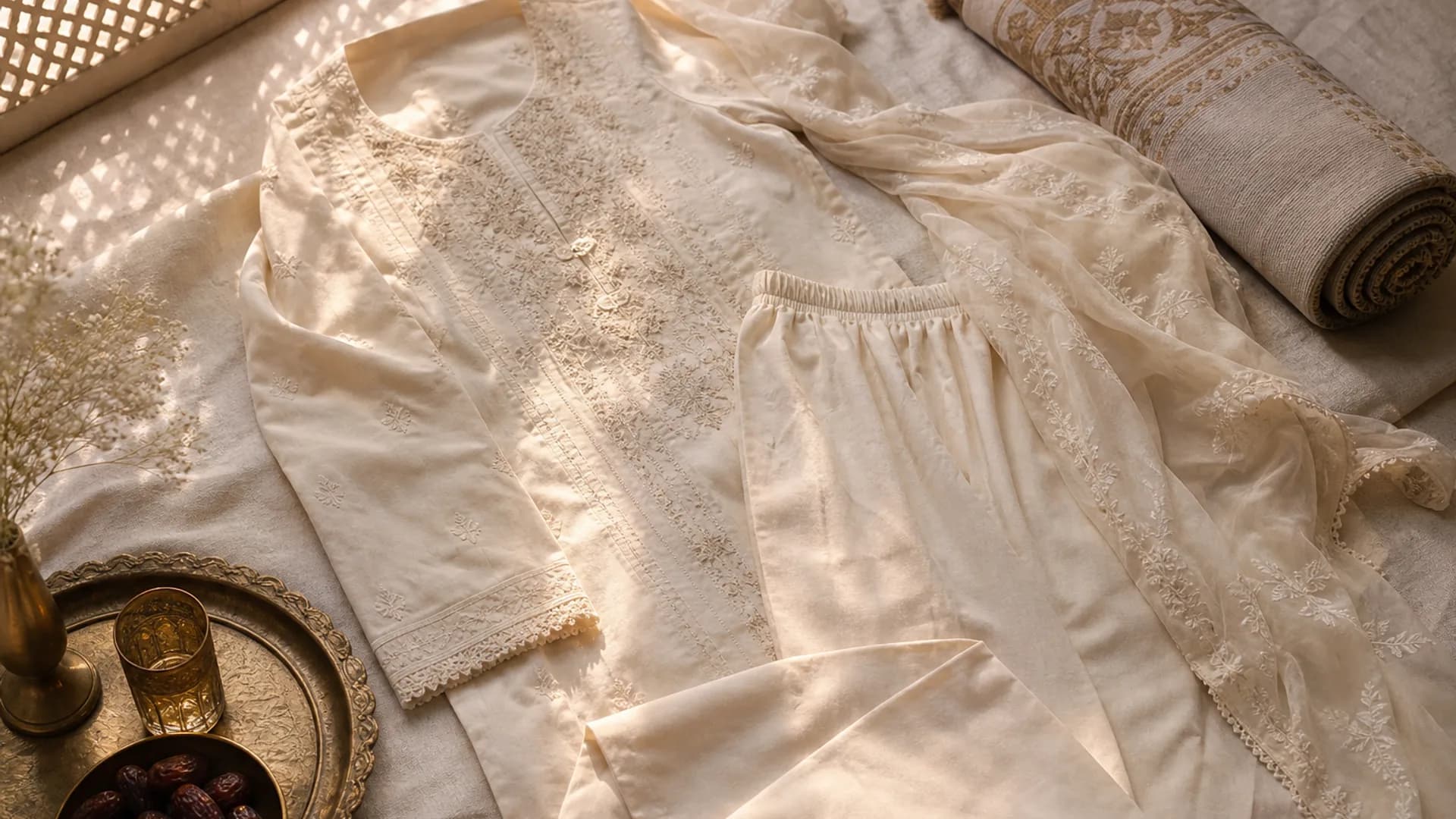
Dressing for Ramadan and Iftar Gatherings
Ramadan runs a month, and the clothing has to work for fasting through the afternoon and hosting in the evening. The two are different problems.
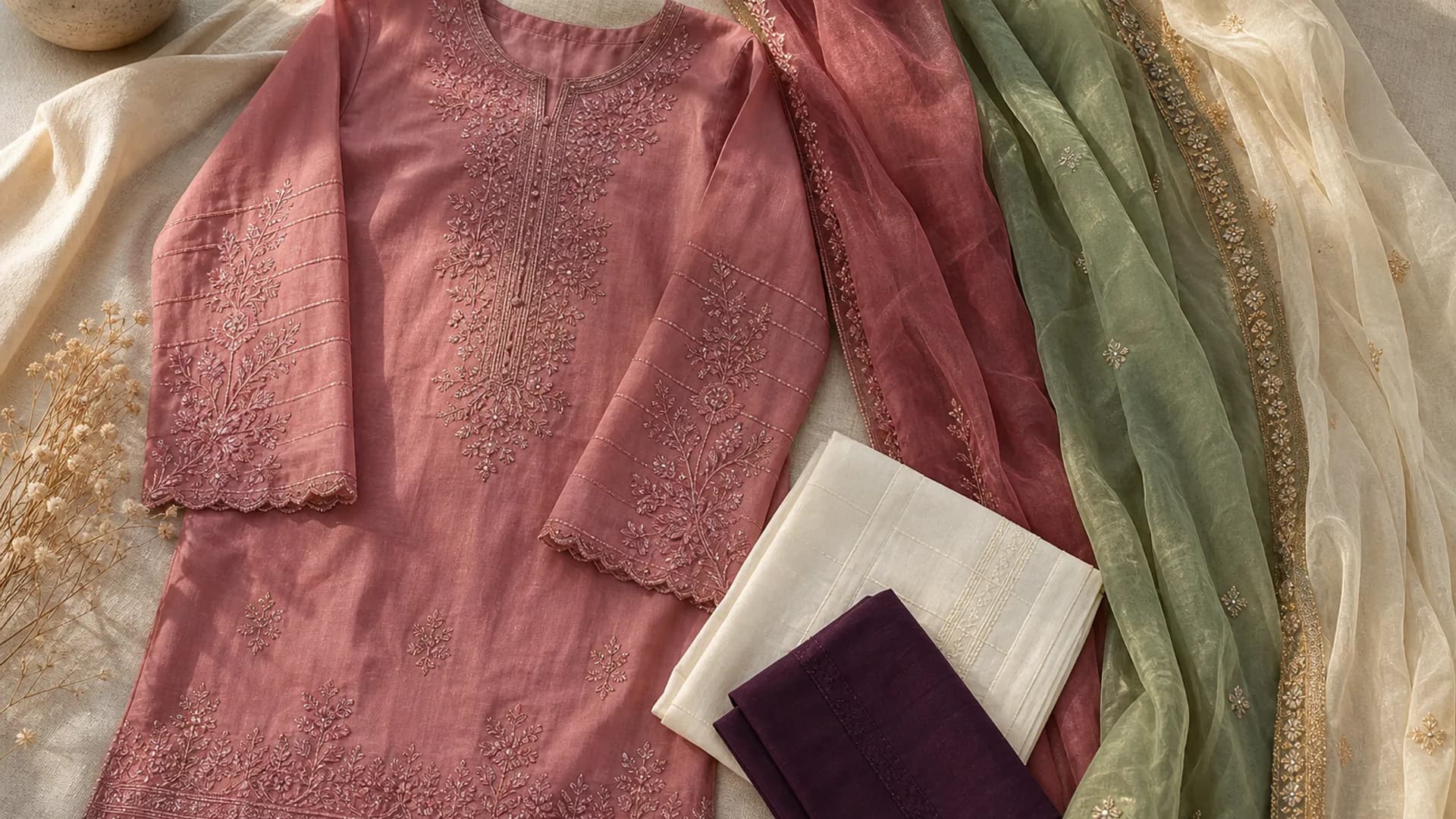
Matching a Dupatta or Trouser to a Shirt
Almost matching looks worse than clearly not matching. Here is how to pair pieces bought separately so the outfit reads as deliberate.
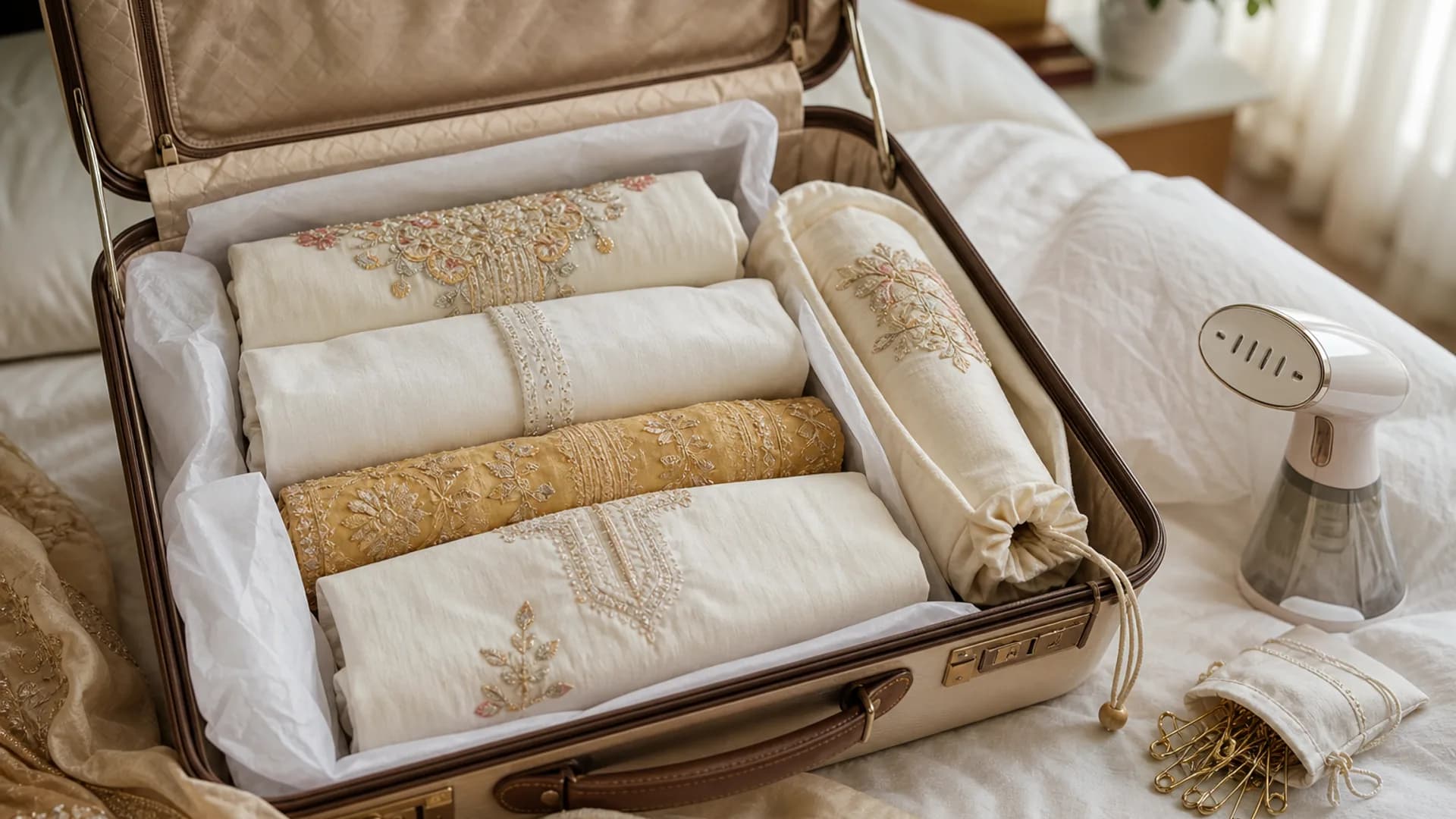
Packing Formal Wear Without Ruining It
A heavily worked outfit and a suitcase are natural enemies. A specific folding method and twenty minutes on arrival is the difference between wearable and not.