

What to Wear to a Nikah: A Guest's Guide
A nikah asks for less than any other wedding function, and getting that restraint right is harder than dressing up. Here is what works and what reads as too much.
Of all the functions in a Pakistani wedding week, the nikah is the one guests most often get wrong — and they get it wrong in the same direction every time, by dressing as though it were the barat. The nikah is the ceremony itself. It is short, it is quiet, and in most families it happens in a mosque, a home, or a small hall with a fraction of the guest list the reception will have. There are speeches, there is a signing, and there is often a meal afterwards. Nobody is on a stage. That changes what to wear more than people expect. This is the one function where restraint is the correct answer, and where the most expensive outfit in your wardrobe is usually the wrong one.
How Formal Is a Nikah, Really?
Somewhere between a smart dinner and a walima, and closer to the dinner than most guests assume. The difficulty is that formality at a nikah is not measured in embellishment. A heavily worked outfit does not read as respectful — it reads as though you have misjudged the occasion. What reads as correct is good fabric, a clean cut, and modest coverage. A useful way to picture it: you should look like you have made a real effort and could still sit through a ceremony comfortably for an hour. If the outfit only works standing up, being photographed, it belongs at a different function. The exception is the increasingly common combined nikah-and-reception, where the ceremony is followed straight away by a full evening event. In that case dress for the reception. If you are unsure which kind it is, ask what time it starts — a morning or afternoon start is nearly always a ceremony-only nikah.
Colours That Work — and the Ones to Think About
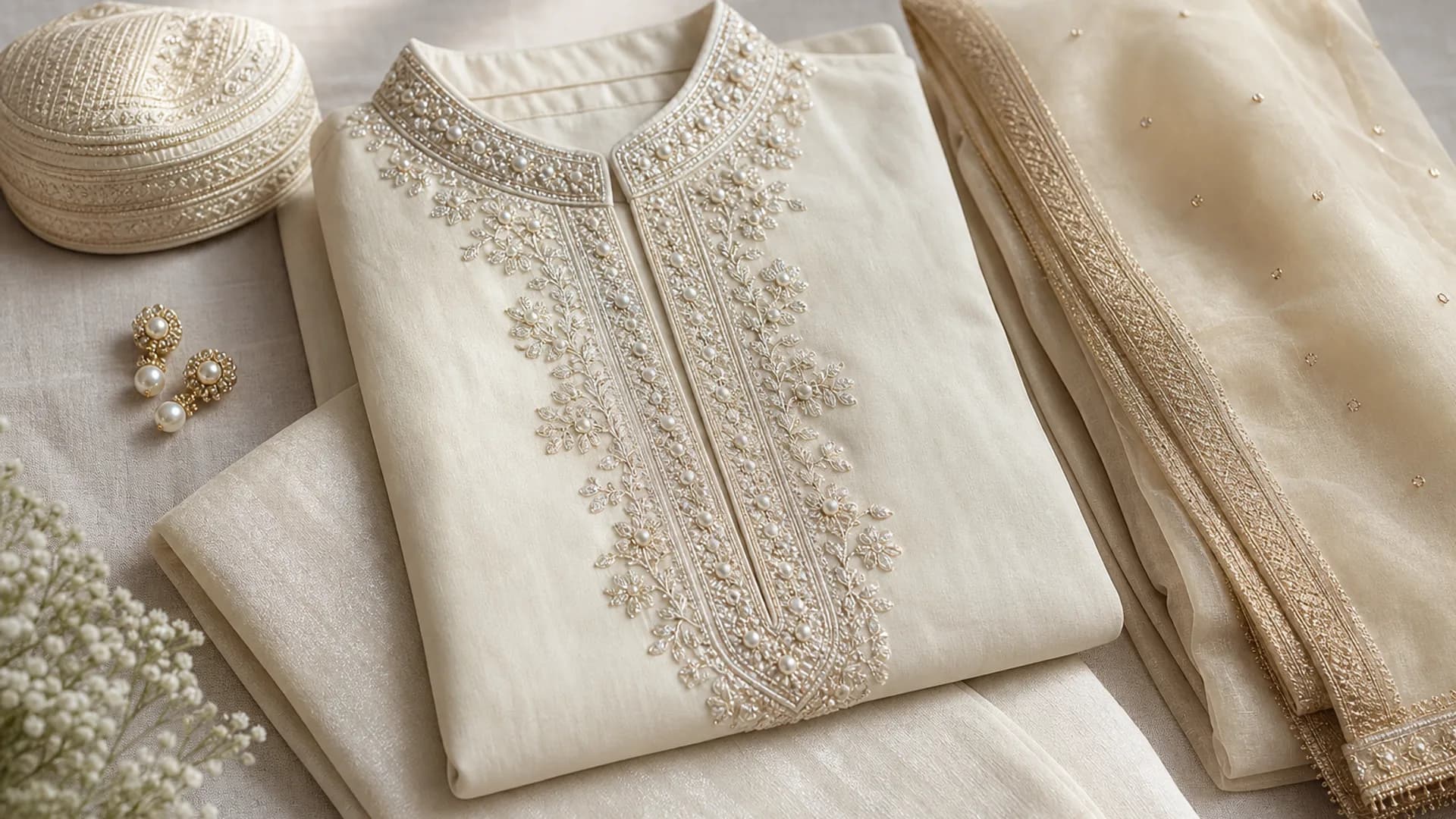
The nikah palette is the softest of the week, and this is where it differs most sharply from the mehndi. **Ivory, champagne, pearl and soft gold** are the classic nikah colours and remain the safest choice. They read as ceremonial without competing with anyone. **Powder blue, dusty rose, sage, lavender and stone** all sit well. The muted end of the spectrum suits daytime light and photographs beautifully in a small room. **Deep jewel tones** — emerald, plum, navy — work for an evening nikah, particularly in winter, but keep the embellishment light. Two to think about carefully. **Red** is generally the bride's, and a guest in full red at a nikah will be noticed. **Pure white** is worth checking on: some families treat it as the bride's nikah colour, others see it as mourning-adjacent, and plenty have no view at all. Ivory or off-white avoids the question entirely, which is part of why it has become the default. Our guide to [colours for Pakistani skin tones](/journal/best-colours-for-pakistani-skin-tones) covers which of these suits you rather than only which is permitted.
Coverage: The Part Nobody Says Out Loud
The nikah is a religious ceremony, and it is often held in a mosque or with a maulvi present. Coverage matters more here than at any other function of the week, and it is worth planning rather than improvising. Full-length or three-quarter sleeves. Sleeveless and cap sleeves are the most common mistake, and the one hardest to fix once you have arrived. A kameez that covers the hip, or a longer shirt. Very short shirts with a fitted trouser look out of place at a ceremony even when they are perfectly modest elsewhere. A dupatta large enough to cover your head if you need to. This is the practical point: at many nikahs the women cover their heads for the ceremony itself and uncover afterwards. A small decorative dupatta will not do it, and a slippery net one will not stay. A soft chiffon or silk dupatta with some weight is genuinely easier. If you are attending a mosque nikah specifically, assume heads will be covered and plan for it rather than borrowing a shawl at the door.
Silhouettes That Suit the Occasion
The right shape for a nikah is one you can sit in, on a chair or on the floor, for an hour. **A straight-cut three-piece in silk or raw silk.** The most reliable option — formal, comfortable, and appropriate in almost any family. This is the outfit most nikah guests should be reaching for. **An angrakha with wide-leg trousers.** The wrap front gives shape without embellishment, which is exactly the balance a nikah wants. Our [angrakha styling guide](/journal/angrakha-kameez-how-to-style-pakistan-2026) explains why the cut carries a plain fabric so well. **A long shirt with a churidar.** Traditional, modest and formal without effort. **A pishwas or long frock** in a soft tone for an evening nikah. What to avoid: floor-sweeping trains, heavy lehengas, corseted bodices, and anything that needs managing. You will be sitting, standing for the signing, sitting again, and probably eating. The [formal wear guide](/journal/pakistani-formal-wear-guide-party-semi-formal-festive) maps where each of these silhouettes sits on the formality ladder.
Fabric Does the Work Here
With embellishment dialled down, fabric becomes the thing carrying the outfit — which is why a plain nikah outfit in a good silk looks considered and the same cut in a cheap synthetic looks flat. **Raw silk** holds structure, photographs richly, and suits winter nikahs. The most reliable choice. **Chiffon and organza** for daytime and summer — light, formal, and they move well in a small warm room. **Jamawar or light brocade** if you want texture instead of embroidery. Our guide to [gold brocade](/journal/gold-brocade-fabric-what-it-is-how-to-style) covers how to style a woven fabric without over-accessorising it. **Velvet** for a winter evening nikah only, and even then in a restrained colour. What to avoid: stiff net, anything scratchy against the skin, and heavily sequinned surfaces that catch on a dupatta all evening. Our [summer and winter fabric guide](/journal/summer-vs-winter-fabric-guide-pakistani-women) covers how these behave across Pakistani seasons, and the [fabric glossary](/content/fabric-glossary) explains the names you will see on labels.
Jewellery, Hair and Everything Else
The rule for a nikah is one focal point, not three. **Pearls are the nikah classic** and there is a reason for it — they suit the palette, they photograph softly, and they never look like competing with the bride. **Choose earrings or a necklace, not both.** With a covered neckline and a dupatta over the shoulder, a necklace largely disappears anyway. Earrings are usually the better spend. **Skip heavy jhoomar and maang tikka.** These belong at the mehndi and barat. **Hair should be manageable under a dupatta.** An elaborate style that a dupatta flattens the moment you cover your head is wasted effort. A low bun, a soft twist, or a simple pinned style holds up. Our [hair accessories guide](/journal/hair-accessories-pakistani-women-styling-guide) has options that sit flat, and the [accessories collection](/accessories) has hand-crafted pieces that work with a covered head. **Shoes come off.** At a home nikah or a mosque, plan for it — something you can remove easily, and socks or hosiery you are happy to be seen in.
If You Are Close Family
Close family — sisters, sisters-in-law, khalas, phuppos — sit differently in the room, and the calculation changes slightly. You will be photographed far more, often in a group, and frequently beside the bride. That argues for a slightly more formal outfit than a general guest would wear, but it argues even harder for staying out of bridal territory. Coordinate rather than match. Families increasingly pick a palette — all ivory, all pastel, all one jewel family — and let each person choose their own shape within it. That photographs far better than everyone in the same shade, and it means nobody is stuck in a colour that does not suit them. And think about the whole day. If you are also at the mehndi and the walima, plan the three outfits together so you are not in the same colour family twice. Our [capsule wardrobe guide](/journal/capsule-wardrobe-pakistani-women-10-pieces) makes the case for pieces that recombine across a wedding week rather than one-wear outfits.
A Simple Nikah Formula
If you want to stop thinking about it: an ivory, champagne or soft pastel three-piece in raw silk or chiffon, full sleeves, a dupatta with enough weight to sit on your head, pearl or fine gold earrings, and flat or low-heeled shoes you can slip off. That outfit is correct at almost every nikah in Pakistan, works in a mosque or a drawing room, and photographs well in daylight and in lamplight. Add one thing if you want more presence — a worked dupatta border, a stronger earring, or a richer fabric. Add three and you have drifted into walima territory. You can see how the pale and pastel end of this sits across our [ladies collection](/ladies), and the [stitched suits](/ladies/stitched-suits) are cut for exactly this kind of occasion. If you are unsure whether a shade suits you before committing, the [Virtual Try Room](/virtual-try-room) lets you see it on yourself first.
Frequently Asked Questions
Check with the family. Some treat white as the bride's nikah colour, some associate it with mourning, and many have no view at all. Ivory, champagne or pearl gives you the same soft, ceremonial look without the question, which is why it has become the standard guest choice.
Formal in fabric and cut, restrained in embellishment. A good raw silk or chiffon three-piece with a clean cut reads as correct; a heavily embroidered lehenga reads as though you have mistaken it for the reception. If the outfit only works standing up being photographed, it belongs at a different function.
Often yes, at least during the ceremony itself, and always at a mosque nikah. Bring a dupatta with enough weight to stay put — soft chiffon or silk works, slippery net does not. Many women cover for the ceremony and uncover afterwards.
Full red, which reads as bridal, and pure white in families that treat it as the bride's colour. Very bright mehndi shades like parrot green and marigold also sit oddly at a ceremony. Ivory, champagne, powder blue, dusty rose and sage are all safe.
Usually not well. A nikah outfit is deliberately restrained and tends to look underdressed at a walima reception, while a walima outfit looks like too much at a ceremony. If you must reuse, wear the more formal piece at the walima and dress it down for the nikah with a plainer dupatta and lighter jewellery.
About the Author
Habiba Minhas
Founder and creative director of Habiba Minhas, Pakistan's leading handcrafted fashion brand based in Karachi. With a passion for preserving traditional Pakistani craftsmanship while embracing modern design, she has built a brand serving over 5,000 customers nationwide.
Specializing in premium ladies suits, kids festive wear, and baby products, Habiba works directly with artisan embroiderers and skilled tailors to create pieces that honor Pakistani heritage.
Related Articles
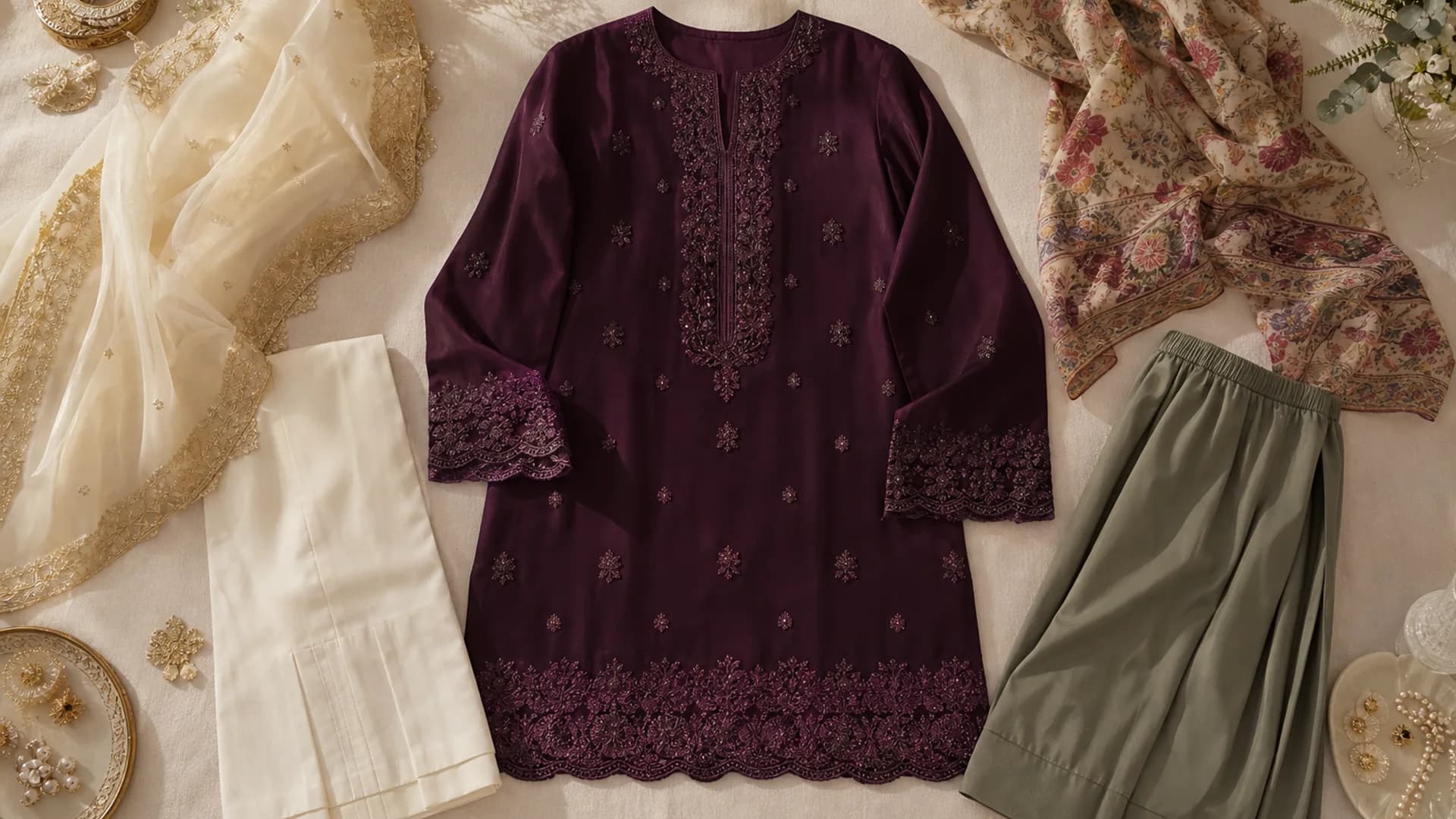
Eight Ways to Restyle a Formal Suit You Own
Most wardrobes hold three or four formal outfits that have been worn once and feel finished. Very little needs to change to make them wearable again.
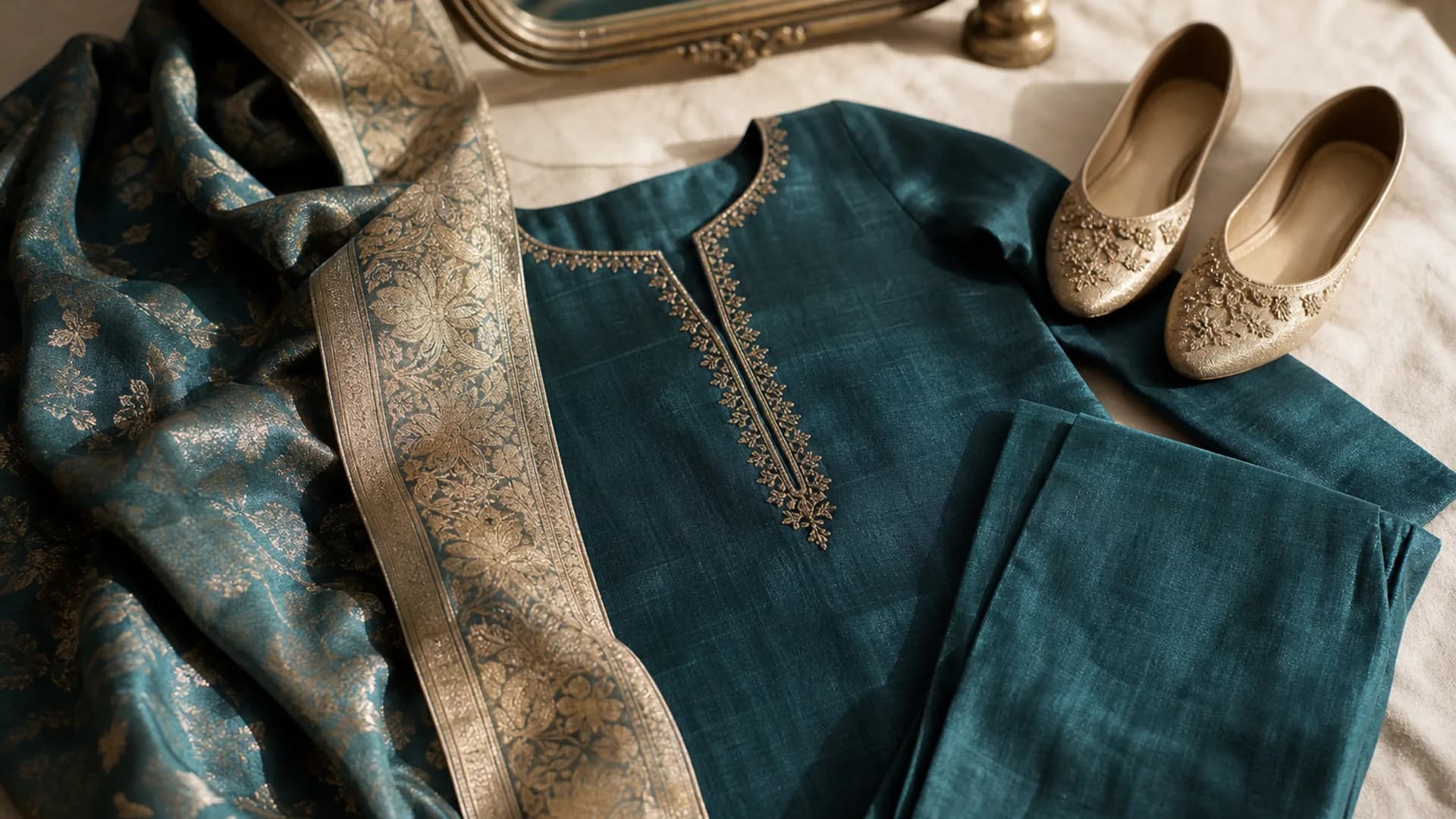
Formal Dressing in Your Forties and Fifties
There is a great deal of advice about what women over forty should stop wearing. Most of it is wrong. What actually changes is fit, fabric and comfort.
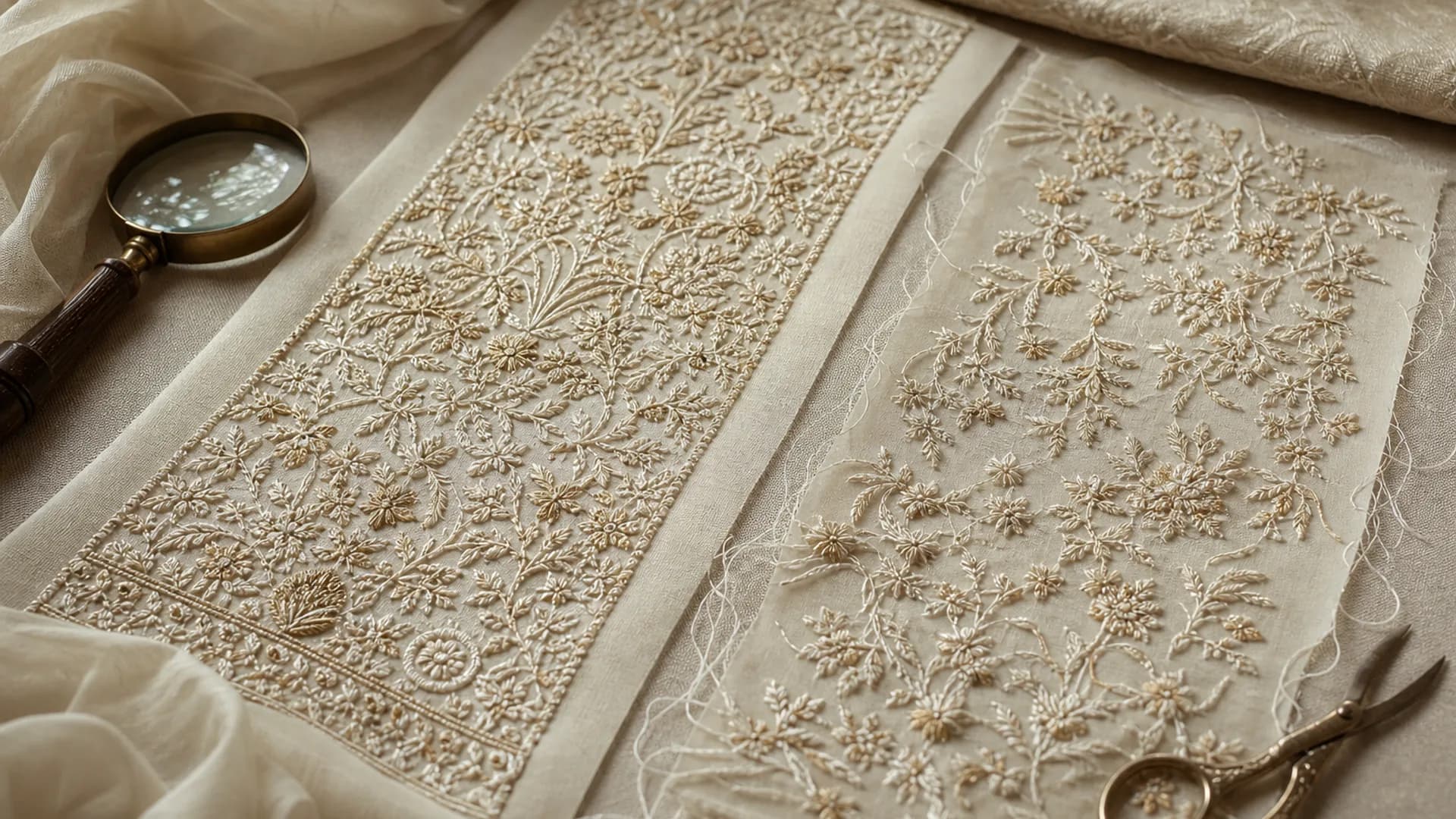
Original or Copy: How to Tell a Replica Suit
Master copies are sold openly and often honestly. The problem is when a copy is sold as an original at an original's price — here is how to tell.