

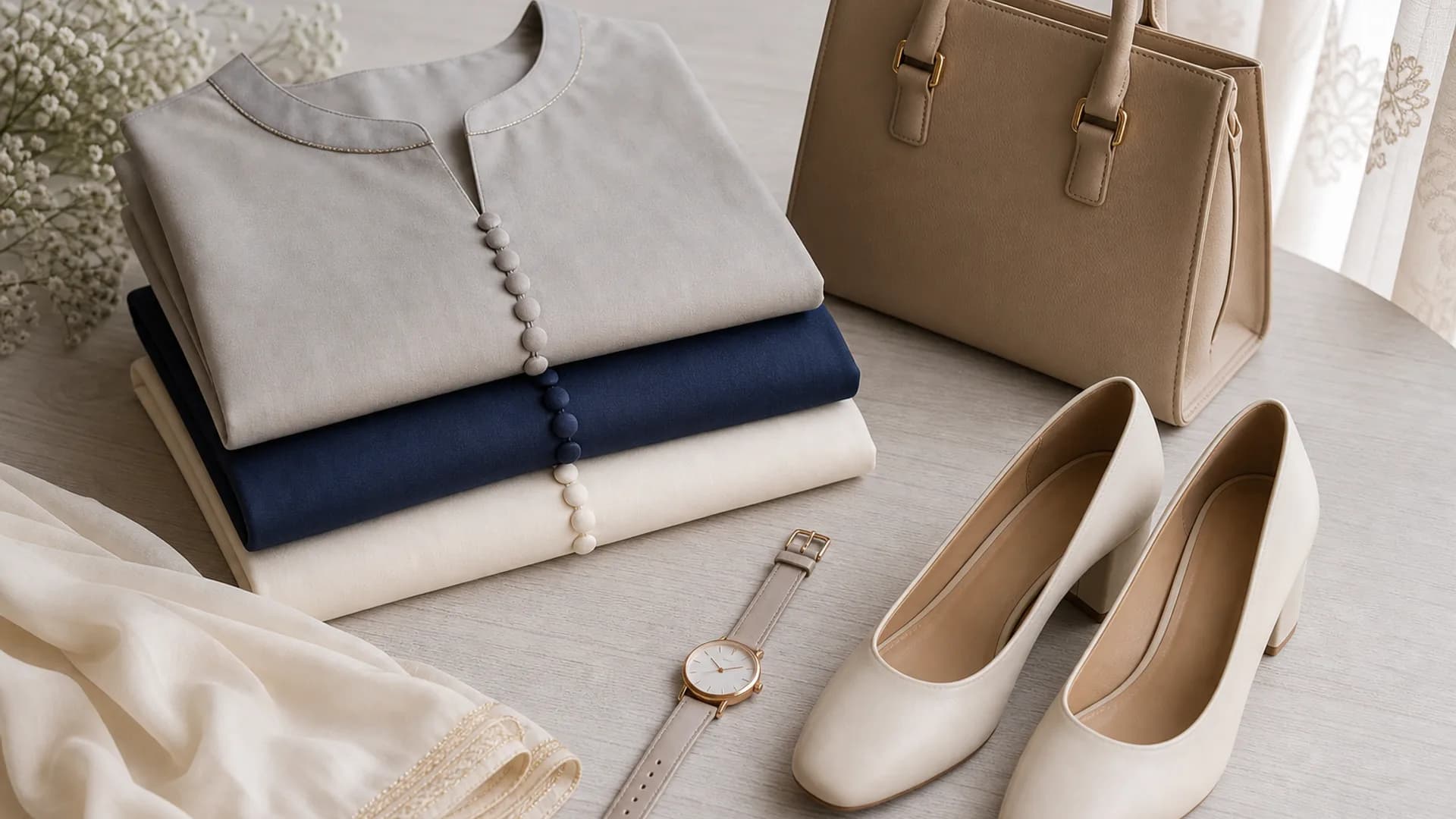
Office Wear: Pakistani Suits That Work at Work
Most workwear advice assumes a Western wardrobe. Dressing professionally in Pakistani clothing has its own rules, and a small wardrobe covers a whole week.
Almost all workwear advice is written for a Western wardrobe — blazers, shirts, trousers, the same five rules repeated. It is of very little use if you go to work in a shalwar kameez, which most working women in Pakistan do. Dressing professionally in Pakistani clothing has its own logic, and it is not simply festive wear made plainer. A work outfit has to survive a full day in a chair, a commute in heat, air conditioning that is either freezing or broken, and being seen by the same people every day — which is the constraint that changes everything. The good news is that a small, well-chosen set of pieces covers a working week comfortably, and it costs less than a single formal outfit.
What Reads as Professional
Three qualities, and none of them is expense. **Structure.** A garment that holds a shape reads as considered. A soft, drapey, unstructured kurta reads as casual regardless of what it cost. This is why crepe and cotton-silk work better at work than georgette does. **Restraint in embellishment.** Light work at the neckline is fine. Heavy embroidery, sequins, mirror work and gota all read as festive rather than professional, and they read that way in a meeting no matter how expensive they are. **A clean, deliberate cut.** A straight or A-line kameez with a proper shoulder line, a defined sleeve and a hem that sits where it should. What does not decide it: the fabric's price, whether the outfit is stitched or ready-to-wear, or whether it is this season's print. The simplest test: if it would look correct at a semi-formal dinner, it is probably too much for the office. If it would look correct at home on a Sunday, it is too little. Our [formal wear guide](/journal/pakistani-formal-wear-guide-party-semi-formal-festive) maps the ladder either side of this.
Fabrics That Survive a Working Day
This is where most office outfits fail, and it fails by four o'clock rather than in the morning. **Crepe** is the best workwear fabric available. It resists creasing better than almost anything, holds a clean line, drapes without clinging, and comes in every colour. If you buy one work fabric, buy this. **Cotton-silk blends** are the next best — the structure of cotton with a slight sheen that reads as more formal than plain cotton. **Good cotton and cambric** for summer. Breathable and washable, though they crease and will show it by afternoon. **Linen** looks excellent and creases immediately. Fine if you accept it, frustrating if you do not. **Khaddar** for winter, and it is the most comfortable cold-weather work fabric there is. **What to avoid:** pure chiffon and georgette, which are too soft and slightly formal for daywear; heavy silk, which reads as festive; and polyester, which is unbearable in a Pakistani summer commute and in an office where the air conditioning has failed. Our [seasonal fabric guide](/journal/summer-vs-winter-fabric-guide-pakistani-women) covers how each behaves.
The Cuts That Work
**A straight kameez with trousers** is the workwear default and for good reason — clean, simple and unremarkable in the best sense. **A shorter kurta with wide-leg trousers or a palazzo** has become the standard younger workwear silhouette, and it is genuinely practical. Wide-leg trousers have replaced the shalwar in most offices. **An A-line kameez** for anyone who wants shape without fitting closely. **Cigarette or straight-cut trousers** for a sharper, more formal look. **What to think about:** a churidar reads as slightly dressy for daily office wear in most workplaces, though it is fine occasionally. A full shalwar with heavy pleating reads as traditional and less formal. A sharara or gharara is festive wear and does not belong at work. Our post on [telling the three apart](/journal/sharara-vs-gharara-vs-palazzo-difference) covers the distinction. **Length:** a kameez ending at mid-thigh to just above the knee is the most versatile. Very long shirts read as more traditional; very short ones read as casual.
The Dupatta at Work
The practical question nobody addresses: a loose dupatta and a working day do not combine well. It catches on chair arms, it falls off while typing, it drags across a desk, and it needs adjusting every ten minutes. That constant small management is genuinely distracting. **The solutions, in order of usefulness:** **Pin it at the shoulder.** One pin, and it stays where you put it all day. The single most useful change. **Wear a narrower dupatta or a stole.** Less fabric to manage, and it reads as more modern. **Drape it once around the neck** rather than across the shoulders — secure, and it looks deliberate. **Choose a fabric with grip.** Cotton and crepe stay put; chiffon and organza slide constantly. Our [dupatta fabric guide](/journal/dupatta-fabric-guide-chiffon-organza-net-silk) covers which does what. **Or skip it.** In a large number of Pakistani offices a kameez and trousers without a dupatta is entirely normal, particularly with a high or covered neckline. This varies by workplace and city, and the norm in your office is the one that matters.
Colour: Building a Rotation
The constraint that makes work dressing different from every other kind: **the same people see you every day.** A festive outfit is seen once. A work outfit is seen fifty times a year. That argues for a system rather than a set of individual outfits. **Build on neutrals.** Stone, navy, charcoal, olive, ivory, dusty rose, sage. These recombine — any trouser works with any shirt, which multiplies a small wardrobe considerably. **One or two stronger colours** for variety, not five. **Avoid a memorable print** for regular wear. A distinctive pattern is recognised and counted; a plain or subtle fabric is not. This is the single most useful piece of workwear advice there is. **Five shirts and three trousers in compatible neutrals** gives fifteen combinations, which covers three weeks without repeating a look. Our [capsule wardrobe guide](/journal/capsule-wardrobe-pakistani-women-10-pieces) applies the same principle across a whole wardrobe, and the [colour guide for Pakistani skin tones](/journal/best-colours-for-pakistani-skin-tones) helps pick neutrals that suit you rather than the standard ones.
Shoes, Bag and the Rest
**Shoes.** A closed flat or a low block heel, in a neutral. Comfort matters more than at any other occasion because you will walk, stand and commute in them. One good pair worn daily beats three occasional pairs. Our [shoes guide](/journal/shoes-with-pakistani-formal-wear-guide) covers the formal end; for work the rules are simpler and comfort wins. **Bag.** Structured rather than soft, and large enough for a laptop if you carry one. A structured bag does more for a professional impression than almost any garment. **Jewellery.** Small and consistent. Studs or small hoops, one bracelet or a watch, and a ring. Heavy jhumkas and bangle stacks read as festive. **Hair.** Something that survives a commute and stays out of your way. The [hair accessories guide](/journal/hair-accessories-pakistani-women-styling-guide) has options that hold, and the [accessories collection](/accessories) has simpler hand-crafted pieces. **A cardigan or shawl at your desk.** Pakistani office air conditioning is either arctic or absent, and having a layer that lives at work solves it permanently.
Building the Wardrobe Efficiently
A working wardrobe is bought differently from festive wear, and the economics are better. **Buy in multiples.** When you find a cut and fabric that works, buy it in two or three colours. This is not boring — it is what makes getting dressed at seven in the morning take ninety seconds. **Spend on the trousers.** They are worn most, washed most, and a well-cut trouser lifts an ordinary shirt. Most people do the opposite. **Get everything altered.** A work outfit is seen constantly, so fit matters more here than for a piece worn twice a year. Our post on [the five alterations that matter](/journal/five-alterations-make-any-suit-fit) covers what to ask for, and the [size guide](/content/size-guide) has our measurements. **Wash-test before committing to a second.** A fabric that pills, fades or loses shape after four washes is not a work fabric, whatever it cost. **Keep one better outfit at the formal end** for meetings, presentations and unexpected occasions. Something from the [stitched suits](/ladies/stitched-suits) range works for that without tipping into festive. And if you are unsure how a colour or cut sits on you before ordering, the [Virtual Try Room](/virtual-try-room) will show you.
Frequently Asked Questions
Structure, restraint and a clean cut. A garment that holds its shape reads as considered; a soft drapey one reads as casual regardless of cost. Keep embellishment to light work at the neckline — heavy embroidery, sequins and mirror work read as festive in a meeting whatever they cost.
Crepe, by a distance. It resists creasing, holds a clean line, drapes without clinging and comes in every colour. Cotton-silk blends are next best. Avoid pure chiffon and georgette, which are too soft for daywear, and polyester, which is unbearable in a summer commute.
It depends entirely on your workplace — in many Pakistani offices a kameez and trousers without one is entirely normal, particularly with a covered neckline. If you do wear one, pin it at the shoulder: an unpinned dupatta needs adjusting every ten minutes and is genuinely distracting.
Five shirts and three trousers in compatible neutrals gives fifteen combinations, which covers three weeks without repeating a look. Building on neutrals that recombine multiplies a small wardrobe far more than buying complete outfits does.
Avoid memorable ones for regular wear. The same people see you every day, so a distinctive print gets recognised and counted while a plain or subtle fabric does not. This is the main difference between dressing for work and dressing for an occasion.
About the Author
Habiba Minhas
Founder and creative director of Habiba Minhas, Pakistan's leading handcrafted fashion brand based in Karachi. With a passion for preserving traditional Pakistani craftsmanship while embracing modern design, she has built a brand serving over 5,000 customers nationwide.
Specializing in premium ladies suits, kids festive wear, and baby products, Habiba works directly with artisan embroiderers and skilled tailors to create pieces that honor Pakistani heritage.
Related Articles
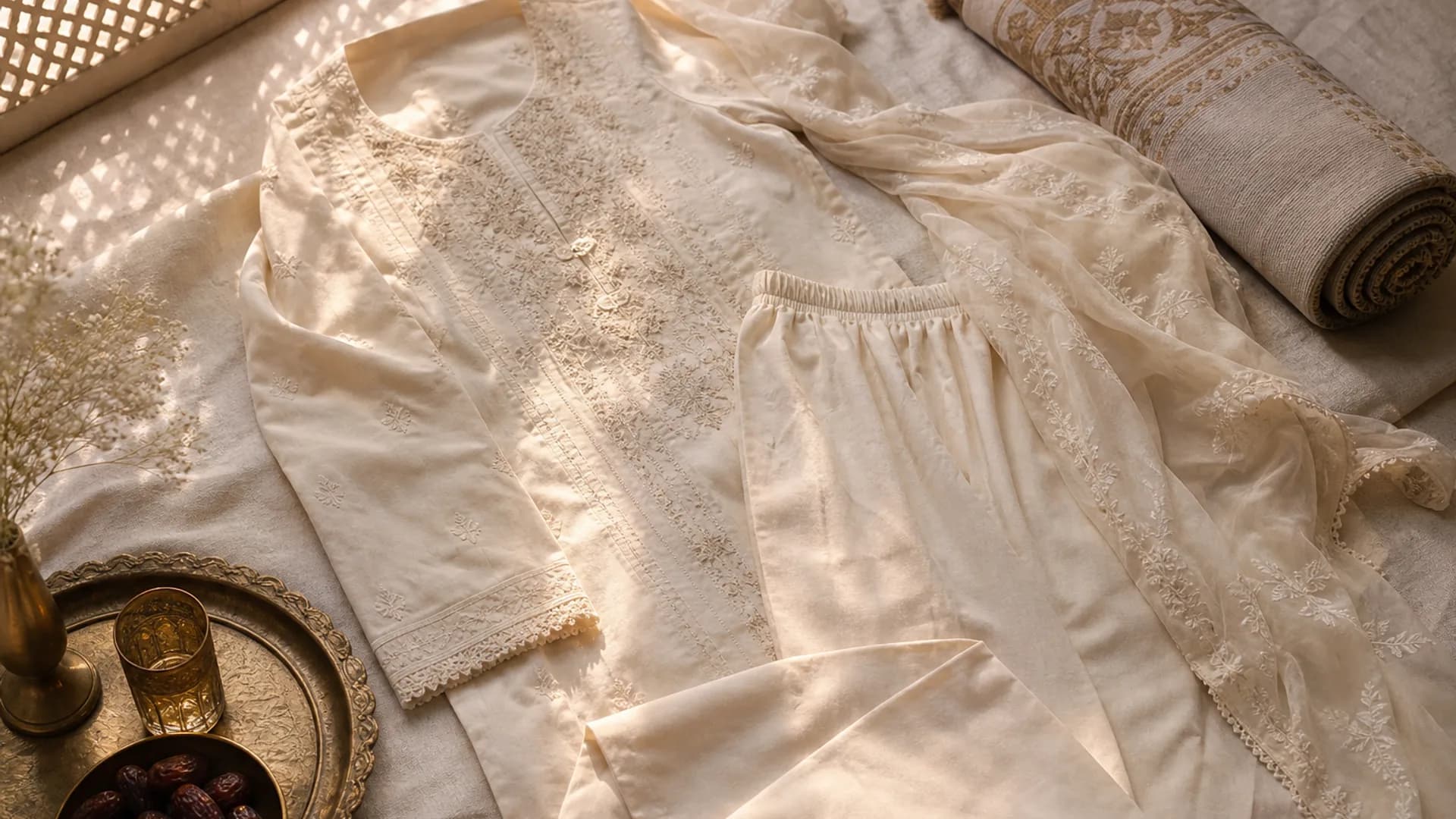
Dressing for Ramadan and Iftar Gatherings
Ramadan runs a month, and the clothing has to work for fasting through the afternoon and hosting in the evening. The two are different problems.
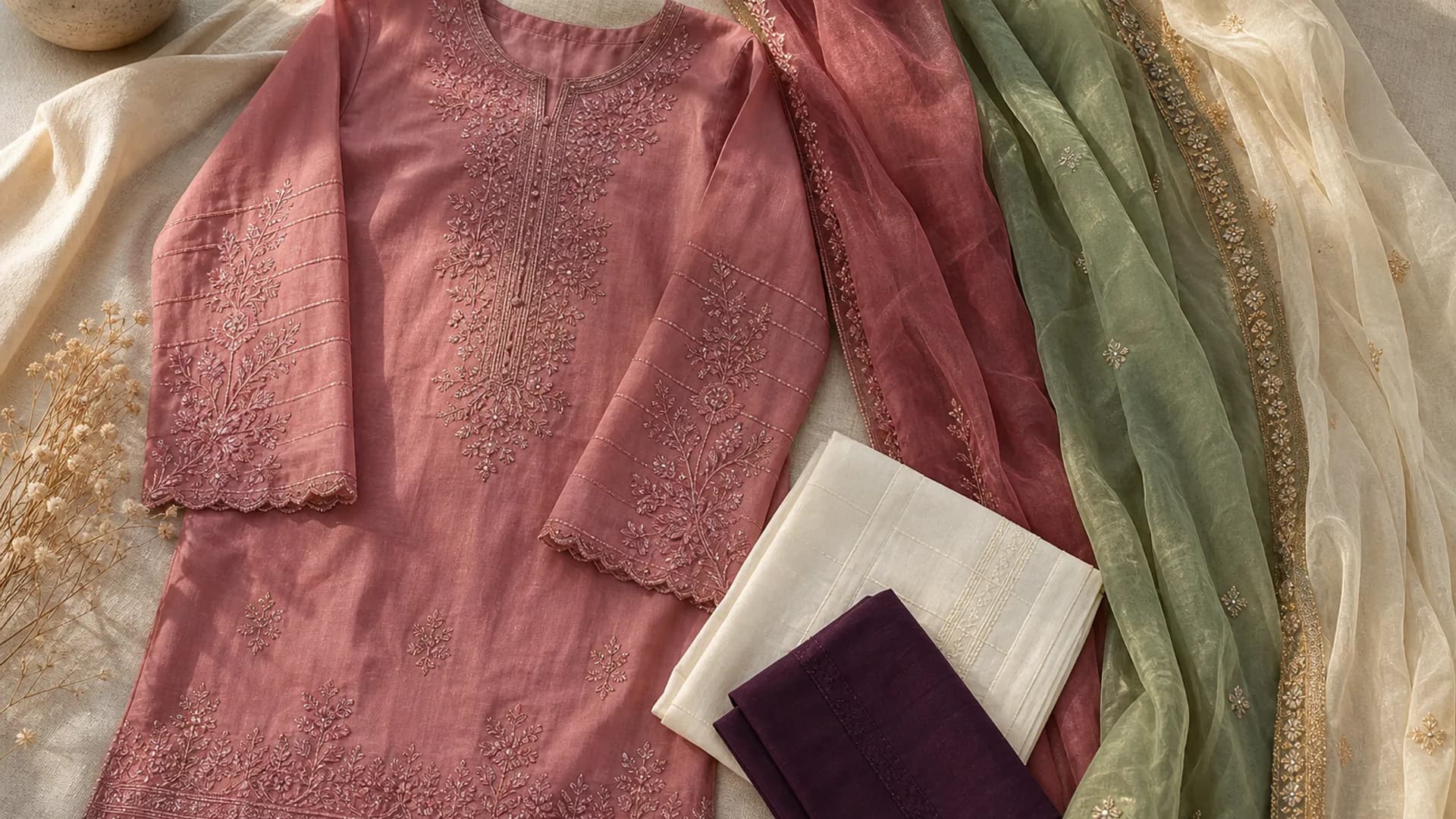
Matching a Dupatta or Trouser to a Shirt
Almost matching looks worse than clearly not matching. Here is how to pair pieces bought separately so the outfit reads as deliberate.
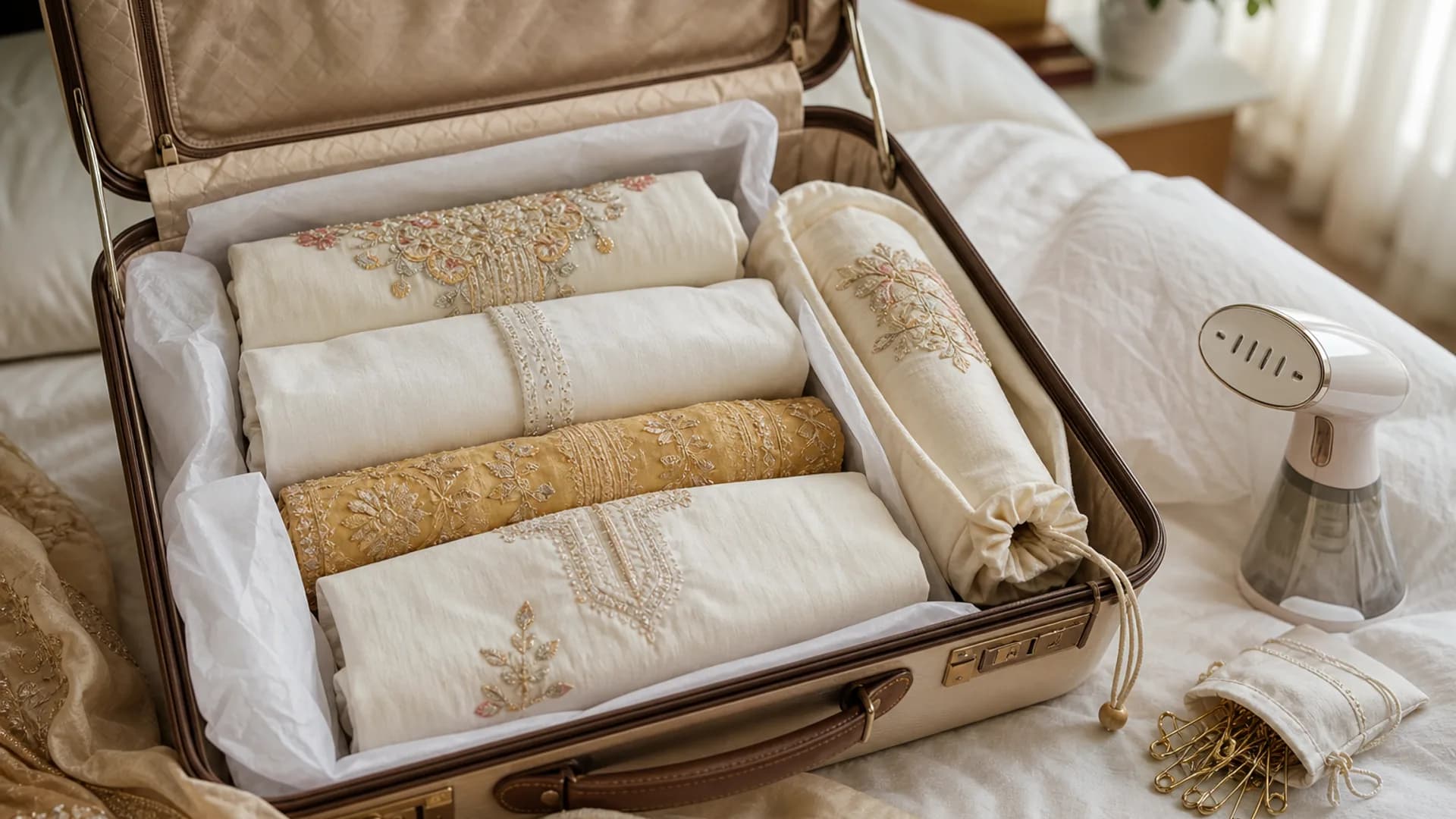
Packing Formal Wear Without Ruining It
A heavily worked outfit and a suitcase are natural enemies. A specific folding method and twenty minutes on arrival is the difference between wearable and not.