

Original or Copy: How to Tell a Replica Suit
Master copies are sold openly and often honestly. The problem is when a copy is sold as an original at an original's price — here is how to tell.
Replica designer suits are a large, open and entirely visible part of the Pakistani clothing market. They are advertised as "master copies" and "first copies", sold in shops and on Instagram, and priced at a fraction of the original. Much of that trade is honest in its own way — the seller says it is a copy, the buyer knows it is a copy, and both are satisfied. There is a legitimate argument for buying one: an outfit worn twice at a fraction of the price is a reasonable decision, and plenty of sensible people make it. The problem is the other case: a copy sold as an original, at close to an original's price, to a buyer who does not know the difference. That is worth being able to spot. And it is easier than it sounds, because the things a copy cannot replicate are the things that cost money.
What Gets Copied and What Does Not
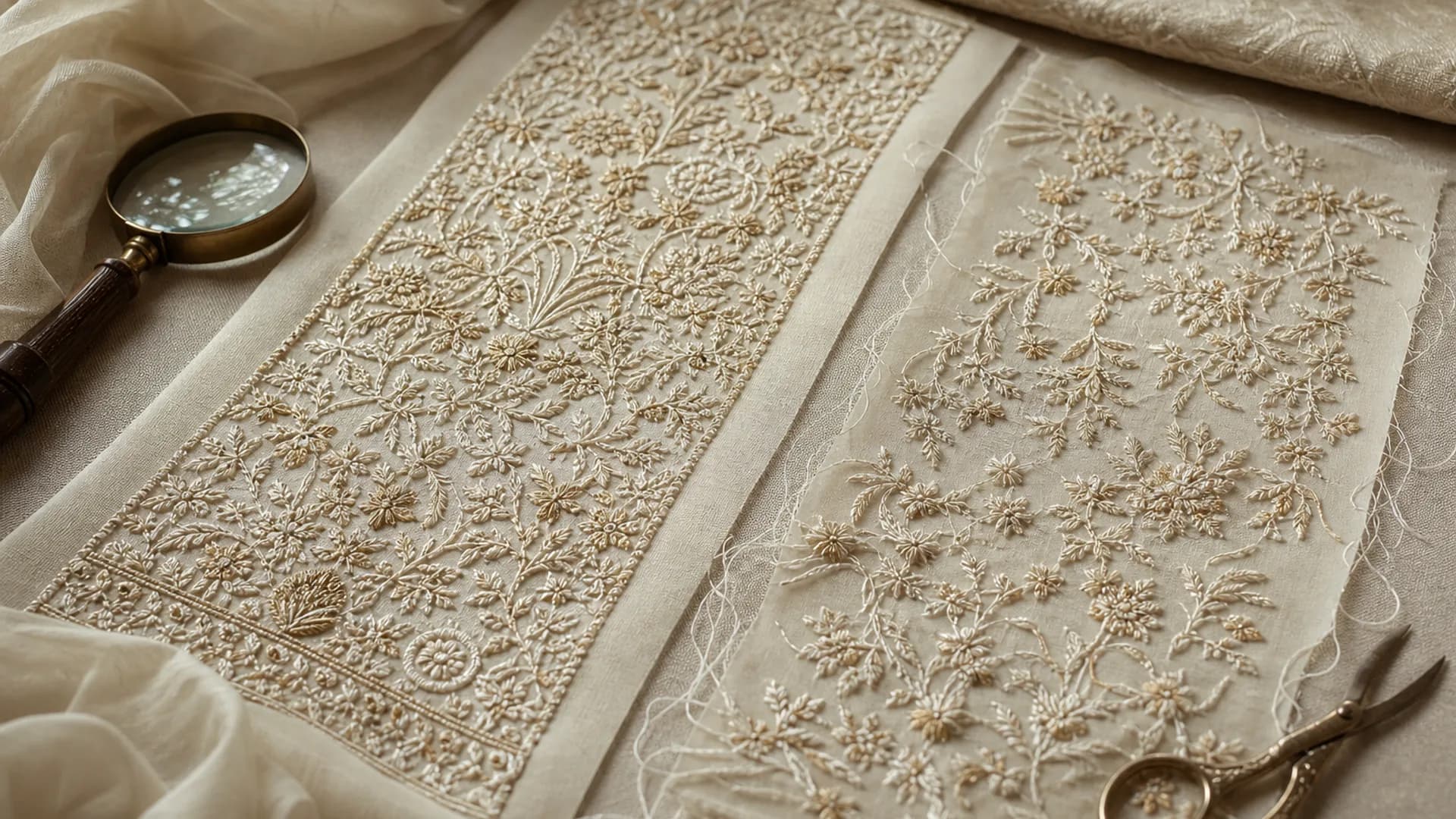
A replica copies the design — the print, the placement, the colour, the silhouette. Those are the visible things, and a good copy gets them close enough that a photograph is not much use for telling them apart. What a copy generally does not replicate: **The base fabric.** The single biggest cost in a designer suit and the least visible online. An original uses a heavier, better-finished fabric; a copy uses whatever holds the print. **The embroidery method.** Hand-finished dabka and nakshi on an original become machine-run thread work on a copy. Our post on [embroidery types](/journal/embroidery-types-explained-zari-gota-resham) covers telling them apart. **The finishing.** Seam allowance, lining, facings, thread ends, edge treatment. **The dupatta.** Where an original uses genuine chiffon or organza, a copy uses polyester. This is the most common substitution of all. **Colour accuracy.** Copies are worked from photographs, so shades drift — usually brighter and flatter than the original.
The Checks That Work
**Turn it inside out.** The most reliable test for anything. Originals are finished on the inside — bound or overlocked seams, neat thread ends, a proper neckline facing, lining behind worked areas. Copies are finished only where it shows. **Rub the fabric between your fingers.** An original's base fabric has weight and a smooth density. A copy's feels thinner, papery or slick. **Look at the print edges under good light.** Sharp boundaries between colours mean good printing; fuzzy or bleeding edges mean a cheaper process. **Check the print on the reverse.** On good fabric the print penetrates and is faintly visible from behind. On a copy it sits entirely on the surface. **Look at the embroidery's raised elements.** Dabka and nakshi are hand-applied by definition. If the original has them and the piece in front of you has flat machine thread work, it is a copy. **Check the dupatta separately.** Hold it up: real chiffon falls softly and warms in your hand, polyester stays cool with a glassy shine. Our guide on [telling real silk from fake](/journal/how-to-tell-real-silk-from-fake-pakistan) covers the tests.
Labels, Packaging and Paperwork
These are the easiest things to fake and therefore the weakest evidence — but they still catch careless copies. **Labels.** Originals have consistent, well-printed woven labels with correct spelling, a size, a fibre composition and care instructions. Copies frequently have a printed label, a missing composition, or a spelling error. **Care instructions are revealing.** A label saying machine wash warm on a garment sold as silk is describing polyester, whatever the brand name says. **Packaging.** Original brands use consistent bags, boxes and tissue. Copies arrive in generic packaging. **Tags and barcodes.** Present and scannable on an original. **The stitching of the label itself** is often the giveaway — an original's label is neatly attached, a copy's is added afterwards and shows it. **Do not rely on any of this alone.** Labels can be sourced and copied, and a sophisticated replica will have convincing ones. The fabric and the finishing are much harder to fake and are where you should look.
Price and Where It Is Sold
**A designer suit has a floor price** driven by fabric and labour. A price far below it is not a bargain that only you have found. **Steep discount on a current-season design** is the clearest signal. Brands discount at end of season, not during a launch. **Sold-out designs reappearing elsewhere** are usually copies. Originals sell out and stay sold out. **Where it is sold matters.** A brand's own site or an authorised stockist is safe. An unknown Instagram account with a stock photograph and a price a third of retail is very likely a copy. **The photographs are a signal.** A seller using the brand's own campaign images rather than photographs of their actual stock cannot show you what they have, which is usually the point. Ask for a real photograph and a daylight video of the actual item. **Cash-only and no returns** are worth noticing. An honest seller has a returns process. Our [returns page](/help/returns) sets out ours, and it is worth reading the equivalent before buying anywhere.
What You Actually Lose With a Copy
Set aside the ethics for a moment; there are four practical differences that show up in wear. **Comfort.** A polyester base and a polyester dupatta in a Pakistani summer is genuinely unpleasant, and it is the difference most people notice first. **How it ages.** A copy's print fades faster, the fabric pills, and machine embroidery on a thin base puckers as the threads pull. An original in good fabric looks better after five years than a copy does after one. **How it photographs.** Good fabric shifts through the light; flat synthetic does not. In a photograph under warm wedding lighting the difference is visible even when it is not in daylight. **Fit and finish.** Copies are cut to approximate measurements with narrow seam allowances, which means less can be altered. **And the ethics do matter.** Original design work is expensive and copying it is a straightforward transfer from the people who did the work to the people who did not. That is a real cost even when the individual purchase feels harmless.
When a Copy Is a Reasonable Choice
This should be said plainly, because pretending otherwise is not useful. **When it is sold honestly as a copy and priced as one.** A buyer who knows what they are getting and pays accordingly has made an informed choice. **For a one-wear occasion.** A heavily worked outfit for a single function that will never be worn again is a poor place to spend heavily, and the durability difference does not get tested. **For a child.** She will outgrow it in a season regardless. Our post on [kids' formals that last](/journal/kids-formal-wear-that-lasts-more-than-one-season) covers what actually matters at that age — and it is construction and comfort, not brand. **When the alternative is nothing.** A copy that lets someone attend a wedding they would otherwise skip is not a moral failing. **Where it is not reasonable:** paying an original's price for a copy, buying from a seller who is lying about it, or buying a copy for something you intend to keep and wear for years. In that last case the economics genuinely favour the original.
The Better Question
There is a third option that gets overlooked between original and copy, and for most buyers it is the right one. **Buy a good non-designer suit instead.** A well-made suit from a smaller maker, in genuine fabric with proper finishing, at a fraction of a designer price and considerably more than a copy. You get the fabric, the comfort and the durability, and you simply do not get the name. What you are paying for in a designer suit is design, brand and finishing. The first two are what a copy steals; the third is what a copy cannot replicate. A good non-designer suit gives you the third without pretending to the first two. Judge it on the checks in this article rather than the label: turn it inside out, feel the fabric, check the dupatta, look at the finishing. That is the honest test of value, and it is the one we would rather be judged on. Every [stitched suit](/ladies/stitched-suits) in our [ladies collection](/ladies) is silk with the finishing described here, and our post on [what to check when buying online](/journal/5-things-check-buying-unstitched-suit-online-pakistan) covers asking the right questions of any seller, including us.
Frequently Asked Questions
Turn it inside out — originals are finished inside with bound seams, neat thread ends and a proper neckline facing, while copies are finished only where it shows. Then check the base fabric weight, the print penetration on the reverse, and whether the dupatta is genuine chiffon or polyester.
A replica of a designer suit, copying the print, placement and silhouette but using cheaper base fabric, machine embroidery in place of hand work, and a polyester dupatta in place of chiffon. Many are sold openly and honestly as copies; the problem is one sold as an original.
The weakest evidence, since labels are easy to source and copy. They still catch careless replicas — look for spelling errors, missing fibre composition, or care instructions saying machine wash warm on something sold as silk. Fabric and finishing are much harder to fake.
For something you intend to keep and wear for years, yes — the base fabric, the comfort in heat and how it ages are genuinely different. For a single-wear occasion outfit the durability difference never gets tested, and the economics are much closer.
Yes, and it is usually the better option: a well-made suit from a smaller maker in genuine fabric with proper finishing. You get the fabric, comfort and durability at a fraction of a designer price — you simply do not get the name. Judge it inside out rather than by the label.
About the Author
Habiba Minhas
Founder and creative director of Habiba Minhas, Pakistan's leading handcrafted fashion brand based in Karachi. With a passion for preserving traditional Pakistani craftsmanship while embracing modern design, she has built a brand serving over 5,000 customers nationwide.
Specializing in premium ladies suits, kids festive wear, and baby products, Habiba works directly with artisan embroiderers and skilled tailors to create pieces that honor Pakistani heritage.
Related Articles
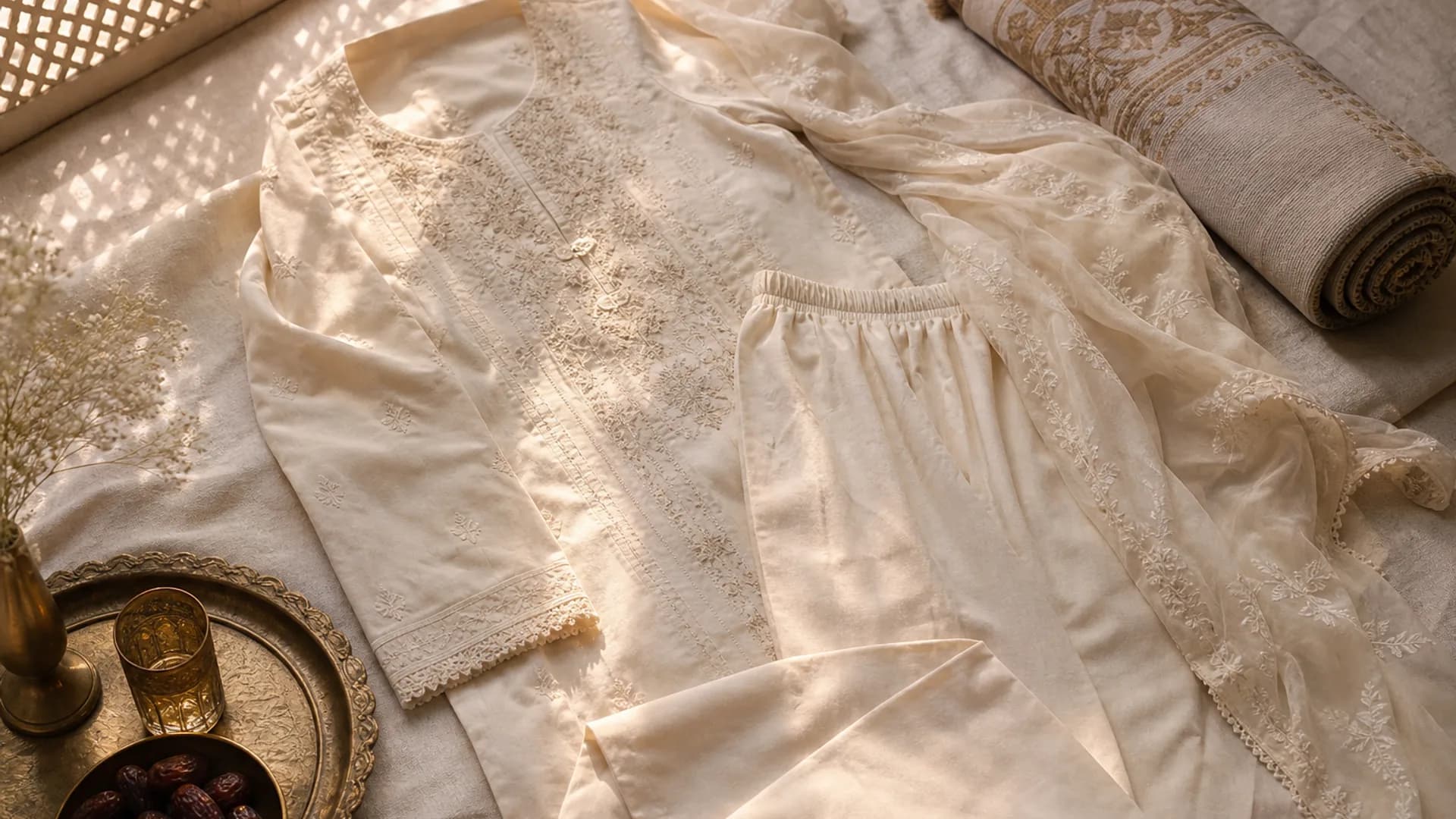
Dressing for Ramadan and Iftar Gatherings
Ramadan runs a month, and the clothing has to work for fasting through the afternoon and hosting in the evening. The two are different problems.
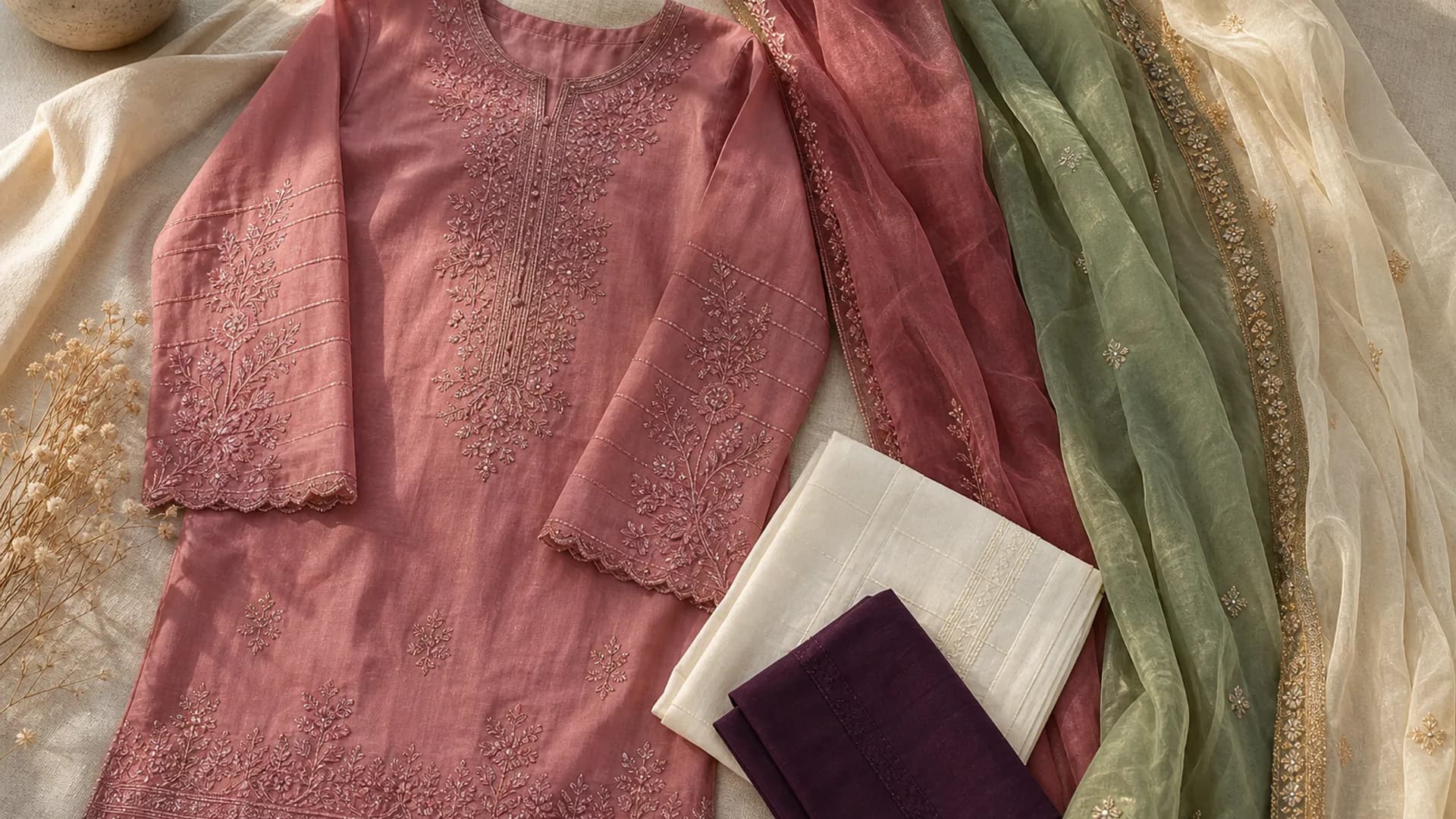
Matching a Dupatta or Trouser to a Shirt
Almost matching looks worse than clearly not matching. Here is how to pair pieces bought separately so the outfit reads as deliberate.
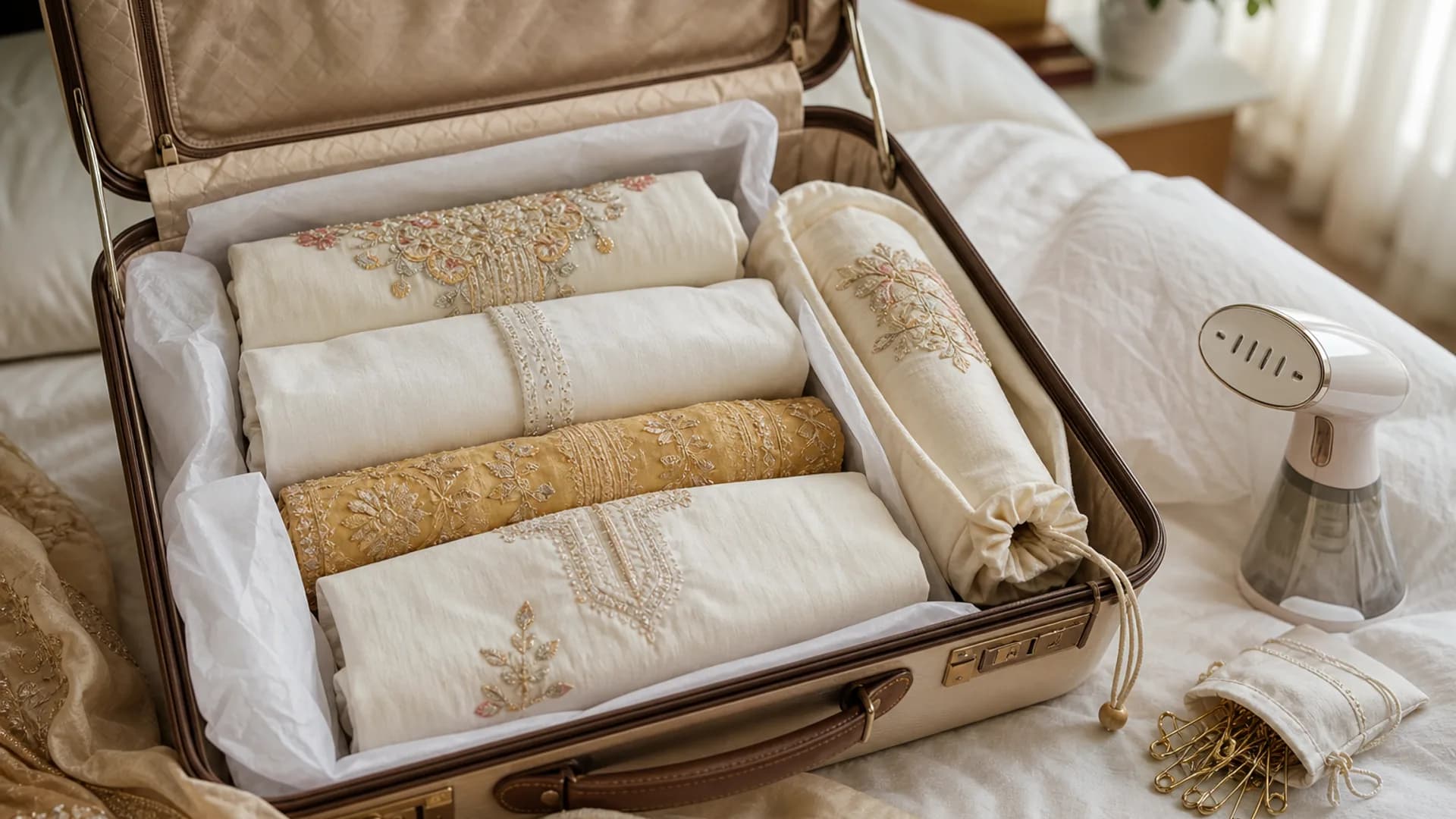
Packing Formal Wear Without Ruining It
A heavily worked outfit and a suitcase are natural enemies. A specific folding method and twenty minutes on arrival is the difference between wearable and not.