

Packing Formal Wear Without Ruining It
A heavily worked outfit and a suitcase are natural enemies. A specific folding method and twenty minutes on arrival is the difference between wearable and not.
A heavily worked Pakistani outfit and a suitcase are natural enemies. Embroidery does not want to be folded. Zari creases and the crease marks the fabric permanently. Sequins press into whatever is next to them and can fuse in a hot hold. A gharara carries several metres of pleated fabric that occupies most of a case on its own. And chiffon and organza take a crease that will not come out with anything you have in a hotel room. Most people discover all of this the night before a wedding, in a relative's spare room, holding an outfit that looks slept in. It is avoidable. The method is specific rather than obvious, and it takes about fifteen minutes at each end.
Before You Pack: Two Decisions
**Decide what actually has to travel.** The temptation is to take options. Options are what fill a case and crush everything in it. Two outfits packed well arrive wearable; four packed tightly arrive creased. Our post on [how many outfits a wedding needs](/journal/how-many-outfits-pakistani-wedding-week-budget) argues that two is usually the right number anyway. **Decide what travels in hand luggage.** One outfit — the most important one, for the function you cannot miss — should not go in the hold. Checked bags are delayed, and a barat outfit in a bag that arrives a day late is a genuine problem. If you can only protect one thing, protect the outfit for the biggest function. **Photograph everything before packing.** Useful for insurance, useful for remembering what you brought, and useful if a bag goes missing and you need to describe the contents.
The Folding Method
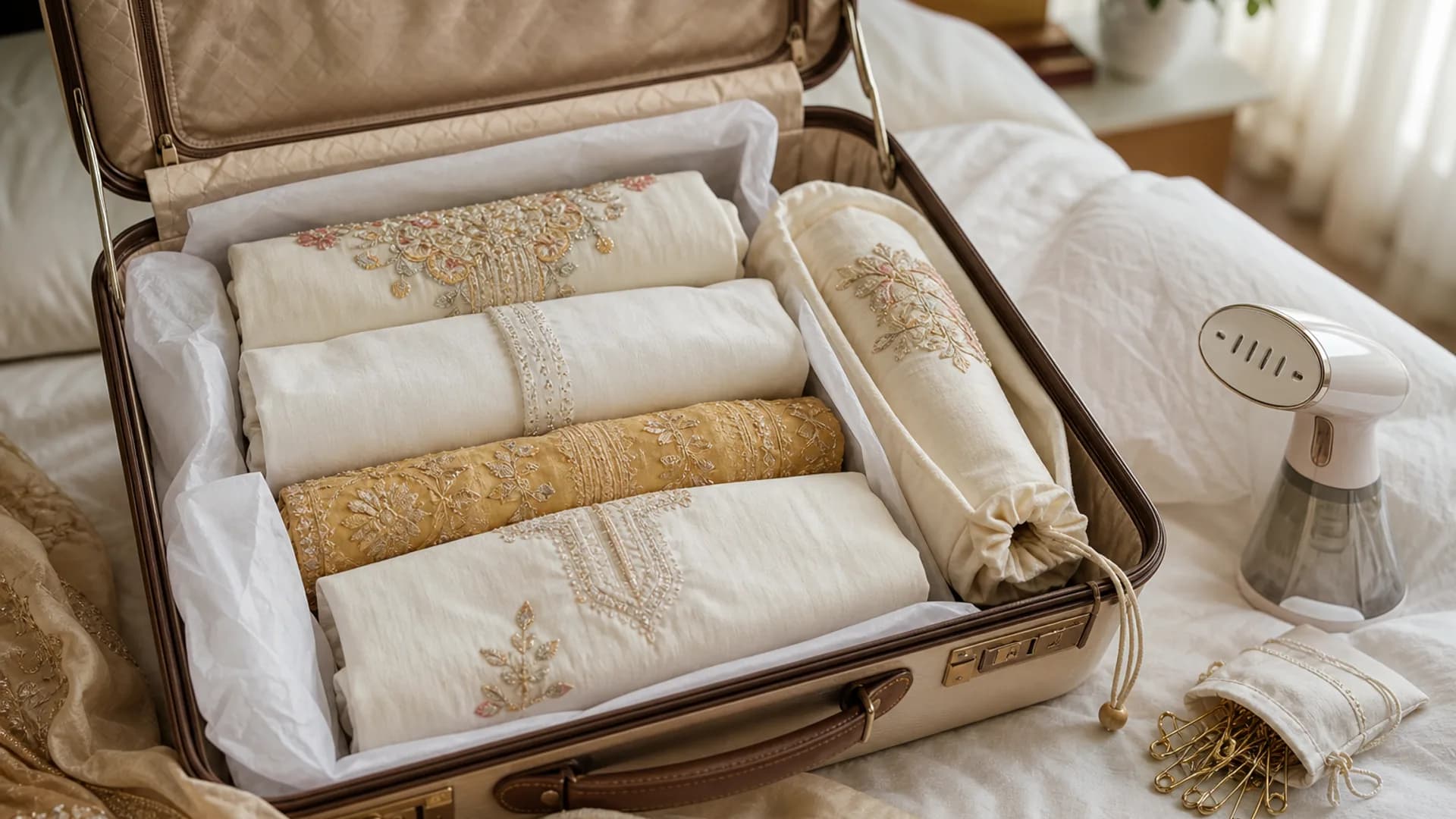
The principle is that a fold over something soft leaves a soft crease, and a fold over nothing leaves a sharp one. **Use tissue paper.** Acid-free if you have it, plain white tissue otherwise. Never newspaper — the ink transfers, particularly onto pale silk. **Lay the garment face down.** Embroidery on the inside of the fold, not pressed against the case. **Fold the sleeves in across the back**, with a roll of tissue in each fold so the crease is soft. **Fold the body in half or thirds**, with a rolled sheet of tissue at each fold line. This is the step that does most of the work, and it is the one people skip. **Interleave tissue between garments**, particularly between anything sequinned and anything else. Sequins soften in heat and can fuse to the fabric next to them. **Roll rather than fold anything light and plain** — cotton, lawn, plain chiffon. Rolling is better for unworked fabric and worse for embroidered fabric, which is why the two need different treatment.
Dupattas, Ghararas and the Difficult Pieces
**Heavy worked dupattas** should be rolled loosely around a tube of tissue or a rolled towel, not folded. A fold line across the centre of an organza dupatta is close to permanent. **Light dupattas** can be folded, with tissue at the folds. **Ghararas and shararas** are the hardest thing to pack. Fold along the existing pleat lines where possible rather than creating new ones — the pleats are already set and refolding along them does no additional damage. Pad the folds with tissue. **Anything with a stiff net underskirt** should go in flat and on top, with nothing on it. Net does not recover from being crushed. **Beaded or stone-set pieces** go in their own muslin bag so the backs of the stones do not abrade other garments. Sharp stone backs will damage silk over a long journey. **Shoes in separate bags**, always. Leather and dye transfer onto fabric, and embroidered khussas crush permanently under any weight. Our [storage guide](/journal/how-to-store-formal-suits-pakistan) covers the same materials at rest, and the same principles apply.
Packing the Case
**Heavy things at the bottom**, on the wheel side. Shoes, toiletries, anything solid. **Formal wear flat on top**, in as few layers as possible. **Fill the gaps.** A garment that shifts around in a half-empty case creases more than one packed snugly. Use soft items — a shawl, a cardigan — to fill space rather than leaving it. **Do not overpack.** Compression is the enemy of embroidery, and a case forced shut presses everything inside it for the whole journey. **Use a garment bag inside the case** if you have one. A cotton one, not plastic — plastic traps moisture and in a hot hold that is worse than the creasing. **Keep anything that could leak away from fabric.** Oils, perfume, liquid makeup. A leaked bottle onto a silk outfit is not recoverable, and it is the most common way a wedding outfit is lost in transit. **Put a spare muslin or old cotton sheet in the case.** It weighs nothing and it is useful for a hundred things at the other end.
On Arrival: The First Twenty Minutes
This is the part that matters most and takes the least effort. **Unpack immediately.** Not tomorrow. Most creasing sets permanently in the hours after arrival, while the fabric is still compressed and warm. **Hang everything.** On broad or padded hangers — a thin wire hanger leaves a mark on silk within hours. If there are no good hangers, lay the garments flat on a bed rather than leaving them folded. **Hang heavy pieces flat instead.** A heavily worked shirt or a gharara should be laid out rather than hung, because hanging stretches it. **Steam, do not iron.** A bathroom with a hot shower running for ten minutes, with the garment hanging nearby but not in the spray, releases most travel creases. This works remarkably well and needs no equipment. **Never iron directly on embroidery.** Zari flattens, dabka crushes, sequins melt. Iron on the reverse, on low, with a cloth between — and only on plain areas. **Give it a day if you can.** Most creases in silk relax on their own once the fabric is hanging.
The Emergency Kit
Small things that save an evening, and all of them fit in a pouch. **Safety pins**, in two sizes. The most useful item on the list — for a dupatta that will not stay, a hook that has come off, a hem that has dropped. **A small sewing kit** with thread in the colours of what you brought. **Spare hooks and buttons**, ideally the ones supplied with the outfit. **Double-sided fashion tape** for a neckline or a dupatta that will not sit. **A lint roller**, which matters most for black and dark outfits. Our post on [wearing black](/journal/how-to-wear-black-pakistani-formal-wear) covers why. **A travel steamer** if you are going somewhere for several days with several functions. Genuinely worth the space. **Plasters for shoes.** Our [shoes guide](/journal/shoes-with-pakistani-formal-wear-guide) makes the case for breaking them in beforehand, but a travelling pair sometimes has to be new. **A folding flat pair of shoes**, for the end of the evening.
Coming Home
The return journey is where outfits actually get ruined, because the care taken on the way out is rarely repeated. **Do not pack anything damp.** An outfit worn at a late function in humid weather and packed the next morning will grow mildew in a closed case. Air it first, even for an hour. **Pack worn and unworn separately.** Perfume, food marks and body oils transfer between garments in a case. **Take the same tissue home with you** and use it again. It weighs nothing. **Clean everything on arrival, not next season.** Invisible marks oxidise into permanent yellow-brown stains over months, and they attract insects. This is the single most useful habit for anyone with formal wear, and it is covered in full in our [storage guide](/journal/how-to-store-formal-suits-pakistan). **Deal with damage now.** A pulled thread, a loose sequin, a broken hook. Ten minutes now, a much larger job after a year folded against the damage. And if the outfit did not survive, that is worth knowing before the next trip — the [ladies collection](/ladies) and the [stitched suits](/ladies/stitched-suits) are there, and our post on [buying from abroad](/journal/buying-pakistani-clothes-from-abroad-guide) covers ordering ahead of a trip rather than carrying everything.
Frequently Asked Questions
Lay it face down so the embroidery is inside the fold, and place rolled tissue paper at every fold line — sleeves and body. A fold over something soft leaves a soft crease; a fold over nothing leaves a sharp one. Never use newspaper, whose ink transfers onto pale fabric.
Roll light unworked fabrics — cotton, lawn, plain chiffon. Fold embroidered pieces with tissue at each fold. Heavy worked dupattas should be rolled loosely around a tube of tissue rather than folded, because a crease across the centre of an organza dupatta is close to permanent.
Hang the garment in a bathroom with a hot shower running for ten minutes, near the steam but not in the spray. It releases most travel creases and needs no equipment. Never iron directly on embroidery — zari flattens, dabka crushes and sequins melt.
The most important one, yes. Checked bags get delayed, and a barat outfit arriving a day after the barat is a real problem. If you can only protect one thing, protect the outfit for the function you cannot miss.
Air anything worn before packing it away — an outfit packed damp after a humid function will grow mildew in a closed case. Then clean everything, including pieces worn only briefly, because invisible marks oxidise into permanent stains over months and attract insects.
About the Author
Habiba Minhas
Founder and creative director of Habiba Minhas, Pakistan's leading handcrafted fashion brand based in Karachi. With a passion for preserving traditional Pakistani craftsmanship while embracing modern design, she has built a brand serving over 5,000 customers nationwide.
Specializing in premium ladies suits, kids festive wear, and baby products, Habiba works directly with artisan embroiderers and skilled tailors to create pieces that honor Pakistani heritage.
Related Articles
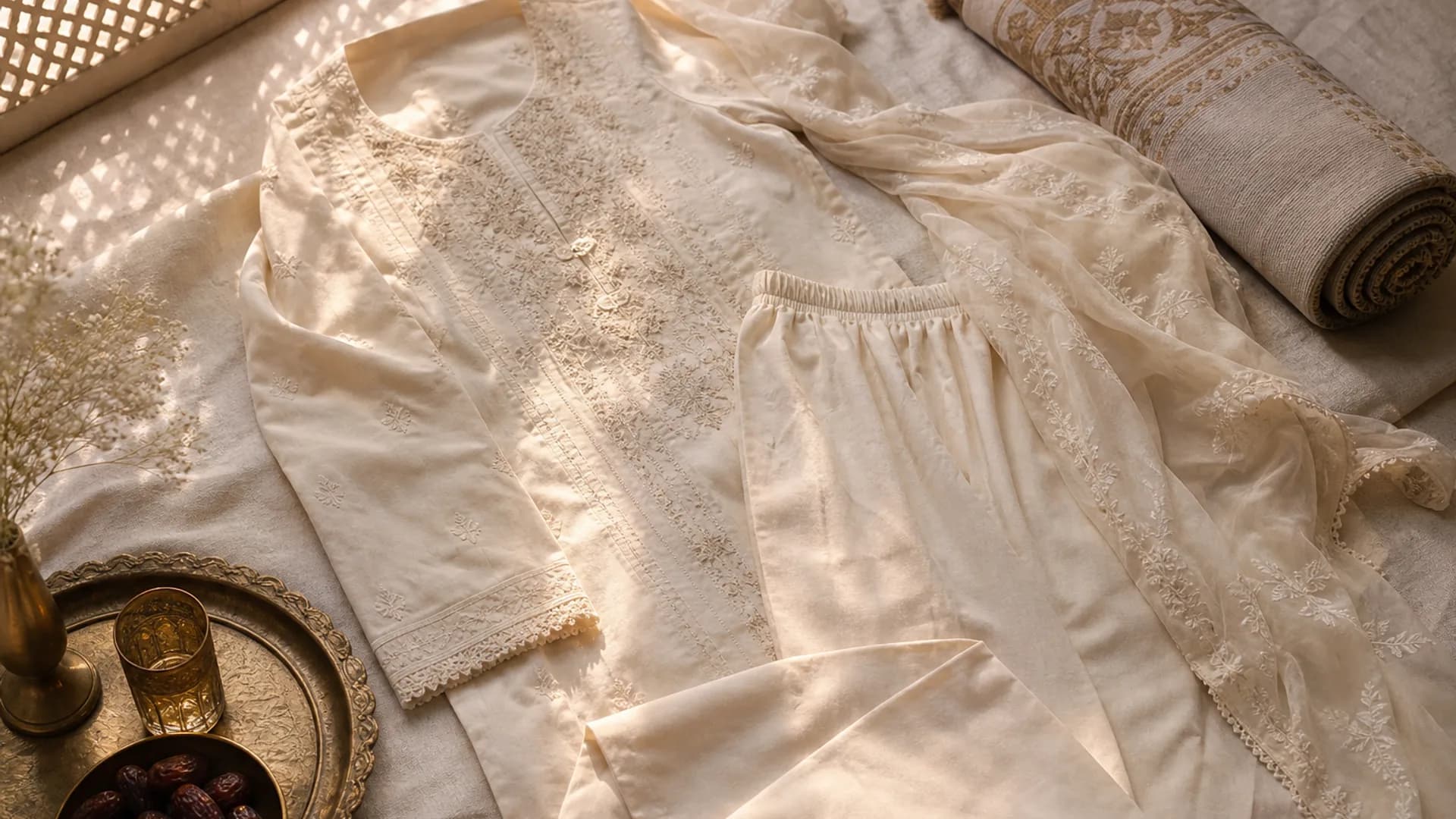
Dressing for Ramadan and Iftar Gatherings
Ramadan runs a month, and the clothing has to work for fasting through the afternoon and hosting in the evening. The two are different problems.
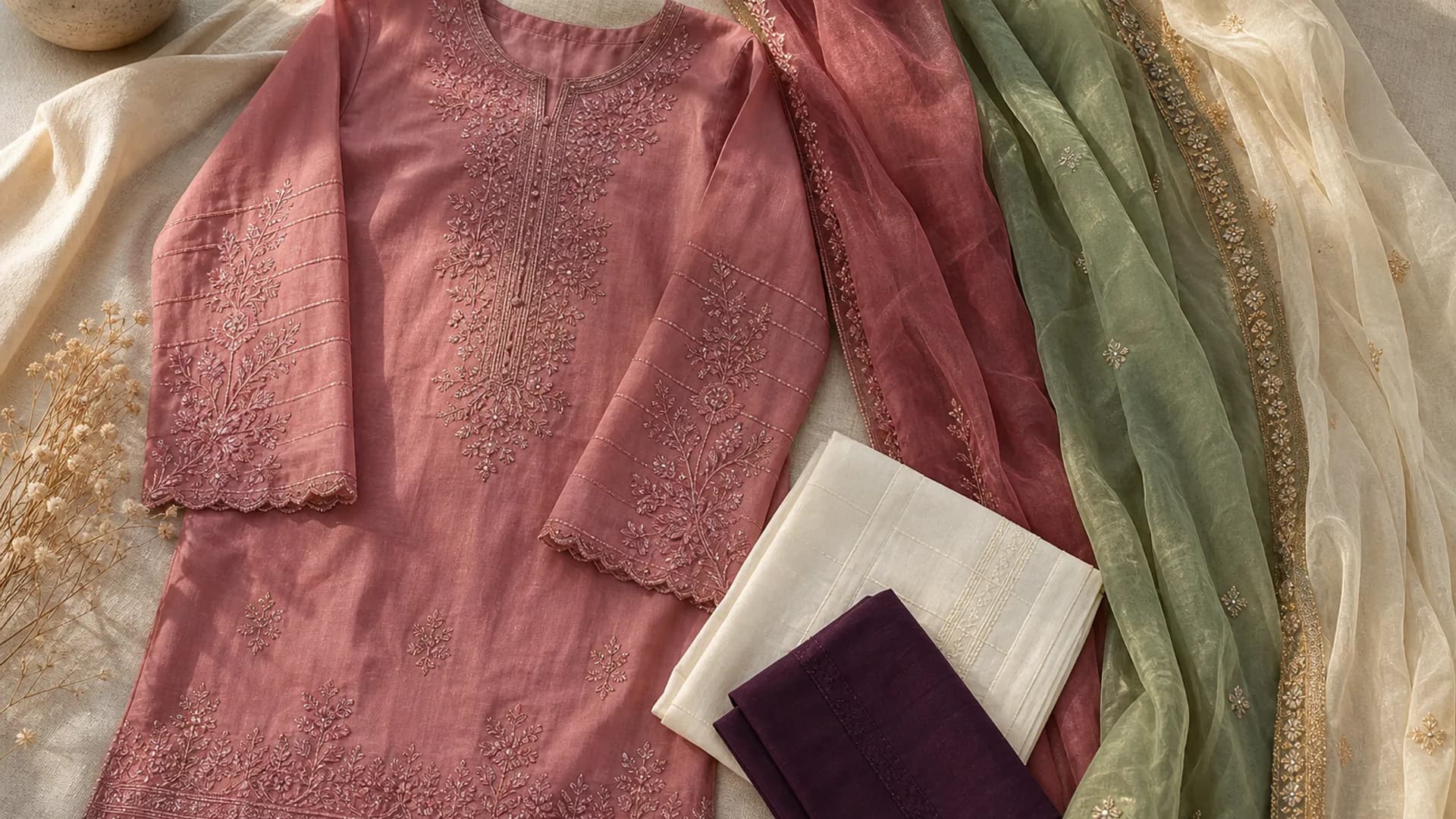
Matching a Dupatta or Trouser to a Shirt
Almost matching looks worse than clearly not matching. Here is how to pair pieces bought separately so the outfit reads as deliberate.
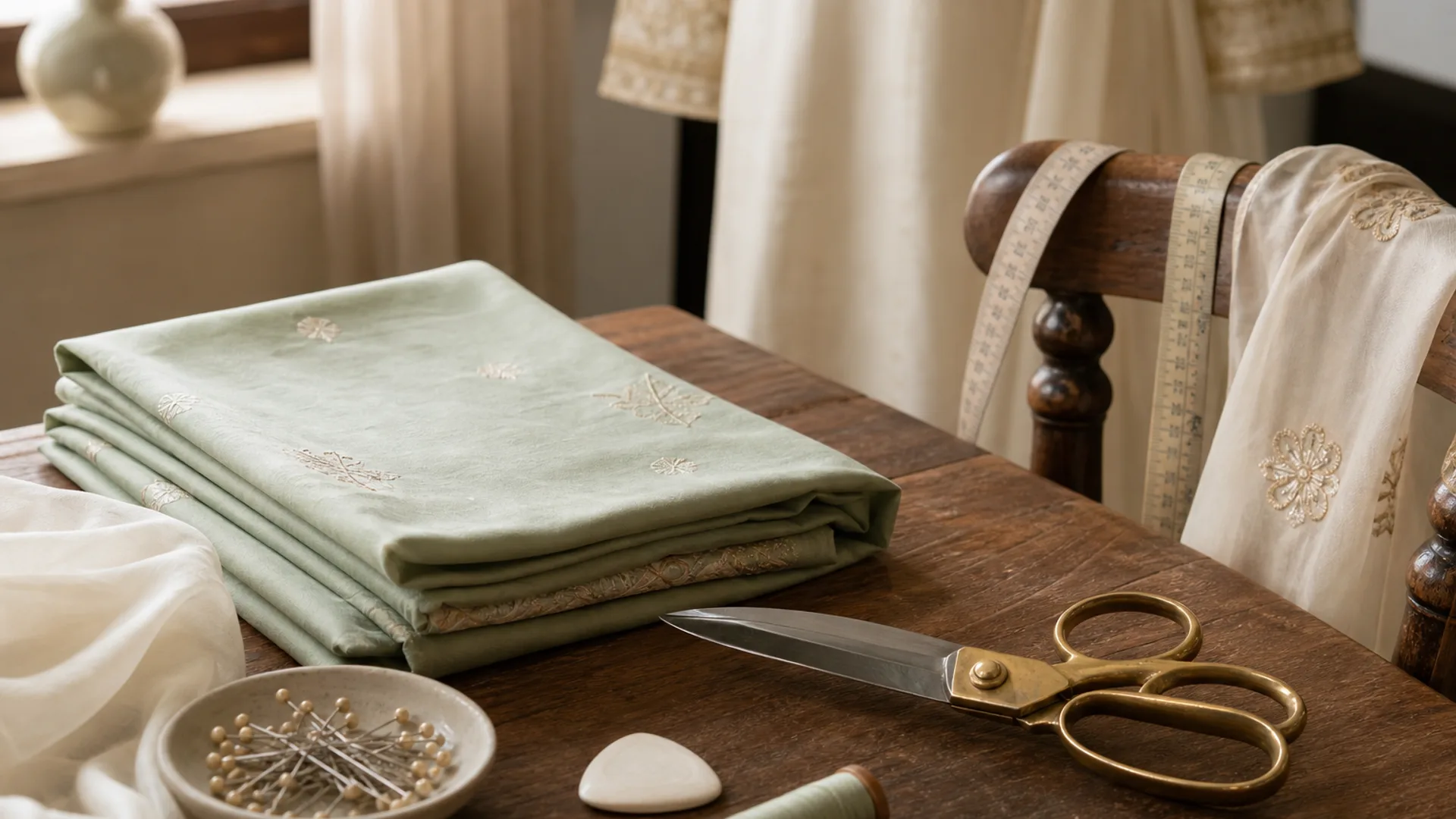
Working With a Tailor: What to Actually Say
Most tailoring disappointments are communication failures, not skill failures. Here is how to brief a darzi so what comes back matches what you pictured.