

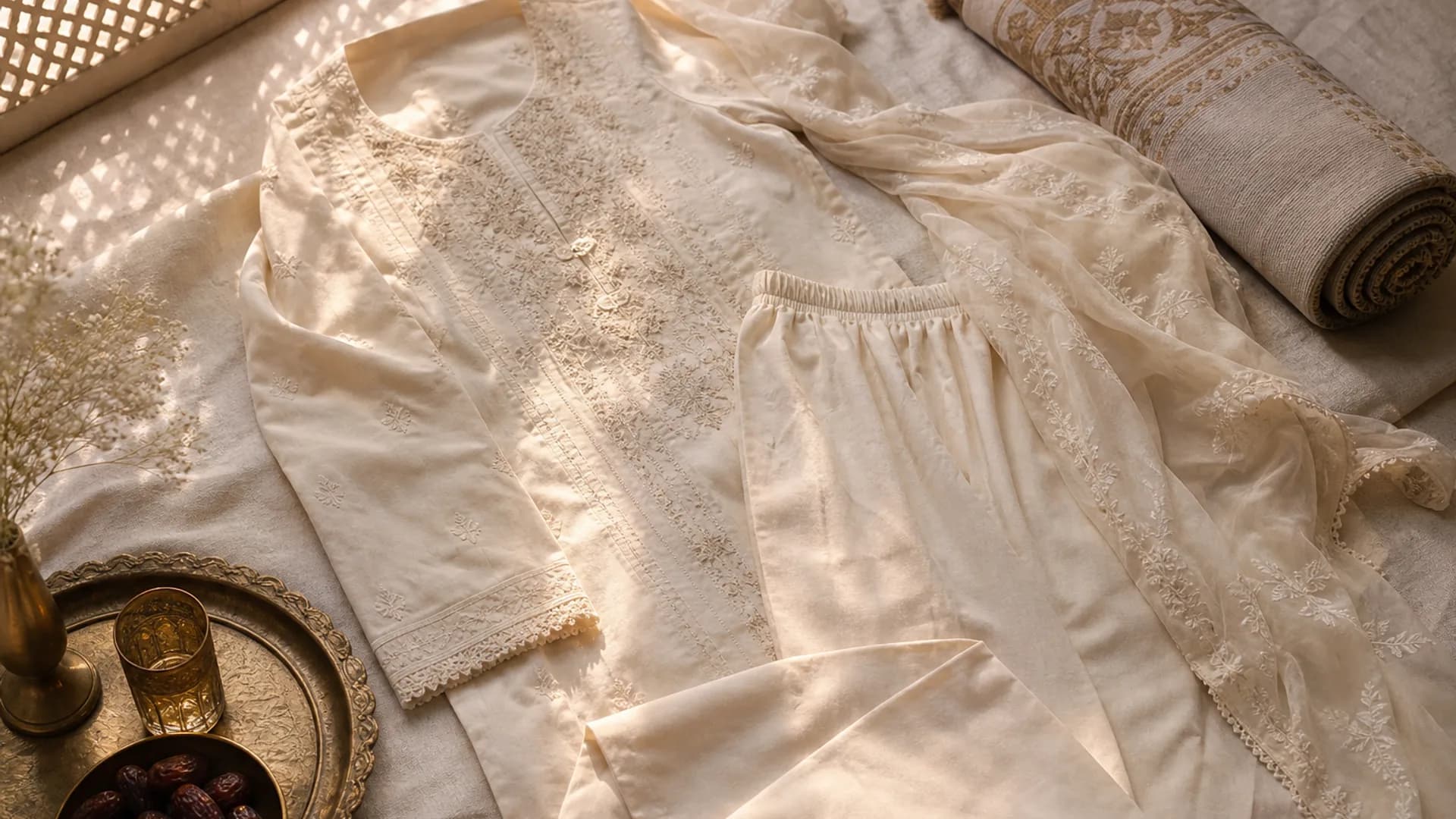
Dressing for Ramadan and Iftar Gatherings
Ramadan runs a month, and the clothing has to work for fasting through the afternoon and hosting in the evening. The two are different problems.
Ramadan is a month of clothing decisions rather than one, and the demands change through each day. The afternoon is spent fasting, often in heat, often working or running a household, and comfort matters more than at any other time of year. The evening is iftar, which may be quiet at home or may be a gathering of thirty people. Then taraweeh, which means an hour or more of standing, bowing and prostrating in whatever you are wearing. Most people dress for one of those three and are uncomfortable in the other two. There is a way to dress that covers all three without changing clothes twice a day, and there is a separate question of what to wear to an iftar dawat, which is a genuine social occasion with its own pitch.
Daytime: Fasting Through the Afternoon
The priority through the day is heat management, because dehydration and heat are considerably harder to bear while fasting. **Pure cotton and lawn.** Non-negotiable in a Ramadan that falls in the warm months. Synthetic fabric traps heat against the skin and makes a long fast measurably harder. Our [fabric glossary](/content/fabric-glossary) explains what the labels mean. **Loose, not fitted.** Air moving between fabric and skin is the whole mechanism. A loose cotton kurta is cooler than a fitted one in a lighter fabric. **Pale colours** reflect heat rather than absorbing it, which matters if you are outdoors at all. **Nothing tight at the waist.** Elasticated or drawstring trousers, and a shirt that does not press. Comfort at the waist matters more during fasting than most people anticipate, particularly in the hours after iftar. **Sleeves rather than bare arms** if you are outdoors — loose long sleeves are cooler in direct sun than exposed skin. **Minimal layers, minimal jewellery, hair off the neck.** Our [seasonal fabric guide](/journal/summer-vs-winter-fabric-guide-pakistani-women) covers what genuinely behaves well in Pakistani heat.
Dressing for Prayer
This is the practical constraint that shapes the whole month and it is rarely discussed. You will pray five times, plus taraweeh, in whatever you are wearing. That means standing, bowing, kneeling and prostrating repeatedly. **A kameez long enough to cover the hips when bowing.** A short kurta rides up, and adjusting it during prayer is distracting. **Trousers loose enough to kneel in comfortably.** A tight churidar makes prostration uncomfortable over a long taraweeh. **A dupatta with enough weight to stay on your head** through the movements. Slippery net and organza will not; cotton, soft chiffon and silk will. Our [dupatta fabric guide](/journal/dupatta-fabric-guide-chiffon-organza-net-silk) covers which fabrics grip. **Nothing that needs holding.** If one hand is managing a dupatta, prayer is harder. **Sleeves that stay down** rather than sliding up the forearm. **Avoid heavy embroidery at the knees and elbows**, which presses uncomfortably during prostration and wears out from the friction. The simplest solution many people adopt: a loose cotton three-piece with a cotton dupatta, worn from afternoon through taraweeh, which handles all of it.
The Iftar Dawat
An iftar gathering is a genuine social occasion and the most common Ramadan dressing question. **Pitch it as semi-formal.** Better than everyday, well below a wedding. A good three-piece in a nice fabric with light embroidery at the neckline is the right level. **Not a full formal outfit.** Heavy embroidery and a worked lehenga read as having mistaken it for a wedding, and an iftar involves sitting on floors, serving, and often helping in the kitchen. **Not everyday clothes either**, if you are a guest. An iftar dawat is an invitation and dressing for it is a courtesy. **Muted and soft colours** suit the mood — ivory, sage, dusty rose, powder blue, stone. Ramadan dressing tends toward the quiet end, and bright festive colours can feel slightly out of step. **Comfortable, because you will eat.** A fitted waist after a full day of fasting is a decision you will regret at eight o'clock. **Sleeves and modest coverage**, which is expected across almost all families for a Ramadan gathering regardless of what is usual otherwise. Our [formal wear guide](/journal/pakistani-formal-wear-guide-party-semi-formal-festive) maps the ladder either side of this, and the [Eid dawat guide](/journal/how-to-dress-eid-dawat-pakistan) covers the more festive version that follows.
If You Are Hosting
Hosting an iftar means being in the kitchen until the moment of iftar and presentable immediately afterwards, with no time in between. **Dress at asr, not at maghrib.** There is no gap. Whatever you plan to wear should already be on. **Choose something you can cook in.** Sleeves you can push up, nothing white, nothing that shows a splash, and no long dupatta near a stove — this is a genuine safety point rather than a styling one. **An apron that covers properly** is the practical answer, and it lets you wear something better than you otherwise could. **Skip the jewellery until just before.** Rings and bangles in a kitchen are a nuisance, and they are the thing to add in the last two minutes. **Comfortable shoes or bare feet.** You will be on your feet for hours. **A darker or patterned fabric** hides the inevitable. Our post on [matching colours](/journal/matching-dupatta-trouser-to-shirt-colour) covers building a set of practical mid-tones that still look considered.
Building a Ramadan Rotation
A month is a long time and the same clothes are seen repeatedly by the same people, which is a similar problem to dressing for work. **Four or five good everyday three-pieces** in cotton or lawn covers the month comfortably. **One or two semi-formal outfits** for iftar dawats. **Build on neutrals so pieces recombine.** Three shirts and two trousers in compatible colours gives six looks. Our [office wear guide](/journal/office-wear-pakistani-suits-workplace) covers the same principle for a working wardrobe. **Change the dupatta rather than the outfit.** The fastest way to make a repeated suit read differently. **Wash and rotate rather than buying more.** Cotton washes fast and dries fast in Pakistani weather. **Do not buy your Eid outfit in the last week.** This is the most useful planning advice for the whole month — Eid shopping in the final ten days of Ramadan means picked-over stock, no time for alterations and the highest prices of the year. Our [Eid guide](/journal/eid-ul-fitr-vs-eid-ul-adha-dressing) covers planning both Eids together.
Winter Ramadan
Ramadan moves about eleven days earlier each year, so it passes through every season. A winter Ramadan is a different set of problems. **Layers that come off.** Mosques and prayer rooms warm up considerably once full, and a heavy single garment cannot be adjusted. **Khaddar** is the ideal winter Ramadan fabric — warm, breathable, comfortable, and it does not overheat once you are in a crowded room. **A shawl rather than a coat** for taraweeh, since it can be removed and folded easily during prayer. **Warm socks matter.** Prayer on a cold floor for an hour is genuinely uncomfortable, and this is the item most often overlooked. **Avoid velvet and heavy synthetics** even in winter — they trap heat unevenly and a packed prayer hall gets warm quickly. **Suhoor is the coldest part of the day.** Something warm and easy to put on at three in the morning is worth having by the bed. Our [winter wedding guide](/journal/winter-wedding-guest-outfit-guide-pakistan) covers dressing for Pakistani cold in more detail, and much of it applies.
Small Things That Help
**Keep one outfit clean and ready** for an unexpected invitation. Iftar invitations arrive at short notice. **Avoid strong perfume** in a crowded prayer space — it is inconsiderate to those around you and can genuinely bother people who are fasting. **Slip-on shoes.** You will remove them several times a day. Anything with buckles becomes tiresome by the second week. **Keep a spare dupatta in the car** and one at work. The one you need is always somewhere else. **Hair off the face and neck** — practical while fasting in heat, and it stays neat under a dupatta. **Light or no makeup during the day.** It is a personal choice, though heat and a long fast make heavy makeup uncomfortable. **Plan Eid before the last week.** Alterations take time, tailors are overwhelmed, and delivery slows sharply. Our [shipping page](/help/shipping) has current timings, and you can see the range across the [ladies collection](/ladies).
Frequently Asked Questions
Semi-formal — a good three-piece in a nice fabric with light embroidery at the neckline. Better than everyday, well below a wedding. Heavy embroidery reads as having mistaken it for a wedding, and you will be sitting on floors, serving and probably helping in the kitchen.
Loose pure cotton or lawn in a pale colour, with an elasticated or drawstring waist. Synthetic fabric traps heat and makes a long fast measurably harder, and nothing tight at the waist — comfort there matters more than most people anticipate, especially after iftar.
A kameez long enough to cover the hips when bowing, trousers loose enough to kneel in comfortably, and a dupatta with enough weight to stay on your head through the movements — cotton, soft chiffon or silk, not slippery net. Avoid heavy embroidery at the knees and elbows.
Four or five good everyday three-pieces in cotton or lawn, plus one or two semi-formal outfits for iftar dawats. Build on neutrals so the pieces recombine, and change the dupatta rather than the outfit — the same people see you repeatedly across a month.
Well before the last ten days of Ramadan. Shopping in the final week means picked-over stock, no time for alterations, tailors who are already overwhelmed and the highest prices of the year. Ordering four to six weeks ahead avoids all of it.
About the Author
Habiba Minhas
Founder and creative director of Habiba Minhas, Pakistan's leading handcrafted fashion brand based in Karachi. With a passion for preserving traditional Pakistani craftsmanship while embracing modern design, she has built a brand serving over 5,000 customers nationwide.
Specializing in premium ladies suits, kids festive wear, and baby products, Habiba works directly with artisan embroiderers and skilled tailors to create pieces that honor Pakistani heritage.
Related Articles
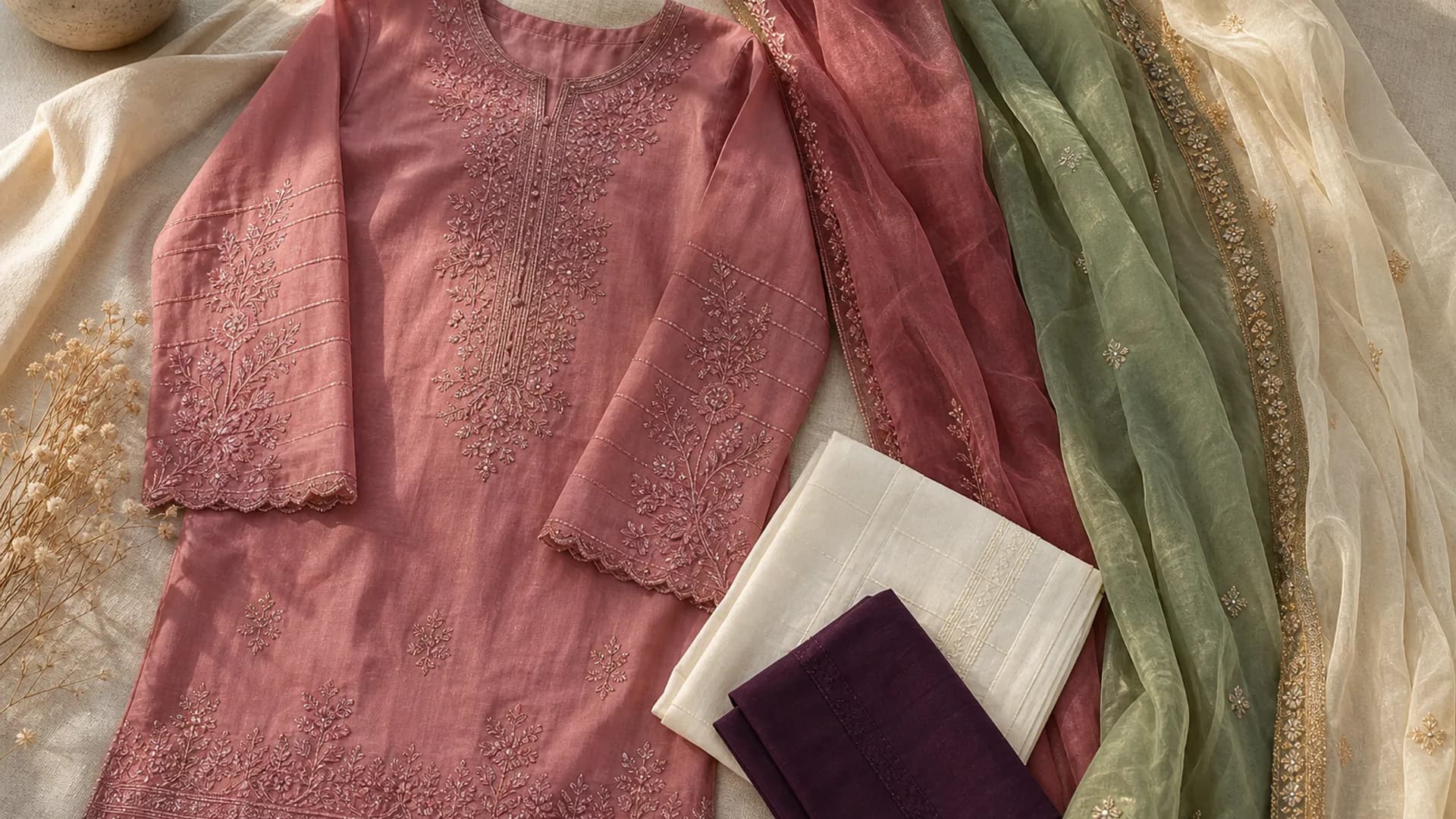
Matching a Dupatta or Trouser to a Shirt
Almost matching looks worse than clearly not matching. Here is how to pair pieces bought separately so the outfit reads as deliberate.
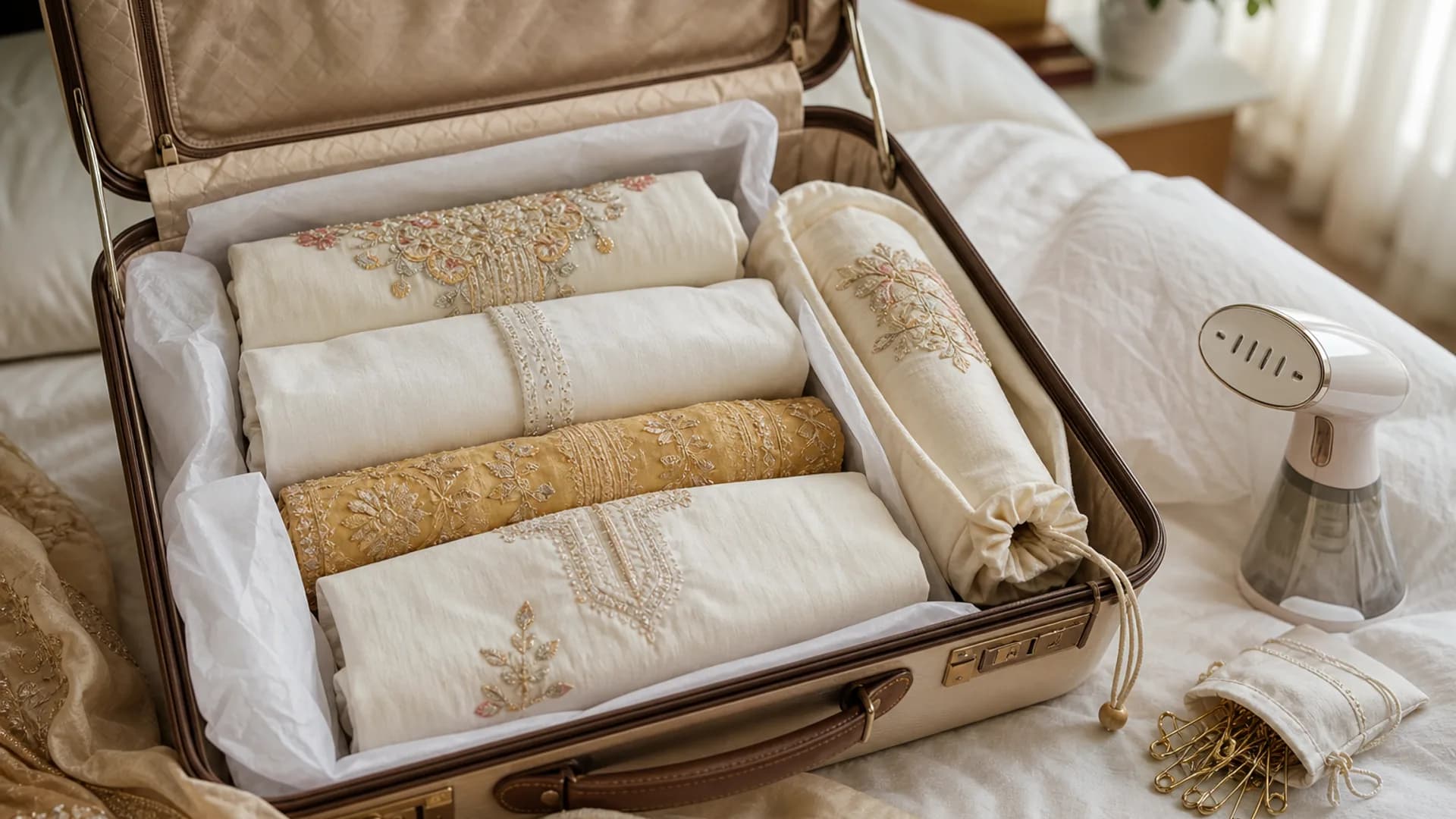
Packing Formal Wear Without Ruining It
A heavily worked outfit and a suitcase are natural enemies. A specific folding method and twenty minutes on arrival is the difference between wearable and not.
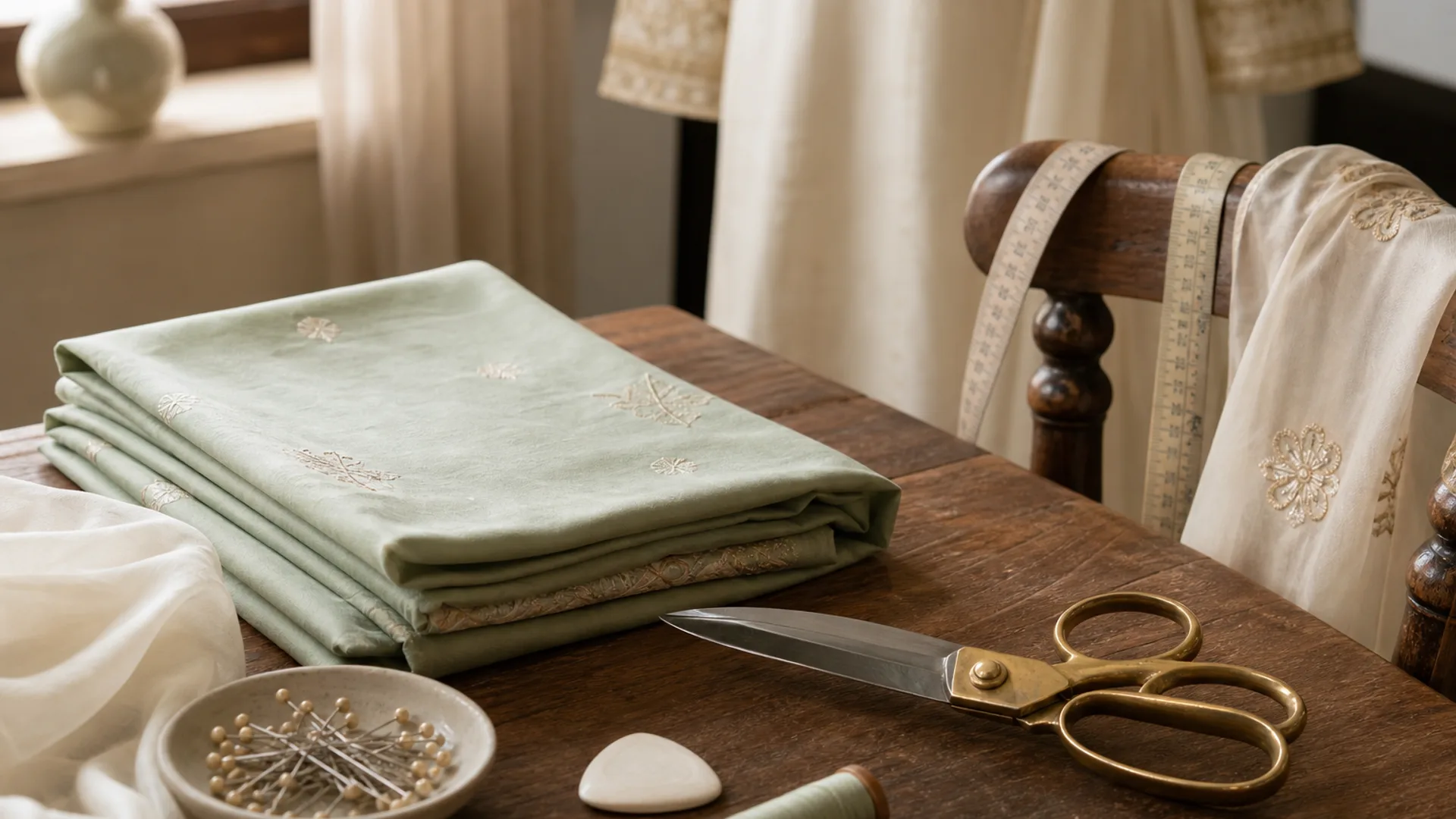
Working With a Tailor: What to Actually Say
Most tailoring disappointments are communication failures, not skill failures. Here is how to brief a darzi so what comes back matches what you pictured.