

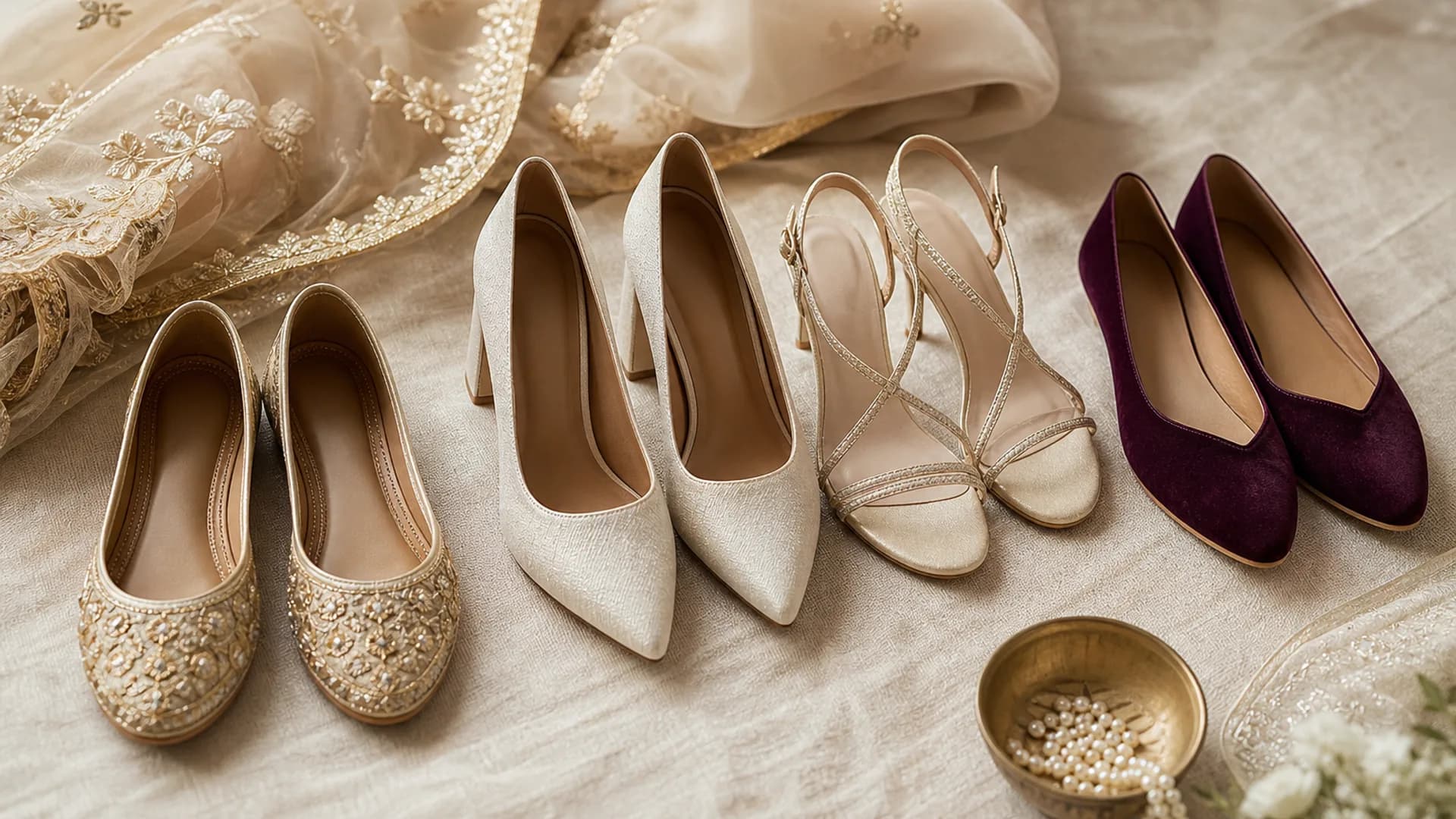
Shoes With a Formal Suit: Khussa, Heel or Flat
Shoes are chosen last and cause more discomfort than any other part of the outfit. The venue should decide them, not the colour of the dupatta.
Shoes are the last thing bought and the first thing regretted. The outfit is chosen months ahead, altered, matched with a dupatta and jewellery — and then shoes are picked in the final week, usually on colour alone, and worn for the first time at the function itself. Four hours later they are under a table. What should decide the shoe is not the colour of the outfit. It is the floor you will be standing on, the number of hours you will be standing on it, and whether you will be taking them off at the door. Get that right and the colour question mostly answers itself.
Start With the Venue
Four venues, four different answers. **A lawn or garden.** Grass. A stiletto heel sinks straight into it, particularly after dew or winter rain, and you will walk on your toes all evening. A block heel, a wedge or a flat is the only sensible choice. **A marquee.** Carpet laid directly over grass or uneven ground. Slightly better than open grass but still soft underfoot. Block heel or flat. **A hall or hotel.** Hard flat floor, usually marble or tile. Any heel works here — this is the one venue where a thin heel is practical. It is also the least forgiving surface for standing on for hours. **A home.** Shoes come off at the door, almost always. Choose something you can slip on and off without sitting down, and pay attention to what is on your feet underneath. If you do not know the venue, ask. It is a more useful question than what everyone else is wearing.
Khussas and Traditional Flats
The khussa is the traditional Pakistani formal flat, and it is having a long-running revival among women who have decided comfort matters. **What works about them:** they are flat, they slip on and off, they are unmistakably traditional, and a well-embroidered pair is genuinely beautiful. At a home function or a mehndi they are the correct shoe rather than a compromise. **What to know before buying:** leather khussas are stiff when new and need breaking in over several wears. Buying a pair the week of a wedding and wearing them straight to the function is how people end up barefoot. Wear them around the house for a few evenings first. **Sizing runs small and narrow** in most traditional khussas, and there is little give across the width. Try before buying if you possibly can. **The flat sole gives no cushioning at all**, which is fine for two hours and hard going for five on marble. A pair with a thin padded insole added is far more wearable. **Kolhapuris and embroidered mules** work similarly and are often more comfortable straight out of the box.
Heels: Height and Shape
**Block heels** are the practical formal heel — stable on grass and carpet, comfortable for hours, and they give height without the balancing act. Two to three inches is the useful range. **Wedges** are the most stable of all and the best choice for an outdoor function, though they read as less formal than a block heel. **Stilettos and thin heels** belong on hard floors only. On grass they are unusable; on carpet over grass they are barely better. **Kitten heels** give a lift without commitment and are underrated for long functions. **Platform soles** let you wear a higher heel with less strain, because the effective angle of the foot is lower than the heel height suggests. The honest advice: the highest heel you can walk in comfortably for one hour is roughly the right height for a four-hour function, not the highest you can stand in. And whatever you choose, walk in it at home for a full evening before the day.
Heel Height Changes the Hemline
This is the connection almost nobody makes, and it ruins more outfits than any other single mistake. A trouser hemmed for a three-inch heel drags on the ground in flats. A trouser hemmed for flats sits several inches too short in heels, exposing the ankle in a way that looks accidental rather than deliberate. So the shoes must be chosen **before** the trousers are hemmed, not after. Take the actual pair to the tailor, or wear them to the fitting. This matters most for palazzos, shararas and ghararas, all of which are meant to just clear the floor. A dragging sharara hem picks up dirt, trips you on stairs, and shortens the whole line — our [petite styling guide](/journal/how-to-look-taller-pakistani-suits-petite) covers why that costs more height than the heel gave you. If you own one formal outfit and two pairs of shoes at different heights, hem for the heel and accept it is a heels outfit. Trying to split the difference gives you a hem that is wrong with both.
Colour: Three Approaches That Work
**Metallic.** Gold, antique gold, silver, rose gold, bronze. The default for Pakistani formal wear and the reason is sound — a metallic shoe goes with almost every outfit, so one good pair covers a whole season of functions. Match the metal to the work on the outfit: gold shoes with gold zari, silver with silver. **Nude or skin-toned.** The most lengthening option, because the shoe and the leg read as one continuous line rather than the shoe cutting the leg off. Genuinely useful with a shorter hem, and worth choosing over black if you are petite. **Tonal.** A shoe in the same colour family as the outfit. Elegant and cohesive, though it means a shoe per outfit rather than one pair for several. **Matching exactly is not necessary** and is often worse — a shoe dyed to almost the same shade as the outfit but not quite reads as a mismatch. Close-but-different is worse than clearly-different. **Black** is the least useful formal shoe colour in Pakistani wear. It cuts the leg line sharply and works with fewer outfits than any of the above. Our guide on [matching accessories](/journal/how-to-match-accessories-formal-pakistani-suit) covers the metals question in more detail.
Winter and Summer
**Winter functions** are the case for closed shoes, and this is one of the few genuinely seasonal shoe rules in Pakistani wear. Weddings run from November to February, mostly outdoors, mostly after dark, and cold feet on grass or marble at midnight will end your evening early. Closed velvet or embroidered pumps and closed block-heeled shoes exist in quantity for exactly this reason, and fine skin-toned socks or hosiery underneath are worth the small awkwardness. **Summer functions** are the case for open shoes, sandals and khussas — a closed shoe in a Karachi June is unbearable, and feet swell in heat, so a strappy or open shoe accommodates it where a closed one does not. A practical winter note: if the function is on a lawn, the ground will be damp. A fabric or suede shoe will mark. Leather or a coated finish survives it. Our [winter wedding guide](/journal/winter-wedding-guest-outfit-guide-pakistan) covers dressing for the temperature you will actually experience, which for feet is colder than for anything else.
The Practical Checklist
**Never wear them new.** Break in every pair over at least two evenings at home. This is the single most useful thing on this list. **Carry a folding flat** if you are in heels. Almost everyone ends the evening in them; having your own pair beats borrowing. **Check what is under them.** At a home function or a mosque nikah your shoes come off. Socks with holes and bare feet in winter are both worth thinking about in advance. **Grip matters on marble.** Hall floors are polished and slippery, particularly in a new leather sole. Scuff the sole with sandpaper before wearing. **Pack them separately if travelling.** Formal shoes crush, and embroidered khussas crush permanently. **Label them at a home function** if there are many guests. Twenty pairs by a door look very similar at midnight. If you are assembling a formal wardrobe rather than a single outfit, our [capsule wardrobe guide](/journal/capsule-wardrobe-pakistani-women-10-pieces) makes the case for one good metallic block heel over four occasion-specific pairs. The [accessories collection](/accessories) has hand-crafted pieces to finish the look, and the [formal wear](/ladies/formal-wear) section shows the outfits these are being chosen for.
Frequently Asked Questions
A block heel, a wedge or a flat. Thin stiletto heels sink into grass and into carpet laid over grass, so you spend the evening walking on your toes. In winter choose a closed shoe — lawn functions after dark are cold, and marquee floors are laid straight over the ground.
After. Heel height changes where the hem falls, and a trouser hemmed for heels sits too short in flats while one hemmed for flats drags in heels. Take the actual shoes to the fitting. This matters most for palazzos, shararas and ghararas, which should just clear the floor.
They can be, but not new. Leather khussas are stiff and need breaking in over several evenings first, and they run narrow with little give. The flat sole has no cushioning, so a thin padded insole makes a real difference across a long function.
Metallic — gold, antique gold or silver, matched to the metal in the outfit's embroidery. One good metallic pair covers a whole season of functions. Nude is the most lengthening choice. Black is the least useful in Pakistani formal wear because it cuts the leg line.
You can, but shoes usually come off at the door, so they will be on your feet for the walk in and nothing else. Choose something you can slip on and off without sitting down, and pay attention to what is underneath — bare feet in winter on a marble floor is the real problem.
About the Author
Habiba Minhas
Founder and creative director of Habiba Minhas, Pakistan's leading handcrafted fashion brand based in Karachi. With a passion for preserving traditional Pakistani craftsmanship while embracing modern design, she has built a brand serving over 5,000 customers nationwide.
Specializing in premium ladies suits, kids festive wear, and baby products, Habiba works directly with artisan embroiderers and skilled tailors to create pieces that honor Pakistani heritage.
Related Articles
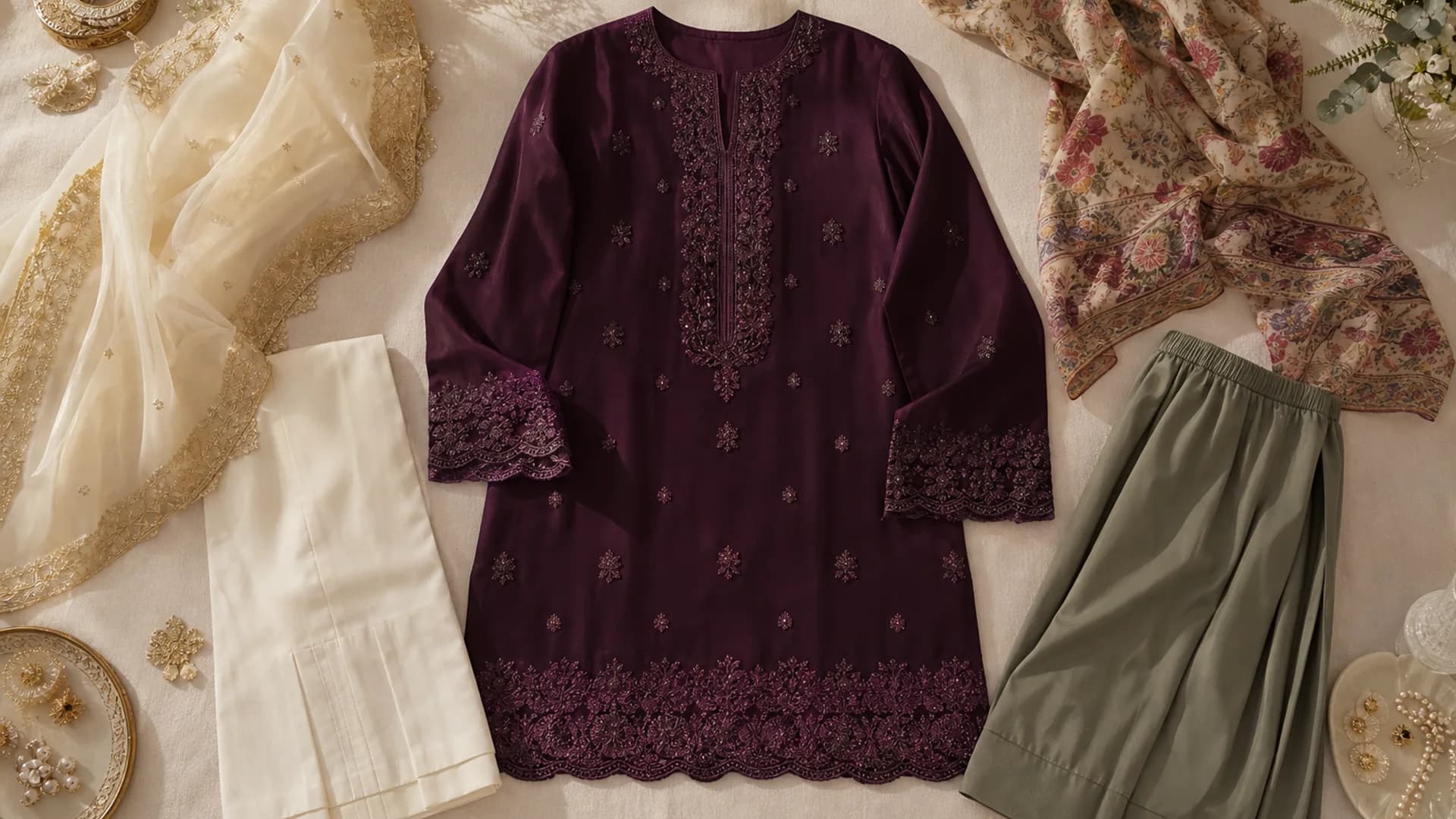
Eight Ways to Restyle a Formal Suit You Own
Most wardrobes hold three or four formal outfits that have been worn once and feel finished. Very little needs to change to make them wearable again.
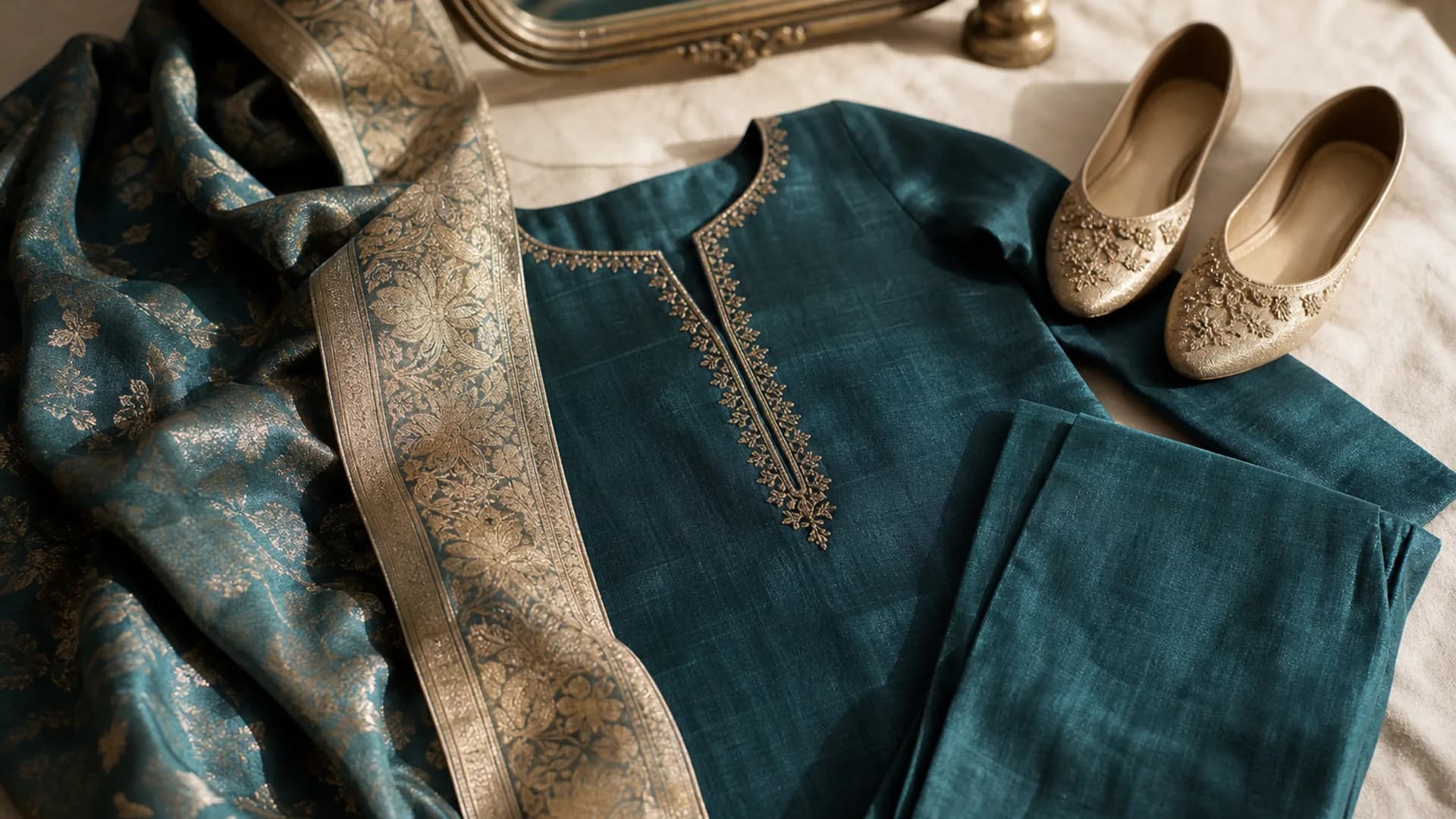
Formal Dressing in Your Forties and Fifties
There is a great deal of advice about what women over forty should stop wearing. Most of it is wrong. What actually changes is fit, fabric and comfort.
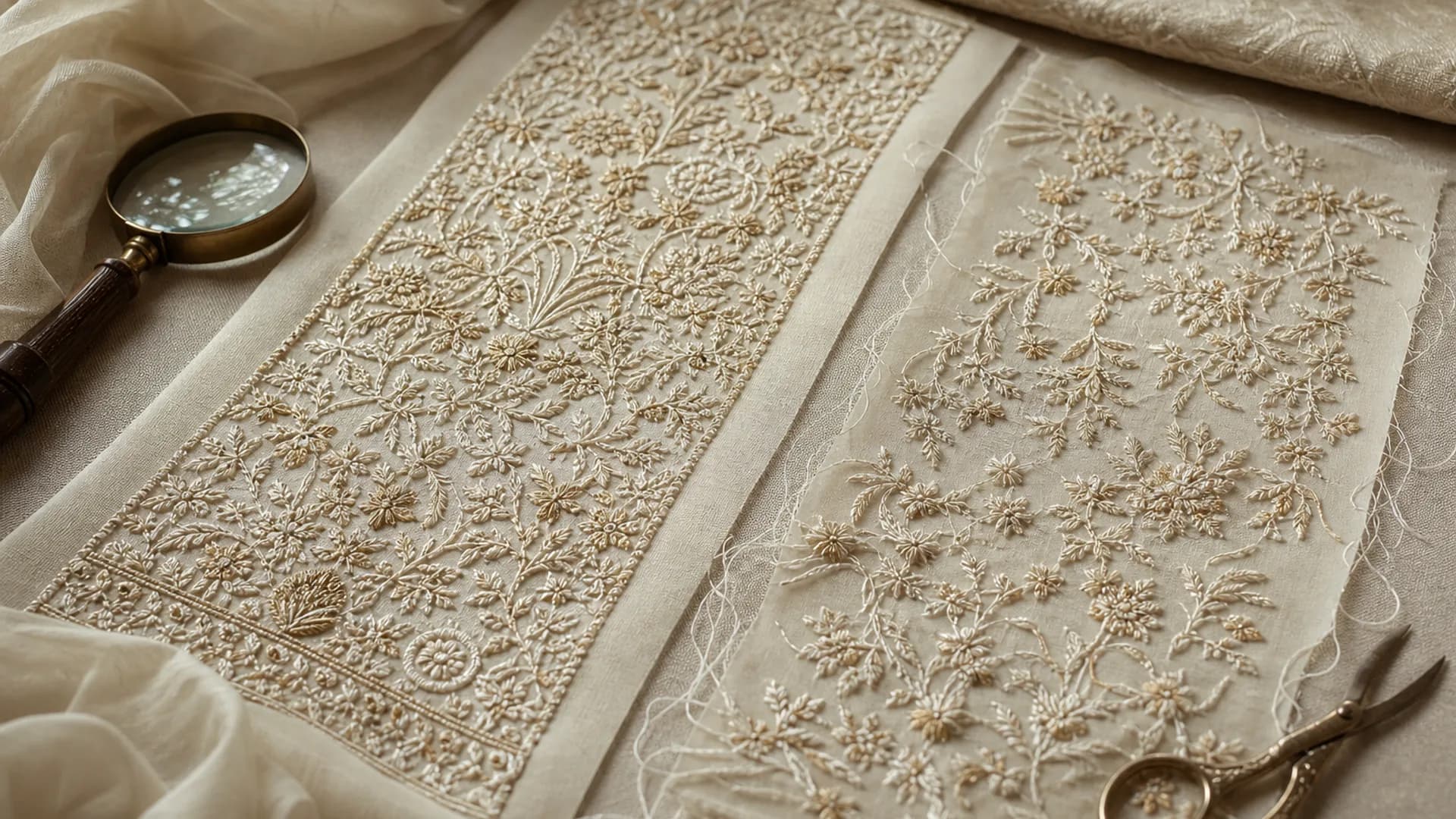
Original or Copy: How to Tell a Replica Suit
Master copies are sold openly and often honestly. The problem is when a copy is sold as an original at an original's price — here is how to tell.