

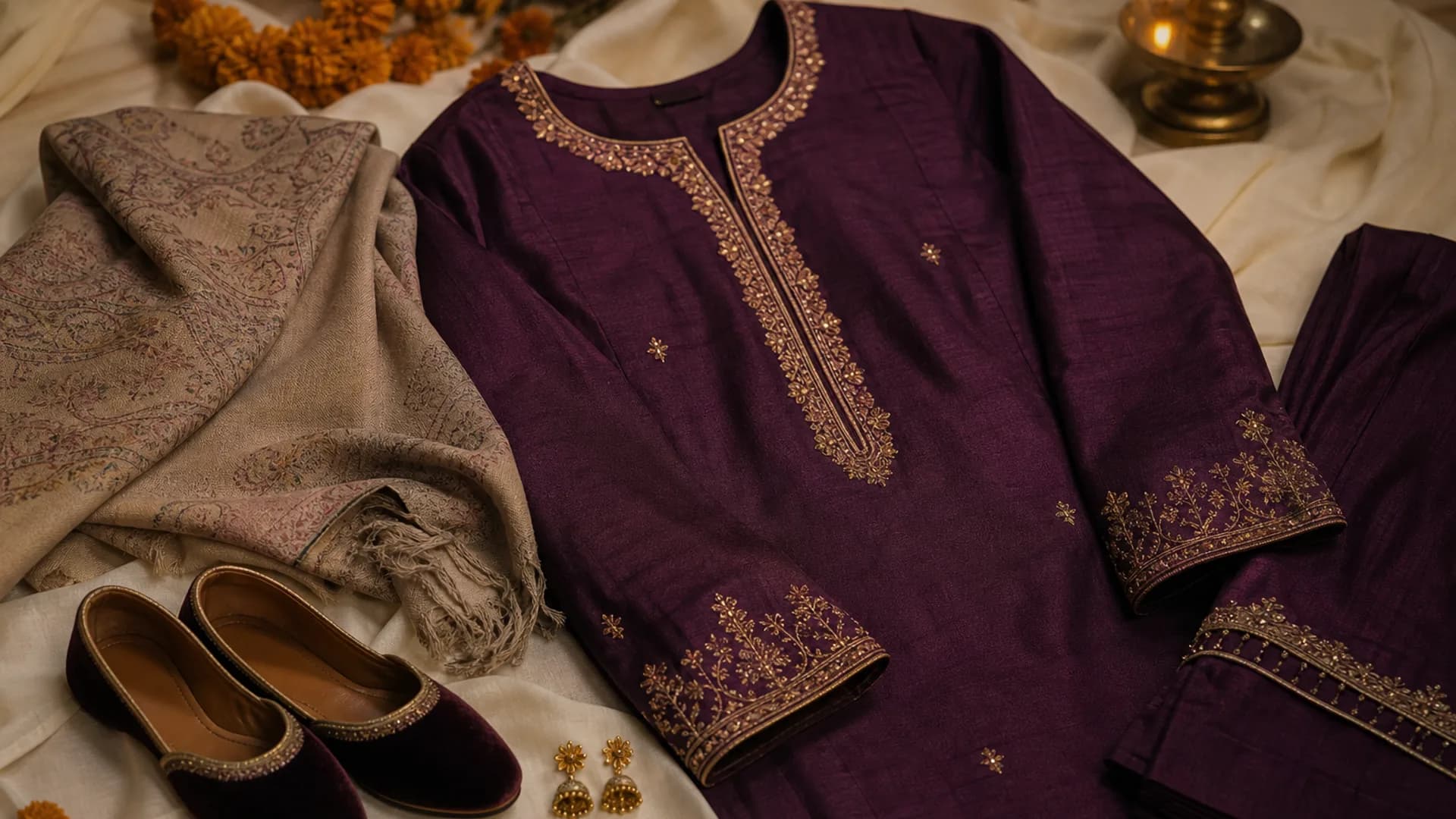
Winter Wedding Guest Outfits: Warm and Formal
Pakistani wedding season is also the coldest part of the year, and most of it happens outdoors after dark. Here is how to dress for the temperature you will actually experience.
Pakistani wedding season runs from November to February, which is also the coldest part of the year. Most functions happen outdoors, in a marquee or on a lawn, and they start at nine in the evening and run past midnight. Everyone knows this. Almost nobody dresses for it. The standard result is a beautiful outfit worn under someone else's borrowed coat by eleven, or an evening spent standing near a patio heater instead of talking to anyone. Neither is necessary. Dressing warmly for a Pakistani wedding is entirely possible — it just has to be planned into the outfit rather than added on top at the last minute.
The Temperature You Will Actually Experience
Be honest about the numbers before choosing anything. Lahore and Islamabad drop to around 4–8°C on a December or January night. Peshawar and the north go lower. Karachi is milder but a sea breeze after midnight is colder than the forecast suggests. A marquee is warmer than open air but not warm — the sides are usually open, and heaters warm a radius of about two metres. And the timing works against you. You will arrive at nine when it is merely cool, and leave at one when it is genuinely cold, having sat still for three hours in between. Sitting still is the part people forget: you feel a temperature very differently seated at a table than walking around. So dress for one in the morning, not for nine in the evening.
Fabrics That Are Warm and Formal
The good news is that the warmest formal fabrics are also the most beautiful ones, and winter is the season they belong to. **Velvet** is the obvious winter formal fabric and it genuinely works. It is warm, it photographs richly in low light, and a velvet kameez needs almost nothing else. Best in deep tones — plum, emerald, navy, wine. **Raw silk** is warmer than it looks. It has body, it blocks wind far better than chiffon, and it holds structure in cold air. **Jamawar and brocade** are woven heavy and warm by nature, and give texture without needing embroidery. Our guide on [gold brocade](/journal/gold-brocade-fabric-what-it-is-how-to-style) covers styling a woven fabric. **Khaddar** is the everyday winter fabric and the semi-formal answer for smaller functions and dholkis. What not to wear outdoors in January: unlined chiffon, organza, net, and thin georgette. All four are effectively transparent to wind. If you love a chiffon outfit, it belongs at an indoor daytime function. Our [seasonal fabric guide](/journal/summer-vs-winter-fabric-guide-pakistani-women) goes through the full range.
Lining Is the Whole Trick
This is the part almost nobody asks about, and it makes more difference than the outer fabric does. A lined kameez is dramatically warmer than an unlined one in the same fabric. Two layers of light silk beat one layer of heavy fabric, because it is the trapped air between them doing the work. Ask for a full lining rather than a partial one — many formal suits are lined only through the bodice, which leaves the sleeves and lower shirt open to the wind. For the trousers, a lined or double-layered churidar or palazzo is the single most effective change you can make. Cold air travels up a trouser leg, and this is where most people are coldest without identifying why. If you are having something stitched, specify the lining fabric too. A cotton lining is comfortable but not warm; a silk or satin lining is warmer and slips over layers underneath, which matters if you plan to wear thermals.
Layering Underneath Without Ruining the Line
Modern thin thermal tops have made this genuinely easy, and they are the single most useful thing you can own for wedding season. A fitted thermal or a thin merino top under a full-sleeved kameez is invisible under anything but the sheerest fabric, adds no bulk at the shoulder, and changes your comfort completely. Match the thermal to your skin tone rather than your outfit if there is any chance of it showing at the neck or wrist. Black under ivory is the classic mistake. For legs, thin fleece-lined leggings under a palazzo or gharara work and nobody will know. Under a churidar there is no room, so choose a lined churidar instead. What to avoid: bulky layers at the shoulder, which change the fit of the shirt and read immediately as padding, and anything with a visible ribbed neckline.
The Shawl Question
A shawl is the traditional answer and it is a good one, but only if it is chosen as part of the outfit instead of grabbed on the way out. **Pashmina and fine wool** are warm, light, and drape properly over formal wear. Worth owning one good neutral — stone, camel, deep grey or black — that works with everything you own. **Woven shawls with borders** can be beautiful but often fight an embroidered outfit. Plain beats patterned over a worked suit. **Size matters.** A narrow scarf-width shawl looks like an afterthought. A generous one you can wrap properly looks intentional and is far warmer. The practical difficulty is that a shawl and a dupatta together are hard to manage — two lengths of fabric on the same shoulder is one too many. Two solutions work: pin the dupatta flat at the shoulder and drape the shawl over it, or choose an outfit with a heavy dupatta that does the shawl's job on its own. Our [dupatta draping guide](/journal/7-ways-drape-dupatta-weddings-formal-events) has pinned styles that survive a shawl on top.
Feet, Which Are the Real Problem
You will be standing on grass, on a marble floor, or on a marquee carpet laid straight over a lawn. All three are colder than they look, and cold feet ruin an evening faster than a cold back. **Closed shoes.** Winter is the one season when closed formal shoes are clearly better than open khussas or sandals. Velvet or embroidered closed flats and pumps are widely available for exactly this reason. **Thin socks or hosiery.** Fine, opaque, and skin-toned if there is any chance of them showing. This one change makes an hour's difference. **Avoid a new pair.** Cold makes shoes stiffer and feet swell less predictably, and a wedding is four hours of standing. **Bring flats if you wear heels.** Grass and heels do not combine well, and by midnight you will want them. If the function is on a lawn, choose a block heel or a flat rather than a stiletto — a thin heel sinks straight into wet winter grass.
Colours That Belong to Winter
The winter palette is deeper and richer, and it suits low light better than the summer one does. **Deep jewel tones** — emerald, plum, wine, sapphire, teal — are the winter formal standard, and they photograph beautifully under warm lighting. **Chocolate, bronze and coffee** have grown considerably as alternatives to black, and they are more flattering on most skin tones. **Rich neutrals** — stone, camel, deep gold — read as expensive against a winter background and pair with any shawl. **Deeper greens** carry the year's green trend into the cold months, where sage and mint feel too summery. Our post on [sage and mint green](/journal/sage-mint-green-pakistani-fashion-2026) covers where the pale end belongs instead. A practical point about lighting: winter functions are lit with warm bulbs, string lights and candles. Cool pastels go grey and flat under that light, while jewel tones and metallics glow. Our [colour trends](/journal/pakistani-fashion-colour-trends-2026) post covers the year's palette, and the [party wear](/ladies/party-wear) and [formal wear](/ladies/formal-wear) sections show which shades we carry for the season.
Frequently Asked Questions
Velvet, followed by jamawar, brocade and raw silk. All four are warm and formal enough for a wedding. Avoid unlined chiffon, organza and net outdoors after dark — they are effectively transparent to wind, however beautiful they look indoors.
Ask for a full lining rather than a bodice-only lining, wear a thin thermal or merino top under a full-sleeved kameez, choose closed shoes with fine socks, and bring one generous plain shawl. Layering underneath works far better than adding bulk on top.
Indoors and in daytime, yes. Outdoors after dark in December or January, no — it gives no wind protection at all. If you have a chiffon outfit you want to wear, save it for a daytime nikah or an indoor dinner and choose raw silk or velvet for the evening functions.
Pin the dupatta flat at the shoulder and drape the shawl over the top, or choose an outfit with a heavy dupatta that does the shawl's job alone. Two loose lengths of fabric on the same shoulder are unmanageable across a long evening.
Deep jewel tones — emerald, plum, wine, sapphire — along with bronze, chocolate and rich neutrals. Winter functions are lit with warm bulbs and string lights, under which pale cool pastels go grey and flat while jewel tones and metallics glow.
About the Author
Habiba Minhas
Founder and creative director of Habiba Minhas, Pakistan's leading handcrafted fashion brand based in Karachi. With a passion for preserving traditional Pakistani craftsmanship while embracing modern design, she has built a brand serving over 5,000 customers nationwide.
Specializing in premium ladies suits, kids festive wear, and baby products, Habiba works directly with artisan embroiderers and skilled tailors to create pieces that honor Pakistani heritage.
Related Articles
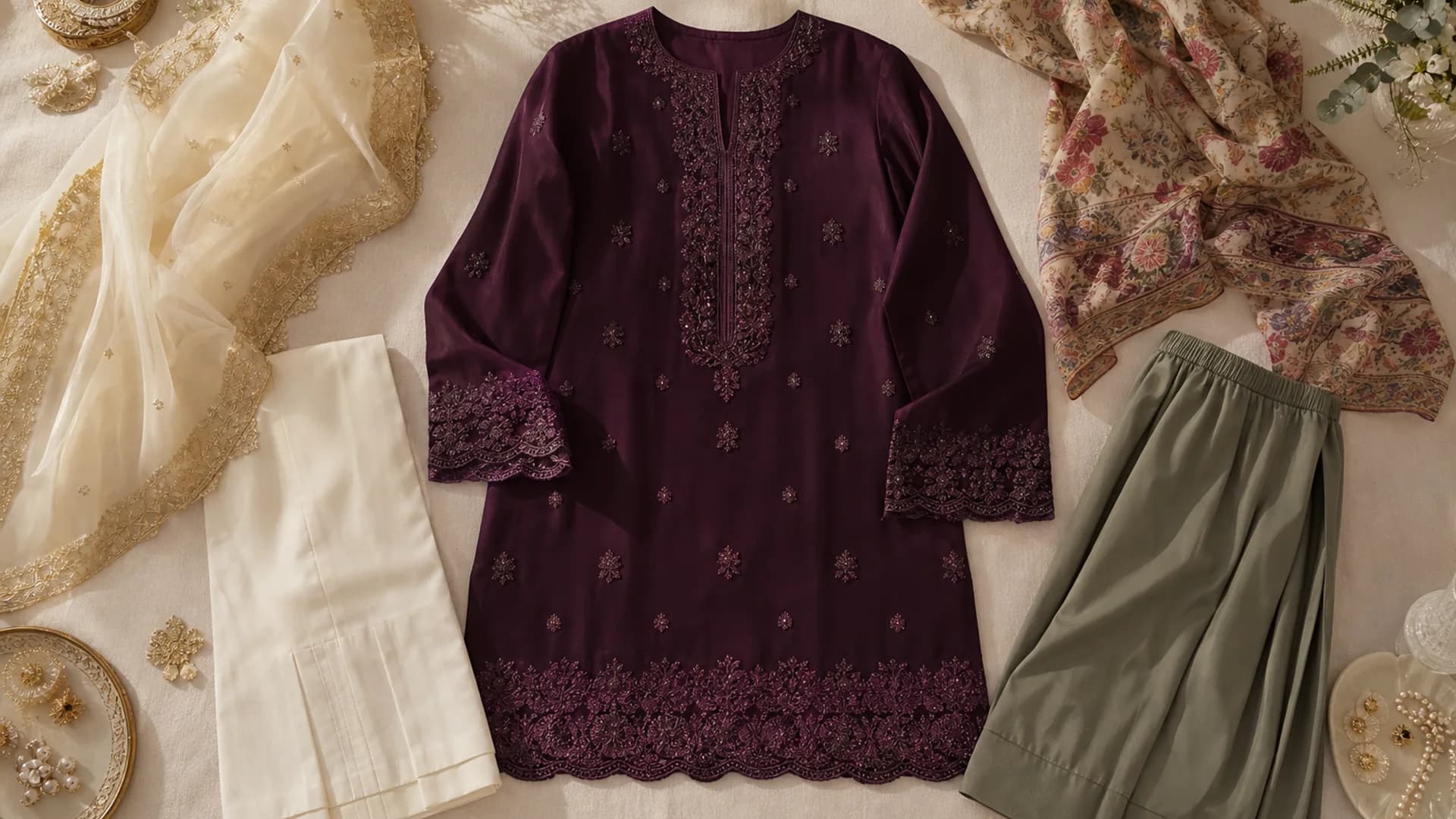
Eight Ways to Restyle a Formal Suit You Own
Most wardrobes hold three or four formal outfits that have been worn once and feel finished. Very little needs to change to make them wearable again.
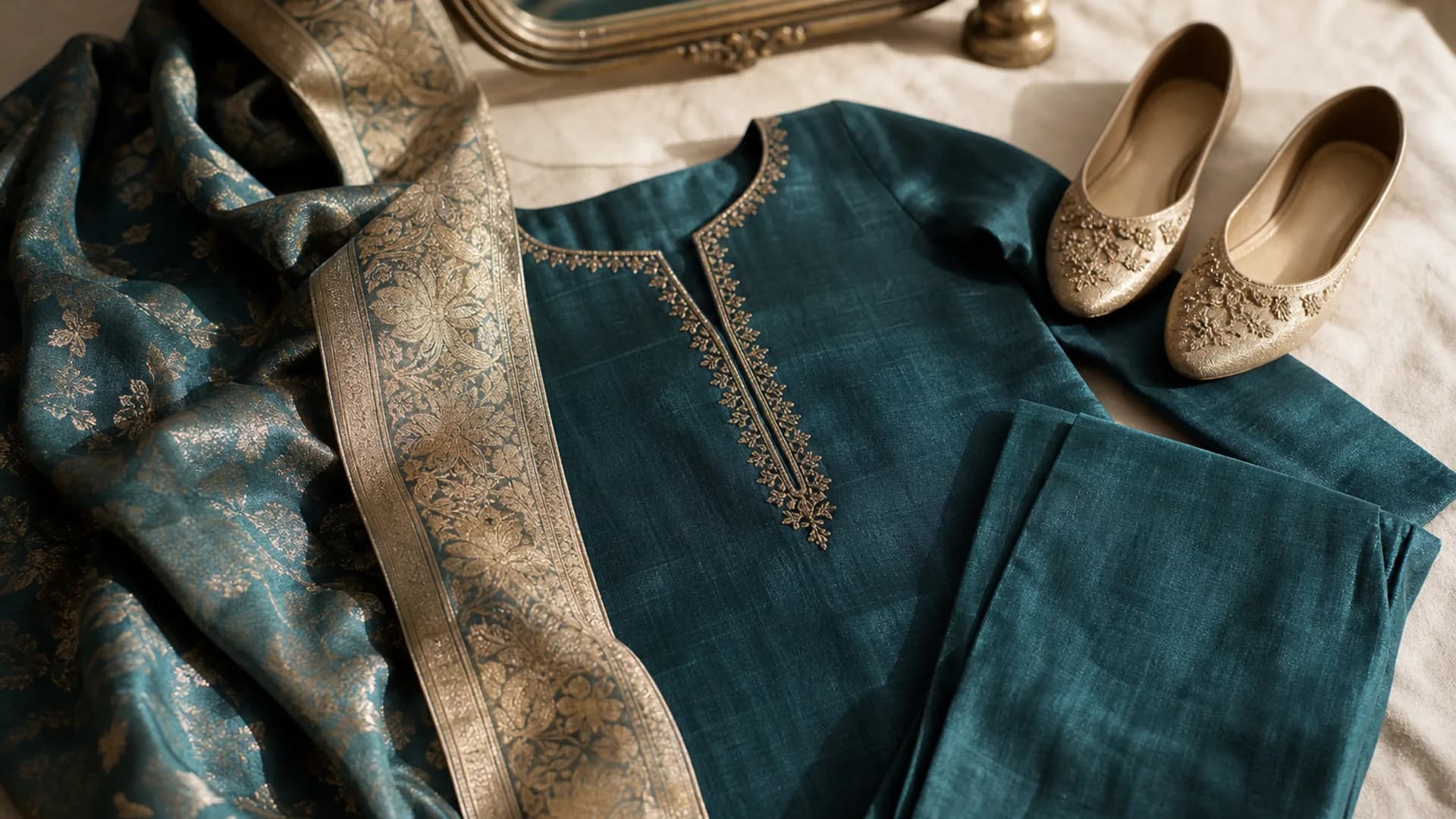
Formal Dressing in Your Forties and Fifties
There is a great deal of advice about what women over forty should stop wearing. Most of it is wrong. What actually changes is fit, fabric and comfort.
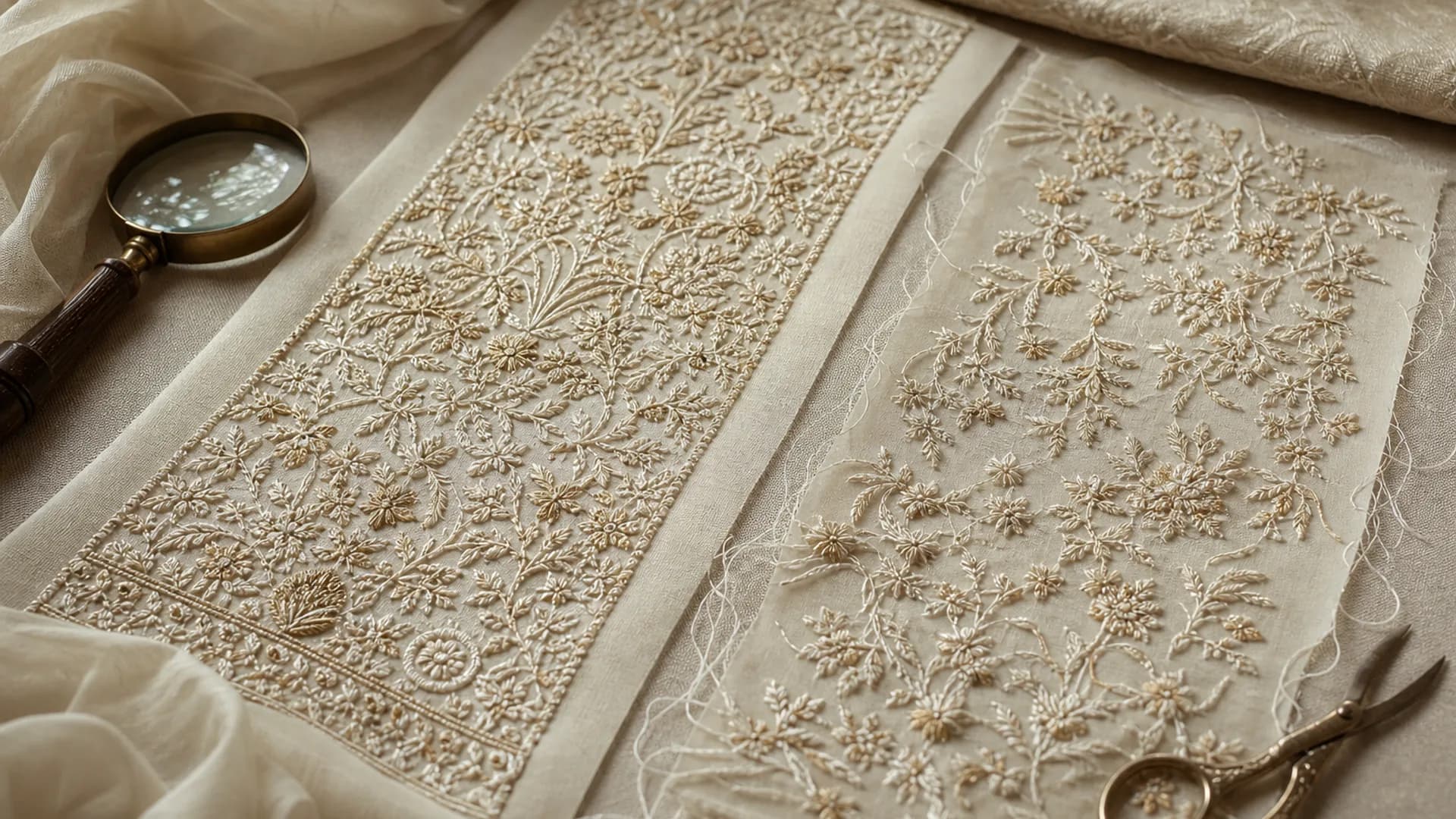
Original or Copy: How to Tell a Replica Suit
Master copies are sold openly and often honestly. The problem is when a copy is sold as an original at an original's price — here is how to tell.