

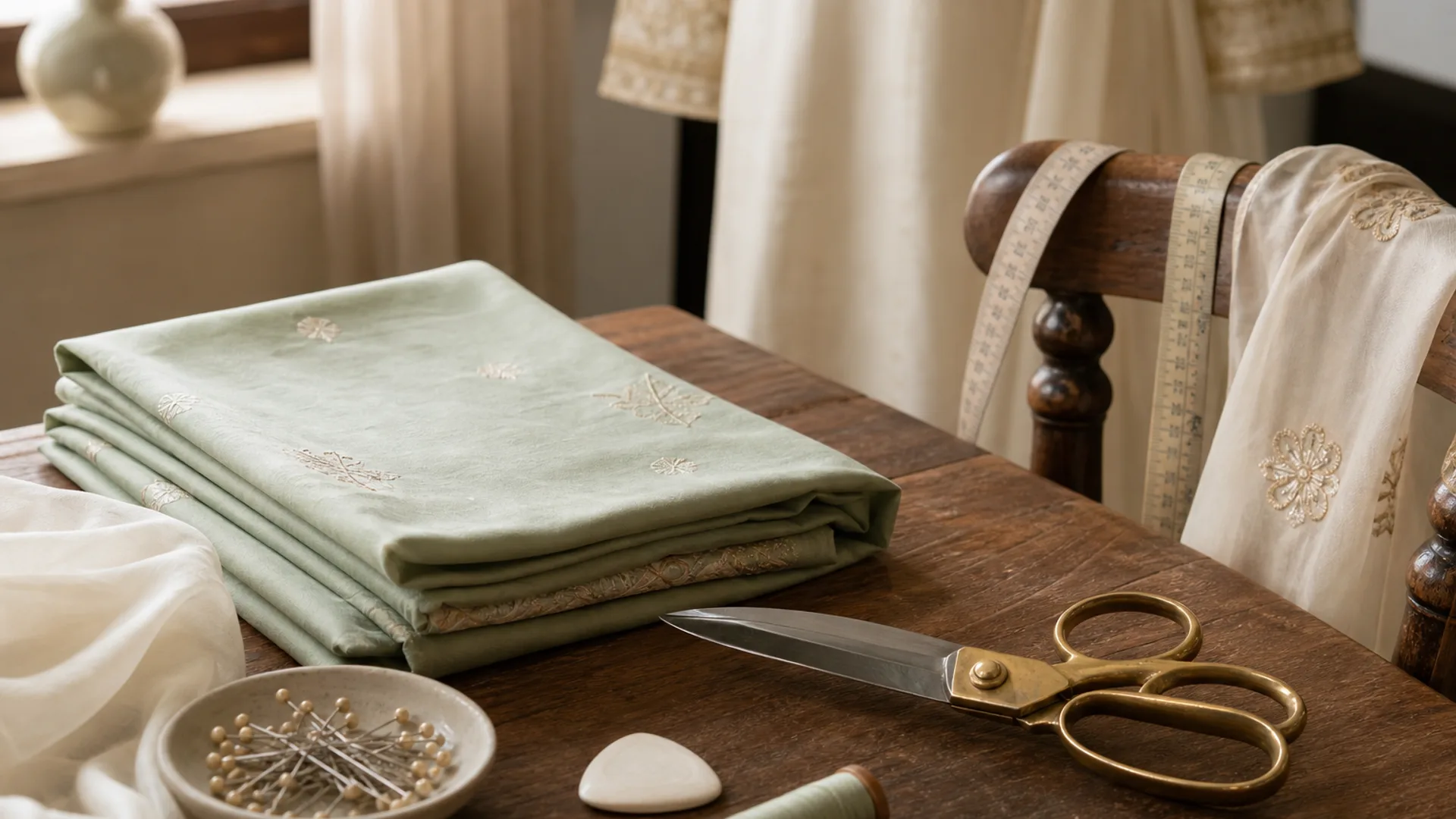
Working With a Tailor: What to Actually Say
Most tailoring disappointments are communication failures, not skill failures. Here is how to brief a darzi so what comes back matches what you pictured.
Almost every complaint about a tailor is really a complaint about a brief. The shirt came back longer than expected, the neckline deeper than intended, the sleeve tighter, the trouser a shape you did not picture. In most of those cases the tailor made exactly what he was told to make. The instruction was "normal length", "a bit fitted", "the usual neckline" — descriptions that mean something specific to you and something else to him. A good darzi is genuinely skilled and works quickly. What he cannot do is know what is in your head. The fix is not to find a better tailor. It is to give better instructions, and it takes about ten minutes to learn how.
The Single Best Habit: Bring a Garment
If you take one thing from this: **take a shirt you already own and like, and say "like this".** It removes every ambiguity at once. Length, width, sleeve, neckline depth, shoulder, hem — all of it is in the garment, and a tailor can copy measurements off it in two minutes. It also gives you a shared reference for describing changes. "Like this, but two inches shorter and the neckline one inch deeper" is a brief that cannot be misunderstood. "A bit shorter than usual" is not. **Take the garment even if it does not fit perfectly.** "Like this but looser through the waist" is still a far better brief than a description from nothing. **Take a photograph as well** if you are copying a style you have seen. A picture and a sample garment together is the strongest brief there is. If you are having something made for the first time, this is worth building a habit around — keep one shirt and one trouser that fit well as your reference pieces, and bring them every time.
The Measurements to Give
Write these down and keep them in your phone. Give them in inches unless your tailor works in something else. **Shirt length** — shoulder to hem. Where it should end matters more than any other number. **Chest** and **waist**, measured on the body, and say whether you want them fitted or with ease. **Hip** — often skipped, and it is what decides whether a straight shirt pulls. **Shoulder** — seam to seam across the back. The measurement that decides whether it looks right. **Sleeve length** — shoulder to where you want it to end. Wrist bone, or three-quarter. **Sleeve width** at the upper arm and at the opening. **Armhole depth** — say whether you want it close or roomy. **Neckline depth** — front and back, in inches from the shoulder line. Never describe this in words. **Trouser length** — measured in the shoes you will wear. **Trouser waist and rise.** **Bottom opening width** for the trouser, which is what makes it a straight, a palazzo or a churidar. Our post on [the five alterations that matter](/journal/five-alterations-make-any-suit-fit) explains what each of these does to the finished garment.
The Words That Cause Trouble
Some instructions sound precise and are not. **"Normal" or "standard"** — means whatever that tailor makes most often, which may be nothing like what you wear. **"Fitted"** — ranges from lightly shaped to close-fitting. Say how much ease you want, or point at a garment. **"A bit"** — a bit shorter, a bit looser, a bit deeper. Give a number instead. **"Long shirt"** — could be knee-length or ankle-length. Inches. **"Deep neckline"** — the most consequential vague instruction there is, and the one that cannot be undone. Always in inches, and always err shallow, because deepening later is easy and raising is not. Our [neckline guide](/journal/kameez-neckline-guide-which-suits-you) covers the shapes. **"Loose sleeves"** — loose at the top, at the elbow, or at the opening? These are three different garments. **"Same as last time"** — only safe if he kept your measurements and you have not changed. Ask him to confirm the numbers back to you.
Things Worth Asking For
Small requests that cost nothing and improve the result considerably. **A deep hem allowance.** Five to eight centimetres, so the length can be adjusted later. Standard practice for children's clothes and worth asking for on your own. **Sleeve hem allowance**, for the same reason. **Generous side seam allowance**, so the garment can be let out later. **Lining behind embroidery.** Worked areas at the neckline and inner sleeve are scratchy without it, and it is the difference between a suit you wear and one you do not. Our post on [embroidery types](/journal/embroidery-types-explained-zari-gota-resham) covers why the reverse matters. **A proper facing on the neckline**, not just an overlocked edge. A neckline without a facing gapes within a few wears. **Your leftover fabric back.** It is yours, and it is useful — for a repair, a patch, or lengthening later. **Pockets**, which most people forget to ask for and then wish they had.
The Fitting
If a tailor offers a fitting, take it. If he does not, ask. **Wear the right underclothes and the shoes you will wear with it.** Both change the fit measurably, and trouser length is meaningless without the right shoes. **Sit down during the fitting.** A garment that fits standing can be uncomfortable seated, and Pakistani functions involve a great deal of sitting. **Raise your arms.** This is where armhole depth and sleeve width reveal themselves. **Check the shoulder seam** sits on the point of your shoulder. **Check the neckline in a mirror and while looking down** — a neckline that is fine standing straight can gape when you lean forward. **Say something at the fitting, not afterwards.** Everything is adjustable while the garment is basted and much harder once it is finished. This is the moment to speak, and being polite about a problem now is easier than being unhappy about it later. **Do not accept "it will settle".** Fabric does not become smaller, and a garment that is too tight at the fitting will be too tight at the wedding.
Timing and Practicalities
**Book early.** Tailors are overwhelmed in the weeks before both Eids, after every lawn launch, and through wedding season. A rushed job is a badly finished one, and the busiest weeks are when finishing quality drops most. **Six weeks before an occasion** is comfortable. Two is not. **Wash lawn and cotton before stitching.** It shrinks three to five percent in the first wash, which is around ten centimetres on a shirt length. Our [lawn buying guide](/journal/how-to-buy-lawn-well-pakistan-guide) covers this. **Count what you hand over.** Shirt fabric, trouser fabric, dupatta, lining, buttons, any lace or trim. Write it down. Fabric goes missing and it is nobody's fault if there is no record. **Agree the price before, not after.** Including any extras — lining, piping, a complicated sleeve. **Get a collection date**, and expect to chase it politely.
Finding a Good One, and Keeping Him
A tailor who understands your shape is genuinely valuable, and worth some effort to find and keep. **Test with something inexpensive first.** Do not hand a wedding outfit to a tailor you have never used. A simple cotton kurta tells you what you need to know for a fraction of the risk. **Look at finishing, not just fit.** Turn the garment inside out. Neat seams, secured thread ends, a proper facing and a tidy hem are the marks of care. A garment that fits but is finished badly will not last. **Ask what he is best at.** Many tailors are excellent at one kind of garment and average at others. A darzi who makes beautiful straight suits may not be the one for a sharara. **Be specific and be reasonable.** Detailed instructions are welcomed; changing your mind three times is not. **Stay with one once you find him.** He will learn your shape, keep your measurements, and the results improve every time. If all of this sounds like more process than you want, ready-stitched skips it entirely — the [stitched suits](/ladies/stitched-suits) in our [ladies collection](/ladies) arrive wearable, and the [size guide](/content/size-guide) has the measurements to check against.
Frequently Asked Questions
Bring a garment you already own and like and say 'like this'. It removes every ambiguity at once — length, width, sleeve, neckline, shoulder — and gives you a shared reference for changes. 'Like this but two inches shorter' is a brief that cannot be misunderstood.
Shirt length, chest, waist, hip, shoulder seam to seam, sleeve length and width, armhole depth, neckline depth front and back, trouser length, waist, rise and bottom opening. Give them in inches. Never describe a neckline in words — always give a number.
Yes, for lawn and cotton. They shrink three to five percent in the first wash, which is around ten centimetres on a shirt length. Washing first means the shrinkage happens before the garment is cut rather than after it is made and fitted.
Sit down and raise your arms — a garment that fits standing can be wrong seated or with arms up. Check the shoulder seam sits on the point of your shoulder, and check the neckline while leaning forward. Say something at the fitting, not afterwards, while it can still be adjusted.
Test with something inexpensive before handing over a wedding outfit. Judge the finishing as well as the fit — turn the garment inside out and look for neat seams, secured thread ends and a proper neckline facing. Ask what he is best at, and stay with him once you find him.
About the Author
Habiba Minhas
Founder and creative director of Habiba Minhas, Pakistan's leading handcrafted fashion brand based in Karachi. With a passion for preserving traditional Pakistani craftsmanship while embracing modern design, she has built a brand serving over 5,000 customers nationwide.
Specializing in premium ladies suits, kids festive wear, and baby products, Habiba works directly with artisan embroiderers and skilled tailors to create pieces that honor Pakistani heritage.
Related Articles
Dressing for Ramadan and Iftar Gatherings
Ramadan runs a month, and the clothing has to work for fasting through the afternoon and hosting in the evening. The two are different problems.
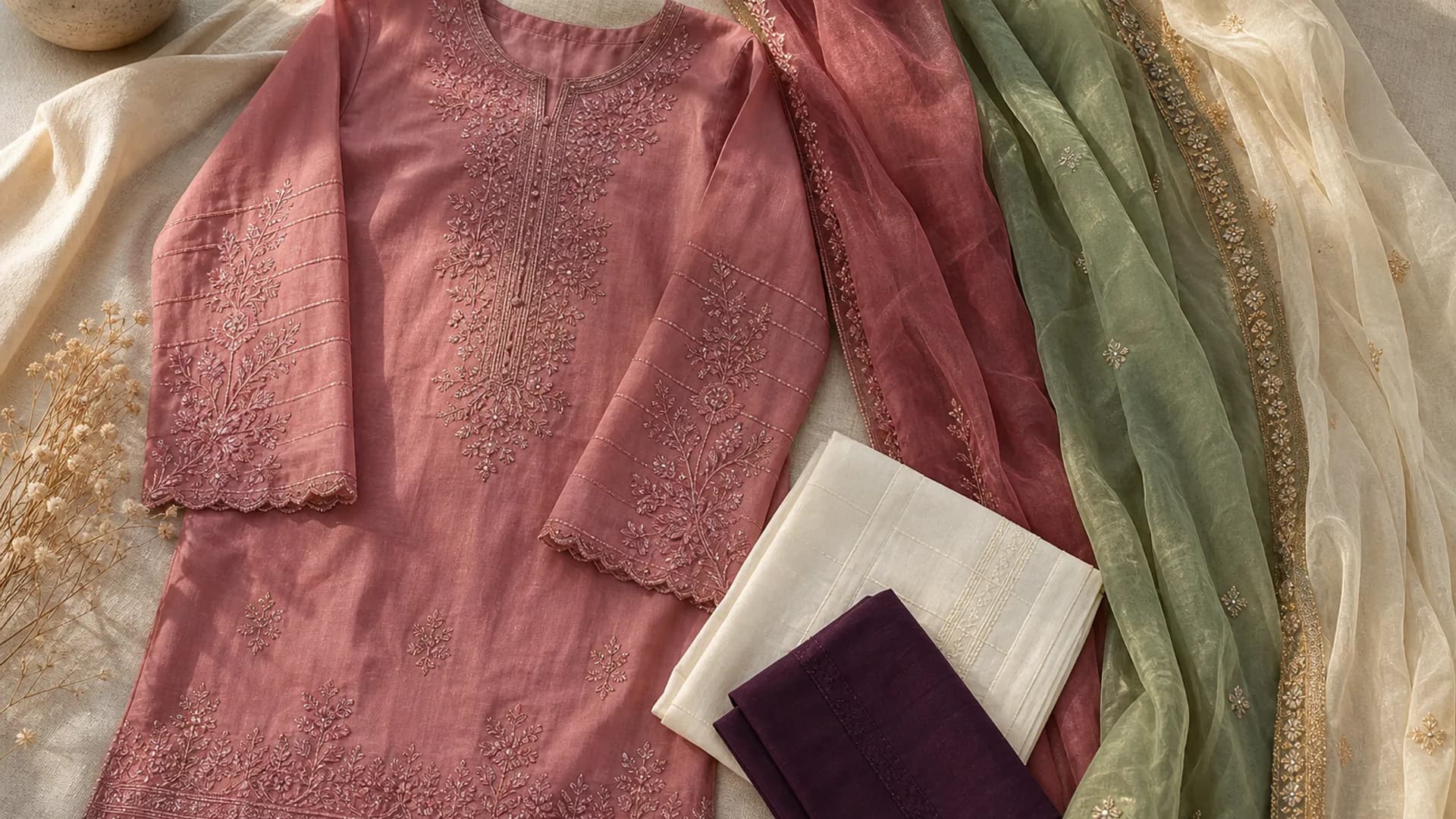
Matching a Dupatta or Trouser to a Shirt
Almost matching looks worse than clearly not matching. Here is how to pair pieces bought separately so the outfit reads as deliberate.
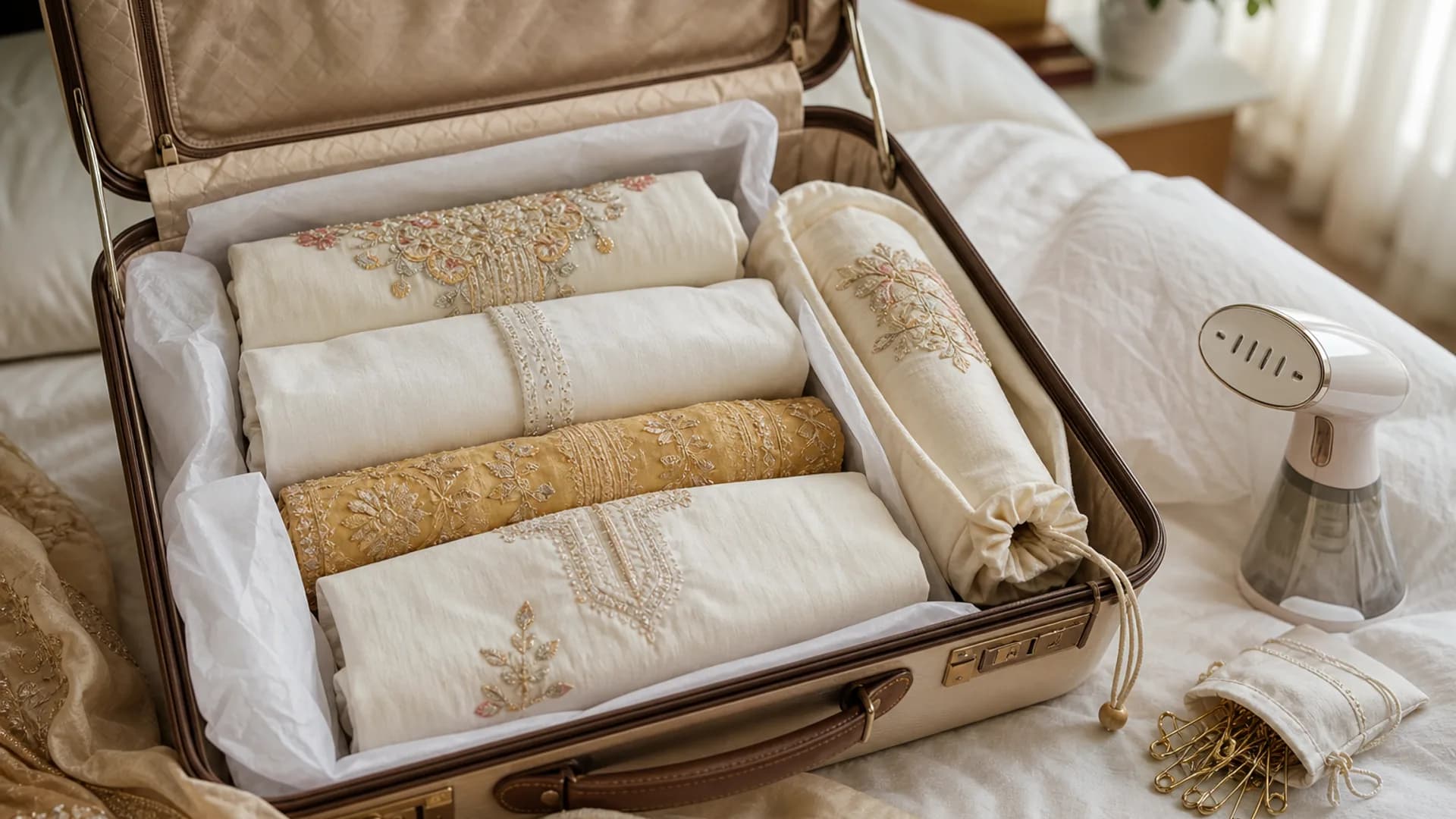
Packing Formal Wear Without Ruining It
A heavily worked outfit and a suitcase are natural enemies. A specific folding method and twenty minutes on arrival is the difference between wearable and not.