

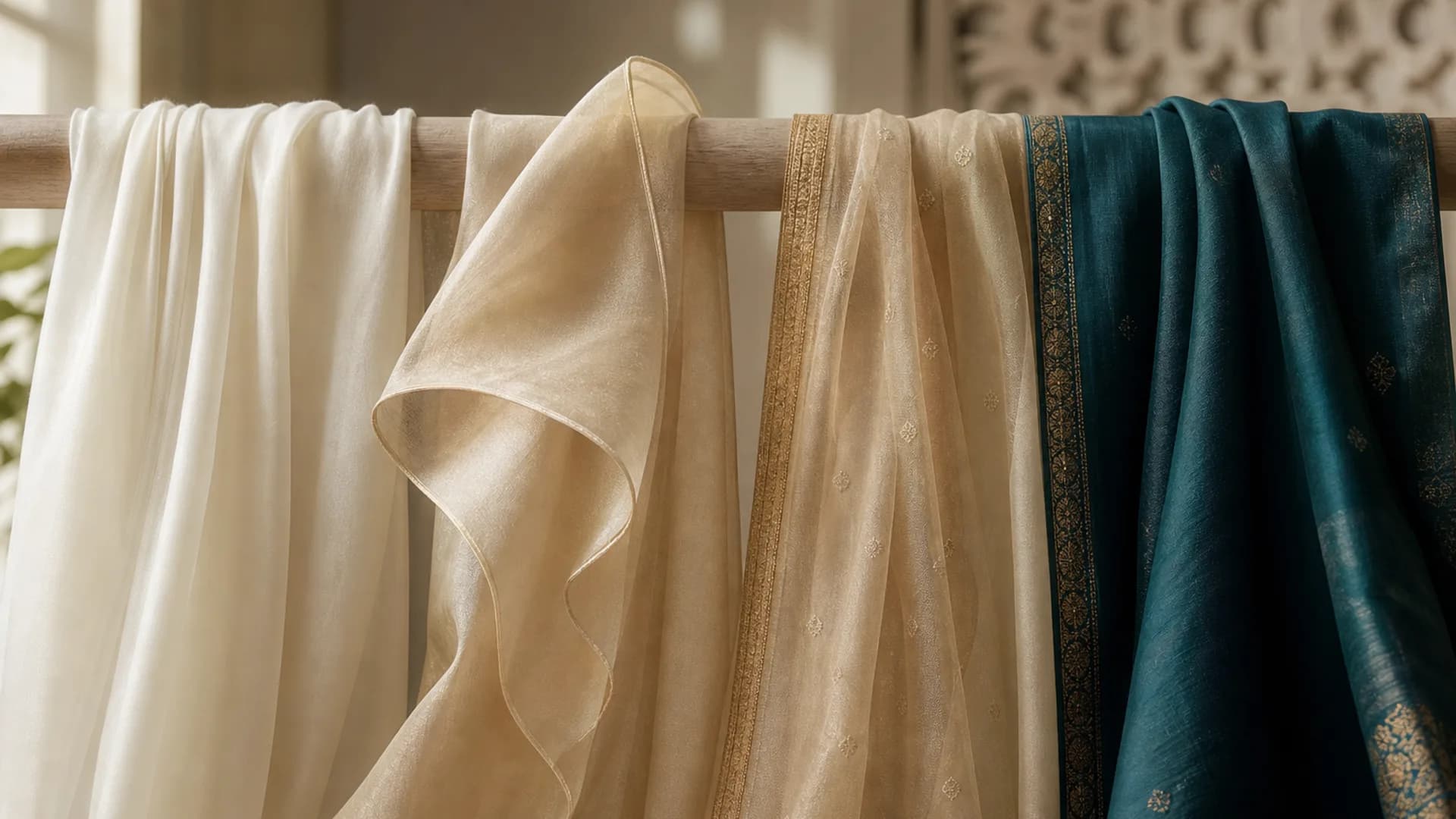
Dupatta Fabrics: Chiffon, Organza, Net or Silk
The dupatta is a third of the outfit and usually the last thing anyone thinks about. The fabric decides whether it drapes, stands up, or slides off all evening.
A three-piece suit is a shirt, a trouser and a dupatta, and the dupatta is the piece nearly everyone decides last and thinks about least. It is also the piece that shows most. It sits across the shoulders and chest, it is what moves when you move, and in most photographs of you it occupies more visual space than the trouser does. The fabric it is made from decides everything about how it behaves — whether it falls close to the body or stands away from it, whether it stays on your shoulder or slides off every ten minutes, and whether it can carry embroidery without sagging. Four fabrics account for almost all Pakistani formal dupattas. They are genuinely different, and they are not interchangeable.
Chiffon: The One That Falls
Chiffon is lightweight, sheer, soft and completely without structure. It has no stiffness at all, which means it falls straight down and follows the body. **What it does well:** drapes closer to the body than anything else, creates a long vertical line, moves beautifully, and photographs softly. It is the most flattering dupatta fabric for most people, and the most comfortable across a long evening. **What it does badly:** holds weight. A chiffon dupatta with heavy embroidery sags and pulls out of shape, and the work drags it off your shoulder constantly. It also creases if it is folded and packed. **Best for:** everyday formals, summer weddings, nikahs, daytime functions, and any outfit where you want the dupatta to stay close rather than make a statement. **A note on quality:** most chiffon sold in Pakistan is polyester. Silk chiffon exists, costs considerably more, and feels warmer to the touch. Our guide on [telling real silk from fake](/journal/how-to-tell-real-silk-from-fake-pakistan) covers checking it.
Organza: The One That Holds Its Shape
Organza is sheer like chiffon but crisp rather than soft. It has body — it holds a fold, stands away from the shoulder, and keeps whatever shape you put it in. **What it does well:** structure and presence. An organza dupatta creates volume and a sculptural line, and it carries embroidery at the border beautifully because the fabric holds it up instead of sagging under it. It also has a subtle sheen that reads as expensive. **What it does badly:** it does not drape. It will not fall close to the body no matter how you arrange it, and it adds visual width across the shoulders — worth knowing if that is not what you want. It also creases sharply and the creases show. **Best for:** formal and semi-formal outfits, engagements, evening events, and any look that needs volume. It has become the most fashionable dupatta fabric of the last few years for exactly this reason. **Practical warning:** organza edges can be scratchy against bare skin at the neck. Check the finish on the edge before buying.
Net: The One That Carries Weight
Net is a mesh — an open structure of twisted or knitted yarn — and it comes in soft and stiff versions that behave quite differently. **What it does well:** carries heavy embroidery better than any other lightweight fabric, because the open structure means the fabric itself weighs almost nothing. This is why bridal and heavily worked dupattas are so often net. It is also breathable, which matters at a summer function. **What it does badly:** it is transparent, which is the point, but it means a plain net dupatta over a plain shirt does very little. Stiff net is also uncomfortable — it scratches, it holds static, and it snags on jewellery. And a net dupatta with no embroidery reads as cheap, because net is the least expensive of the four. **Best for:** heavily worked formal and bridal dupattas, and outfits where the dupatta is the embellished piece. **Avoid it for:** anything plain, and anything you will be adjusting all evening. Soft net is far more wearable than stiff net if you have the choice.
Silk: The Formal Default
Silk here covers a family rather than one fabric — smooth silk, raw silk, jamawar and brocade all behave differently, but they share weight and opacity. **What it does well:** weight and richness. A silk dupatta stays where you put it, which is the practical advantage nobody mentions until they have spent an evening rescuing a chiffon one. It is opaque, so it provides real coverage. It has depth of colour that sheer fabrics cannot match, and it shifts through the light in a way synthetics do not. **What it does badly:** it is warm, which is a real limitation at a summer function. Heavy silk dupattas are also genuinely tiring across a long evening, and they do not fold small. **Best for:** winter functions, nikahs where you need to cover your head, formal daytime events, and anyone who dislikes constantly rearranging a dupatta. **Best for head covering specifically.** This is worth stating plainly — silk and heavy chiffon stay on a head, organza and slippery net do not. If you are attending a mosque nikah, this decides it. Our [nikah guide](/journal/nikah-outfit-guide-guests-pakistan) covers the wider question.
Matching the Dupatta to the Outfit
The useful principle: the dupatta and the shirt should not have the same weight and structure, or the outfit reads flat. **Heavy worked shirt** → light plain dupatta in chiffon or fine silk. The shirt is the feature; the dupatta gets out of the way. **Plain shirt** → worked dupatta in organza or net. The dupatta carries the outfit. **Structured shirt in raw silk** → soft chiffon dupatta. Contrast in behaviour rather than colour. **Soft flowing shirt in georgette** → organza dupatta, for the structure the shirt lacks. What does not work: a stiff organza dupatta over a stiff brocade shirt, which produces an outfit with no movement anywhere. And a heavily worked net dupatta over a heavily worked shirt, which is simply too much of the same thing. Our guide on [matching accessories to a formal suit](/journal/how-to-match-accessories-formal-pakistani-suit) covers the same balance for jewellery.
Season and Occasion
**Summer, daytime.** Chiffon or fine cotton. Light, breathable, and they do not trap heat against the shoulders. **Summer, evening formal.** Chiffon, organza or net. Net is the coolest of the three because of the open structure. **Winter, daytime.** Silk or a light woollen weave. **Winter, evening formal.** Silk, jamawar, brocade, or a velvet-bordered dupatta. This is where weight becomes an advantage rather than a burden — our [winter wedding guide](/journal/winter-wedding-guest-outfit-guide-pakistan) covers the whole outfit. **Mehndi and dholki.** Light and short. You will be dancing and sitting on the floor, and a heavy dupatta will end up on a sofa. **Nikah.** Silk or heavy chiffon, large enough to cover your head and with enough grip to stay there. **Everyday.** Cotton, lawn or light chiffon — whatever you will actually keep on.
Size, Which Matters More Than Expected
Dupatta dimensions vary far more than anyone tells you, and a dupatta of the wrong size cannot be styled well regardless of fabric. **Standard formal dupatta:** roughly 2.5 metres long. That is enough to drape over one shoulder with a good fall. **For head covering:** you want closer to 2.75 metres, and enough width. A short dupatta pulled over the head leaves nothing to drape. **Width matters as much as length.** A narrow dupatta looks like a scarf. A very wide one swamps a petite frame — though it can be folded lengthways, which a narrow one cannot be widened. **Ask for both measurements before ordering online.** Sellers routinely list neither, and it is the most common source of disappointment with an otherwise good suit. If you are petite, our [petite styling guide](/journal/how-to-look-taller-pakistani-suits-petite) covers how dupatta width and drape affect the whole line. You can see the dupattas across our [3-piece suits](/ladies/3-piece-suits) and the wider [ladies collection](/ladies).
Care: The Part That Decides How Long It Lasts
The dupatta is the piece that wears out first, because it is handled constantly and it takes the most friction. **Hang, do not fold.** Chiffon and organza hold creases badly, and a fold line across the middle of a dupatta is permanent on organza. **Hang over a padded rail or a wide hanger.** A thin wire hanger leaves a mark on silk. **Dry clean anything worked.** Embroidery, sequins and zari should not go anywhere near water at home — threads shrink at different rates and the work puckers. **Plain chiffon and cotton can be hand-washed** in cold water with a mild detergent, then dried flat in shade. Never wring. **Store away from direct light.** Silk and any dyed fabric fades along the fold that faces outward in a cupboard. Our guide on [caring for silk at home](/journal/how-to-care-for-silk-suits-at-home-pakistan) covers the full method, and the [fabric glossary](/content/fabric-glossary) explains the terms on the label.
Frequently Asked Questions
Chiffon is soft and has no structure, so it falls straight down and drapes close to the body. Organza is equally sheer but crisp — it holds its shape, stands away from the shoulder and creates volume. Chiffon flatters; organza makes a statement.
Net or organza. Net carries weight best because the open mesh weighs almost nothing itself, which is why bridal dupattas are usually net. Organza holds embroidered borders up rather than sagging under them. Chiffon sags and pulls out of shape under heavy work.
Silk or a heavy chiffon. Both have enough weight and grip to stay put. Organza slides off and slippery net will not stay at all. If you are attending a mosque nikah or a function where you will cover your head, this decides the fabric on its own.
Around 2.5 metres for normal draping, and closer to 2.75 metres if you want to cover your head with enough left to drape. Width matters too — a wide dupatta can be folded lengthways, a narrow one cannot be made wider. Ask for both measurements before ordering online.
Plain chiffon and cotton can be hand-washed in cold water with mild detergent and dried flat in shade — never wrung. Anything with embroidery, sequins or zari should be dry cleaned, because the threads shrink at different rates in water and the work puckers permanently.
About the Author
Habiba Minhas
Founder and creative director of Habiba Minhas, Pakistan's leading handcrafted fashion brand based in Karachi. With a passion for preserving traditional Pakistani craftsmanship while embracing modern design, she has built a brand serving over 5,000 customers nationwide.
Specializing in premium ladies suits, kids festive wear, and baby products, Habiba works directly with artisan embroiderers and skilled tailors to create pieces that honor Pakistani heritage.
Related Articles
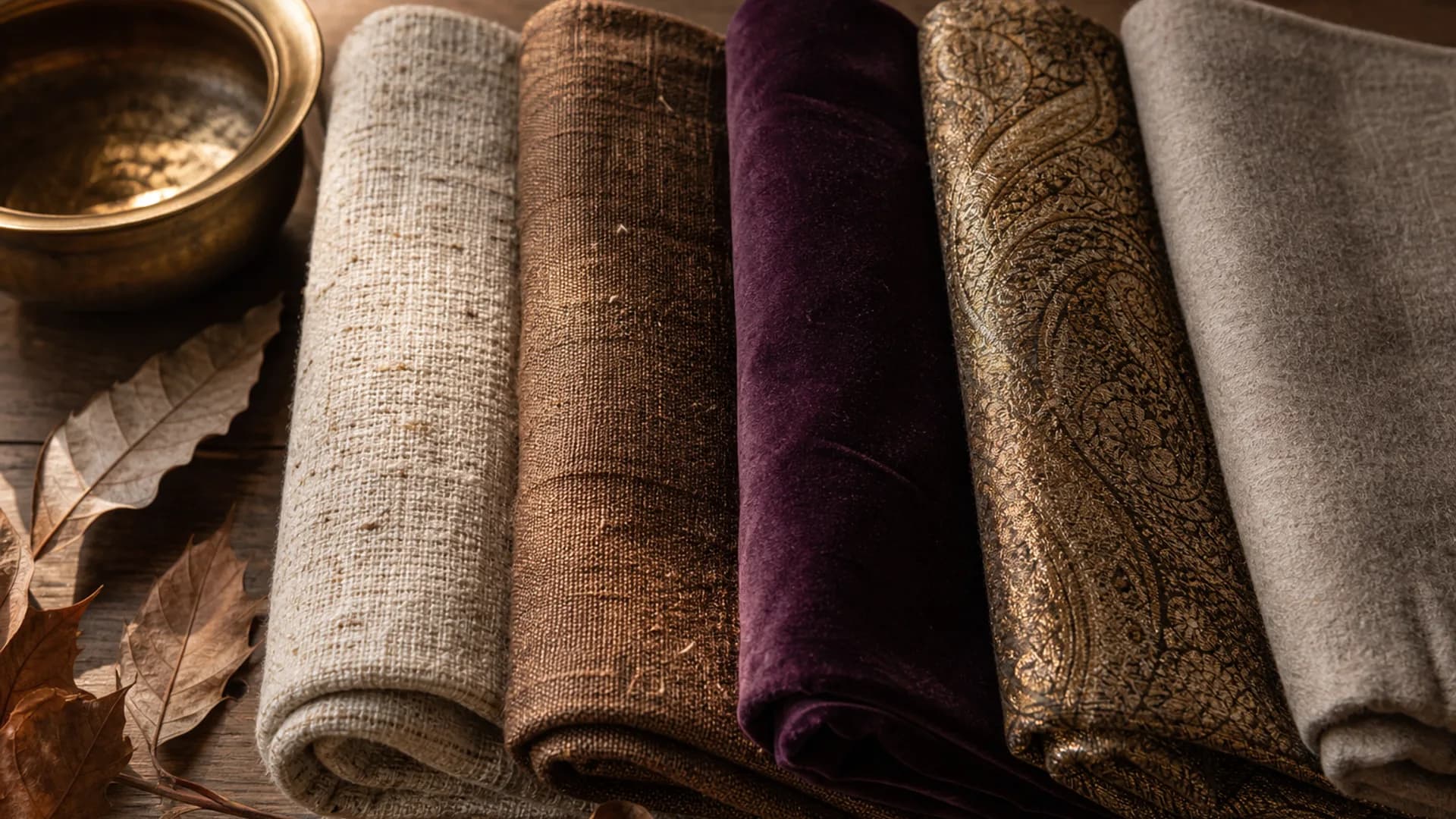
Winter Fabrics: Khaddar, Karandi, Velvet and More
Pakistani winter fabrics are sold by name and almost never explained. Here is what each one is, how warm it really is, and where it belongs.
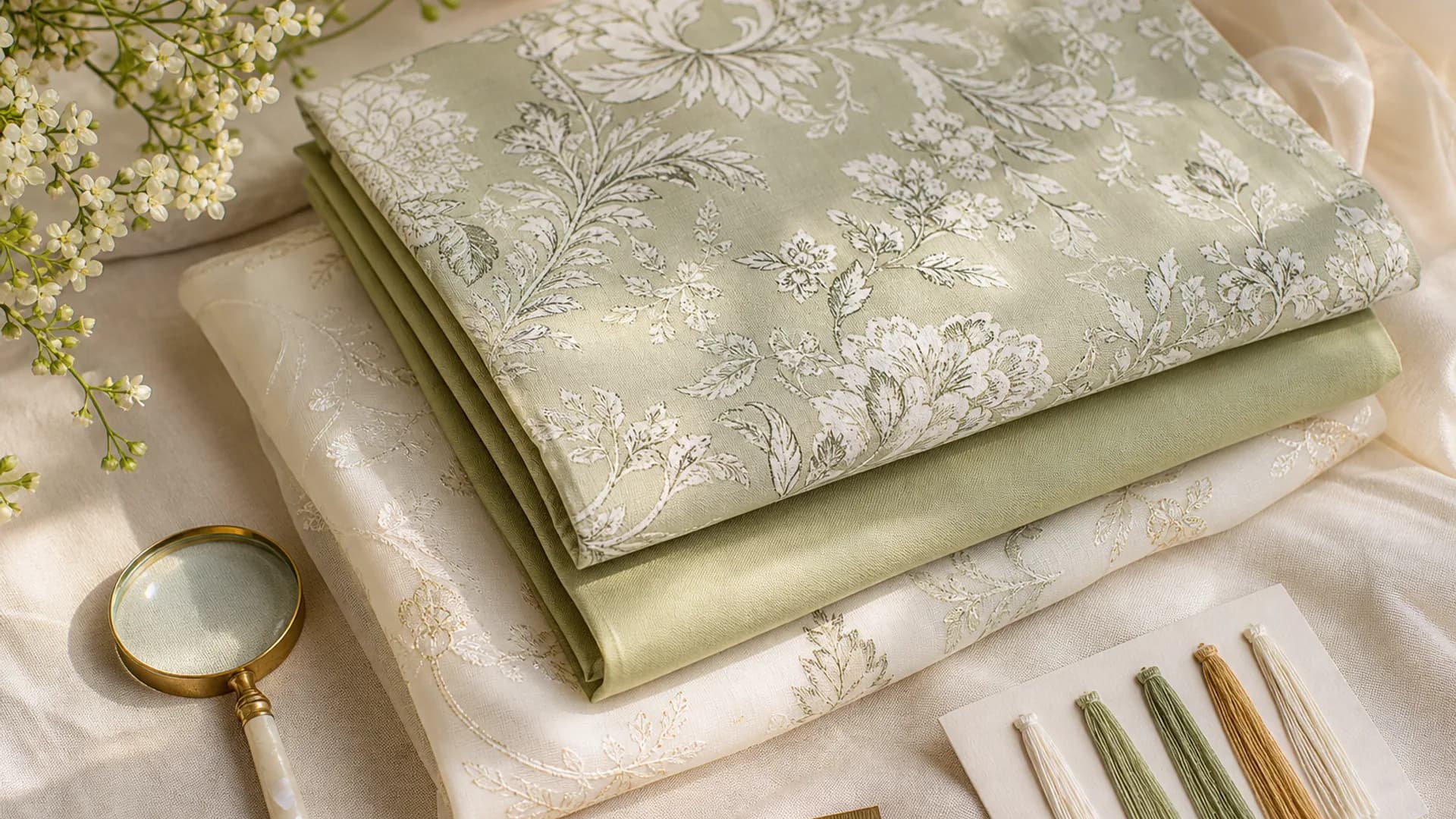
Lawn Season: How to Buy Lawn Actually Well
Lawn season is the one shopping event the whole country takes part in, and most of it is bought in a rush on a phone. Here is how to judge what you are buying.
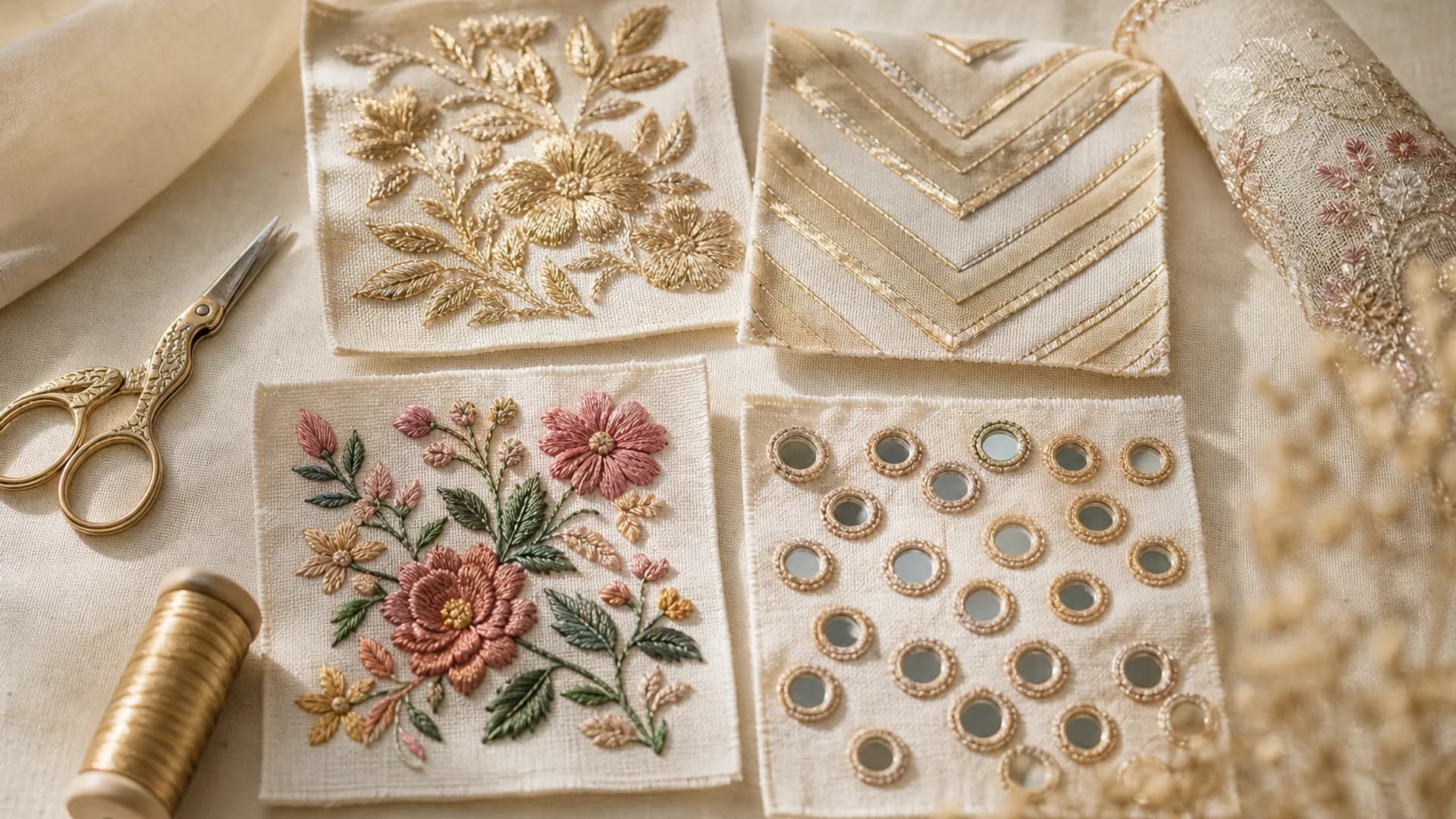
Zari, Gota, Resham: Embroidery Types Explained
Every formal suit is described with a list of embroidery names, and almost nobody knows what they mean. Here is what each one is, and how it behaves.