

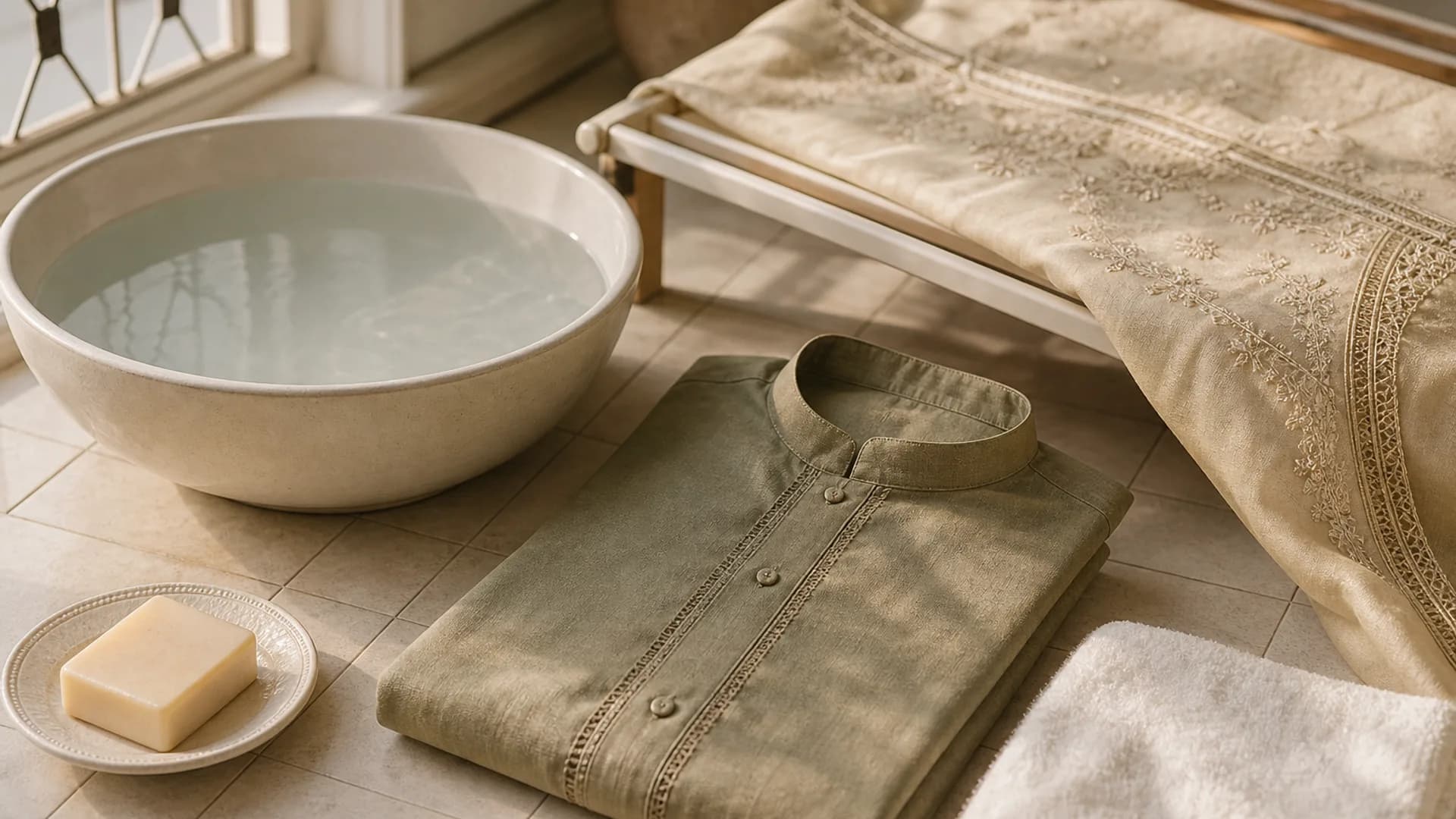
Washing Pakistani Clothes Without Ruining Them
Most clothes are ruined at home rather than in wear, and usually in the first wash. Here is what can be washed, what cannot, and how.
Most clothes are ruined at home, not in wear. A dupatta that ran into a shirt, a lawn suit that came out two sizes smaller, embroidery that puckered, a black that faded to grey-brown along the shoulders. Almost all of it happens in the first two washes, and almost all of it is avoidable. The difficulty is that Pakistani clothing spans an unusually wide range — a cotton lawn kurta and a dabka-worked silk formal need entirely different treatment, and the care labels frequently say nothing useful, or say "dry clean" on everything as a way of avoiding the question. This is what can safely be washed at home, what genuinely cannot, and how to do the first without damage.
What Can Be Washed at Home
**Plain lawn, cotton, cambric and khaddar.** Yes, straightforwardly. These are the everyday fabrics and they are designed to be washed. **Lightly embroidered cotton and lawn.** Usually yes, by hand, in cold water. Machine-run thread embroidery on cotton is more robust than it looks. **Plain chiffon and georgette.** By hand, cold, gently. Never wrung. **Crepe.** By hand, cold. It holds up well. **Plain silk.** Possible by hand in cold water with a very mild detergent, though the first wash is a risk — test on an inside seam. Our guide on [caring for silk at home](/journal/how-to-care-for-silk-suits-at-home-pakistan) covers the method in detail. **Cotton dupattas and muslins.** Yes, and hot where the label allows. What this covers is most of a wardrobe. The exceptions are fewer than the labels suggest, and dry cleaning everything is expensive and slightly damaging in its own right — solvent is hard on fine fabric over many cycles.
What Should Not Be Washed at Home
**Anything with zari, dabka, nakshi or tilla.** These are metal. Water tarnishes them, and the coil of a dabka can catch and unravel. Dry clean, and tell the cleaner what the work is. Our post on [embroidery types](/journal/embroidery-types-explained-zari-gota-resham) covers identifying them. **Anything with sequins, stones or mirror work.** Glue softens, stones detach, and sharp backs snag other fabric in the machine. **Heavy embroidery of any kind.** Threads shrink at different rates from the base fabric, and the work puckers permanently. This is irreversible. **Velvet.** The pile crushes and does not recover. **Jamawar, brocade and banarsi.** Woven metallic threads and dense construction — these need professional cleaning. **Anything with a stiffened or structured lining**, which softens and never regains shape. **Wool and wool blends** in a machine. Machine washing felts wool irreversibly. Hand wash cold, or dry clean. **The general test:** if the decoration is raised off the surface, do not put it in water.
Stopping Colours From Bleeding
The most common single disaster, and the most preventable. Deep reds, maroons, dark blues and blacks bleed most, and they bleed worst onto ivory and white. A dark dupatta washed with a pale shirt is how a suit is lost once. **Wash new items separately for the first two or three washes.** Not with similar colours — separately. **Test first.** Dampen an inside seam, press a white cloth against it. If colour transfers, it will bleed. **Cold water only.** Heat is what releases dye. **Do not soak.** This is the single biggest cause of bleeding, more than washing itself. Dye leaches out over time in still water, and a garment left soaking for an hour will bleed into itself — which is how a white shirt with a red border ends up pink. **Wash and rinse quickly**, then get it out of the water. **Salt and vinegar in the first wash** are traditional remedies with limited effect on modern dyes. They do little harm, but washing separately in cold water without soaking does far more. **Dry immediately.** A wet garment left folded in a heap will transfer colour between its own parts.
Shrinkage
Cotton shrinks. Lawn shrinks three to five percent in the first wash, khaddar more. **On unstitched fabric, wash before stitching.** This is the single most useful habit and almost nobody does it — the shrinkage then happens before the garment is cut rather than after it has been fitted. Our [lawn buying guide](/journal/how-to-buy-lawn-well-pakistan-guide) covers this. **On a stitched garment there is nothing to be done except limit it.** Cold water, no hot drying, no tumble dryer. **Heat is what shrinks cotton**, not water. A cold hand wash shrinks far less than a warm machine wash. **Do not stretch it back into shape while wet.** It distorts the weave and the result is worse than the shrinkage. **Ready-stitched from a good maker is usually pre-shrunk**, which is one of the quiet advantages of buying stitched. Our post on [unstitched versus ready-to-wear](/journal/unstitched-vs-ready-to-wear-suits-pakistan) covers the wider trade-off, and the [stitched suits](/ladies/stitched-suits) in our range come made up.
The Method for Hand Washing
**Cool water, never hot.** Cold is safest for colour and for shrinkage. **A mild detergent, dissolved before the garment goes in.** Undissolved powder sitting against fabric bleaches spots, particularly on dark colours. **No bleach, no strong stain remover, no fabric conditioner on silk.** **Turn the garment inside out**, which protects the surface and any embroidery. **Move it gently through the water for a minute or two.** Do not rub, scrub or twist. Agitation is what damages fine fabric and lifts print. **Rinse until the water runs clear**, in cool water. **Never wring.** Press the water out between your palms, or roll the garment in a dry towel and press. Wringing distorts the weave permanently and it is the most common handling mistake. **Support the weight when lifting it out.** A wet garment lifted by one shoulder stretches under its own weight, and silk and georgette never recover.
Drying, Where Most Fading Happens
This is the step that ruins more Pakistani clothing than washing does, and it is entirely down to one thing: the sun. **Dry in shade, always.** Direct Pakistani sunlight fades printed lawn dramatically, and the fade is uneven — it follows the fold, leaving a permanent line. A single afternoon on a sunny line can visibly age a new suit. **Dry inside out**, which protects the printed or embroidered surface. **Dry flat where possible** for anything heavy or knitted. Hanging a wet heavy garment stretches it. **Do not tumble dry.** Heat shrinks cotton, damages elastic, and crushes any surface texture. **Do not dry on a wooden rail or a painted surface** — both mark wet fabric. **Get it out of the machine or basin immediately.** Wet fabric left folded develops mildew in humid weather and transfers colour between its own parts. **Dry fully before storing.** Anything put away even slightly damp will grow mildew, which on silk is often permanent. Our [storage guide](/journal/how-to-store-formal-suits-pakistan) covers the rest.
Ironing and Stains
**Iron on the reverse**, on the lowest heat that works, with a pressing cloth between iron and fabric. **Never iron directly on embroidery.** Zari flattens, dabka crushes, sequins melt. Iron around it, or steam instead. **Steam rather than iron** for silk, chiffon and anything worked. Hanging a garment in a bathroom with a hot shower running for ten minutes releases most creases without touching it. Our [packing guide](/journal/packing-formal-wear-travel-without-creasing) covers the method. **Iron while slightly damp** for cotton and lawn, which is far more effective than dry ironing. **On stains: act fast and cold.** Blot, never rub. Cold water for most things; hot water sets protein stains like blood and dairy permanently. **Oil and grease** need a dry approach first — talc or cornflour to absorb, brushed off after an hour, then a gentle wash. **Do not use hot water or a hot iron on an unknown stain**, which is how a removable mark becomes permanent. **Tell the dry cleaner what caused a stain.** It genuinely changes what they use, and it is the difference between a stain coming out and setting.
Frequently Asked Questions
Lightly embroidered cotton and lawn usually survive a gentle cold hand wash. Anything with zari, dabka, sequins, stones or mirror work should not go in water — the metal tarnishes, glue softens and threads shrink at different rates, which puckers the work permanently.
Wash new items completely separately for the first two or three washes, in cold water, and do not soak. Soaking is the biggest single cause of bleeding — dye leaches out over time in still water. Wash quickly, rinse, and dry immediately rather than leaving it in a wet heap.
Cotton shrinks three to five percent in the first wash, and heat is what causes it rather than water. Wash unstitched fabric before stitching so it happens before the garment is cut. On a stitched garment, cold water and shade drying limit it, but it cannot be reversed.
Direct sunlight. Pakistani sun fades printed lawn dramatically and unevenly, leaving a permanent line along the fold — a single afternoon on a sunny line visibly ages a new suit. Dry inside out, in shade, and flat for anything heavy.
Never directly on the embroidery — zari flattens, dabka crushes and sequins melt. Iron on the reverse with a pressing cloth, on the lowest heat that works, or steam it instead by hanging it in a bathroom with a hot shower running for ten minutes.
About the Author
Habiba Minhas
Founder and creative director of Habiba Minhas, Pakistan's leading handcrafted fashion brand based in Karachi. With a passion for preserving traditional Pakistani craftsmanship while embracing modern design, she has built a brand serving over 5,000 customers nationwide.
Specializing in premium ladies suits, kids festive wear, and baby products, Habiba works directly with artisan embroiderers and skilled tailors to create pieces that honor Pakistani heritage.
Related Articles
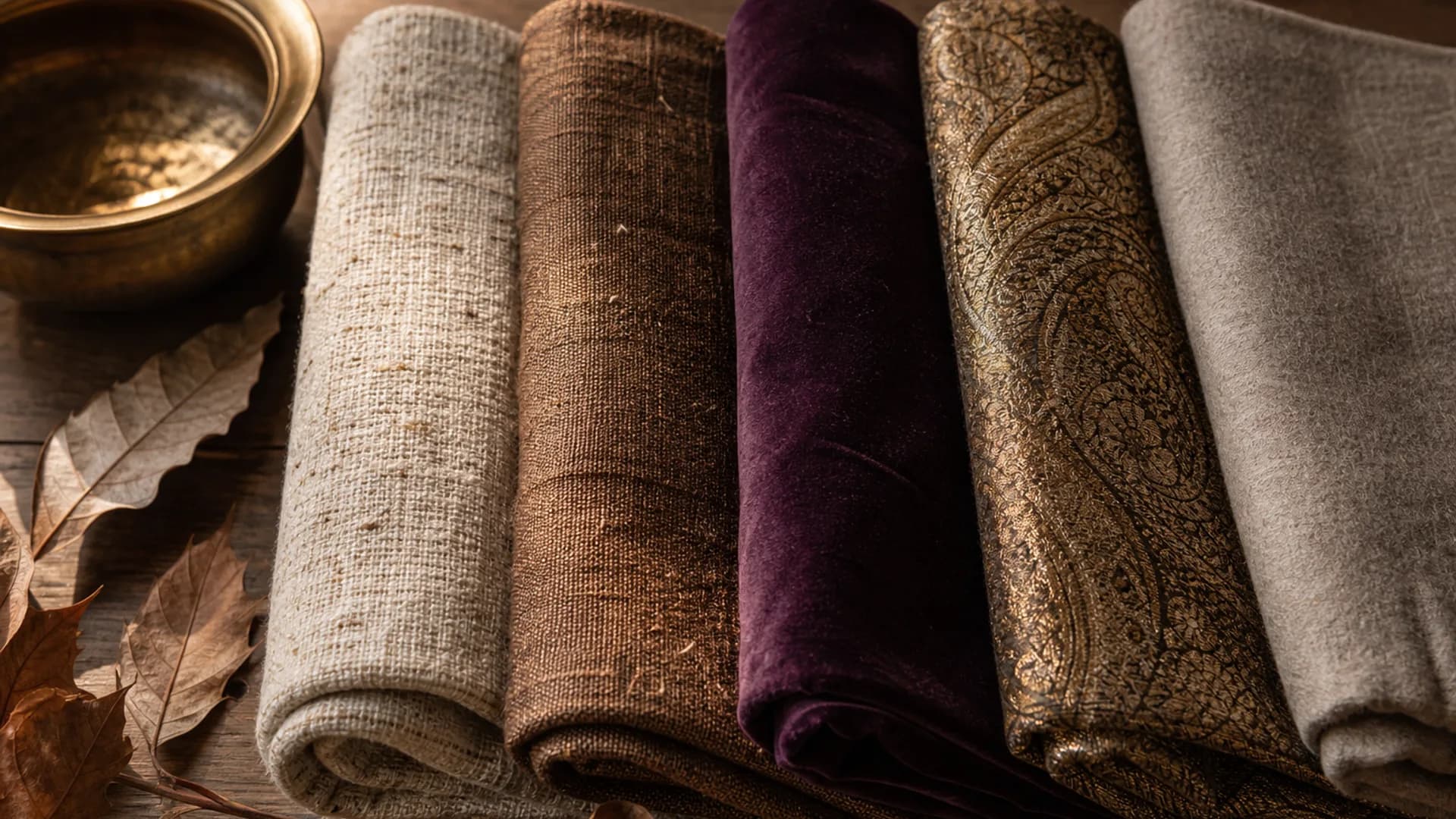
Winter Fabrics: Khaddar, Karandi, Velvet and More
Pakistani winter fabrics are sold by name and almost never explained. Here is what each one is, how warm it really is, and where it belongs.
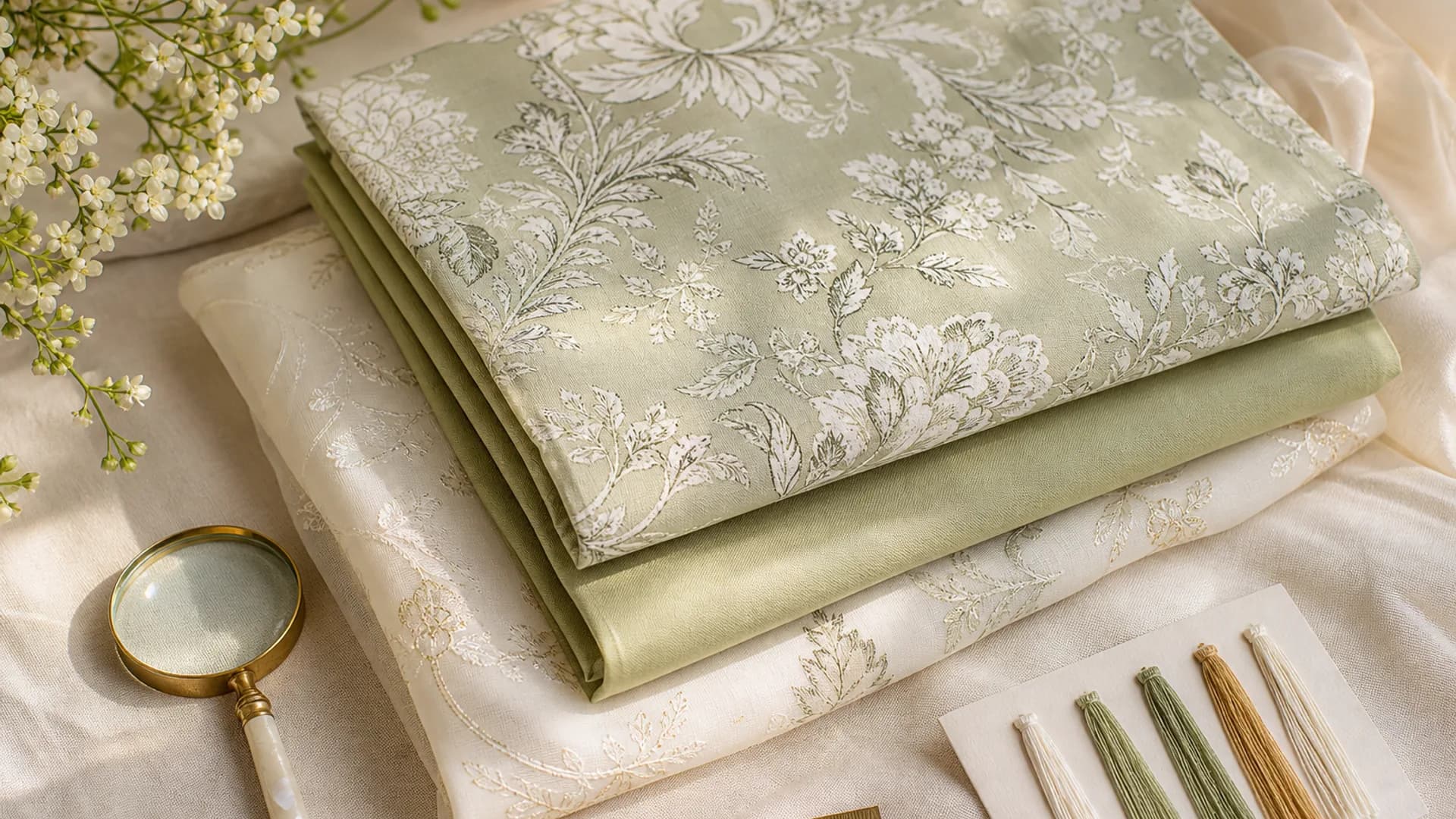
Lawn Season: How to Buy Lawn Actually Well
Lawn season is the one shopping event the whole country takes part in, and most of it is bought in a rush on a phone. Here is how to judge what you are buying.
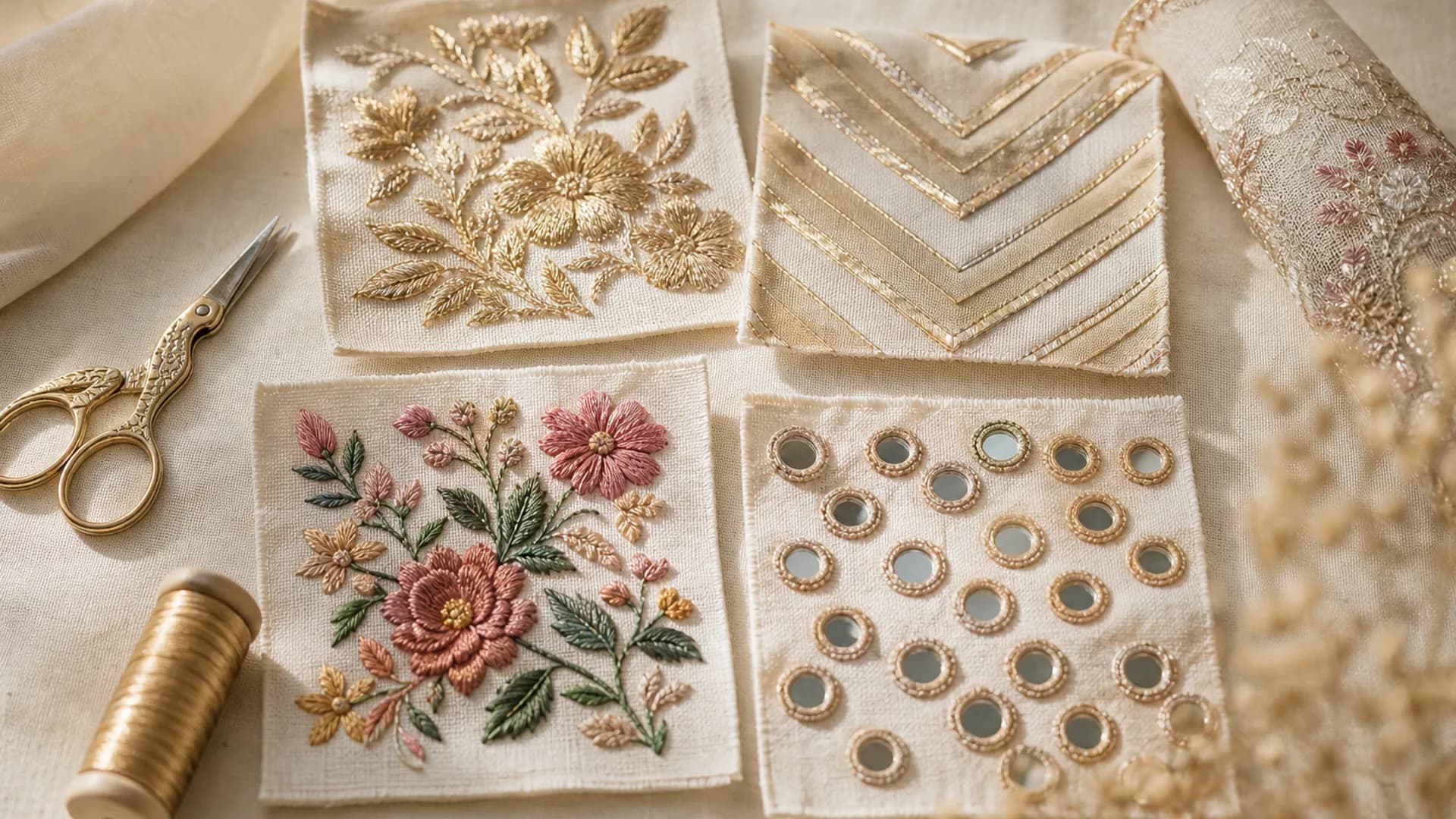
Zari, Gota, Resham: Embroidery Types Explained
Every formal suit is described with a list of embroidery names, and almost nobody knows what they mean. Here is what each one is, and how it behaves.