

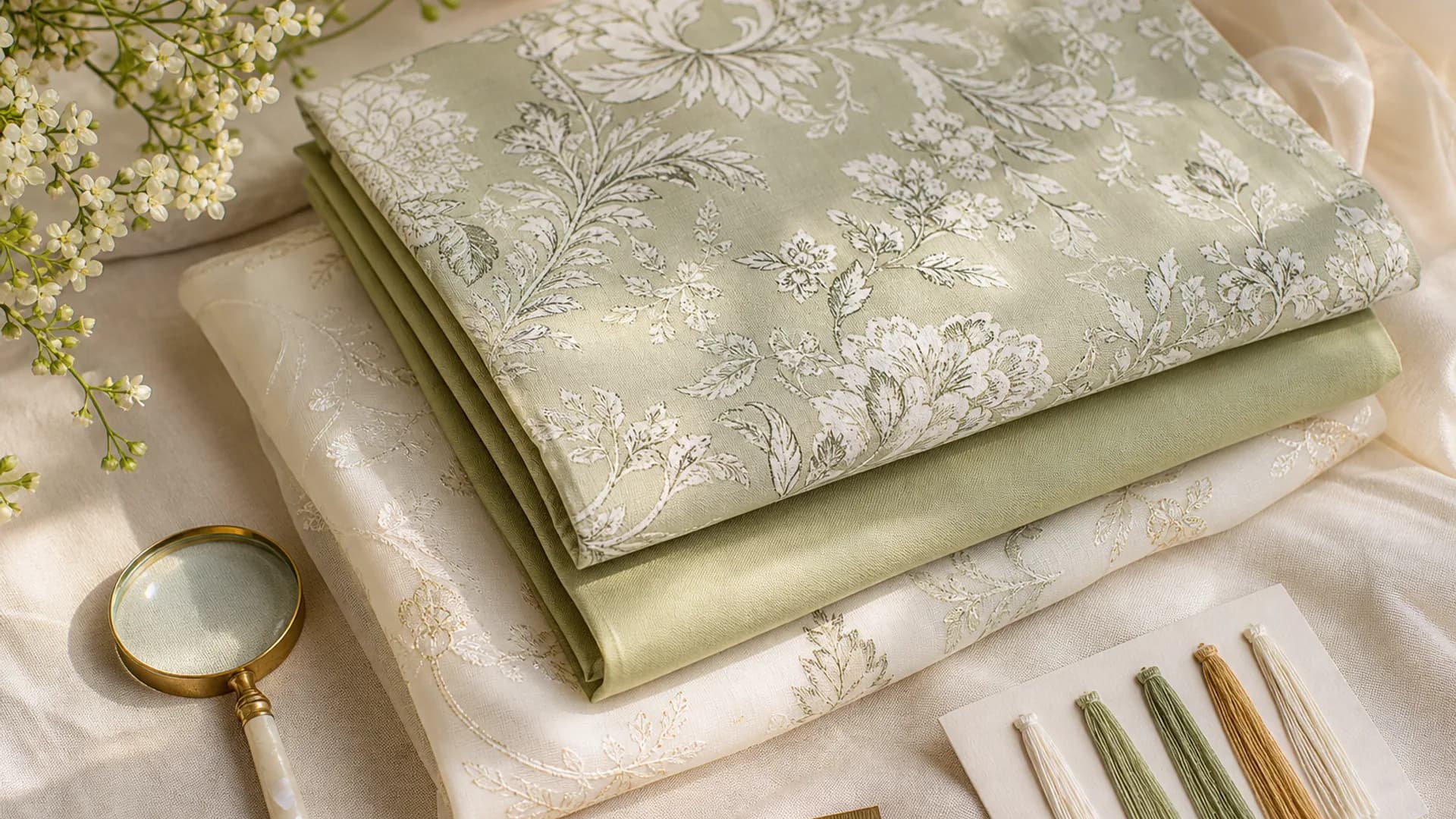
Lawn Season: How to Buy Lawn Actually Well
Lawn season is the one shopping event the whole country takes part in, and most of it is bought in a rush on a phone. Here is how to judge what you are buying.
Lawn season is the only shopping event in Pakistan that the entire country takes part in at once. Collections launch, websites fall over, queues form outside stores, and a great deal of money changes hands in a few weeks. It is also almost entirely bought in a rush, on a phone, from a photograph — which means most people have very little idea what they are actually paying for. Two suits that look identical online can differ substantially in the weight of the fabric, the quality of the print, the amount of shrinkage in the first wash, and whether the dupatta is chiffon or polyester pretending to be. None of that is visible in a product image. But most of it is checkable, and a few minutes of knowing what to look for changes what you get for the same money.
What Lawn Actually Is
Lawn is a plain-weave cotton fabric, woven fine and light, with a high thread count and a smooth finish. It is not a brand or a style — it is a specific construction. What makes it suit Pakistan so well is the combination of light weight and breathability. It moves air, it takes bright prints cleanly, and it washes repeatedly without falling apart. In forty-degree heat there is nothing better. **Pure lawn is cotton.** If a label says lawn and lists polyester in the composition, it is a blend, and it will be noticeably hotter to wear. Blends are cheaper and hold prints slightly more vividly, which is why they exist. **Weight varies considerably.** A fine summer lawn is very light and slightly sheer; a heavier lawn is more opaque and holds structure better. Neither is wrong, but they suit different things — the fine one for a loose kurta, the heavier for something more structured. Our [fabric glossary](/content/fabric-glossary) covers the neighbouring fabrics — cambric, voile, khaddar — that get confused with it.
How to Judge Quality
Five checks, all of them quick. **Hold it up to the light.** Good lawn shows an even, regular weave. Poor lawn shows visible thin patches and irregular gaps. This is the single fastest quality check. **Rub it between your fingers.** Good lawn feels cool, smooth and slightly dense. A cheap blend feels papery or slightly slick. **Look at the print edges.** Sharp, clean boundaries between colours mean good printing. Fuzzy, bleeding edges mean the dye has spread, and it will spread further in the first wash. **Check the print on the reverse.** On good quality, the print penetrates and is faintly visible from the back. On poor quality it sits entirely on the surface and will fade quickly. **Scrunch and release.** Good lawn creases softly and relaxes. A stiff, heavily finished lawn springs back — that finish is starch and it washes out, leaving a limper fabric than the one you handled in the shop. That last one catches the most people. A great deal of inexpensive lawn feels substantial in the shop because of a chemical finish that disappears in the first wash.
Why the Same Design Costs Three Prices
You will see very similar designs at very different prices, and the difference is real even when the photograph is not. **Base fabric weight and quality.** The single biggest cost driver and the least visible online. **Print method.** Digital printing gives sharp detail and unlimited colours but sits lighter on the fabric. Rotary screen printing penetrates better and lasts longer but has fewer colours. Block printing is hand-done and costs accordingly. **Number of colours.** Each additional colour in a screen print is a separate pass and a separate cost. **Embroidery.** Whether it is machine-run on a panel or hand-finished changes the price substantially. Our post on [embroidery types](/journal/embroidery-types-explained-zari-gota-resham) covers telling them apart. **What the dupatta actually is.** This is where corners are cut most often. A "chiffon dupatta" in an inexpensive suit is usually polyester chiffon, which is hot and has a glassy shine. Our guide on [dupatta fabrics](/journal/dupatta-fabric-guide-chiffon-organza-net-silk) covers the difference. **Design origination.** An original print costs the brand money. A copied one does not, which is why the copies appear within weeks and cost a third.
Two-Piece, Three-Piece and What You Get
The counting confuses first-time buyers, and the difference is money. **Two-piece:** shirt fabric and trouser fabric. No dupatta. Cheaper, and sensible if you already own dupattas or intend to buy one separately. **Three-piece:** shirt, trouser and dupatta. The standard. **Check the shirt length included.** This is where suits differ most and where people get caught. Around 2.5 metres is standard for a straight shirt; a longer or fuller cut needs 3 metres or more. A suit sold with 2.25 metres will not make the kameez shown in the photograph. **Check the trouser length.** Around 2.5 metres for a straight trouser. A palazzo or sharara needs considerably more — sometimes double. **Check the dupatta size.** Around 2.5 metres long. Anything under 2.25 is short and hard to drape. Ask for these numbers before ordering. Sellers rarely list them and always know them. If you are having it stitched, your tailor will ask you for exactly these figures. Our post on [what to check when buying unstitched online](/journal/5-things-check-buying-unstitched-suit-online-pakistan) covers the wider list.
Shrinkage and the First Wash
Lawn is cotton, and cotton shrinks. This is the most common and most avoidable disappointment in the whole process. **Expect three to five percent shrinkage** on unstitched lawn in the first wash. On a 2.5 metre shirt length that is roughly ten centimetres — enough to turn a planned length into a shorter one. **Wash before stitching.** This is the single most useful habit and almost nobody does it. Wash the fabric, dry it, then take it to the tailor. The shrinkage happens before the garment is cut rather than after it is made. **Wash cold, separately, first time.** Deep colours bleed, particularly reds, maroons and dark blues on ivory grounds. A dark dupatta washed with a pale shirt is how a suit gets ruined once. **Do not soak.** Extended soaking is what causes bleeding more than washing does. **Dry in shade.** Direct Pakistani sun fades printed lawn dramatically, and the fade is uneven along the fold. If you are buying ready-stitched instead, this is one of the real advantages — the shrinkage question has been handled for you. Our post on [unstitched versus ready-to-wear](/journal/unstitched-vs-ready-to-wear-suits-pakistan) covers the wider trade-off.
Buying in the Launch Rush
Lawn launches are deliberately engineered scarcity events, and knowing that helps. **Decide before the launch, not during it.** Look at the catalogue when it is published, pick two or three designs, and know your second choice. Deciding while a site is crashing produces purchases you regret. **Check the composition and lengths on the listing.** In a rush this is the first thing skipped and the thing that matters most. **Do not buy in a colour you never wear** because it is the one still in stock. This is the single most common lawn-season regret and it is how cupboards fill with unstitched fabric that never reaches a tailor. Our guide to [colours for Pakistani skin tones](/journal/best-colours-for-pakistani-skin-tones) is worth reading before the launch rather than after. **Restocks happen.** The sold-out design you wanted frequently returns, and end-of-season sales are substantial. Very little is genuinely once-only. **Count what you already own.** Most households have unstitched lawn from previous seasons sitting unstitched. Getting two of those made up costs less than buying two more.
Getting It Stitched
The fabric is half the purchase. The stitching decides whether you wear it. **Take a garment you like to the tailor** rather than describing what you want. It removes all ambiguity and takes two minutes. **Book early.** Tailors are overwhelmed for weeks after every launch and before both Eids, and a rushed job is a badly finished one. **Give clear numbers.** Shirt length, sleeve length, trouser length and neckline depth in inches. Our post on [the five alterations that matter](/journal/five-alterations-make-any-suit-fit) covers which measurements decide fit. **Ask for a deep hem allowance**, so the length can be adjusted later. **Ask what will be left over.** Spare fabric is genuinely useful — for a matching mask, a hair tie, a patch, or lengthening later. Ask for it back rather than leaving it. **Consider having the neckline cut conservative.** Deepening later is easy, raising is not. If the whole process sounds like more effort than it is worth, that is a legitimate conclusion — ready-stitched exists for exactly that reason, and our [stitched suits](/ladies/stitched-suits) and the wider [ladies collection](/ladies) skip all of it.
Frequently Asked Questions
Hold it to the light — good lawn has an even regular weave with no thin patches. Check the print edges are sharp rather than bleeding, and look at the reverse: on good fabric the print penetrates and is faintly visible from behind. Be wary of a stiff finish, which is starch and washes out.
Yes, and almost nobody does. Lawn shrinks three to five percent in the first wash — around ten centimetres on a shirt length — so washing before cutting means the shrinkage happens before the garment is made rather than after. Wash cold and separately, because dark colours bleed.
Typically around 2.5 metres for the shirt, 2.5 for the trouser and 2.5 for the dupatta, but it varies and sellers rarely list it. A longer or fuller kameez needs 3 metres or more, and a palazzo or sharara needs considerably more than a straight trouser. Ask before ordering.
Base fabric weight, print method, number of colours, whether embroidery is machine-run or hand-finished, and what the dupatta actually is — an inexpensive suit's 'chiffon' dupatta is usually polyester. Original prints also cost the brand money in a way that copies do not.
Unstitched gives you a fit made to your measurements and usually costs less, but adds shrinkage, a tailor booking and a wait. Ready-stitched removes all of that and the shrinkage has been handled. If your cupboard already holds unstitched fabric from past seasons, that is your answer.
About the Author
Habiba Minhas
Founder and creative director of Habiba Minhas, Pakistan's leading handcrafted fashion brand based in Karachi. With a passion for preserving traditional Pakistani craftsmanship while embracing modern design, she has built a brand serving over 5,000 customers nationwide.
Specializing in premium ladies suits, kids festive wear, and baby products, Habiba works directly with artisan embroiderers and skilled tailors to create pieces that honor Pakistani heritage.
Related Articles
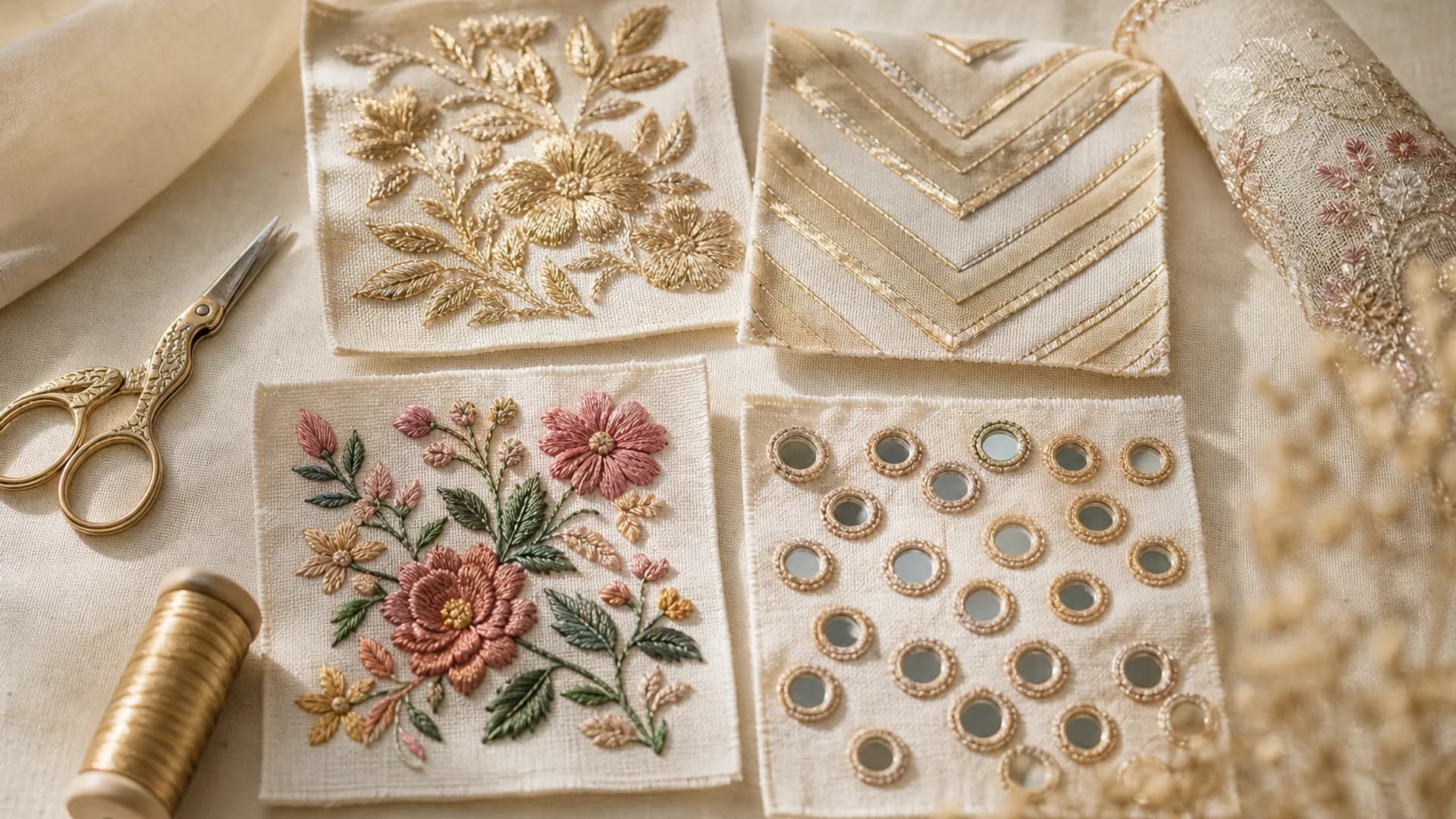
Zari, Gota, Resham: Embroidery Types Explained
Every formal suit is described with a list of embroidery names, and almost nobody knows what they mean. Here is what each one is, and how it behaves.
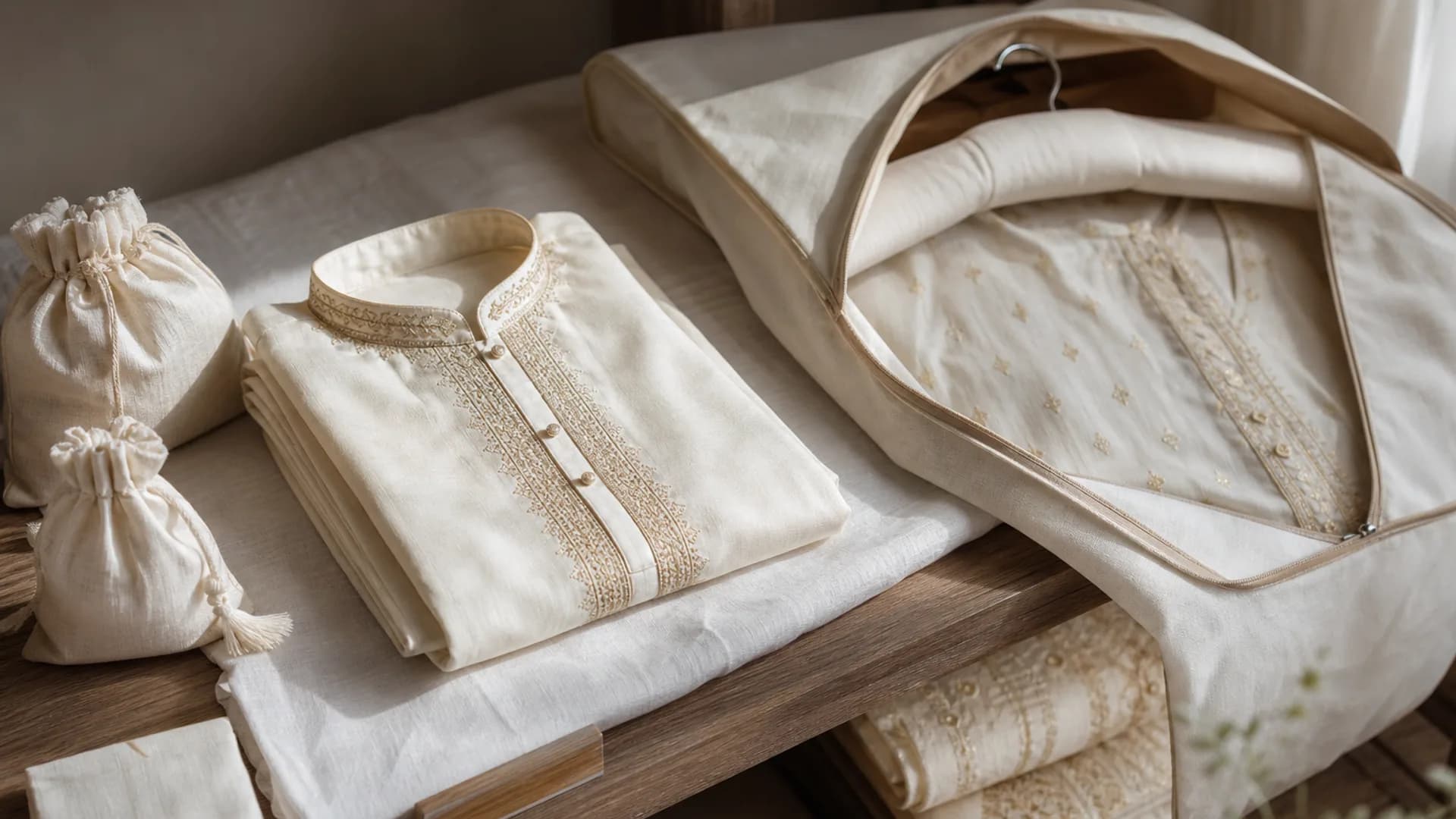
How to Store Formal Suits So They Last Years
A formal suit spends most of its life in a cupboard, and that is where most of them are ruined — not by wearing but by waiting.
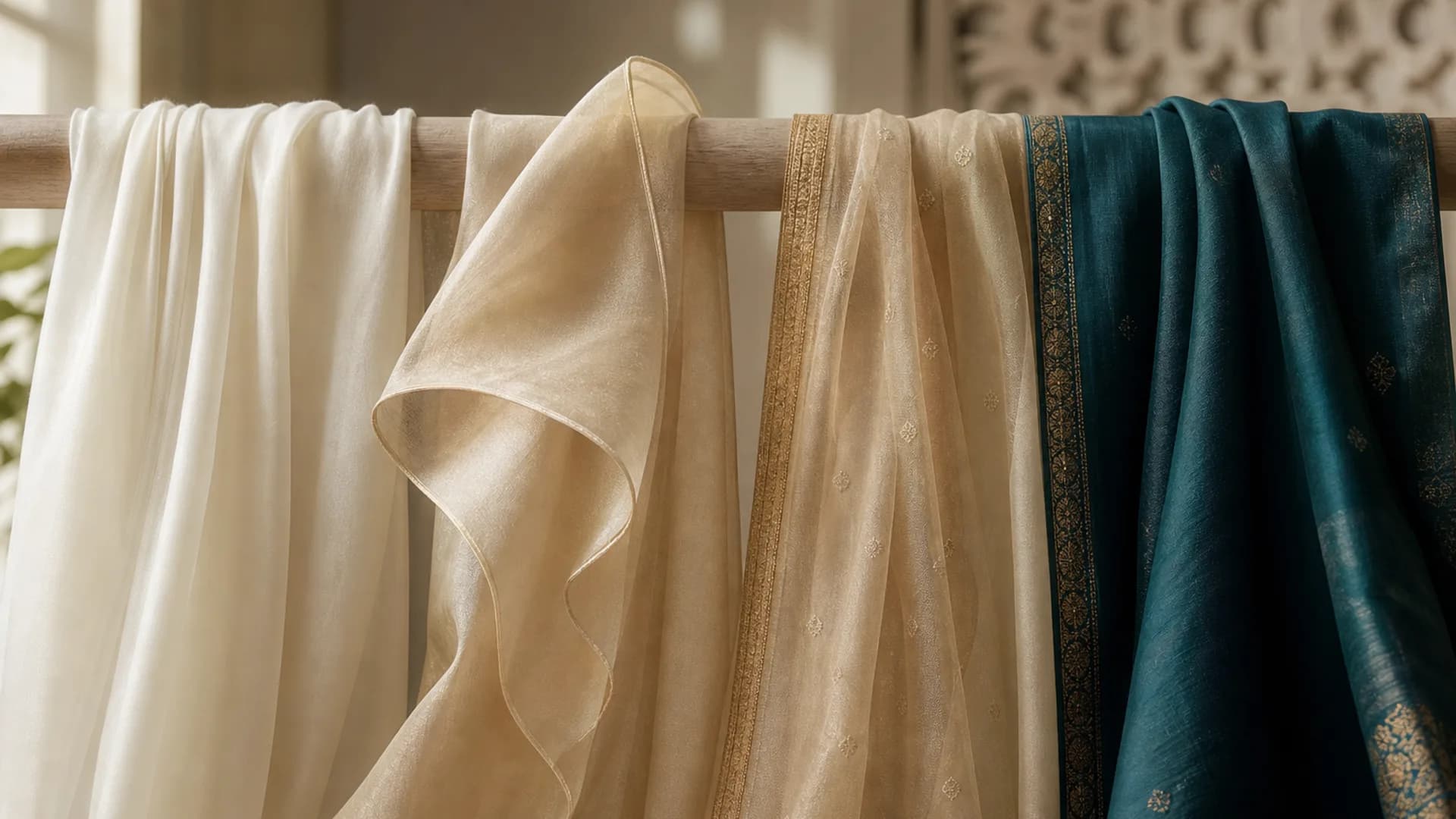
Dupatta Fabrics: Chiffon, Organza, Net or Silk
The dupatta is a third of the outfit and usually the last thing anyone thinks about. The fabric decides whether it drapes, stands up, or slides off all evening.