

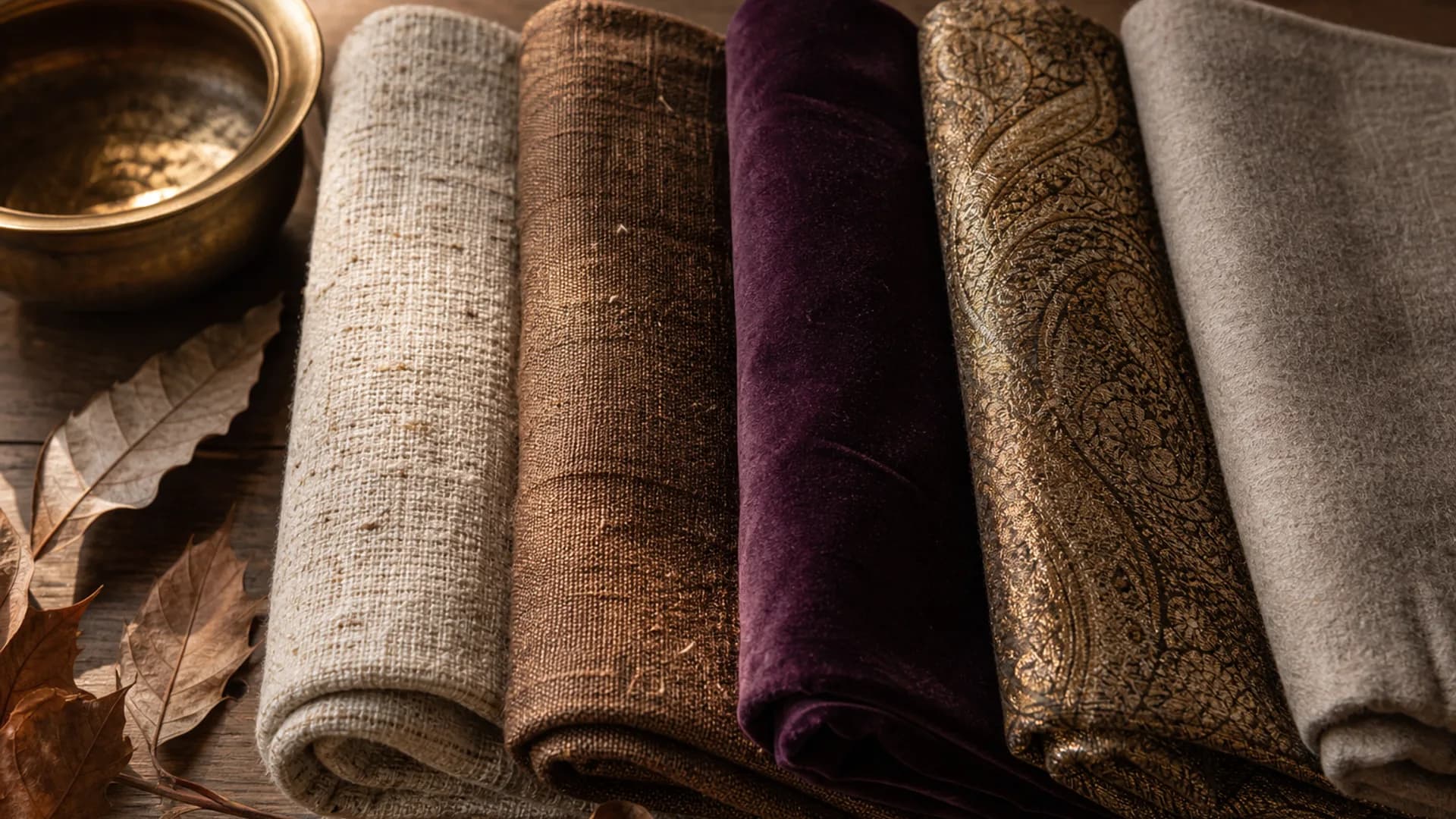
Winter Fabrics: Khaddar, Karandi, Velvet and More
Pakistani winter fabrics are sold by name and almost never explained. Here is what each one is, how warm it really is, and where it belongs.
Pakistani winter fabrics are sold entirely by name. Khaddar, karandi, jamawar, linen, marina, pashmina — the words appear on every label from October onward, and almost nobody explains what they mean. The result is a lot of buying by association: khaddar sounds warm, velvet looks formal, linen sounds expensive. Some of those associations are right and some are not. Linen, for instance, is a summer fabric that gets sold as winter wear in Pakistan because a heavier weave of it exists. Winter in Pakistan is also not one climate. Lahore in January and Karachi in January are entirely different problems, and the north is different again. This is what each fabric actually is, how warm it genuinely is, and where each one belongs.
Khaddar: The Everyday Winter Fabric
Khaddar is a coarse, handwoven or handloom-style cotton, woven thicker and looser than lawn. The name comes from khadi — the hand-spun cloth tradition — though most commercial khaddar today is mill-woven in the same style. **How warm:** moderately. It is considerably warmer than lawn because of the thickness and the trapped air in the weave, but it is still cotton and it will not carry you through a Murree January on its own. **How it feels:** slightly textured and matte, softening considerably with washing. New khaddar can feel rough; after three washes it is one of the most comfortable fabrics there is. **Where it belongs:** everyday winter wear, office wear, semi-formal functions, and Ramadan when it falls in the cold months. It is the workhorse of a Pakistani winter wardrobe. **What to check:** weight varies enormously between brands under the same name. Ask for the weight or feel it — a light khaddar is barely warmer than lawn. **Care:** it shrinks noticeably on the first wash, more than lawn does. Wash before stitching. Our [lawn buying guide](/journal/how-to-buy-lawn-well-pakistan-guide) covers the shrinkage question, which applies here more strongly.
Karandi and Marina
**Karandi** is a blended fabric — usually cotton with wool or a synthetic — woven with a characteristic slubbed, slightly irregular texture. It is warmer than khaddar and has more body. **How it looks:** matte with visible texture, and it takes muted, heathered colours particularly well. It has become the fashionable winter fabric of recent years for exactly that reason. **Where it belongs:** everyday and semi-formal winter wear, and it is warmer than khaddar without being formal. **Check the composition.** Karandi ranges from mostly wool to almost entirely polyester, and the price often does not tell you which. A polyester-heavy karandi is warm but does not breathe, which makes it uncomfortable indoors. **Marina** is a soft wool-blend jersey-like fabric, warm and stretchy, used for winter shirts and kurtas. It is the most comfortable of the winter everyday fabrics and the least formal. **Wool-blend suiting fabrics** sit alongside these and are worth considering for office wear — warm, structured and they hold a clean line.
Velvet: The Formal Winter Fabric
Velvet is a pile fabric — short dense fibres standing up from a woven backing — and it is the winter formal fabric in Pakistani wear. **How warm:** very. The pile traps a great deal of air, and a velvet outfit is warmer than almost anything else formal. **How it looks:** exceptional in low light. Velvet absorbs light in the pile and reflects along the nap, so it has visible depth even in a dark marquee. This is why it photographs so well at winter weddings. **Where it belongs:** barat, walima, formal winter functions and evening events. Too warm and too formal for daytime or indoor gatherings. **Silk velvet versus synthetic velvet** is a large difference. Silk velvet drapes and has a deep shifting lustre; polyester velvet is stiffer with a flatter, harder shine, and it does not breathe at all. **Care:** velvet crushes, and crush marks in the pile are difficult to remove. Hang it, never fold it, and never iron it directly — steam it from the reverse. Our [storage guide](/journal/how-to-store-formal-suits-pakistan) covers the method. **Practical note:** velvet is heavy. A fully worked velvet outfit across a five-hour function is genuinely tiring.
Jamawar, Brocade and Woven Fabrics
These are fabrics where the pattern is woven in rather than printed or embroidered on, and they carry warmth as a side effect of their construction. **Jamawar** is a richly woven fabric, traditionally with intricate paisley and floral patterns worked into the weave. Historically Kashmiri and made of fine wool; today usually silk, cotton or a blend. **Brocade** is woven with supplementary threads — often metallic — creating a raised pattern. Our post on [gold brocade](/journal/gold-brocade-fabric-what-it-is-how-to-style) covers styling it. **Banarsi** describes the weaving tradition rather than the fibre, and today it is woven in silk, viscose and polyester alike, so the name alone tells you nothing about what you are buying. **How warm:** moderately to very, depending on the weight. The dense weave blocks wind well. **Where they belong:** formal winter functions, and they are the sophisticated alternative to embroidery — texture instead of applied decoration. **The advantage:** a woven fabric needs no embellishment, which means no scratchy embroidery backing, no weight on the shoulders and nothing to catch on a dupatta. Comfortable and formal simultaneously, which is rare.
Shawls and Outer Layers
The layer that does the actual warming, and where quality shows most. **Pashmina** is fine cashmere wool from Himalayan goats. Genuinely warm for its weight, extremely soft, and expensive. Most of what is sold as pashmina is a viscose or acrylic blend — the real test is warmth relative to weight, and a genuine pashmina is remarkably warm while being almost weightless. **Wool shawls** are heavier, warmer per rupee, and more practical for everyday. **Kashmiri shawls** with sozni embroidery are the formal end and are heirloom purchases. **Acrylic and viscose shawls** are warm enough for a mild winter and considerably cheaper. They pill, and they do not breathe. **What to look for:** drape and weight together. A good shawl should be light in the hand and warm on the shoulders. If it is heavy and only moderately warm, it is doing the job inefficiently. **Size matters.** A generous shawl you can wrap properly is warmer and looks more intentional than a narrow one. Our [winter wedding guide](/journal/winter-wedding-guest-outfit-guide-pakistan) covers wearing one over formal wear without fighting the dupatta.
Which Winter, Though
Pakistan's winter varies enormously and the right fabric depends on where you are. **Karachi.** Mild, with cool evenings and coastal humidity. Khaddar and light karandi are enough for most of the season. Velvet is genuinely too warm except for a late outdoor function. A light shawl covers the evenings. **Lahore and Faisalabad.** Properly cold from December to February, with dense fog. Karandi, wool blends, velvet for formals, and a real shawl. This is where the full winter wardrobe is needed. **Islamabad and Rawalpindi.** Colder still, and wetter. Everything Lahore needs plus proper outer layers. **Peshawar and the north.** Cold enough that fabric alone is not the answer — layering and outerwear matter more than what the kameez is made of. **Quetta and the highlands.** Genuinely severe. Wool and layers. The practical implication for buying online: **a brand's "winter collection" is usually designed for Punjab.** If you are in Karachi it may be too warm, and if you are in Quetta it is not enough. Our [seasonal fabric guide](/journal/summer-vs-winter-fabric-guide-pakistani-women) covers the year in full.
Buying and Caring for Winter Fabric
**Ask for the composition, as a percentage.** Karandi, marina and pashmina all cover a wide range of blends, and the name tells you nothing. **Ask for the weight** where you can. It is the number that predicts warmth better than the fabric name. **Feel it if possible.** Warmth correlates with thickness and loft, both of which you can judge by hand in a few seconds. **Expect shrinkage on khaddar and cotton blends** — more than lawn. Wash before stitching. **Wool and wool blends should be dry cleaned or hand washed cold.** Machine washing felts them, which is irreversible. **Velvet is hung, never folded**, and steamed rather than ironed. **Store everything clean.** Wool attracts moths, and moths are attracted to the residue on worn clothing rather than to clean fabric. Our [storage guide](/journal/how-to-store-formal-suits-pakistan) covers the method in full. **Air winter clothes before putting them away in spring**, and again before bringing them out in autumn. You can see the fabrics we work with across the [ladies collection](/ladies), and the [fabric glossary](/content/fabric-glossary) covers the terms you will meet on labels.
Frequently Asked Questions
Khaddar is a coarse thick cotton woven looser than lawn — moderately warm and very comfortable once washed. Karandi is a blend, usually cotton with wool or synthetic, with a slubbed texture and more body. Karandi is warmer; khaddar breathes better and softens more with washing.
Velvet, followed by wool blends, jamawar and brocade. Velvet's pile traps a great deal of air, which is why it is the winter formal standard. For everyday wear, karandi and marina are warmer than khaddar, which is warmer than lawn.
Moderately to very, depending on the weight. Its warmth comes from the dense weave, which also blocks wind well. Its real advantage is that the pattern is woven in rather than embroidered on, so there is no scratchy backing, no shoulder weight and nothing to snag a dupatta.
Judge warmth relative to weight — a genuine pashmina is remarkably warm while being almost weightless. Most shawls sold as pashmina are viscose or acrylic blends, which are heavier for the same warmth, pill over time and do not breathe.
Khaddar and cotton blends shrink noticeably on the first wash, more than lawn does, so wash before stitching. Wool and wool blends should be dry cleaned or hand washed cold — machine washing felts them, which cannot be reversed.
About the Author
Habiba Minhas
Founder and creative director of Habiba Minhas, Pakistan's leading handcrafted fashion brand based in Karachi. With a passion for preserving traditional Pakistani craftsmanship while embracing modern design, she has built a brand serving over 5,000 customers nationwide.
Specializing in premium ladies suits, kids festive wear, and baby products, Habiba works directly with artisan embroiderers and skilled tailors to create pieces that honor Pakistani heritage.
Related Articles
Lawn Season: How to Buy Lawn Actually Well
Lawn season is the one shopping event the whole country takes part in, and most of it is bought in a rush on a phone. Here is how to judge what you are buying.
Zari, Gota, Resham: Embroidery Types Explained
Every formal suit is described with a list of embroidery names, and almost nobody knows what they mean. Here is what each one is, and how it behaves.
How to Store Formal Suits So They Last Years
A formal suit spends most of its life in a cupboard, and that is where most of them are ruined — not by wearing but by waiting.