
Gifting Clothes: How to Buy for Someone Else
Clothes are the default gift in Pakistani households and the one most often quietly put away. A few rules make the difference.
Clothes are the default gift in Pakistani households. Eid, weddings, births, a visit from abroad, a daughter-in-law arriving — the answer is usually fabric or an outfit. It is also the gift most often quietly put in a cupboard and never worn, and everyone knows this even though nobody says it. The size is wrong, the colour is not one she wears, the style is not hers, or it is simply not to her taste and she cannot say so without causing offence. The difficulty is real: you are choosing something intimate for someone whose measurements you do not know and whose taste you may be guessing at. But there are choices that fail far less often than others, and knowing which they are turns a risky gift into a safe one.
The Safest Choice: Unstitched Fabric
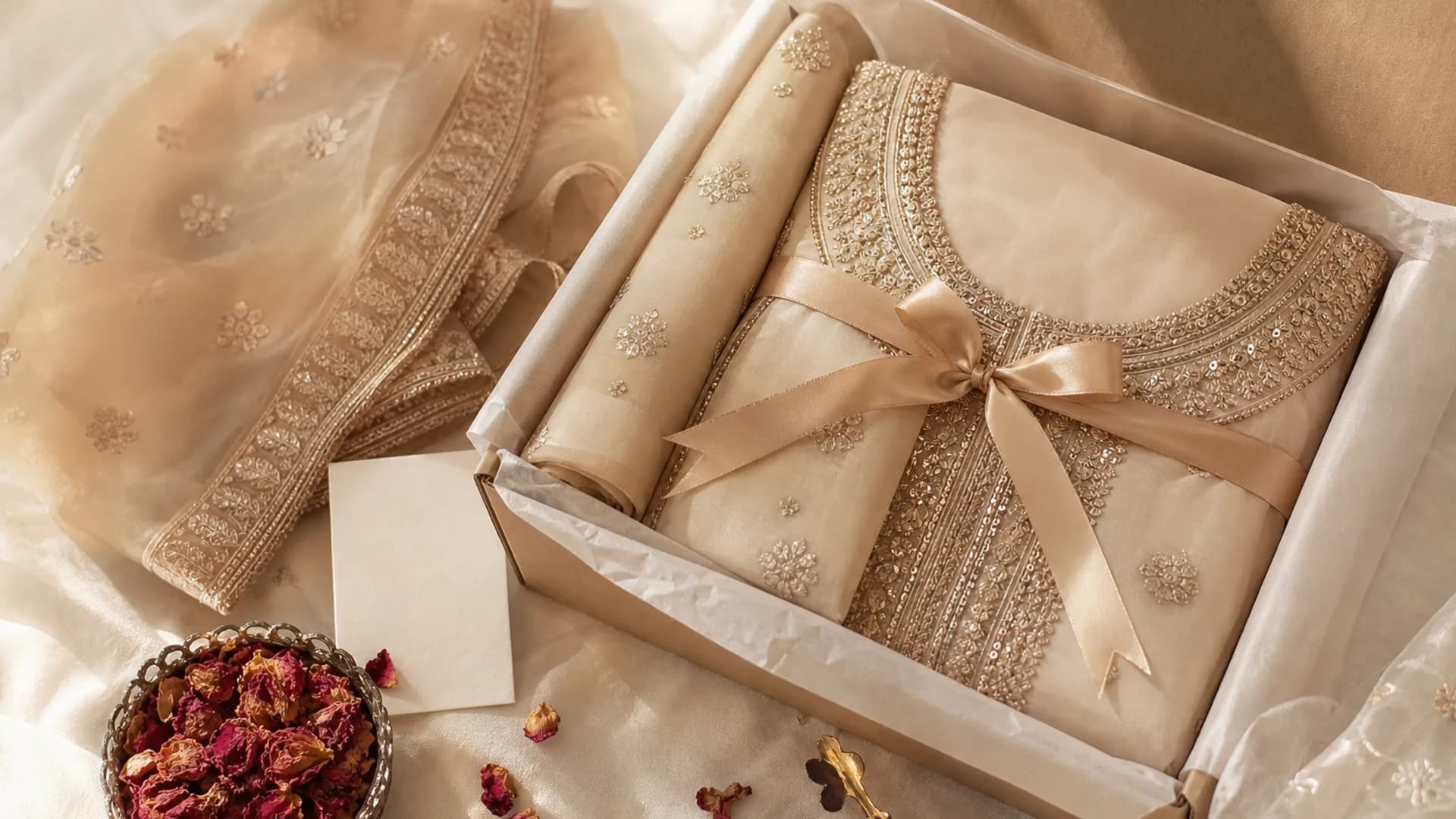
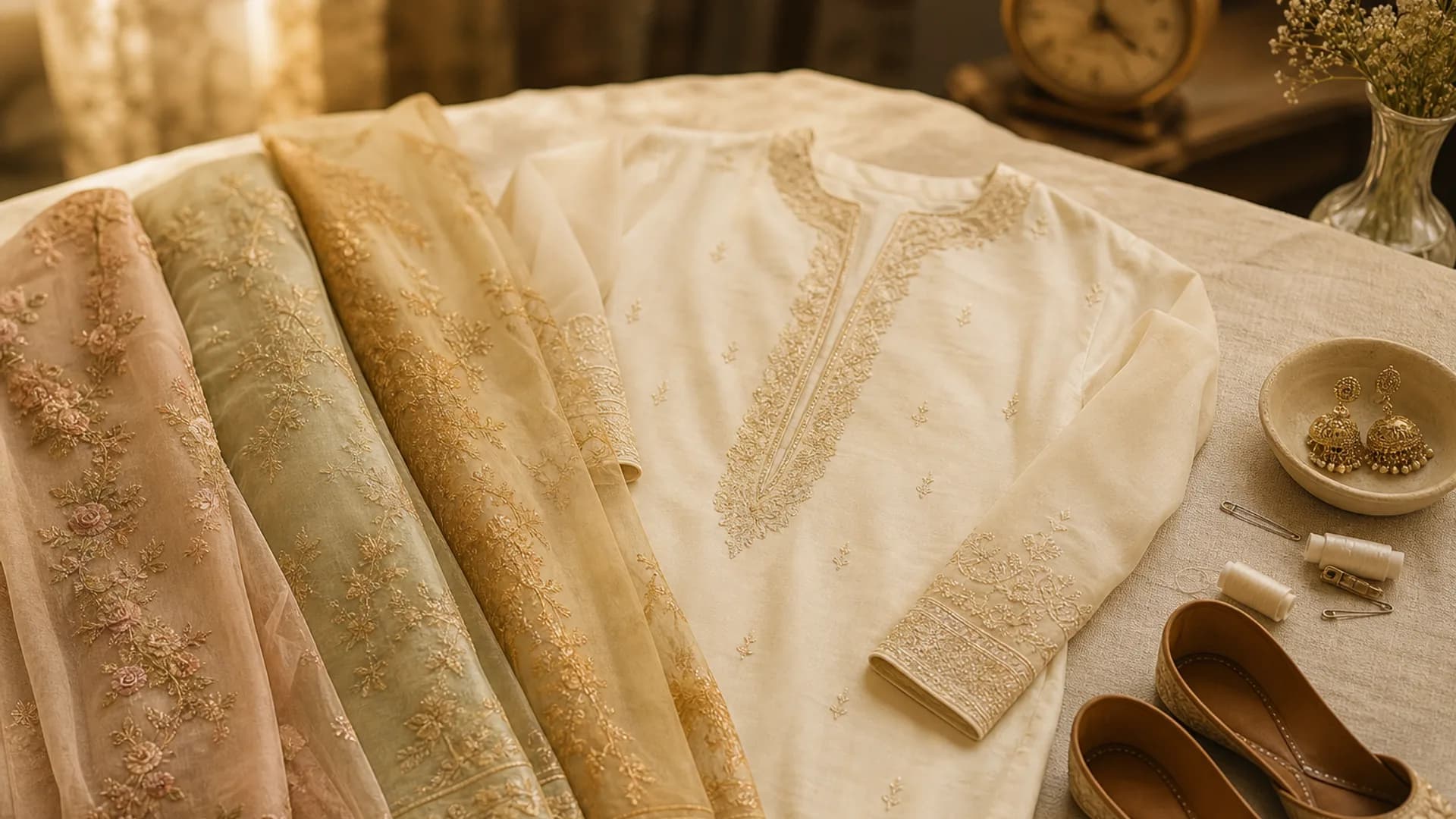
There is a reason unstitched fabric is the traditional gift, and it is not laziness. **It removes the sizing problem entirely.** She has it made to her own measurements, so it fits by definition. **It removes the style problem.** She chooses the cut, the neckline, the sleeve — all the things that are personal and that you would be guessing at. **It is a recognised and respected gift** rather than a fallback. Nobody reads unstitched fabric as an absence of effort. **It travels and stores well**, which matters if you are bringing something from abroad. What you are still choosing is the fabric quality and the colour, and those are the two things to get right. A good fabric in a colour she wears is a genuinely excellent gift. The one caveat: someone who does not have a reliable tailor, or who lives somewhere a tailor is hard to find, may find unstitched more burden than gift. For anyone abroad, ready-stitched is usually kinder — our post on [buying from abroad](/journal/buying-pakistani-clothes-from-abroad-guide) covers why.
Colour: The Decision That Decides It
More gifts fail on colour than on anything else, and it is entirely avoidable. **Look at what she actually wears.** Not what you like, and not what is fashionable. Everybody has a range they return to, and it is visible in five minutes of paying attention or one scroll through photographs. **Safe across almost everyone:** ivory, champagne, dusty rose, sage, powder blue, stone, and soft teal. These are the shades that suit the widest range of skin tones and taste. **Riskier:** bright yellow, orange, neon anything, and mustard — all strongly loved or strongly disliked with little in between. **Black** is safe for some and avoided by others, and it carries associations in some families. Ask if you are unsure. **Red** is loaded at weddings and fine otherwise. **Consider her age and stage**, lightly. A twenty-year-old and a sixty-year-old are likely to want different depths of colour — though our post on [dressing in your forties and fifties](/journal/formal-dressing-in-your-forties-fifties) makes the case that this is far less rigid than people assume. Our guide to [colours for Pakistani skin tones](/journal/best-colours-for-pakistani-skin-tones) covers what genuinely suits whom.
If You Must Buy Stitched
Sometimes ready-made is the right choice — for a child, for someone abroad, or when the occasion is immediate. **Get her measurements rather than her size.** A five-minute phone call and a tape measure removes the entire problem. Sizing across Pakistani brands is genuinely inconsistent, so a size label tells you very little. **If you cannot ask, ask someone who knows** — her sister, her mother, her friend. This is a normal thing to do and nobody minds. **Buy generous rather than exact.** Taking in is easy; letting out is limited by the seam allowance. A slightly loose gift can be altered; a tight one cannot. **Choose a forgiving cut.** An A-line kameez, a loose kurta, anything without a fitted waist. Avoid fitted bodices, churidars and anything structured. **Keep the receipt and check the exchange policy.** Then tell her she can exchange it — this removes the awkwardness for both of you and is a kindness rather than an admission of doubt. Our [returns page](/help/returns) covers how ours works. Our [size guide](/content/size-guide) shows how our measurements are taken, so they can be compared against something she already owns.
What to Give for Which Occasion
**Eid.** Unstitched fabric or a good ready-made outfit. Given before Eid, not on the day — she needs time to have it stitched. Ideally two weeks ahead at minimum. Our post on [last-minute Eid shopping](/journal/last-minute-eid-shopping-chand-raat) explains why the timing matters so much. **A wedding gift to the couple.** Money is the norm in most families and is rarely wrong. Clothes as a wedding gift are usually from close family rather than general guests. **A new bride joining the family.** Traditionally a substantial gift, often formal fabric or jewellery. Ask what the family convention is rather than guessing — this one carries weight. **A new baby.** Practical rather than decorative is genuinely more welcome — muslins, cotton bodysuits, bedding. The mother has been given six decorative outfits already. Our [nursery checklist](/journal/nursery-setup-checklist-pakistani-homes) covers what is actually used, and the [baby collection](/baby) has the practical pieces. **A visit from abroad.** Something not easily available where she is, or the reverse — something Pakistani for family abroad. **A thank-you or a small occasion.** A dupatta, a shawl, or an accessory. Lower stakes and no sizing at all.
The Low-Risk Alternatives
If you are genuinely unsure, these fail far less often than a full outfit. **A dupatta.** No sizing, immediately useful, and it transforms outfits she already owns. One of the best clothing gifts there is and consistently underrated. Our [dupatta fabric guide](/journal/dupatta-fabric-guide-chiffon-organza-net-silk) covers choosing one. **A good shawl.** No sizing, useful for months of the year, and quality is immediately visible. **Accessories.** Earrings, bangles, hair pieces. Personal without being intimate, and no fit to get wrong. The [accessories collection](/accessories) covers this. **Fabric she chooses herself.** Going shopping together is a gift in itself, and for a mother-in-law or an older relative it is often more appreciated than the object. **A gift card or a voucher**, where it is culturally comfortable. In some families this reads as impersonal; in others it is welcomed as practical. Judge the family. **What to avoid:** anything requiring a precise fit, anything in a colour you have never seen her wear, and anything strongly fashion-led that will date.
Quality Over Quantity
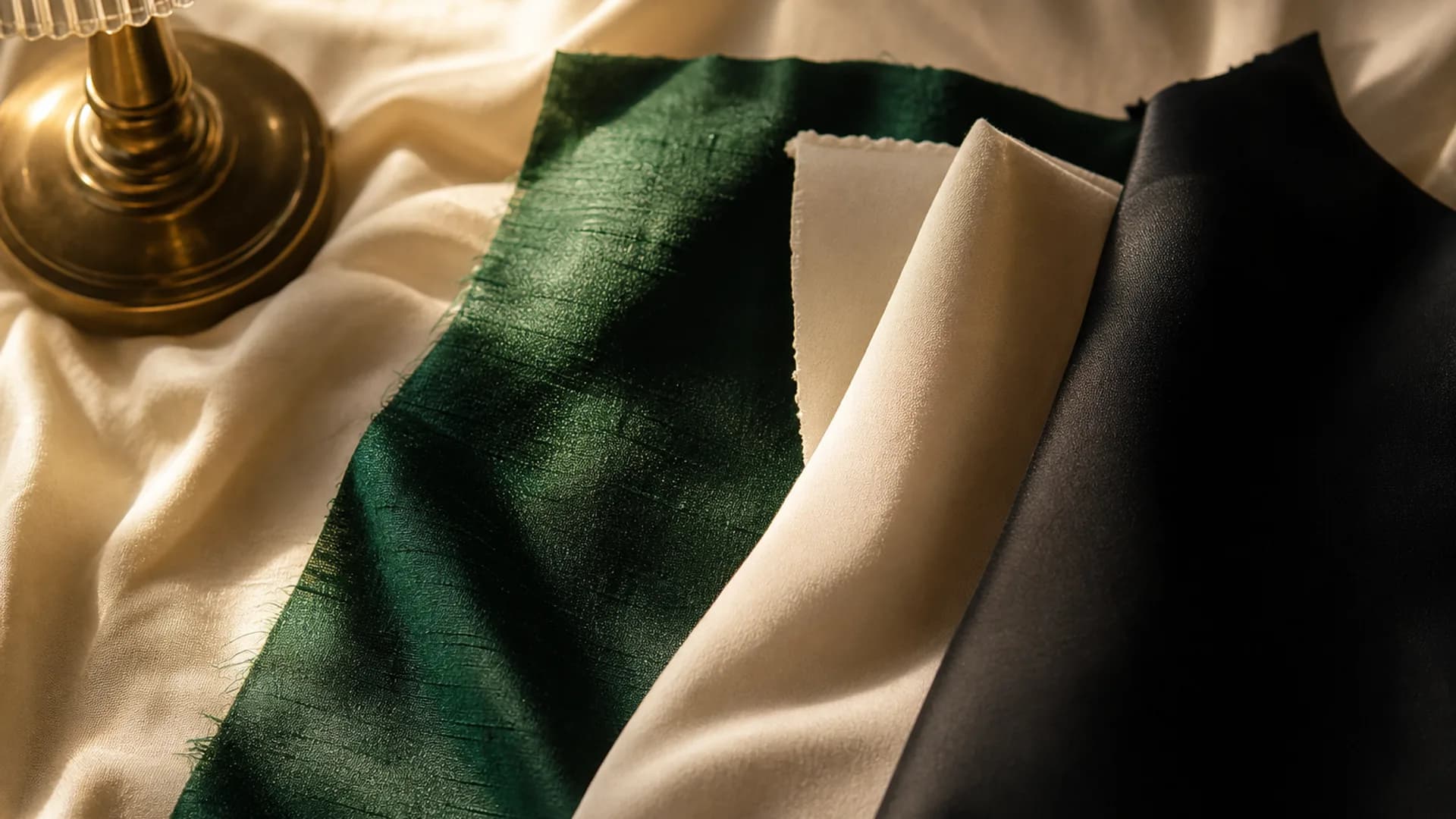
One good piece is a better gift than three ordinary ones, and this is more true for clothing than for almost anything else. **Fabric quality is immediately visible** to anyone who handles Pakistani clothing, which is everyone you are likely to be gifting. A genuine silk and a polyester pretending to be silk are distinguishable in about three seconds by touch. **Spend on the fabric, not the embellishment.** Heavy work dates quickly and is instantly recognisable; a good plain silk is not, and it is far more likely to be worn. Our post on [telling real silk from fake](/journal/how-to-tell-real-silk-from-fake-pakistan) covers the checks. **Avoid heavily fashion-led pieces.** A trend silhouette dates within two years, and a gift that dates is a gift that is worn once. **Check the finishing** — turn the piece inside out. Neat seams and a proper facing signal quality more reliably than a label does. Our post on [spotting a copy](/journal/original-vs-copy-designer-suit-how-to-tell) covers what to look for. **Presentation matters more than it should.** The same suit in tissue in a box reads as considerably more thoughtful than the same suit in a shop bag.
The Etiquette
A few things that are worth knowing and rarely said. **Give clothes before an occasion, not on the day.** She may want to have them stitched, or may want to wear something else and would rather not choose in front of you. **Do not expect it to be worn immediately**, or ask whether it has been. **Remove the price.** Obvious, and frequently forgotten on a tag inside a collar. **Say it can be exchanged**, lightly and once. It is a kindness and it removes an awkwardness she would otherwise carry. **Do not gift something you would like for yourself** unless you know she shares your taste. This is the most common failure mode and the hardest to see in yourself. **Do not comment on size.** Not when giving, not afterwards. **For an older relative, ask.** Directly, or through someone. Guessing at the taste of someone a generation older is where most well-meant gifts go wrong, and asking is not a failure of imagination — it is how you get it right. You can see the range across the [ladies collection](/ladies) and the [3-piece suits](/ladies/3-piece-suits) if you want to narrow the options before asking.
Frequently Asked Questions
Unstitched fabric. It removes the sizing problem entirely since she has it made to her own measurements, and it removes the style problem since she chooses the cut. It is a recognised and respected gift rather than a fallback — you are only choosing the fabric and the colour.
Look at what she actually wears rather than what you like. Ivory, champagne, dusty rose, sage, powder blue and stone are safe across almost everyone. Bright yellow, orange, neon and mustard are strongly loved or strongly disliked with little in between.
Only if you can get her measurements rather than her size — Pakistani sizing is genuinely inconsistent between brands. Buy generous rather than exact since taking in is easy, choose a forgiving cut without a fitted waist, and tell her it can be exchanged.
Practical rather than decorative. Muslins, cotton bodysuits, fitted sheets and bedding are genuinely more welcome than another decorative outfit, because she has usually been given six of those already and the practical items are what run out.
At least two weeks before Eid, not on the day — she may want it stitched, and tailors are overwhelmed in the last stretch of Ramadan. Giving on the day removes any chance of her actually wearing it for the occasion.
About the Author
Habiba Minhas
Founder and creative director of Habiba Minhas, Pakistan's leading handcrafted fashion brand based in Karachi. With a passion for preserving traditional Pakistani craftsmanship while embracing modern design, she has built a brand serving over 5,000 customers nationwide.
Specializing in premium ladies suits, kids festive wear, and baby products, Habiba works directly with artisan embroiderers and skilled tailors to create pieces that honor Pakistani heritage.
Related Articles
What to Wear So You Photograph Well
The outfit that looks best in the room is not always the one that looks best in the photographs, and Pakistani function lighting is unusually unkind.
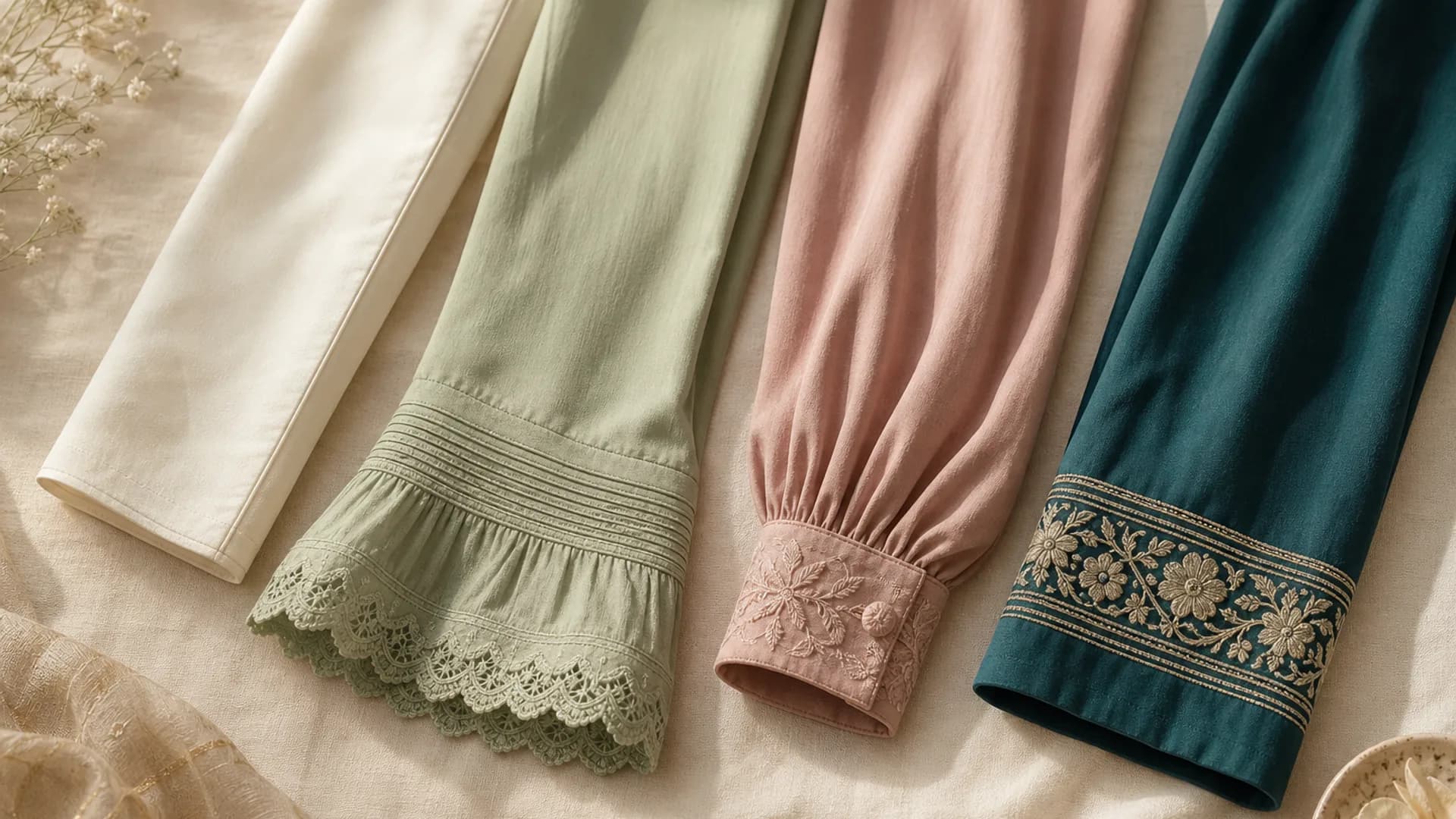
Sleeve Styles: Which One Suits Your Arms
The sleeve is half the visible surface of a kameez and the most common fit complaint. Here is what each style does and which arms it suits.
Left It Late? Eid Shopping in the Last Week
Eid is in four days and nothing in the cupboard works. Here is what is genuinely still possible, in order of how little time each option needs.