Sleeve Styles: Which One Suits Your Arms
The sleeve is half the visible surface of a kameez and the most common fit complaint. Here is what each style does and which arms it suits.
The sleeve is roughly half the visible surface of a kameez, it is in every photograph, and it is the single most common fit complaint in ready-to-wear. It is also where most of the actual movement happens. You eat, gesture, greet people, hold a plate and adjust a dupatta — all with your arms, all evening. A sleeve that is a centimetre too tight at the upper arm or two centimetres too long at the wrist is noticeable to you for four hours in a way a slightly imperfect hem never is. And sleeve styles change faster than almost anything else in Pakistani fashion, which is why an outfit from four years ago often looks dated at the sleeve before anywhere else. This is what each style does, who it suits, and which ones actually work at a function.
The Straight Sleeve
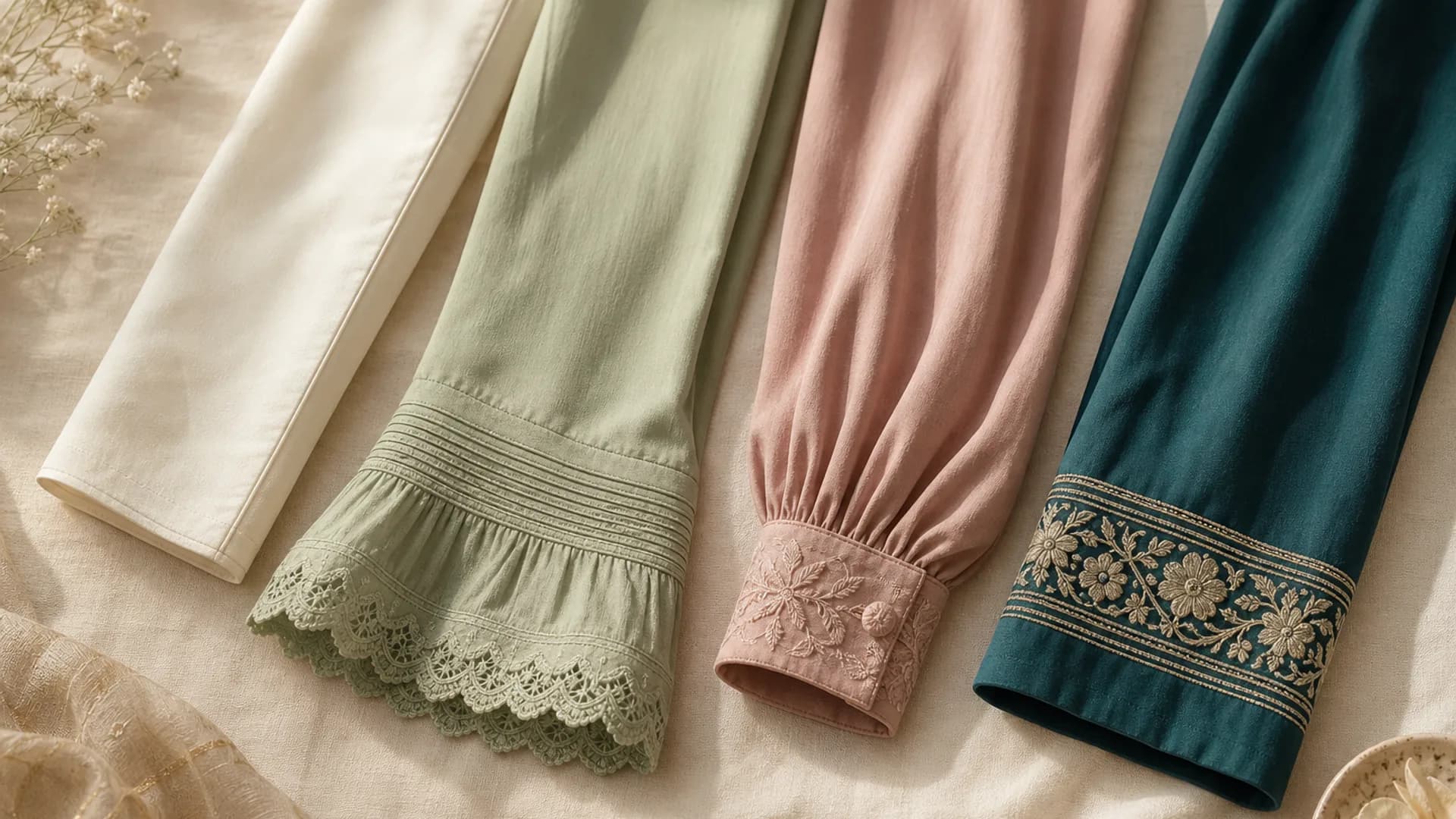
The default: roughly the same width from shoulder to opening, or gently tapered. **What it does:** nothing dramatic, which is its strength. It follows the arm without emphasising or disguising anything, and it works with every neckline and every cut. **Best for:** everyone, genuinely. It is the safe choice and the right one for workwear and everyday. **Where it fails:** when it is cut too narrow. A straight sleeve that grips the upper arm creates a visible line through the fabric and is the most common ready-to-wear fit problem. It should have a little ease. **Length:** ending at the wrist bone or just above. Past the wrist it covers the hand and shortens the arm. **The variable that matters most is width at the bicep**, not the style name. Ask for that measurement when having something made, and check it before buying ready-to-wear. Our [tailor guide](/journal/working-with-a-tailor-darzi-guide) covers what to specify.
The Three-Quarter Sleeve
Ending between the elbow and the wrist, at the narrowest part of the forearm. **What it does:** creates a break at the slimmest point of the arm, which makes the whole arm read as slimmer. It also shows the wrist, which is one of the more flattering parts of the arm on most people. **Best for:** almost everyone, and particularly anyone self-conscious about the upper arm — it covers what most people want covered and reveals what most people are happy to show. **Practically:** the most useful sleeve length there is. It stays out of food, it does not slide down while you eat, and it works in heat. **Where to be careful:** it is slightly less formal than a full sleeve, and at a nikah or a mosque function full or long sleeves are the safer choice. Our [nikah guide](/journal/nikah-outfit-guide-guests-pakistan) covers coverage expectations. **The length to avoid entirely** is elbow-length, which stops at the widest part of the upper arm and does the opposite of what three-quarter does. This is the single most common sleeve mistake.
The Bell Sleeve
Fitted at the shoulder and upper arm, then flaring out from the elbow or forearm. **What it does:** creates drama and movement, and draws the eye to the hands. It also disguises the forearm entirely while showing the upper arm's shape — which is the opposite of what most people want, and worth knowing. **Best for:** slimmer arms, and for formal and festive wear where movement is part of the effect. Excellent on a sharara or a flared silhouette because the volumes echo. **Where it fails:** it is genuinely impractical. A bell sleeve goes into food, catches on furniture, drags across a table and cannot be pushed up. At a wedding where you are eating from a plate on your lap, it is a constant nuisance. **Fabric decides it.** A bell sleeve in chiffon or georgette falls beautifully; the same cut in a stiff fabric stands out from the arm awkwardly. **Practical compromise:** a shorter bell flaring from just below the elbow, which gives the effect without reaching your plate.
The Bishop Sleeve
Full and gathered through the length, then drawn into a fitted cuff at the wrist. **What it does:** volume through the arm with a defined end point. It disguises the whole arm while keeping a neat line at the wrist, which is why it flatters more people than the bell does. **Best for:** anyone wanting coverage without a fitted sleeve — fuller arms particularly. The cuff is what makes it work; volume without a cuff reads as shapeless. **Practically:** far better than a bell sleeve because the cuff keeps everything out of the way. This is the volume sleeve that actually works at a function. **Where to be careful:** it adds visual bulk to the upper body, so it suits a narrower frame more easily than a broad-shouldered one. And a very full bishop sleeve on a petite frame can overwhelm. **Check the cuff fastening.** A cuff that has to be buttoned each time is a nuisance; an elasticated one is comfortable but reads as more casual. Our [fuller figure guide](/journal/fuller-figure-pakistani-formal-wear-guide) covers sleeve choice alongside the rest of the fit.
Cape, Angel and Layered Sleeves
**The cape sleeve** is a loose panel of fabric falling over the shoulder and arm, usually attached only at the shoulder. It is dramatic, it moves well, and it disguises the upper arm entirely. **What to know:** it provides no actual sleeve, so a fitted or sheer under-layer is usually needed, and it can restrict arm movement more than it looks. It is also very identifiable as a specific fashion moment, which affects how long you will wear it. **The angel sleeve** is a long loose flowing panel from the shoulder — extremely dramatic, and even less practical. **Layered and double sleeves** — a fitted sleeve with a sheer overlay — give the drama of volume with the practicality of a fitted sleeve underneath. This is the most wearable of the dramatic options. **The general rule for all of these:** they are one-occasion sleeves. They photograph beautifully and they date quickly. If the outfit is for a single formal event, they are a reasonable choice; if you want to wear it for years, a straight or three-quarter sleeve will not date. Our post on [restyling old outfits](/journal/restyling-old-formal-suits-eight-ways) covers what can be changed later — and a sleeve style is one of the hardest.
Matching the Sleeve to the Arm
The principle is the same as with necklines: contrast rather than repeat. **Fuller upper arms** — a bishop sleeve, a straight sleeve with ease, or three-quarter. Avoid anything tight through the bicep and avoid elbow length. **Slim arms** — anything, and bell and cape sleeves particularly, which need a slim arm to look intentional rather than accidental. **Broad shoulders** — avoid volume at the shoulder itself. Puffed and gathered shoulder heads widen the frame further. A clean set-in sleeve is better. **Narrow shoulders** — a slightly gathered shoulder head or a cape sleeve balances the frame. **Short arms** — three-quarter length, which is proportionally correct rather than looking like a full sleeve that shrank. And avoid a heavy cuff, which shortens further. **Long arms** — check the length carefully on ready-to-wear, which is usually cut short for you. A sleeve ending above the wrist bone reads as too small. Our [neckline guide](/journal/kameez-neckline-guide-which-suits-you) covers the same logic at the other end of the garment, and the two decisions interact.
Practical Checks Before You Buy
**Raise your arms.** The single most useful test, and almost nobody does it in a fitting room. A sleeve that fits standing still can bind completely when you lift your arms — and you will lift your arms all evening. **Check the armhole, not just the sleeve.** A deep loose armhole feels roomy and reads as bulky; one cut close to the underarm is what makes a garment look tailored. Raising an armhole is real work, so check it before buying. **Sit down and reach forward.** This is where a tight sleeve reveals itself. **Check the width at the bicep** with a finger's ease. Tighter than that and it will mark. **Check the inside of any worked cuff or sleeve band.** Exposed embroidery backing at the wrist is scratchy for the whole evening. Our post on [embroidery types](/journal/embroidery-types-explained-zari-gota-resham) covers why the reverse matters. **Check you can eat in it.** Sit at a table, reach for something, bring your hand to your mouth. A bell or cape sleeve fails this test and it is better to know now. Our [size guide](/content/size-guide) has our measurements, and the [Virtual Try Room](/virtual-try-room) is useful for judging a sleeve style on yourself before ordering.
Frequently Asked Questions
Three-quarter, ending at the narrowest part of the forearm — it creates a break at the slimmest point and makes the whole arm read as slimmer. Avoid elbow-length entirely, which stops at the widest part of the upper arm and does the opposite.
A bell sleeve is fitted at the top and flares open from the elbow with no cuff. A bishop sleeve is full and gathered through its length but drawn into a fitted cuff at the wrist. The cuff is what makes the bishop practical — a bell sleeve goes into your food.
A bishop sleeve, a straight sleeve with a little ease, or three-quarter length. All three cover without gripping. Avoid anything tight through the bicep, which creates a visible line through the fabric, and avoid elbow-length, which stops at the widest point.
Not particularly. They photograph beautifully and restrict movement more than they look, and a cape sleeve provides no actual sleeve so it needs an under-layer. They are also strongly identifiable with a fashion moment, so they date faster than a straight or three-quarter sleeve.
Raise your arms — a sleeve that fits standing still can bind completely when lifted, and almost nobody tests this. Then sit and reach forward, check the armhole is close rather than deep and loose, and check the inside of any worked cuff for scratchy embroidery backing.
About the Author
Habiba Minhas
Founder and creative director of Habiba Minhas, Pakistan's leading handcrafted fashion brand based in Karachi. With a passion for preserving traditional Pakistani craftsmanship while embracing modern design, she has built a brand serving over 5,000 customers nationwide.
Specializing in premium ladies suits, kids festive wear, and baby products, Habiba works directly with artisan embroiderers and skilled tailors to create pieces that honor Pakistani heritage.
Related Articles
Gifting Clothes: How to Buy for Someone Else
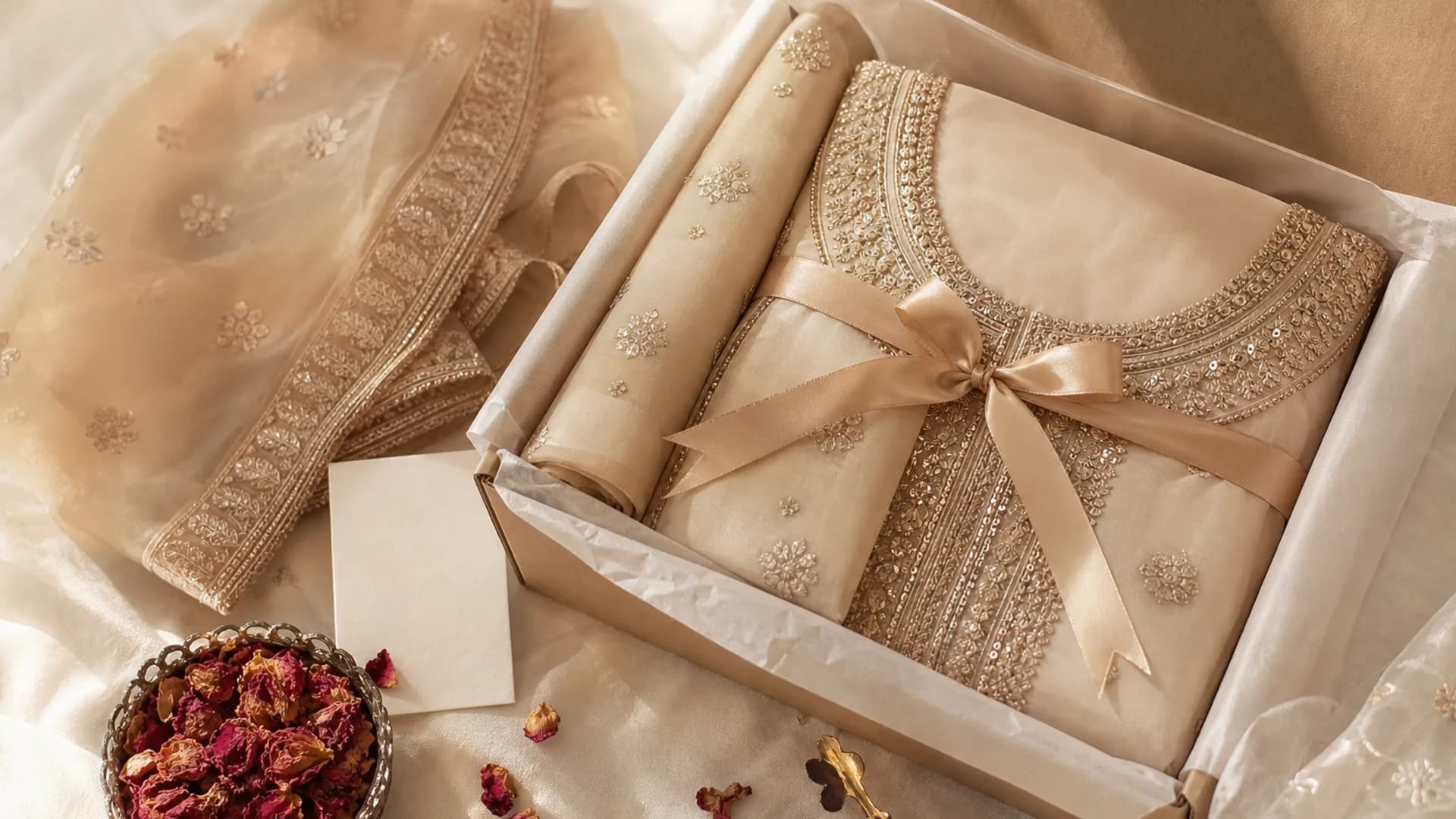
Clothes are the default gift in Pakistani households and the one most often quietly put away. A few rules make the difference.
What to Wear So You Photograph Well
The outfit that looks best in the room is not always the one that looks best in the photographs, and Pakistani function lighting is unusually unkind.
Left It Late? Eid Shopping in the Last Week
Eid is in four days and nothing in the cupboard works. Here is what is genuinely still possible, in order of how little time each option needs.