
Left It Late? Eid Shopping in the Last Week
Eid is in four days and nothing in the cupboard works. Here is what is genuinely still possible, in order of how little time each option needs.
Eid is in four days. There is nothing in the cupboard that works, the good tailors stopped taking orders two weeks ago, and every shop you would normally go to has been picked over since the middle of Ramadan. This happens to most people at least once, and it happens for entirely reasonable reasons — Ramadan is busy, the month goes quickly, and the moon decides the date at short notice. The honest position is that some options are genuinely gone by this point. Made-to-order is finished. Alterations that need a fitting are finished. International delivery is finished. But a surprising amount is still possible, and it improves with each day you have left. This is what to do, in order of how little time each option needs.
First: Look at What You Already Own
Before anything else, and properly rather than as a formality. **Take everything formal out of the cupboard and lay it on a bed.** Most people know what they own from memory, and memory is unreliable — there is usually at least one piece that has been forgotten. **Look for the pieces separately, not as outfits.** A shirt that felt finished with its own trousers may be a completely different outfit with different ones. Our post on [restyling what you own](/journal/restyling-old-formal-suits-eight-ways) covers eight ways to do this, and most of them need no tailor at all. **Check the unstitched pile.** Most Pakistani households have fabric from previous seasons that never reached a tailor. If any of it is stitchable in the time you have, it is the best option available. **Ask who has seen what.** An outfit worn last Eid was seen by a specific set of people. If you are spending this Eid with a different set, it is effectively new. This step costs nothing and solves the problem more often than people expect.
With Four to Seven Days
You still have real options at this range. **Buy ready-stitched.** The single best answer with a week to go. It arrives wearable and needs at most a small alteration. Our [stitched suits](/ladies/stitched-suits) and the wider [ladies collection](/ladies) are cut for exactly this, and the [shipping page](/help/shipping) has current timings — order at the start of the window, not the end. **Simple alterations are still possible.** A hem, a sleeve, a side seam taken in. Most tailors will do a fifteen-minute job even in the last week; what they will not do is a full make-up. **Buy a dupatta rather than an outfit.** A good worked dupatta over a plain suit you already own is a complete outfit for a fraction of the price and none of the time. **Buy the accessories instead.** New earrings, new shoes and a different dupatta change an existing outfit substantially. **Check delivery cut-offs before ordering, not after.** Ask the seller directly whether it will arrive before Eid, and treat a vague answer as a no.
With Two or Three Days
Narrower, but not nothing. **Local ready-to-wear only.** Anything requiring delivery is a gamble at this point, and courier volumes in the last days of Ramadan are at their peak. **Buy something that fits off the rail** rather than something you love that needs work. A well-fitting simple outfit looks considerably better than a beautiful one that does not fit. **Prioritise the shoulder.** It is the measurement that cannot be fixed quickly, and it is what decides whether a garment looks right. Everything else can be pinned, tucked or ignored for a day. Our post on [the five alterations that matter](/journal/five-alterations-make-any-suit-fit) covers the order of priority. **Ten-minute alterations only:** a hem turned up, a sleeve shortened, a waistband elastic tightened. **Buy the dupatta separately** if the matched one is wrong. Our post on [matching pieces](/journal/matching-dupatta-trouser-to-shirt-colour) covers pairing without ending up close-but-wrong — with limited time, go clear contrast rather than attempting a match. **Shoes you already own**, broken in. New shoes at two days' notice is how Eid morning becomes uncomfortable by ten o'clock.
Chand Raat Itself
The night before, and the position is honest: shopping now is the worst possible time to buy anything. Stock is picked over, prices are at their highest, the choice is whatever nobody else wanted, alterations are impossible, and the shops are impassable. **What is still worth doing on Chand Raat:** **Buy bangles, jewellery and hair accessories.** These are genuinely what Chand Raat markets are for, they need no fitting, and the atmosphere is half the point. Our [accessories collection](/accessories) covers the same ground without the crowds. **Buy a dupatta**, which needs no fitting and transforms an outfit. **Get mehndi done.** **Buy shoes only if you must**, and only flats you can wear immediately. **What not to do:** buy a full outfit in a panic. You will pay the most, for the least choice, with no time to alter it. An outfit you already own, well accessorised, will look better on the day than a rushed purchase.
Making Something You Own Look New
This is the highest-value thing you can do with no time and no money, and it works better than most people believe. **Change the dupatta.** The largest visual element and the fastest change. **Split the three-piece.** The shirt with different trousers is a different outfit. Our post on [restyling](/journal/restyling-old-formal-suits-eight-ways) covers this properly. **Change the metal.** Gold jewellery instead of silver, or the reverse, changes the register of the whole outfit. **Change the hair.** Up instead of down does more in photographs than most people expect. **Press everything properly.** A well-pressed old outfit looks better than a creased new one, and steaming rather than ironing is safer on embroidery. Our [packing guide](/journal/packing-formal-wear-travel-without-creasing) covers the steaming method. **Fix the small things.** A loose hook, a dropped hem, a missing button. Ten minutes with a needle transforms how an outfit reads. **Polish the shoes.** Genuinely — it is the detail that most changes whether an outfit looks cared for.
The Children, Who Are Easier
Children's Eid clothes are considerably easier to solve late, for two reasons: the range of acceptable is wider, and they will have outgrown last year's anyway. **Check the size before assuming it fits.** The most common late discovery, and the reason to check a week out rather than the night before. **Ready-to-wear only** at this point. The [girls formal](/kids/girls-formal) section and the wider [kids collection](/kids) are stocked for this. **Buy one size up** if you are between sizes. She will wear it again. Our post on [kids' formals that last](/journal/kids-formal-wear-that-lasts-more-than-one-season) covers the construction details that make that work. **Check the lining**, even in a rush. A polyester-lined outfit in Eid heat is why a child pulls at her clothes all day. **Shoes she can already walk in.** New shoes on a child on Eid morning is a guaranteed problem. **Hair accessories are the cheapest way to make an old outfit feel new to her**, and she will notice them more than the outfit. The [hair bands](/accessories/hair-bands) and [hair clips](/accessories/hair-clips) sections cover it, and our [girls' hair guide](/journal/girls-hair-styling-functions-accessories) has styles that survive the day.
So It Does Not Happen Again
One paragraph of prevention, because this is entirely avoidable. **Buy in the first ten days of Ramadan**, not the last ten. Full stock, normal prices, and tailors who are still taking work. **Or buy for next Eid at the end of this one.** Post-Eid sales are substantial and the stock is the same stock. **Keep one formal outfit in reserve** that fits and is clean. It solves Eid, an unexpected invitation and a wedding you were not planning for. **Check your children's sizes in the first week of Ramadan**, not the last. **Keep your measurements in your phone**, so ordering online is a five-minute decision rather than a research project. Our [size guide](/content/size-guide) shows how ours are measured. **Plan both Eids together.** They are two months apart and a good formal outfit covers the Eid ul Fitr morning and the third day of Eid ul Adha. Our post on [the two Eids](/journal/eid-ul-fitr-vs-eid-ul-adha-dressing) covers the difference between them.
Frequently Asked Questions
Buy ready-stitched, which arrives wearable and needs at most a small alteration — order at the start of the window rather than the end. Simple alterations like a hem or a side seam are still possible. And a good worked dupatta over a plain suit you own is a complete outfit for a fraction of the cost.
For bangles, jewellery, hair accessories, a dupatta and mehndi, yes — none of those need a fitting and the atmosphere is half the point. For a full outfit, no. You will pay the most for the least choice with no time to alter anything.
Change the dupatta, split the three-piece and wear the shirt with different trousers, switch the jewellery metal, and change the hair. Then press everything properly and fix the small things — a loose hook, a dropped hem. A well-pressed old outfit beats a creased new one.
Only flats you can wear immediately. New shoes worn for the first time on Eid morning are uncomfortable by ten o'clock, and there is no time to break them in. A polished pair you already own looks better than an unworn pair that hurts.
In the first ten days of Ramadan, when stock is full, prices are normal and tailors are still taking work — or at the post-Eid sales for next year, which sell the same stock at a substantial discount. Check children's sizes early too; they are the most common late discovery.
About the Author
Habiba Minhas
Founder and creative director of Habiba Minhas, Pakistan's leading handcrafted fashion brand based in Karachi. With a passion for preserving traditional Pakistani craftsmanship while embracing modern design, she has built a brand serving over 5,000 customers nationwide.
Specializing in premium ladies suits, kids festive wear, and baby products, Habiba works directly with artisan embroiderers and skilled tailors to create pieces that honor Pakistani heritage.
Related Articles
Gifting Clothes: How to Buy for Someone Else
Clothes are the default gift in Pakistani households and the one most often quietly put away. A few rules make the difference.
What to Wear So You Photograph Well
The outfit that looks best in the room is not always the one that looks best in the photographs, and Pakistani function lighting is unusually unkind.
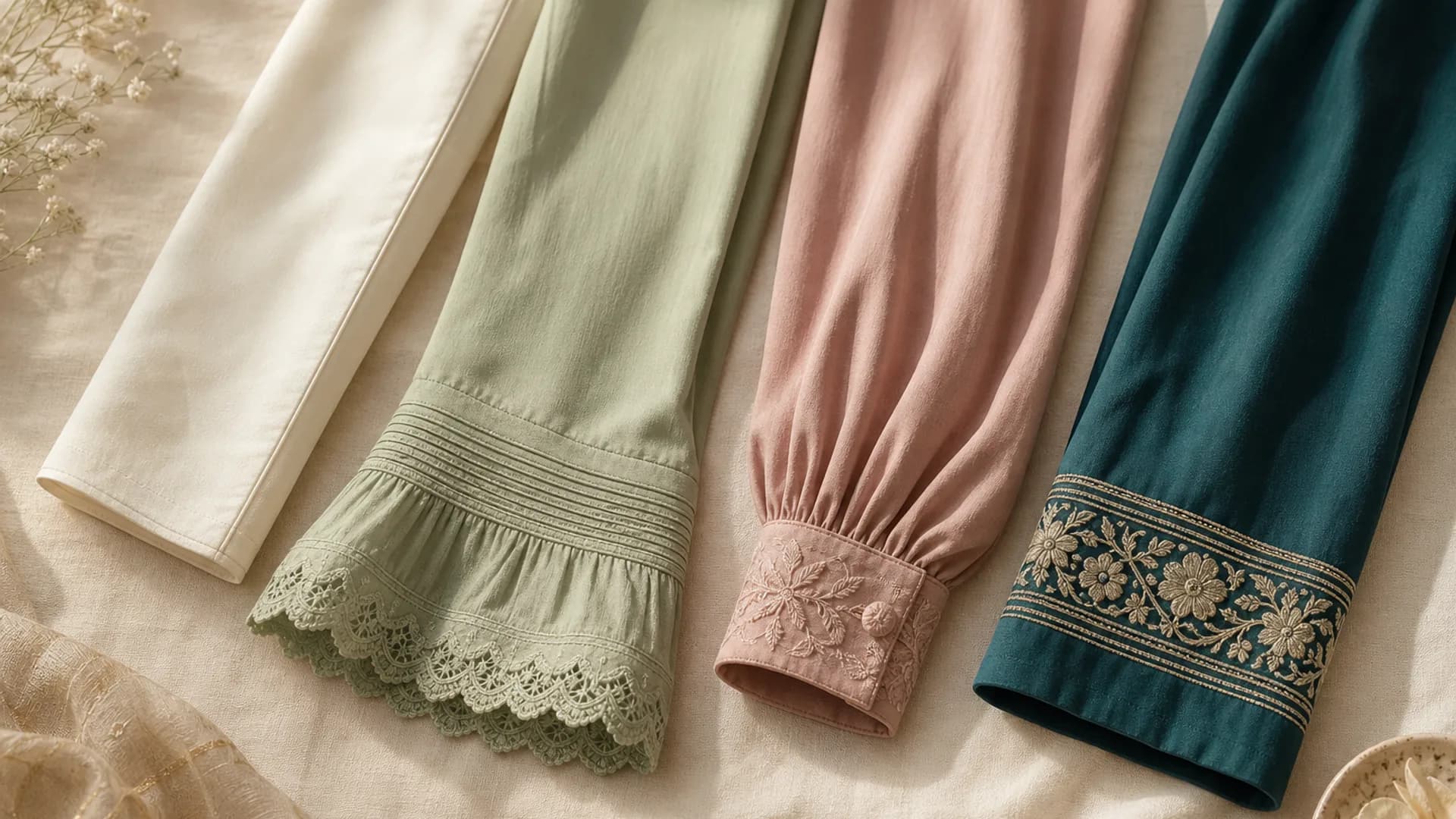
Sleeve Styles: Which One Suits Your Arms
The sleeve is half the visible surface of a kameez and the most common fit complaint. Here is what each style does and which arms it suits.