

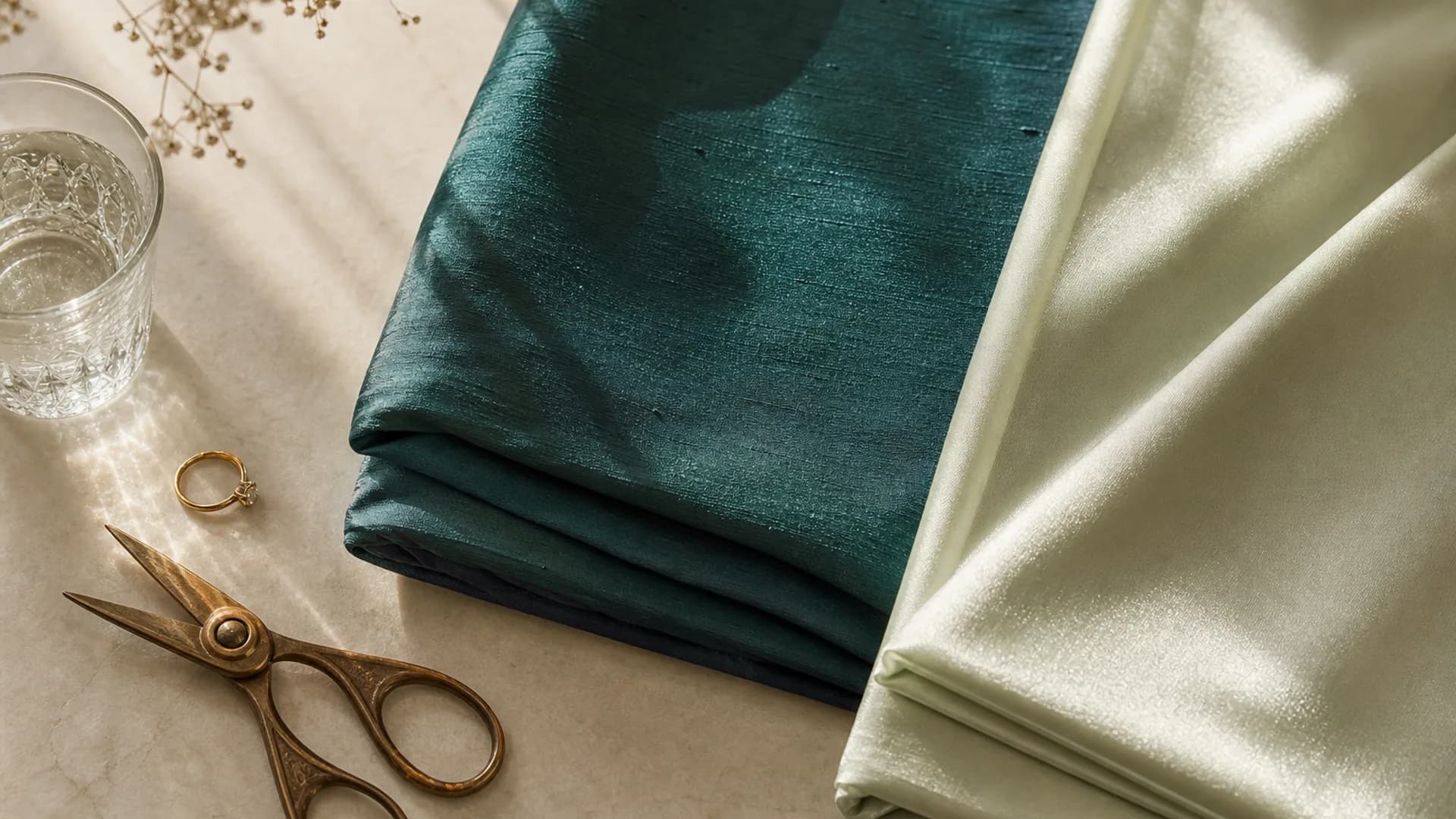
How to Tell Real Silk From Fake: 6 Tests
Most of what is sold as silk in Pakistan is not silk. Here are six tests, three of which you can do standing in the shop before you pay.
A large share of what is sold as silk in Pakistan is polyester. Not fraudulently, in most cases — the words *art silk*, *silk-finish*, *soft silk* and *silk blend* are all in common use, and none of them mean silk. That is a real problem if you are paying a silk price. It is also a problem if you are not, because polyester and silk behave completely differently: how warm they are, how they take a stitch, how they survive a wash, and how they look in photographs after a year. There are six reliable tests. Three of them you can do standing in a shop, in front of the seller, without damaging anything. The other three need a snippet of fabric or a bit of privacy. None of them require equipment.
First, What the Labels Actually Mean
Before testing anything, it helps to know what you are being told. **Pure silk / mulberry silk** — genuine silk filament. This is the real thing. **Raw silk / dupion** — genuine silk, spun with the natural irregularities left in, which is why it has that slightly slubbed texture. Very common in Pakistani formal wear and a legitimate silk. **Art silk** — short for *artificial silk*. It is viscose or rayon. Not silk. **Silk-finish, silky, soft silk, silk-touch** — marketing terms describing a texture. They carry no fibre content claim at all, and they are usually polyester. **Silk blend** — some silk, in an unstated proportion, which is often small. **Banarsi silk** — describes the weaving tradition, not the fibre. Banarsi is now woven in silk, viscose and polyester, so the name alone tells you nothing. None of this means viscose or polyester is a bad buy. Viscose drapes beautifully and costs a fraction of silk. It only becomes a problem when it is priced as silk. Our [fabric glossary](/content/fabric-glossary) covers the other terms you will see on Pakistani labels.
Test 1: The Warmth Test (Do This in the Shop)
The single most useful test, and it takes five seconds. Hold the fabric flat between both palms and rub gently for a few seconds. Silk is a protein fibre — it warms up quickly under your hands and holds that warmth. Polyester stays cool. It feels slick and slightly cold no matter how long you hold it, which is exactly the sensation that makes synthetic bedding unpleasant in summer. This works because you are testing a genuine physical property rather than an appearance. It is also completely non-destructive, so no seller can object. Do it on a fabric you know is silk first, so you have something to compare against. Once you have felt the difference once you will not need this article again.
Test 2: The Sheen Test (Do This in the Shop)
Take the fabric to a window and tilt it slowly through the light. Silk changes colour as the angle changes. Because the fibre has a triangular cross-section, it refracts light rather than simply reflecting it, so a silk shifts and shimmers through several tones — a teal that goes green then blue then almost grey. Polyester has one flat shine. It gets brighter and duller as you tilt it, but the colour itself does not move. It is a glassy, uniform, slightly hard shine. This is the test that catches the most expensive fakes, because a good polyester can pass a casual touch test but almost never passes this one. Do it in daylight if you possibly can. Shop lighting is chosen to make everything look like silk, which is not an accident.
Test 3: The Crush Test (Do This in the Shop)
Take a corner of the fabric, squeeze it firmly in your fist for a few seconds, then open your hand. Silk creases. It will hold soft, fine wrinkles that relax slowly. This is not a flaw — it is why silk formal wear needs hanging rather than folding. Polyester springs back almost perfectly flat. Its wrinkle resistance is the main reason it exists, and it is a giveaway. Viscose and art silk crush too, and crush more sharply than silk with harder creases, so this test separates natural from synthetic rather than silk from viscose. Use it alongside the warmth test, which viscose fails. Three tests, none destructive, all doable in front of a shopkeeper. If a fabric passes all three it is very likely genuine.
Tests 4, 5 and 6: When You Have a Snippet
These need a small piece of fabric — ask for a swatch, or use the inside of a seam allowance on something you already own. **The burn test.** The definitive one. Hold a few threads with tweezers and light them away from anything flammable. Silk smells of burning hair, burns slowly, self-extinguishes, and leaves a brittle black ash you can crush to powder. Polyester melts rather than burns, smells chemical and sweet, and leaves a hard plastic bead you cannot crush. Viscose burns fast like paper with a smell of burning leaves and leaves soft grey ash. Only ever do this on a thread or two, never on a garment. **The water test.** Put a drop of water on the fabric. Silk absorbs it within a few seconds. Polyester beads it and it rolls off. **The ring test.** Pull a lightweight silk through a ring — a fine silk will slip through smoothly. This one only works on light chiffon and georgette weights, not on raw silk or brocade, which are far too heavy to say anything useful.
Buying Online, Where You Cannot Touch Anything
Every test above needs the fabric in your hands, which is exactly what online buying does not give you. So the questions change. **Ask for the fibre composition as a percentage.** A seller with real silk will answer immediately. A vague answer — "pure quality silk", "imported silk" — is an answer. **Ask for a daylight video, not a photograph.** A short clip of the fabric moving through the light shows the colour shift that a still image flattens out. This is the most useful thing you can ask for and most sellers will send it. **Check the price against the weight.** Genuine silk has a floor price. A heavily worked three-piece silk suit at a synthetic price is not a bargain that everyone else has missed. **Read the care instructions.** A label saying machine wash warm is describing polyester. Silk means dry clean or careful hand wash in cold water. Our guide on [what to check when buying unstitched online](/journal/5-things-check-buying-unstitched-suit-online-pakistan) covers the wider ordering checklist, and the [returns policy](/help/returns) explains where you stand if what arrives is not what was described.
Does It Actually Matter?
For a formal outfit you intend to keep, yes — for four practical reasons rather than snobbery. **Temperature.** Silk breathes and regulates; polyester traps heat. At a summer wedding in Lahore that is the difference between a comfortable evening and a miserable one. **How it takes embroidery.** Heavy work on a synthetic base pulls and puckers over time. On silk it sits flat and stays flat. **How it ages.** Silk softens with wear. Polyester pills, and the shine goes patchy where it rubs — under the arms, at the waist, along the dupatta shoulder. **How it photographs.** The colour shift that makes silk hard to fake is exactly what makes it look expensive in photographs, which matters at a wedding. For an everyday lawn suit, none of this is worth paying for. For a formal three-piece you expect to wear for years, it is. Every [stitched suit](/ladies/stitched-suits) in our [ladies collection](/ladies) is silk for these reasons, and our guide on [caring for silk at home](/journal/how-to-care-for-silk-suits-at-home-pakistan) covers keeping it that way.
Frequently Asked Questions
No. Art silk is short for artificial silk and it is viscose or rayon — a plant-based fibre made to imitate silk's drape and shine. It is a perfectly good fabric and drapes beautifully, but it is not silk and should not carry a silk price.
Rub it between your palms for a few seconds. Silk warms up and holds the warmth because it is a protein fibre; polyester stays cool and slick. Then tilt it through daylight — silk shifts colour as the angle changes, polyester has one flat shine.
Yes. Silk holds soft fine creases that relax slowly, which is why silk formal wear should be hung rather than folded. Fabric that springs back perfectly flat after being squeezed in your fist is almost certainly polyester.
Yes. Raw silk, also sold as dupion, is genuine silk spun with the natural irregularities left in — that is where its slubbed texture comes from. It is very common in Pakistani formal wear and it is not a lesser fabric, just a different finish from smooth mulberry silk.
Ask for the fibre composition as a percentage rather than a description, and ask for a short daylight video of the fabric moving through the light — silk shifts colour, polyester does not. Also read the care label: machine wash warm means polyester.
About the Author
Habiba Minhas
Founder and creative director of Habiba Minhas, Pakistan's leading handcrafted fashion brand based in Karachi. With a passion for preserving traditional Pakistani craftsmanship while embracing modern design, she has built a brand serving over 5,000 customers nationwide.
Specializing in premium ladies suits, kids festive wear, and baby products, Habiba works directly with artisan embroiderers and skilled tailors to create pieces that honor Pakistani heritage.
Related Articles
Winter Fabrics: Khaddar, Karandi, Velvet and More
Pakistani winter fabrics are sold by name and almost never explained. Here is what each one is, how warm it really is, and where it belongs.
Lawn Season: How to Buy Lawn Actually Well
Lawn season is the one shopping event the whole country takes part in, and most of it is bought in a rush on a phone. Here is how to judge what you are buying.
Zari, Gota, Resham: Embroidery Types Explained
Every formal suit is described with a list of embroidery names, and almost nobody knows what they mean. Here is what each one is, and how it behaves.